Passionflower with Caterpillars and Insects — History & Facts
A climbing passionflower spreads across the page on curling tendrils. Its large flower has white petals and a wide fringe of wavy blue-and-white filaments around a yellow center, a round yellow-green fruit hangs at right, and a cut fruit at lower right shows white pulp packed with dark seeds. On a big leaf lie a spiny caterpillar, a pupa and a white cocoon; a small mottled moth flies nearby, a red-and-black winged insect clings to the stem, a long-legged insect with flag-like feet stands below, and a dark, hairy caterpillar crawls over the cut fruit. Maria Sibylla Merian drew the scene for plate 21 of Metamorphosis insectorum Surinamensium (1705), engraved by J.
Mulder. She wrote that this fruit was called marquiaas in America and that its passionflower is much larger than Europe's, with a scent that carries far. She raised three kinds of caterpillar from it in May and June 1701 and shows what each became. One caterpillar lived among the flowers in a strange house of tiny tubes, peeking out of one, then another.
The fly with split feet, she noted, loses them at the slightest touch. It is in the Smithsonian Libraries in Washington, DC.
More Artworks by Maria Sibylla Merian
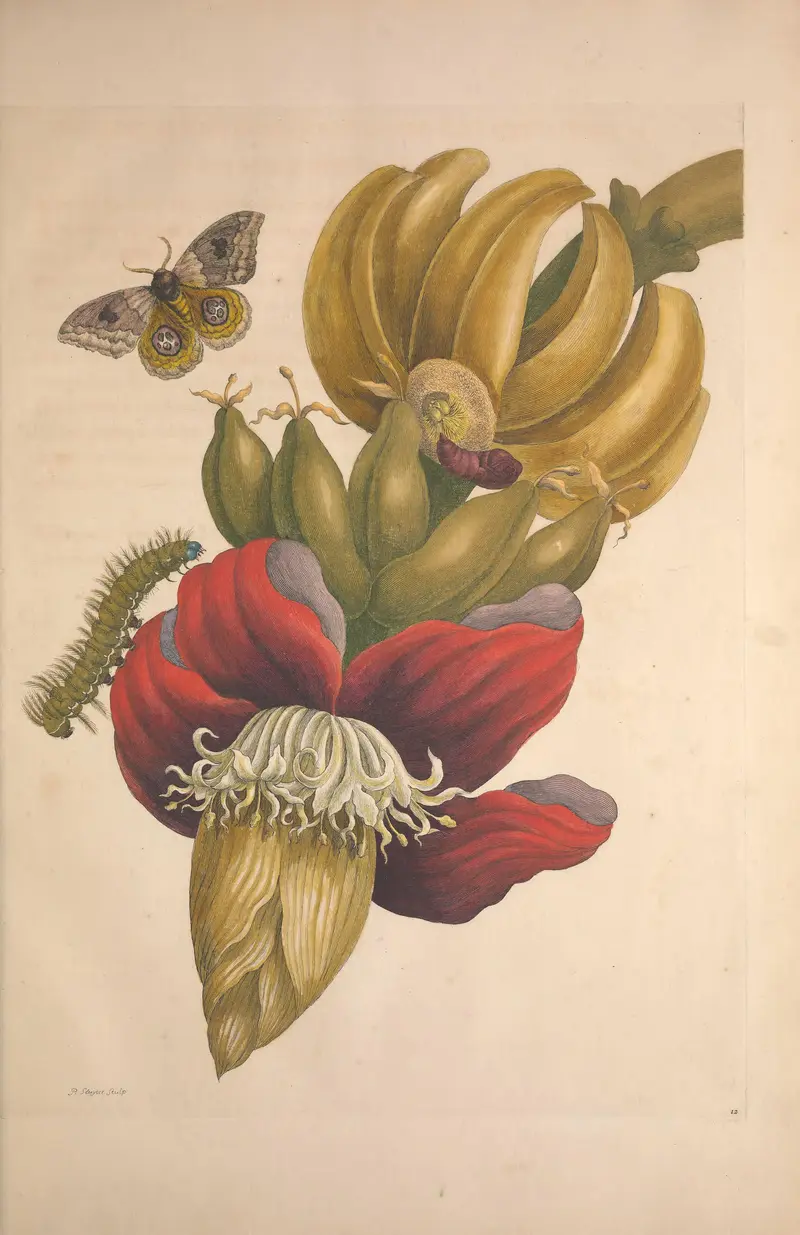
Banana with Bullseye Moth and Caterpillar
Maria Sibylla Merian
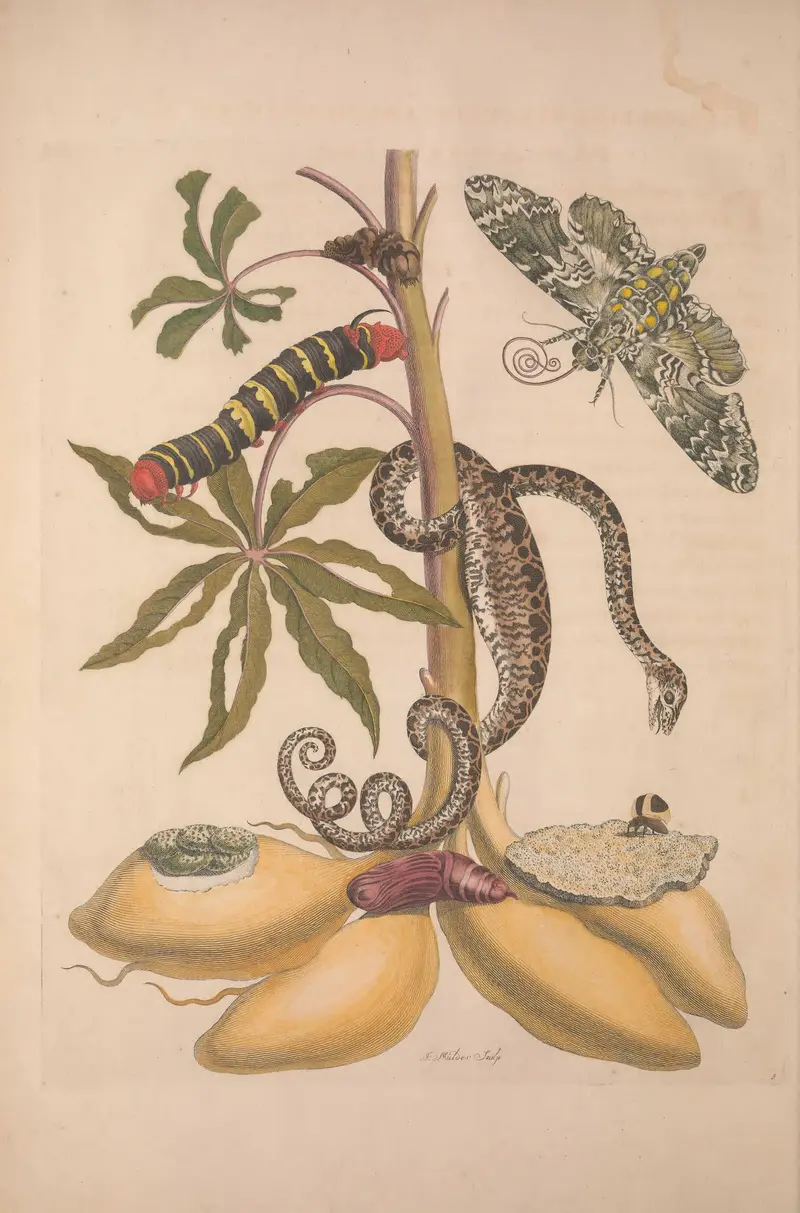
Cassava Root with Tree Boa and Sphinx Moth
Maria Sibylla Merian
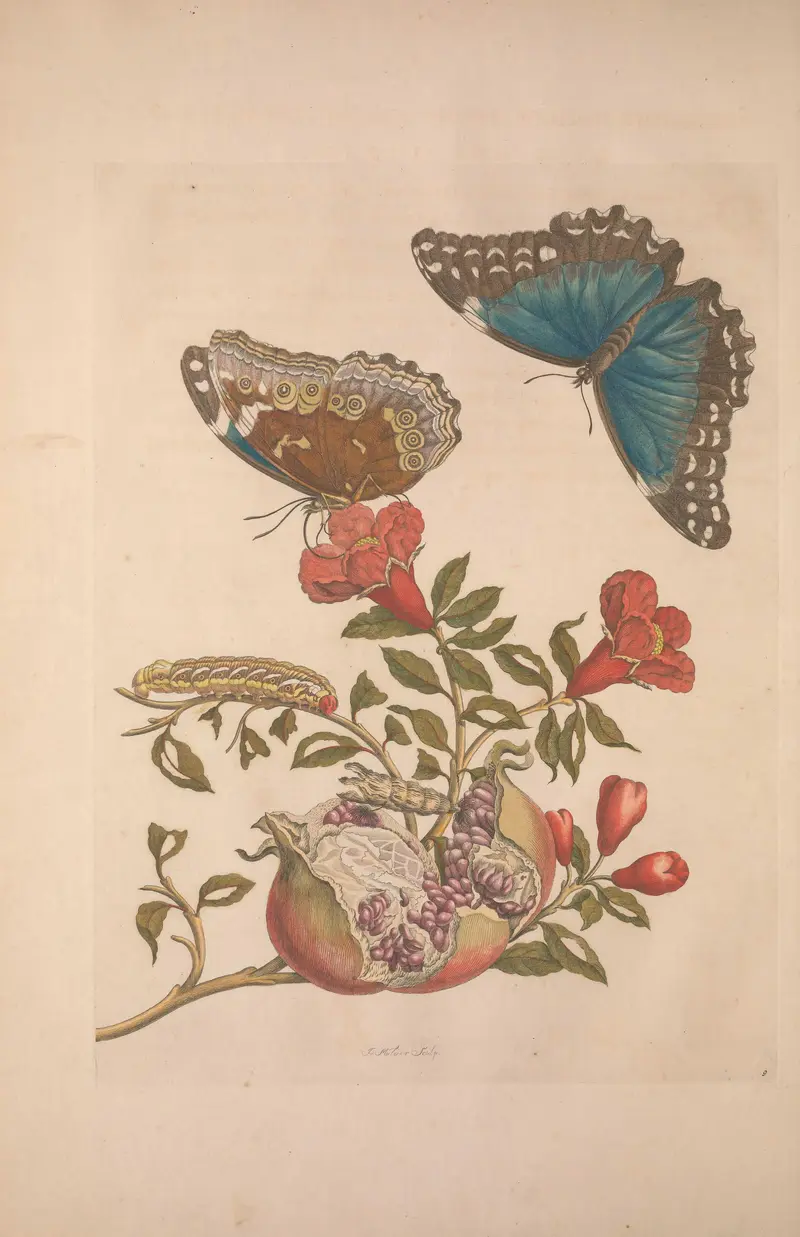
Pomegranate with Caterpillar, Pupa and Blue Butterfly
Maria Sibylla Merian
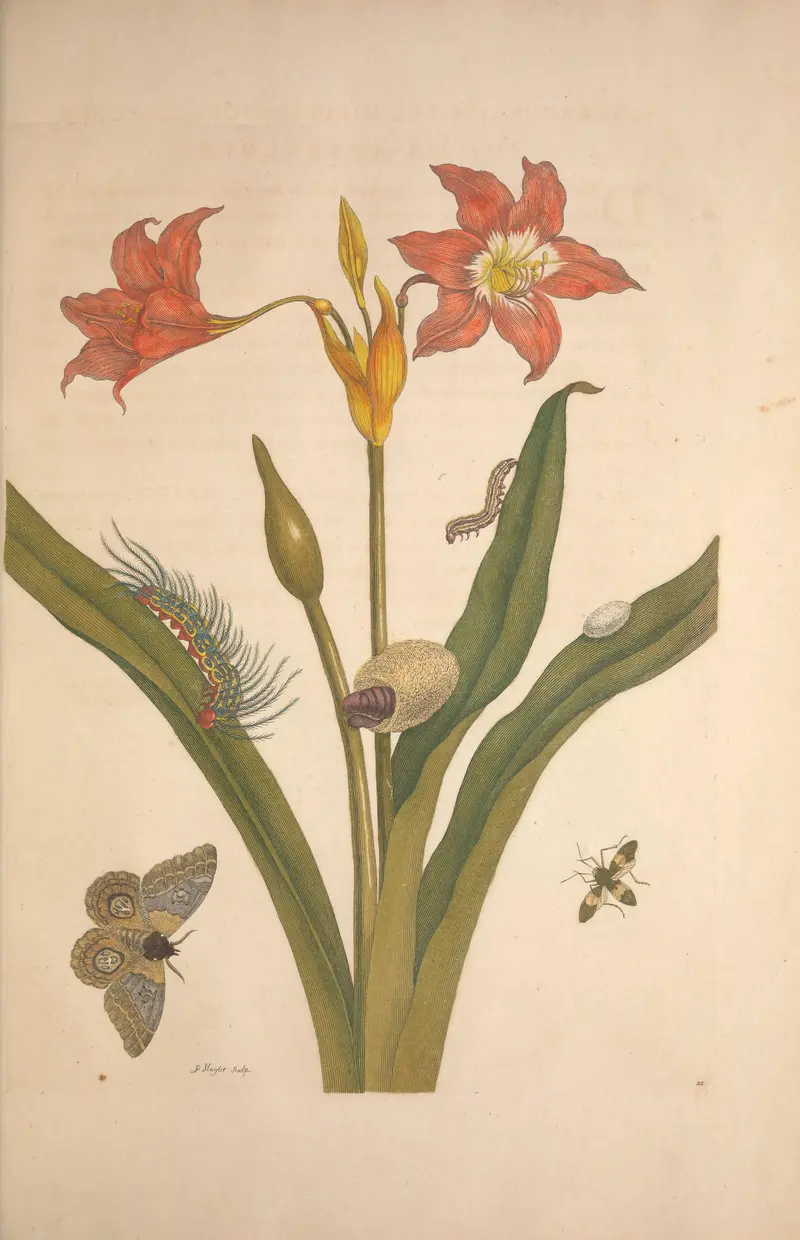
Red Amaryllis Lily with Moth and Caterpillars
Maria Sibylla Merian
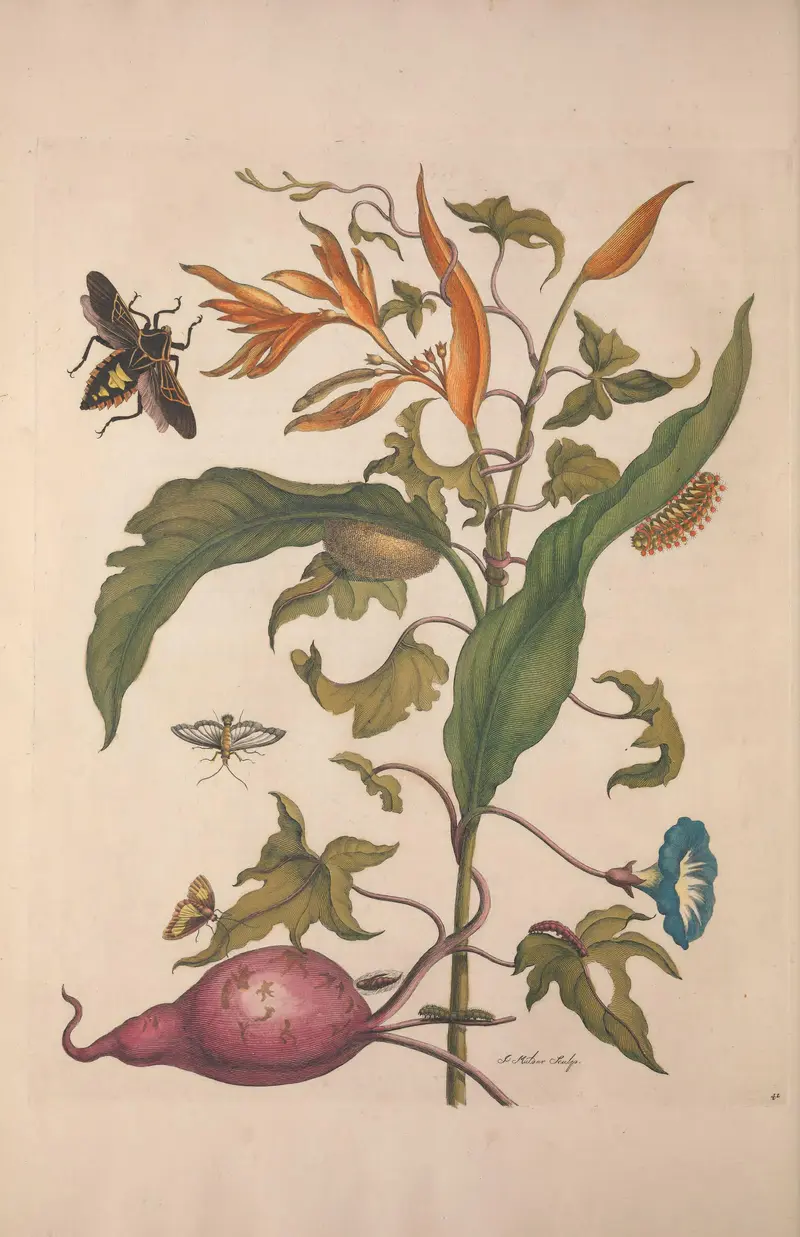
Sweet Potato with Beetle and Butterfly
Maria Sibylla Merian
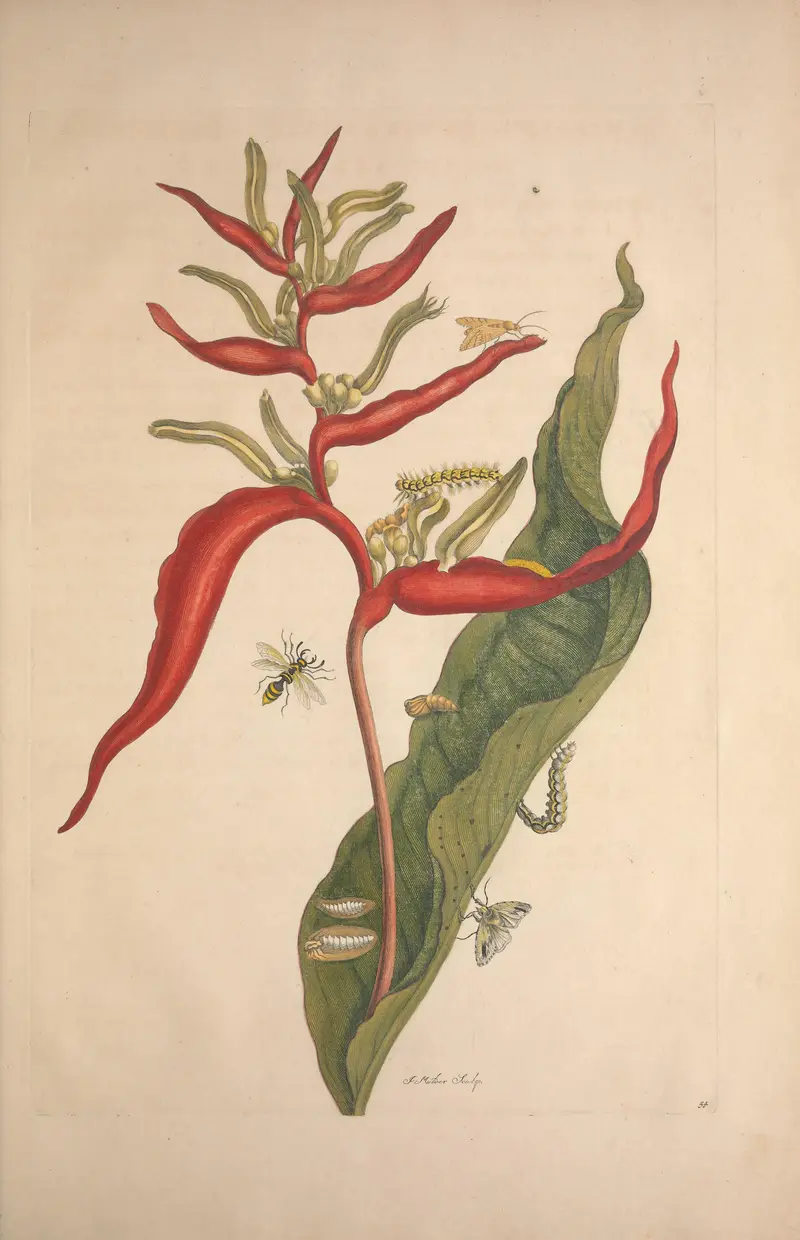
Heliconia with Moth
Maria Sibylla Merian
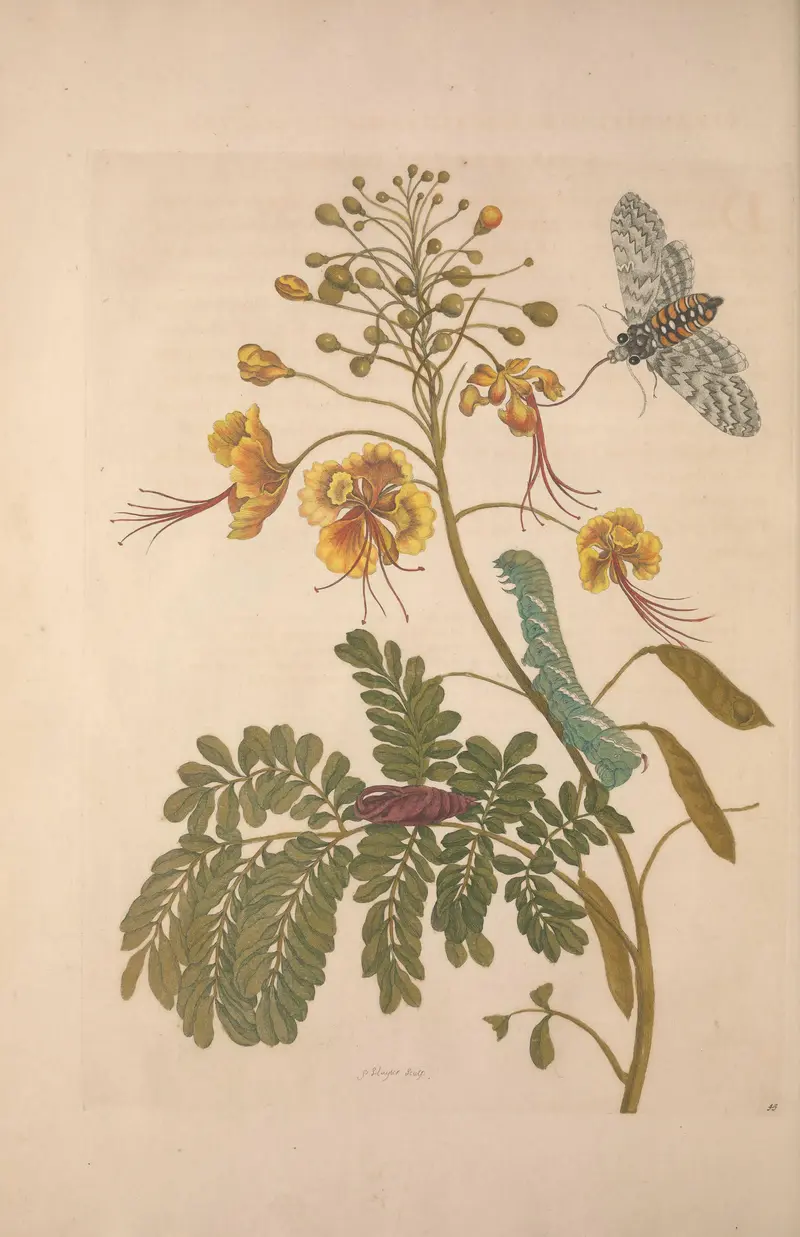
Mimosa with Moth and Caterpillar
Maria Sibylla Merian

Grapevine with Caterpillar and Moth
Maria Sibylla Merian
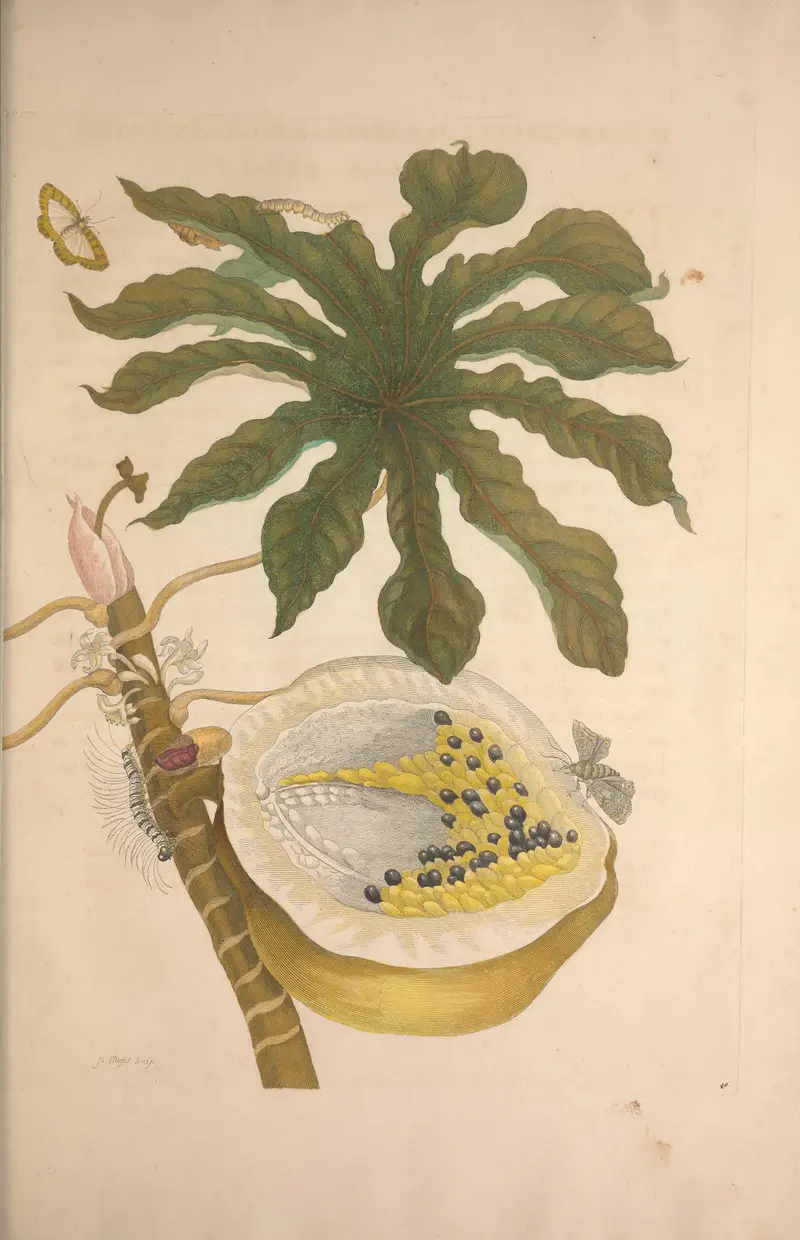
Papaya with Moth and Caterpillar
Maria Sibylla Merian
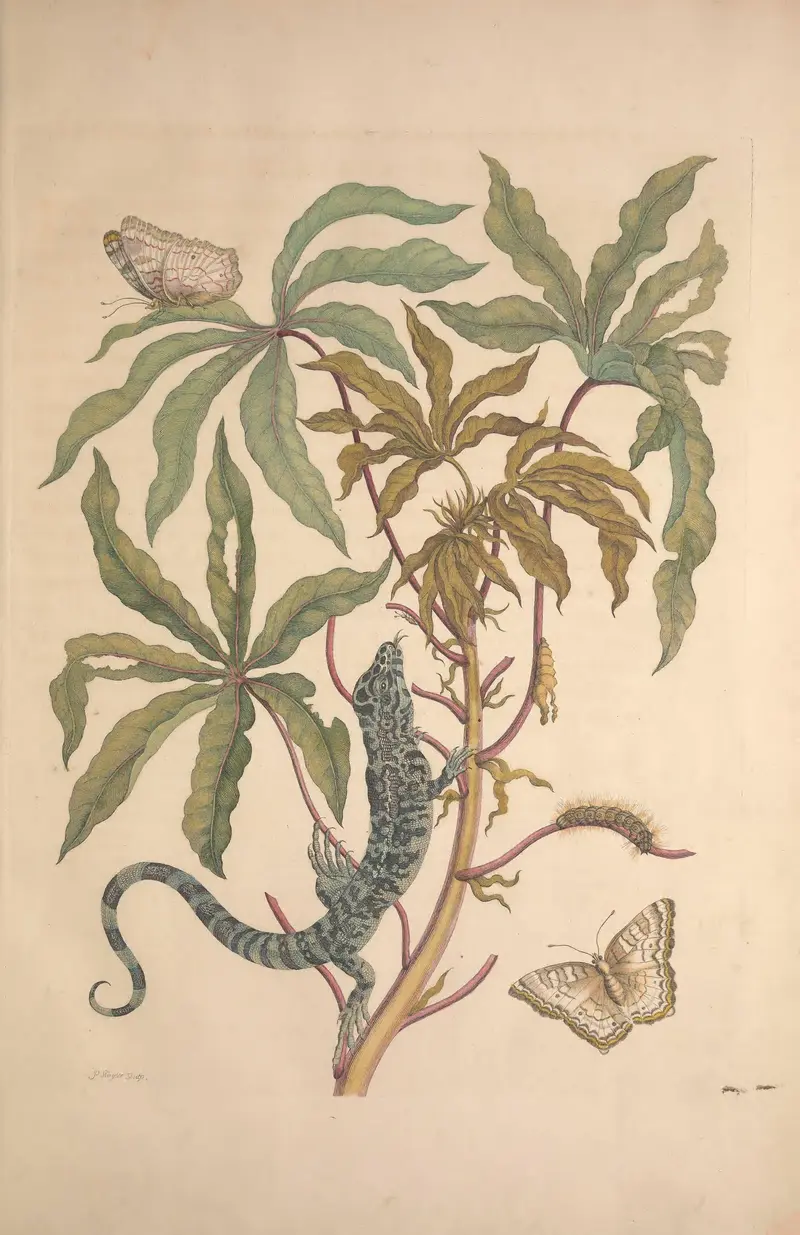
Cassava with Tree Snake and Caterpillar
Maria Sibylla Merian