Cave Dwellers — History & Facts
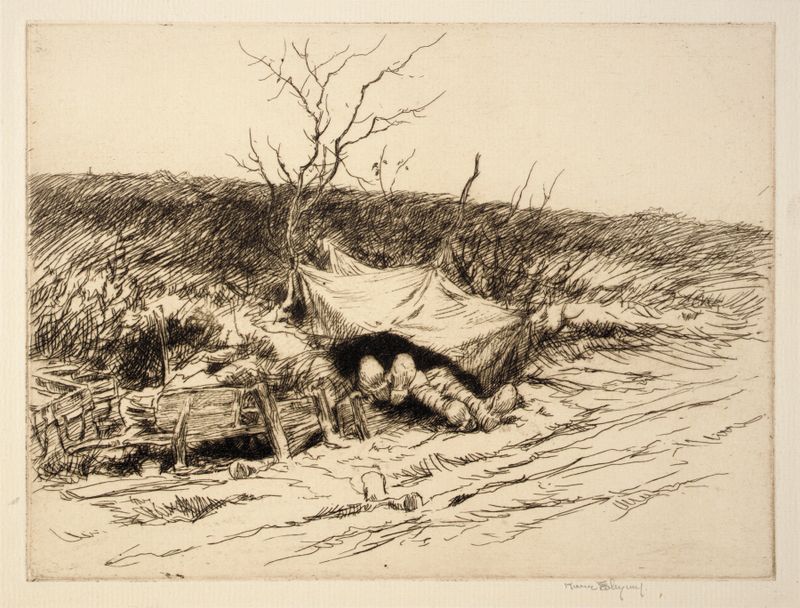
Could beauty survive in a century of chaos? In Cave Dwellers, the yearning for solace and connection resonates deeply, evoking a sense of longing amidst turmoil. Look to the center where the figures huddle, their forms wrapped in shadows, illuminated only by the soft, ethereal glow that spills from above. The contrasting tones of darkness and light create a haunting ambiance, conjuring an atmosphere filled with both despair and hope. Notice how the textures of the cave walls juxtapose the vulnerability of the individuals, drawing our eyes to the intricate details of their expressions, revealing a spectrum of emotions from fear to resilience. Delve deeper into the composition, where the cave serves as both a refuge and a prison, symbolizing the duality of human existence.
Each figure's posture conveys a silent conversation, a shared understanding of their plight that transcends words. The artist's choice of muted earth tones not only grounds the scene in reality but also amplifies the emotional weight—drawing the viewer into a collective yearning for connection and survival in a fractured world. Kerr Eby created Cave Dwellers in 1924, a time when he was exploring themes of isolation and vulnerability, influenced by the aftermath of World War I. Living in the United States, he was part of an artistic movement that grappled with modernity's challenges, seeking to express the human condition through poignant imagery.
This piece stands as a testament to his ability to capture the essence of an era marked by chaos, while simultaneously embodying a universal longing for beauty and belonging.