
Cenotaph to the Memory of Sir Joshua Reynolds — History & Facts
A stag stands alert at the edge of a shadowed forest, its antlers catching the last glimmer of daylight, as if pausing to pay respect to the stone cenotaph rising from the leaf-strewn ground. The monument, flanked by sculpted busts, draws the eye to its solemn presence at the heart of the composition, while the tangled trees arch overhead, their branches weaving a canopy that both shelters and encloses the scene. The painter’s touch lingers on the rough textures of bark and undergrowth, inviting the viewer to linger with the animal in this moment of quiet encounter between nature and memory.
Light filters through the foliage, guiding us from the living world of the deer to the realm of stone and remembrance, and then upward toward a sky that hints at both dusk and dawn. Painted in 1836, this work by John Constable belongs to a moment when British artists were reimagining the landscape as a site of personal and national memory. The Romantic period saw a fascination with ruins, monuments, and the power of nature to evoke reflection and awe. Cenotaphs—memorials without a body—were often commissioned by those wishing to honor the dead in a way that merged the human and the eternal.
While little is recorded about the specific journey of this canvas, its presence in the Google Arts & Culture collection today allows us to stand, like the stag, at the threshold between the world we know and the mysteries that lie just beyond the trees.
More Artworks by John Constable
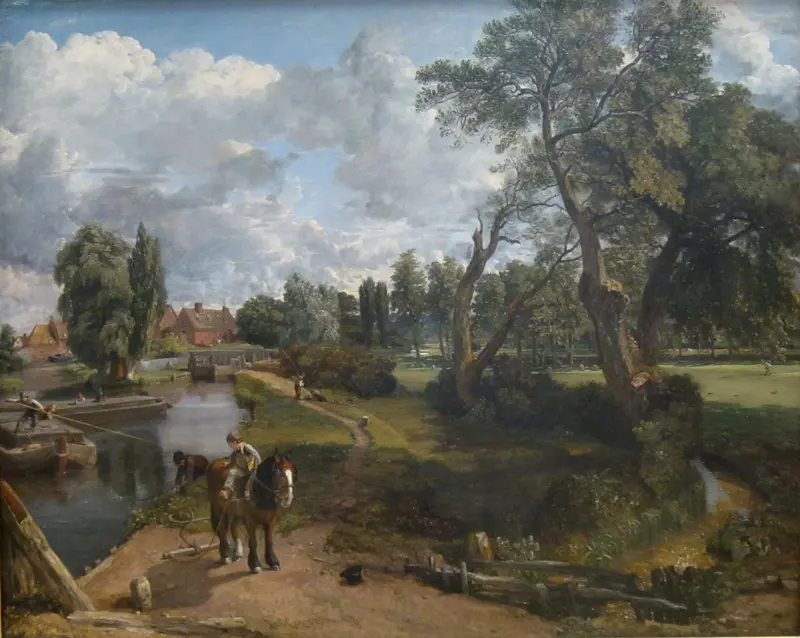
Flatford Mill (Scene on a Navigable River)
John Constable

Salisbury Cathedral From The Meadows
John Constable
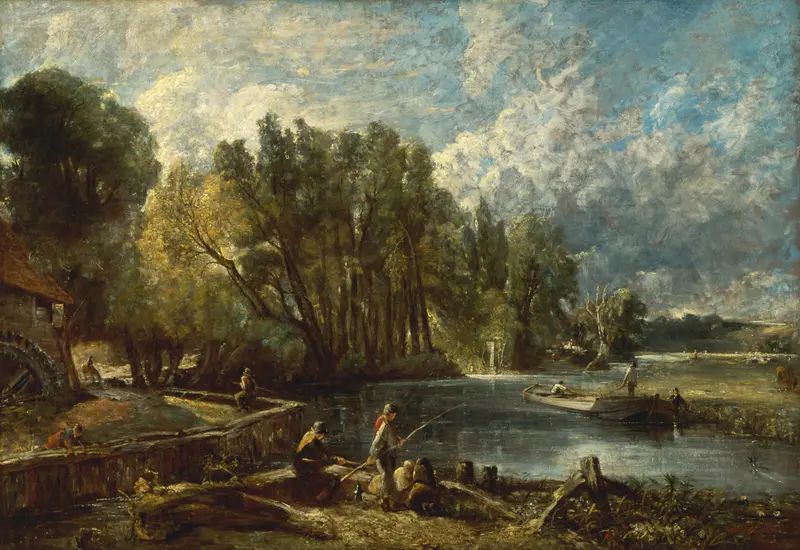
Stratford Mill
John Constable
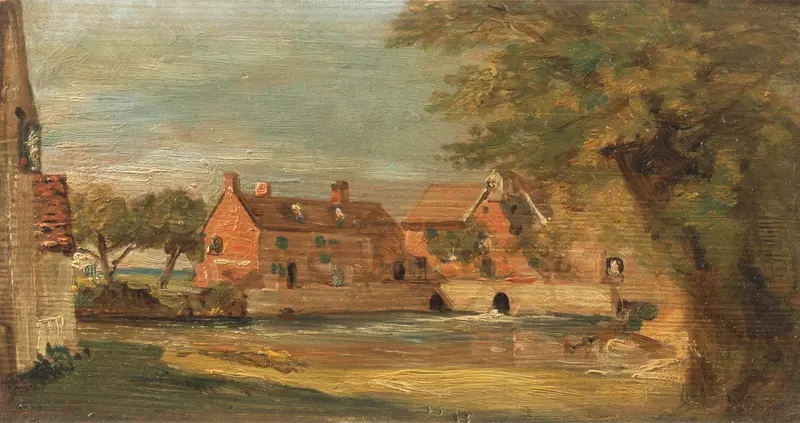
Flatford Mill
John Constable
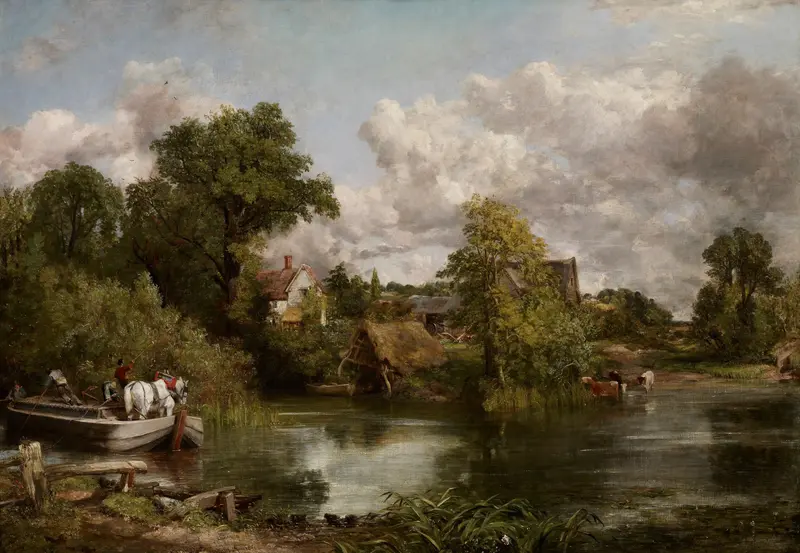
The White Horse
John Constable
Landscape (The Lock)
John Constable
Salisbury Cathedral from the Bishop’s Grounds
John Constable
Salisbury Cathedral From The Meadows
John Constable
Landscape at East Bergholt
John Constable
Cloud Study, Early Morning, Looking East from Hampstead
John Constable
More Landscape Art

The Starry Night
Vincent van Gogh

View of Delft
Johannes Vermeer

Water Lilies
Claude Monet

The Grand Canal, Venice, looking north-west from the Ca' Corner to the Ca' Contarini degli Scrigni, with the campanile of Santa Maria della Carità
Canaletto

Windsor Castle
Canaletto

The Grand Canal looking North-East from the Palazzo Dolfin-Manin to the Rialto Bridge
Canaletto