
Chapelle expiatoire du duc de Berry. — History & Facts
This sentiment reverberates through a work that entangles the viewer in the complexities of loss and memory. The stark beauty of the chapel lingers in the mind, a haunting reminder of what was once vibrant yet is now tinged with decay. Look closely at the delicate ornamentation that graces the chapel’s façade. Notice how the intricate carvings frame the entrance, guiding your gaze inward to the soft play of light that dances upon the cool stone.
The muted palette, tempered by the gentle embrace of shadows, speaks of history—each curve and line telling a story of elegance intertwined with the passage of time. The contrast between the gold accents and the worn textures reveals a dialogue between glory and decline. There is a palpable tension between beauty and melancholy here. The chapel stands as a mausoleum, a place of reverence shadowed by the weight of absence.
The flickering light symbolizes hope yet hints at the fragility of existence. The artistry captures moments of grace that are inherently transient, urging us to reflect on the bittersweet nature of remembrance. Each detail, from the weathered stones to the gilded edges, beckons contemplation of the inescapable decay that underlies even the most magnificent creations. In 1810, when this chapel was completed, Auguste-Sébastien Bénard was immersed in the Neoclassical movement, a time when artists were grappling with themes of mortality and legacy.
Located in Paris, this work emerged shortly after the tumultuous years of the French Revolution, a period marked by profound cultural shifts. Bénard's creation reflects not only personal artistic exploration but also the broader societal contemplation of loss, honor, and the passage of time in a world forever altered.
More Artworks by Auguste-Sébastien Bénard
Browse all →
Cour de la Sainte Chapelle.
Auguste-Sébastien Bénard
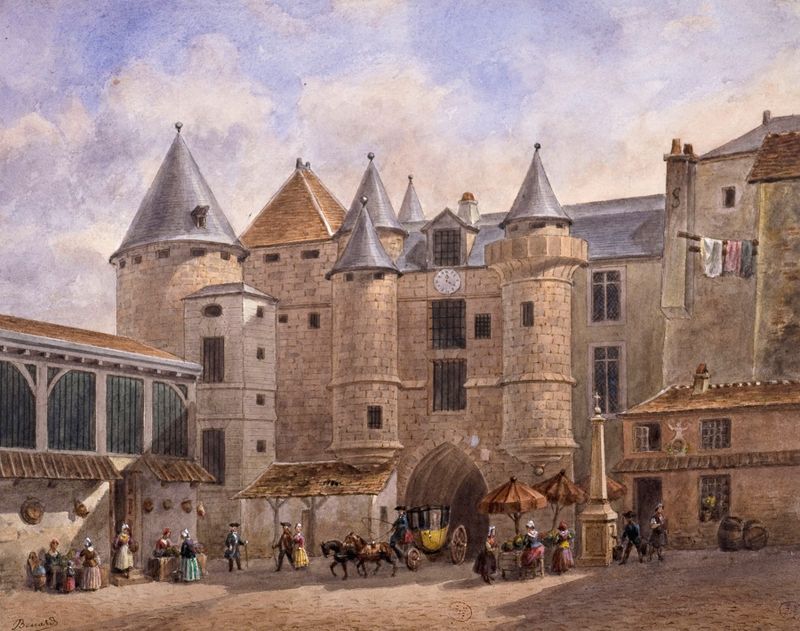
Le Grand Châtelet du XVIIIème siècle.
Auguste-Sébastien Bénard

Place de l’Hôtel de Ville.
Auguste-Sébastien Bénard

Salle souterraine du Palais de Justice.
Auguste-Sébastien Bénard

Voûtes du quai de Gesvres
Auguste-Sébastien Bénard

Monument expiatoire élevé à la mémoire du duc de Berry, à l’emplacement de l’ancien Opéra
Auguste-Sébastien Bénard
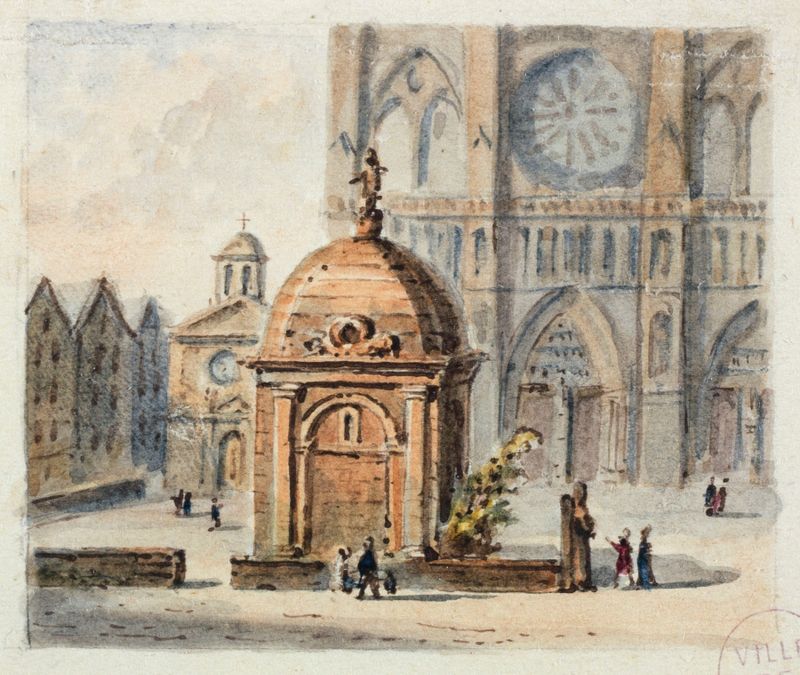
Le parvis de Notre-Dame de Paris
Auguste-Sébastien Bénard

Rue des chantres (entre le quai aux fleurs et la rue Chanoinesse).
Auguste-Sébastien Bénard

L’entrée de l’ancienne forteresse du Grand Châtelet, un jour de Carnaval
Auguste-Sébastien Bénard
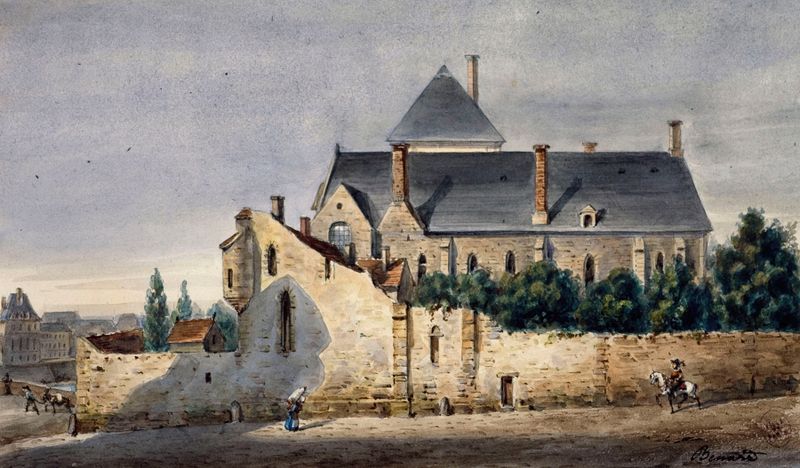
Les restes des bâtiments de l’hôtel du Petit Bourbon.
Auguste-Sébastien Bénard
More Architecture Art
Browse all →
The statue of Liberty
Frédéric Auguste Bartholdi

View of Houses in Delft, Known as ‘The Little Street’
Johannes Vermeer

View of Houses in Delft, Known as ‘The Little Street’
Johannes Vermeer

The Cathedral in Rouen. The portal, Grey Weather
Claude Monet

The yellow house
Vincent van Gogh

The Church in Auvers-sur-Oise, View from the Chevet
Vincent van Gogh