
Char de Namur — History & Facts
In a world often swayed by extremes, balance lends grace to the chaos of life. It is a delicate dance, where every detail—both grand and minute—plays a crucial role. Look to the center of the canvas, where the majestic figure of the char, a grand carriage of the 19th century, commands attention. Notice how it is framed by the lush green landscape, luscious fields stretching toward an inviting horizon.
The artist employs a harmonious palette of earthy tones, with ochre and emerald dancing together under a soft, diffused light that breathes life into every element. The careful composition draws the viewer’s eye, leading it from the elegantly crafted wheels to the ornamental details that evoke a sense of nostalgia. In the juxtaposition of the sturdy carriage against the gentle undulations of the countryside, we find a metaphor for resilience amidst tranquility. The vibrant greens whisper stories of life's growth and renewal, while the gilded details of the char hint at human achievement and aspiration.
This tension creates an emotional resonance, echoing the balance between nature’s beauty and mankind’s industrious spirit—a reminder that progress and harmony can coexist. In 1856, Jules Helbig was deeply immersed in the artistic climate of France, a time when Romanticism was giving way to Realism. He painted Char de Namur during a period marked by a profound exploration of ordinary life and the resurgence of classical themes. While the world around him transformed with industrialization and social change, this piece reflects the tranquility found in nature and tradition, embodying both the artist’s personal journey and the broader narrative of an evolving society.
More Artworks by Jules Helbig
Browse all →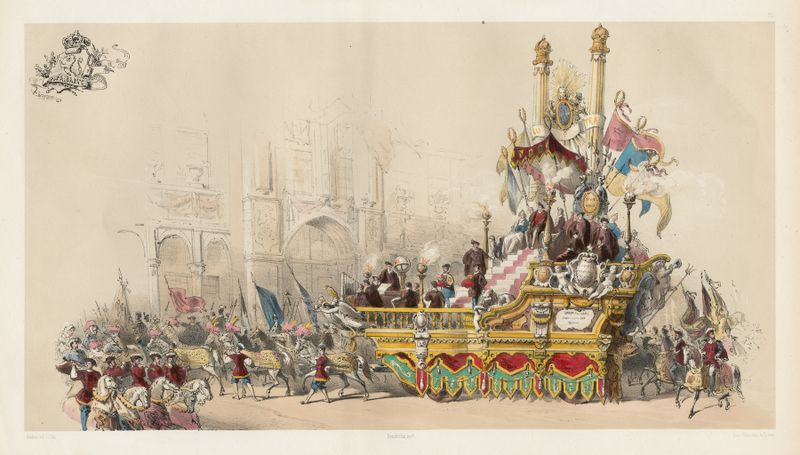
Char du Brabant ou de Charles Quint
Jules Helbig
Réception du roi a la Porte de Laeken
Jules Helbig
Cortége de la Toison d’or envoyé par la ville de Bruges
Jules Helbig

Char de l’Agriculture envoyé par la ville de Nivelles
Jules Helbig

Cortége de la Toison d’or envoyé par la ville de Bruges
Jules Helbig

Décoration de la Place des Palais
Jules Helbig

Char de l’Armurerie Liégeoise
Jules Helbig

Cortége de la Toison d’or envoyé par la ville de Bruges
Jules Helbig
Char des Brasseurs de Louvain
Jules Helbig

Char du Luxembourg ou de Godfroid-de-Bouillon
Jules Helbig





