
Réception du roi a la Porte de Laeken — History & Facts
In the midst of grandiosity, the void of human emotion often lurks beneath the surface, undetected yet palpable. Look to the center of the composition, where the king stands resplendent, adorned in regal attire that glimmers under the soft glow of light. The surrounding figures, draped in muted colors, create an understated contrast, drawing your attention to the monarch's opulence. Notice the intricate details in the fabric, the glint of gold threading, and the carefully rendered expressions of the onlookers, whose faces reveal a spectrum of hope and trepidation, underscoring the complexity of power. The tension in this work lies not just in the celebration of royal authority but in the subtle discord between aspiration and reality.
The crowd’s varying reactions speak volumes: admiration, envy, and apprehension are all encapsulated in their gazes. This scene serves as a poignant reminder of the heavy burden that accompanies grandeur, suggesting that beneath the public adulation, the weight of expectation can be suffocating, leaving a void of authenticity. Created in 1856, the piece emerged from the artistic milieu of Belgium during a period of national pride and complex political undercurrents. Helbig, at this time, was navigating the balance between historical representation and his personal artistic vision, capturing not just events but the shared nuances of human experience.
The painting stands as both a historical record and an exploration of the deeper truths that lie beneath the veneer of society's pomp and circumstance.
More Artworks by Jules Helbig
Browse all →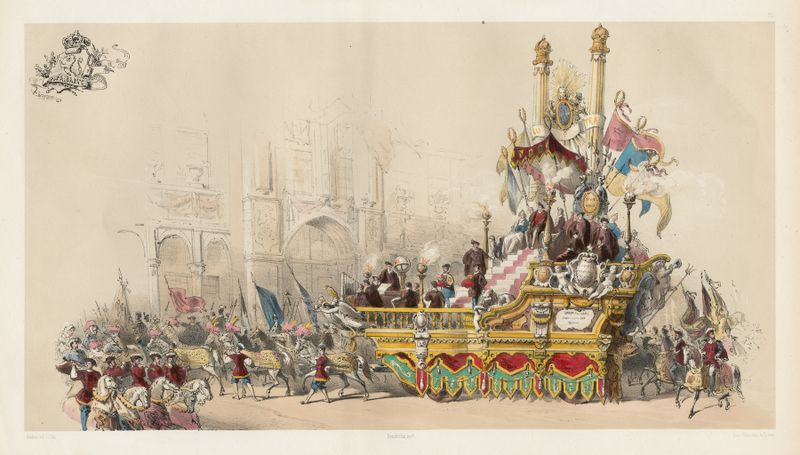
Char du Brabant ou de Charles Quint
Jules Helbig
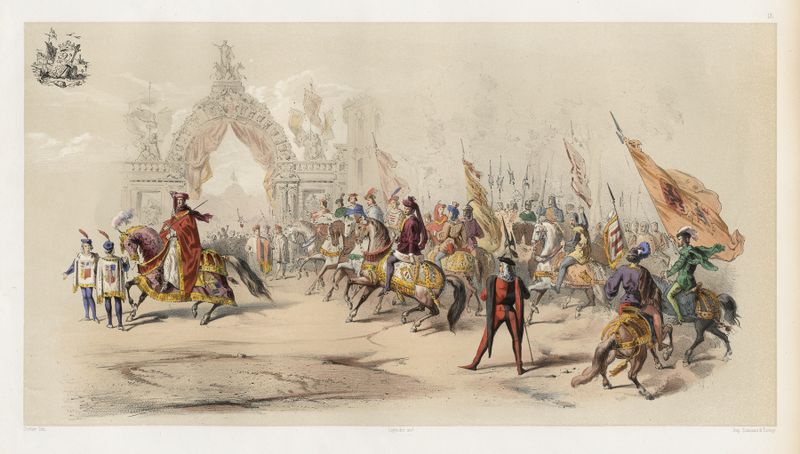
Cortége de la Toison d’or envoyé par la ville de Bruges
Jules Helbig

Char de l’Agriculture envoyé par la ville de Nivelles
Jules Helbig

Cortége de la Toison d’or envoyé par la ville de Bruges
Jules Helbig

Décoration de la Place des Palais
Jules Helbig

Char de l’Armurerie Liégeoise
Jules Helbig

Cortége de la Toison d’or envoyé par la ville de Bruges
Jules Helbig
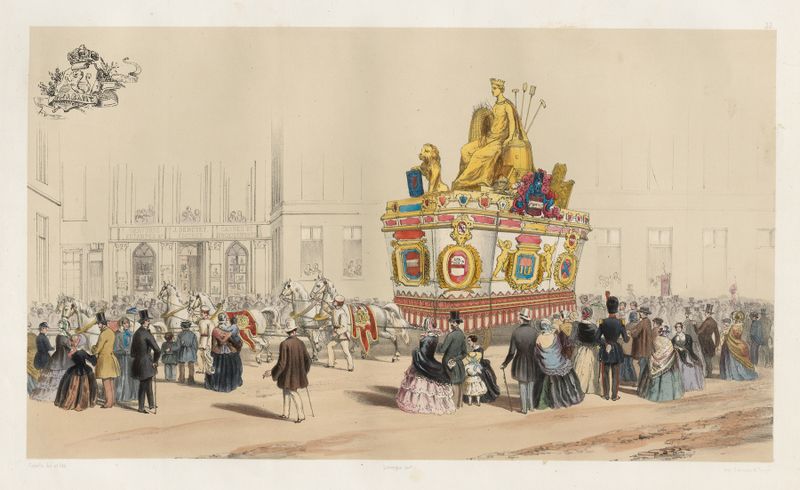
Char des Brasseurs de Louvain
Jules Helbig

Char du Luxembourg ou de Godfroid-de-Bouillon
Jules Helbig
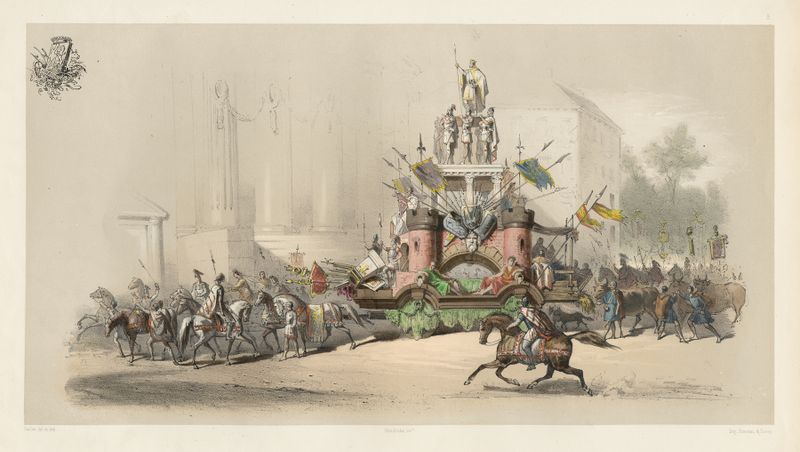
Char du Limbourg ou des Francs Saliens
Jules Helbig
More Historical Art
Browse all →
The Night Watch Militia Company of District II under the Command of Captain Frans Banninck Cocq
Rembrandt van Rijn

Lincoln Memorial
Henry Bacon

The Third of May 1808
Francisco de Goya

Isaac and Rebecca, Known as ‘The Jewish Bride’
Rembrandt van Rijn

The Charge of the Mamelukes (1814)
Francisco de Goya

De vier ruiters van de apocalyps
Albrecht Dürer