
Char du Brabant ou de Charles Quint — History & Facts
Is this a mirror — or a memory? In Char du Brabant ou de Charles Quint, a moment of historical reverie unfolds, inviting contemplation of power, legacy, and the passage of time. Look to the center, where the grandeur of the imperial carriage demands attention, its ornate details glistening like the splendor of a bygone era. The artist employs rich, warm hues that evoke a sense of nostalgia, while the intricate brushwork adds texture, making the golden accents seem to shimmer in the light. Notice how the figures surrounding the carriage are painted with more muted tones, contrasting the vibrancy of the carriage, reflecting their roles as mere shadows in the presence of greatness. Each figure tells a story, their postures conveying a blend of reverence and duty, underscoring the weight of history wrapped in this tableau.
The gentle tension between the ornate details of the carriage and the solemn expressions of the attendants suggests a universal theme: the burdens of leadership and the fleeting nature of glory. As the eye wanders, it becomes evident that this is not merely a royal procession but a meditation on the ephemeral nature of power itself. Jules Helbig created this work in 1856, amidst a France that was deeply influenced by Romanticism and historical themes in art. During this period, Helbig was grappling with his own transitions, reflecting on the intersection of history and artistic expression.
His oeuvre was marked by a fascination with the past, and this piece stands as a testament to a world where the echoes of Charles Quint’s reign still resonate, inviting viewers to explore their own connections to history.
More Artworks by Jules Helbig
Browse all →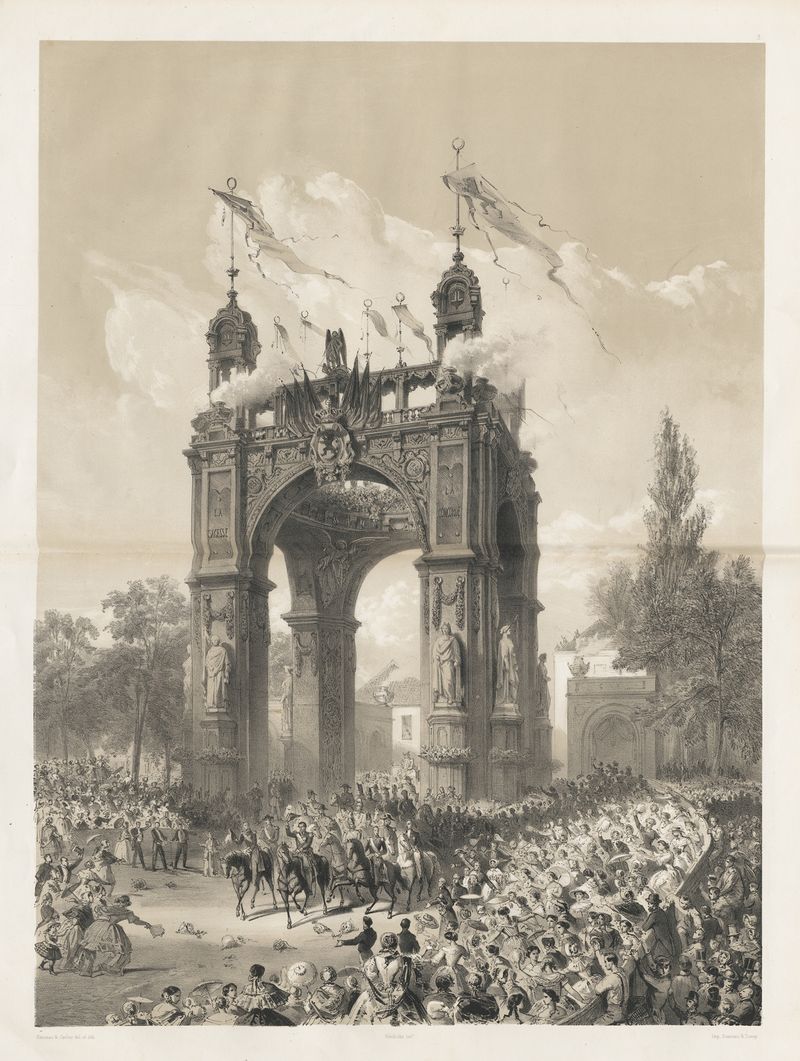
Réception du roi a la Porte de Laeken
Jules Helbig
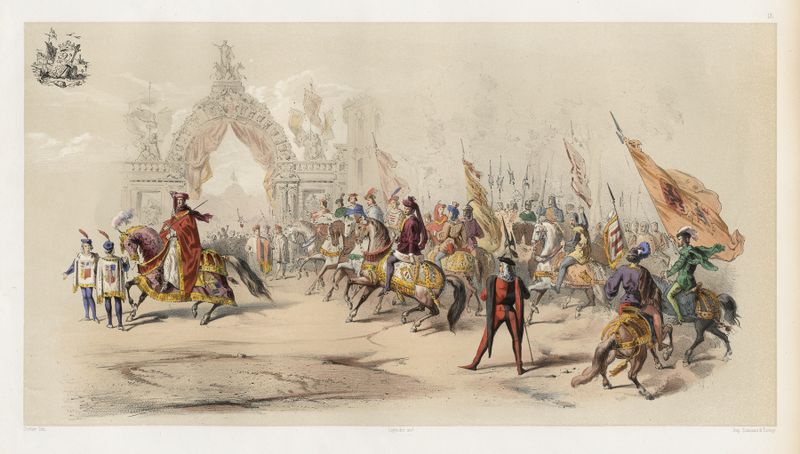
Cortége de la Toison d’or envoyé par la ville de Bruges
Jules Helbig

Char de l’Agriculture envoyé par la ville de Nivelles
Jules Helbig

Cortége de la Toison d’or envoyé par la ville de Bruges
Jules Helbig

Décoration de la Place des Palais
Jules Helbig

Char de l’Armurerie Liégeoise
Jules Helbig

Cortége de la Toison d’or envoyé par la ville de Bruges
Jules Helbig
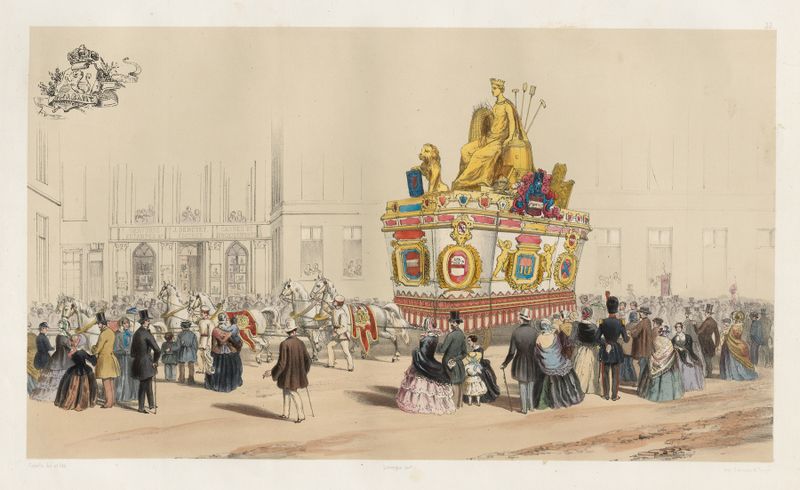
Char des Brasseurs de Louvain
Jules Helbig

Char du Luxembourg ou de Godfroid-de-Bouillon
Jules Helbig
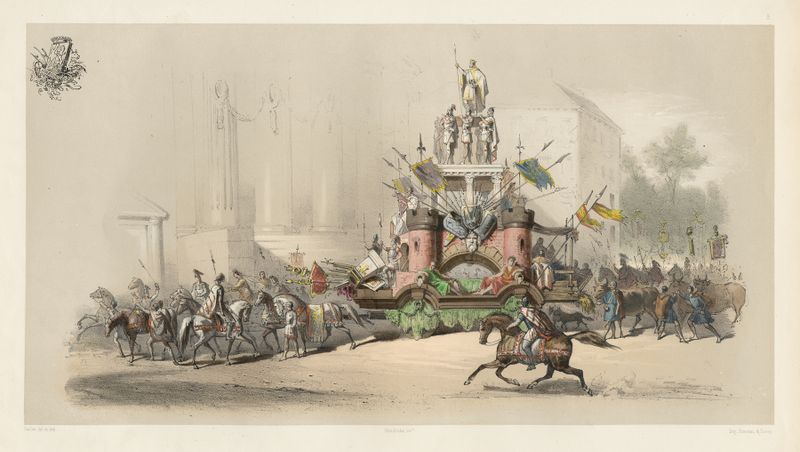
Char du Limbourg ou des Francs Saliens
Jules Helbig
More Historical Art
Browse all →
The Night Watch Militia Company of District II under the Command of Captain Frans Banninck Cocq
Rembrandt van Rijn

Lincoln Memorial
Henry Bacon

The Third of May 1808
Francisco de Goya

Isaac and Rebecca, Known as ‘The Jewish Bride’
Rembrandt van Rijn

The Charge of the Mamelukes (1814)
Francisco de Goya

De vier ruiters van de apocalyps
Albrecht Dürer