
Cortége de la Toison d’or envoyé par la ville de Bruges — History & Facts
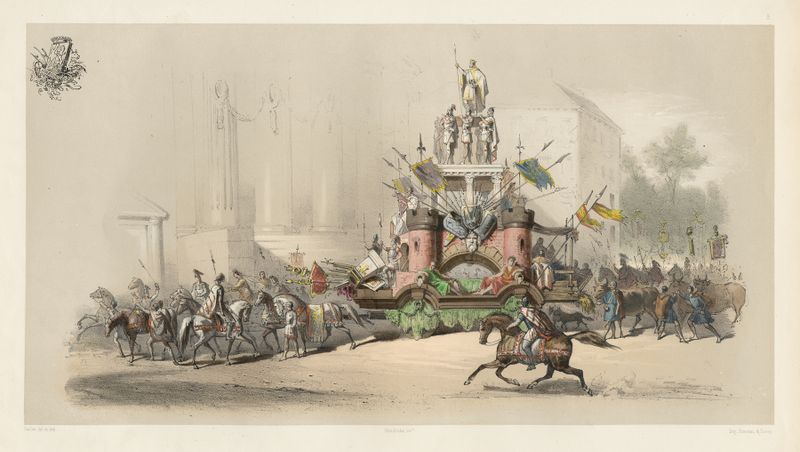
In the world of art, decay reveals the fragility of splendor and the inevitability of time's passage. Look to the center where the procession unfolds, a grand spectacle echoing through ages. The vibrancy of reds and golds contrasts starkly with the muted tones in the background. Notice how Helbig captures the movement of figures in flowing garments, their drapery suggesting both grandeur and a ghostly whisper of what once was.
Light cascades from above, illuminating the expressions of both exuberance and solemnity on the faces of the participants, drawing the eye toward their fleeting moment of triumph. Yet within the elegance lies an undercurrent of melancholic reflection. Each figure, caught in a triumphant march, also embodies a hint of decay—their revelry a reminder of impermanence. The meticulous detailing of the banners, while bright, shows signs of wear, hinting at the passage of time that erodes even the most celebrated moments.
The juxtaposition of celebration against the backdrop of subtle decay invites contemplation on what we cherish and what we inevitably lose. In 1856, during a time when Romanticism still influenced the art world, the artist was immersed in themes of memory and glory. Living in Belgium, he sought to capture the splendor of historical events through his paintings, reflecting a society both proud of its heritage and acutely aware of the passage of time. This work was part of a broader European fascination with national identity and celebration, caught between the thriving present and the shadow of history.
More Artworks by Jules Helbig
Browse all →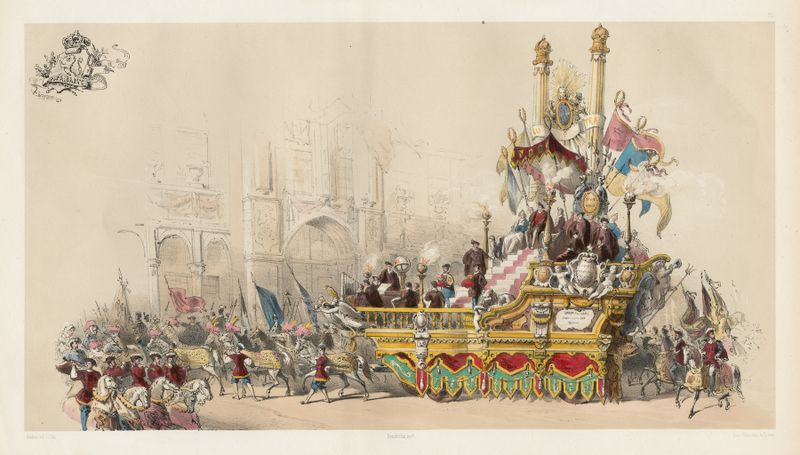
Char du Brabant ou de Charles Quint
Jules Helbig
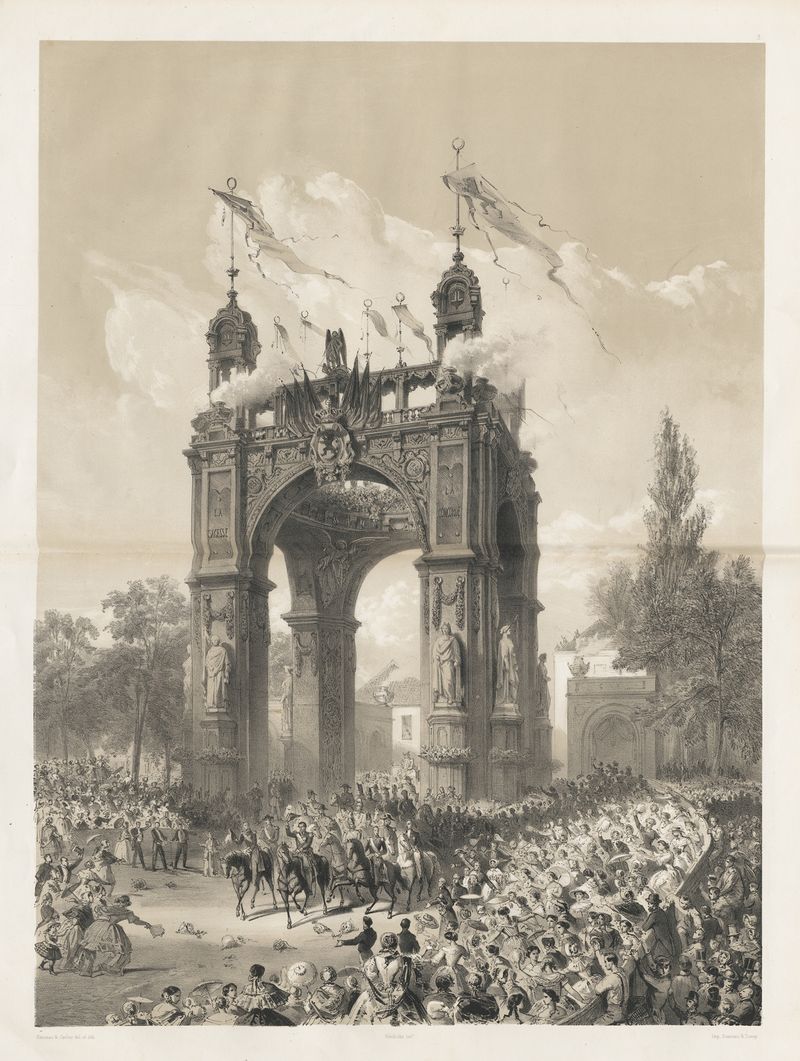
Réception du roi a la Porte de Laeken
Jules Helbig
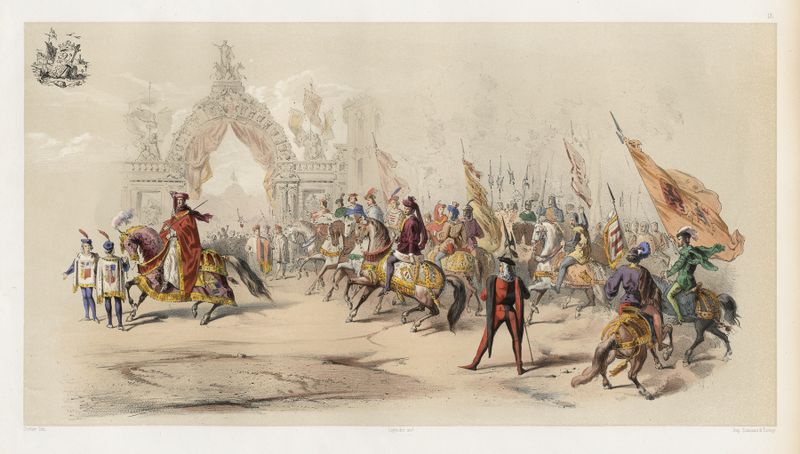
Cortége de la Toison d’or envoyé par la ville de Bruges
Jules Helbig

Char de l’Agriculture envoyé par la ville de Nivelles
Jules Helbig

Décoration de la Place des Palais
Jules Helbig

Char de l’Armurerie Liégeoise
Jules Helbig

Cortége de la Toison d’or envoyé par la ville de Bruges
Jules Helbig
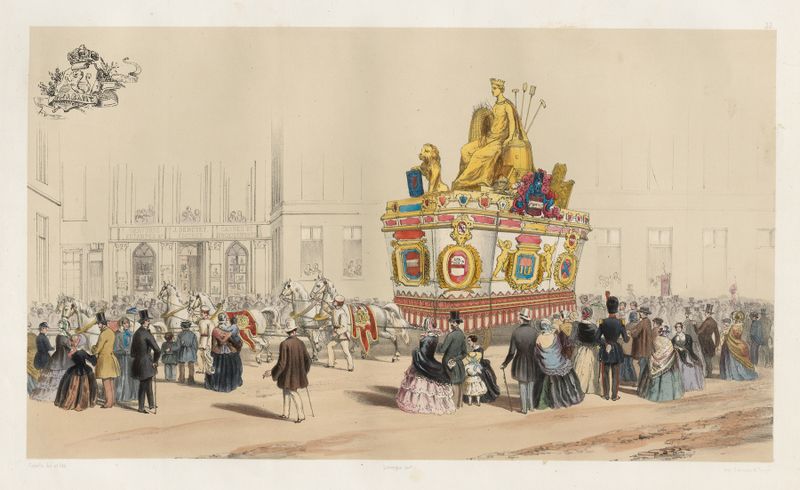
Char des Brasseurs de Louvain
Jules Helbig

Char du Luxembourg ou de Godfroid-de-Bouillon
Jules Helbig
Char du Limbourg ou des Francs Saliens
Jules Helbig
More Historical Art
Browse all →
The Night Watch Militia Company of District II under the Command of Captain Frans Banninck Cocq
Rembrandt van Rijn

Lincoln Memorial
Henry Bacon

The Third of May 1808
Francisco de Goya

Isaac and Rebecca, Known as ‘The Jewish Bride’
Rembrandt van Rijn

The Charge of the Mamelukes (1814)
Francisco de Goya

De vier ruiters van de apocalyps
Albrecht Dürer