
Char de l’Armurerie Liégeoise — History & Facts
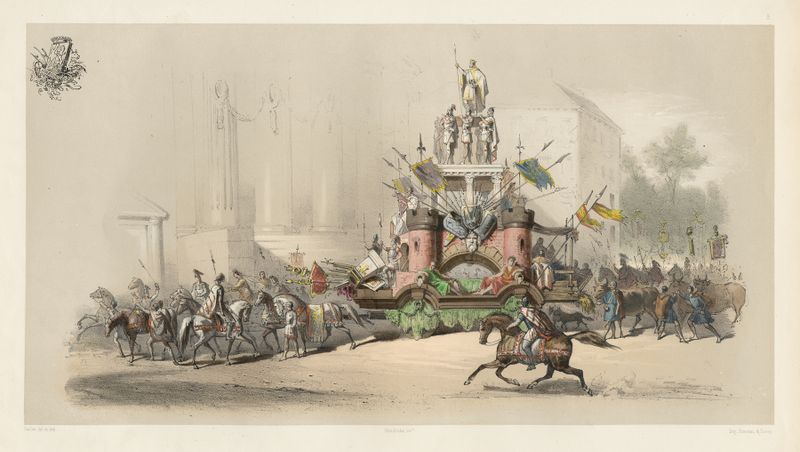
In a world marked by upheaval, revolutions churn beneath the surface, waiting for a moment to emerge. The essence of turmoil and transformation permeates every brushstroke, echoing the cries of a generation longing for change. Look closely at the powerful figures emerging from the shadowy depths of Char de l’Armurerie Liégeoise. Your gaze is drawn first to the intricate detailing of the wagon, a symbol of both mobility and conflict.
Notice how the muted palette of browns and deep greens envelops the scene, creating a somber atmosphere that reflects the gravity of the moment. The figures, with their weary expressions and rigid postures, convey a sense of urgency, while the drab colors ground the work in reality, contrasting with the profound aspirations associated with revolution. Deeper meanings unfold as you explore the tension between hope and despair encapsulated in this composition. The wagon, often a simple mode of transportation, symbolizes the weight of history and the burdens carried by those who yearn for freedom.
Subtle gestures—a clenched fist, a downcast eye—speak volumes about the emotional stakes at play, illustrating the intimate connection between the subjects and their struggle for liberation. The contrast between light and shadow further emphasizes this struggle, hinting at the conflict that lies ahead. Jules Helbig painted this work in 1856, amidst a Europe ripe with revolutionary fervor. The artist, based in Belgium, was influenced by the socio-political turbulence surrounding him, including the Belgian Revolution of 1830 and the broader waves of change sweeping across the continent.
This moment in history propelled artists like him to capture the spirit of resistance, reflecting their own experiences and aspirations through evocative imagery.
More Artworks by Jules Helbig
Browse all →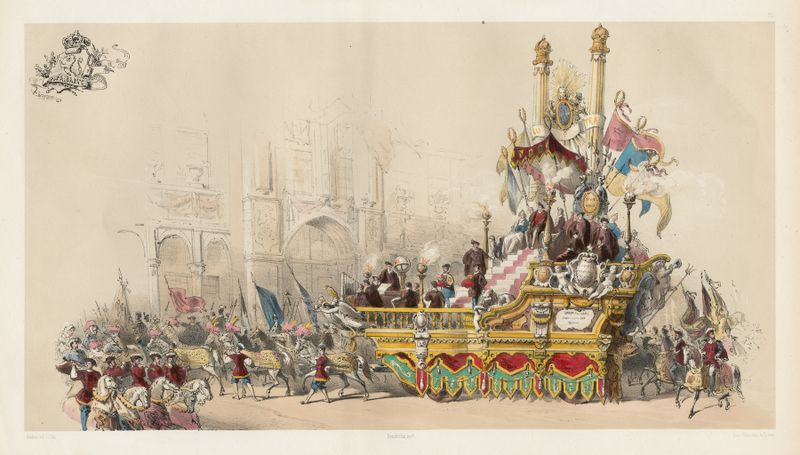
Char du Brabant ou de Charles Quint
Jules Helbig
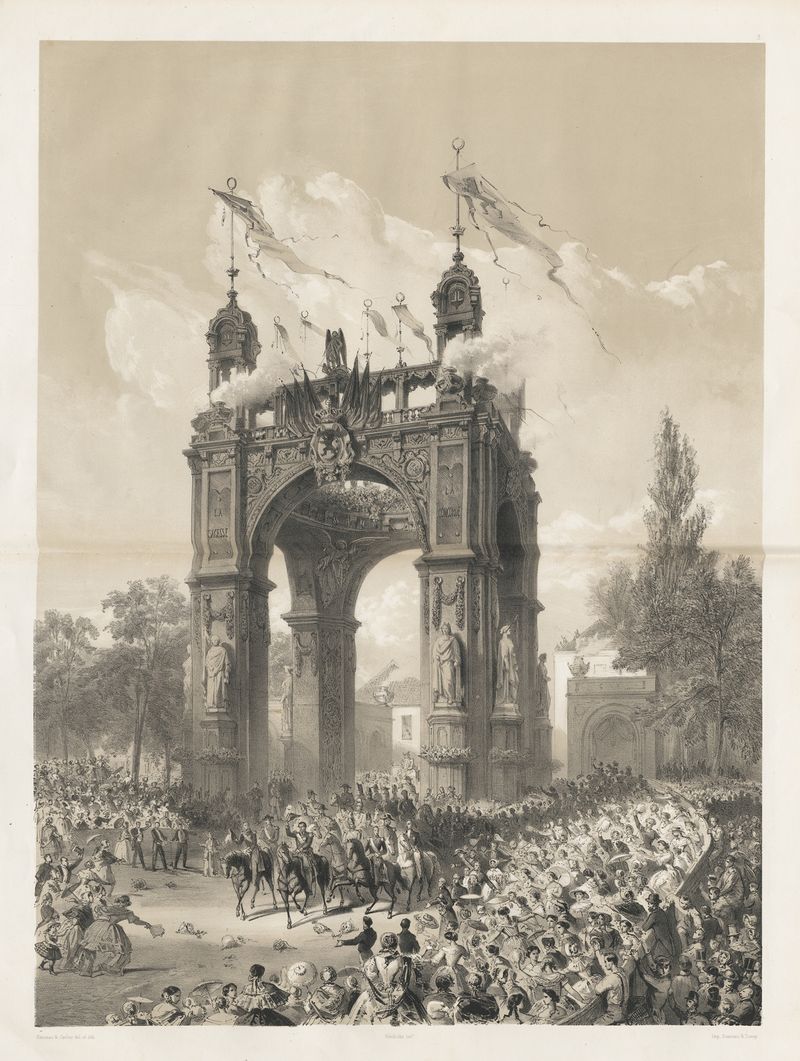
Réception du roi a la Porte de Laeken
Jules Helbig
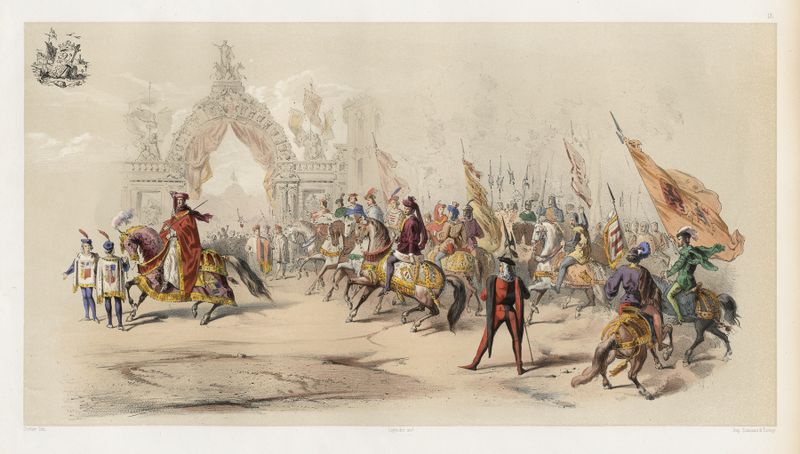
Cortége de la Toison d’or envoyé par la ville de Bruges
Jules Helbig

Char de l’Agriculture envoyé par la ville de Nivelles
Jules Helbig

Cortége de la Toison d’or envoyé par la ville de Bruges
Jules Helbig

Décoration de la Place des Palais
Jules Helbig

Cortége de la Toison d’or envoyé par la ville de Bruges
Jules Helbig
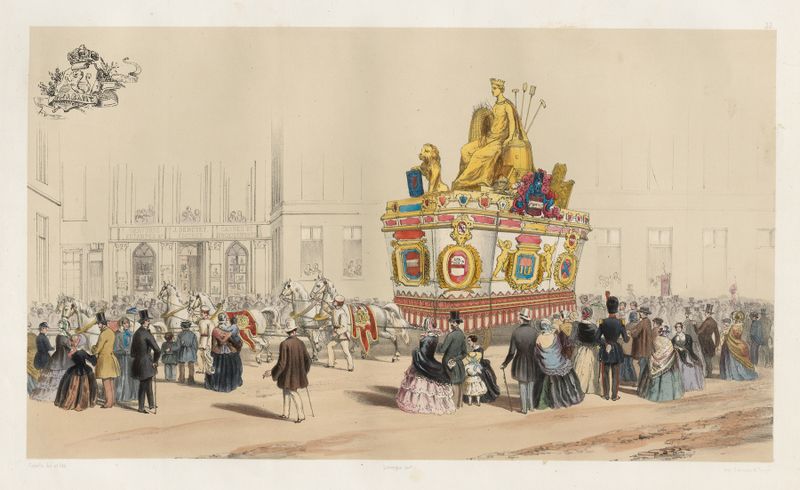
Char des Brasseurs de Louvain
Jules Helbig

Char du Luxembourg ou de Godfroid-de-Bouillon
Jules Helbig
Char du Limbourg ou des Francs Saliens
Jules Helbig
More Historical Art
Browse all →
The Night Watch Militia Company of District II under the Command of Captain Frans Banninck Cocq
Rembrandt van Rijn

Lincoln Memorial
Henry Bacon

The Third of May 1808
Francisco de Goya

Isaac and Rebecca, Known as ‘The Jewish Bride’
Rembrandt van Rijn

The Charge of the Mamelukes (1814)
Francisco de Goya

De vier ruiters van de apocalyps
Albrecht Dürer