
Cortége de la Toison d’or envoyé par la ville de Bruges — History & Facts
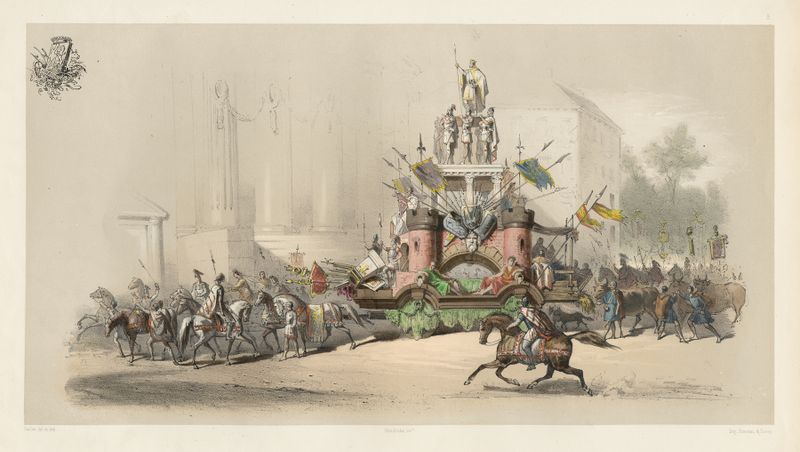
Is this a mirror — or a memory? In Cortége de la Toison d’or envoyé par la ville de Bruges, the whispers of a bygone era echo through the splendid procession, beckoning viewers to consider the ephemeral nature of glory and the shadows of loss that linger in its wake. Look to the center of the composition, where a lavishly adorned figure commands attention, embodying the regality of a historical celebration. Surrounding him, a procession of elegantly dressed nobles and dignitaries flows with a rhythmic grace, their garments rendered in rich, vibrant hues. The interplay of light dances across the scene, highlighting the intricate details of fabric and embellishments while casting deep shadows that hint at the weight of their collective history. Delve deeper into the emotive layers at play.
Observe the expressions of the participants—some adorned with smiles, others with furrowed brows—as if they are caught between the joy of celebration and the specter of what they have sacrificed. The contrast between the opulence of the scene and the somber undertones of the background suggests an awareness of fleeting moments and the inevitability of change. Each stitch in the fabric of their costumes tells a story, merging grandeur with a subtle ache of nostalgia. Painted in 1856 during a period of romantic nationalism, the work reflects the artist's deep engagement with themes of heritage and historical memory.
Helbig, influenced by the burgeoning interest in medieval history and the revival of traditional pageantry in art, sought to capture the essence of Bruges' cultural identity amid a changing landscape. This was a time when artists were beginning to grapple with the implications of modernity, making the poignant reflections on loss within this grand scene all the more resonant.
More Artworks by Jules Helbig
Browse all →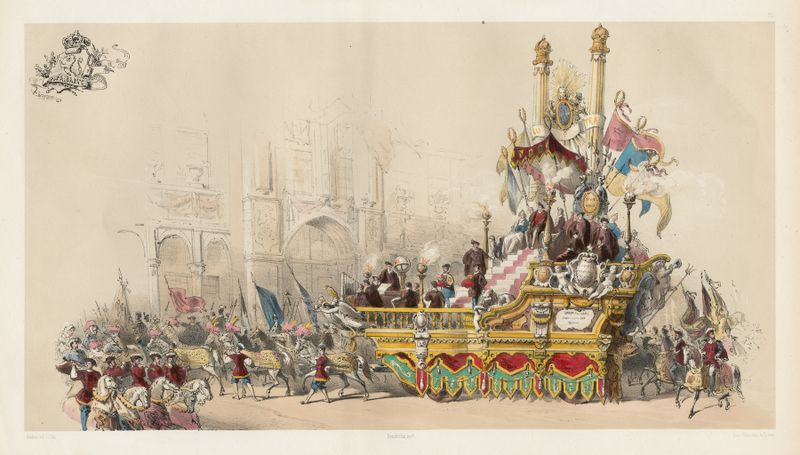
Char du Brabant ou de Charles Quint
Jules Helbig
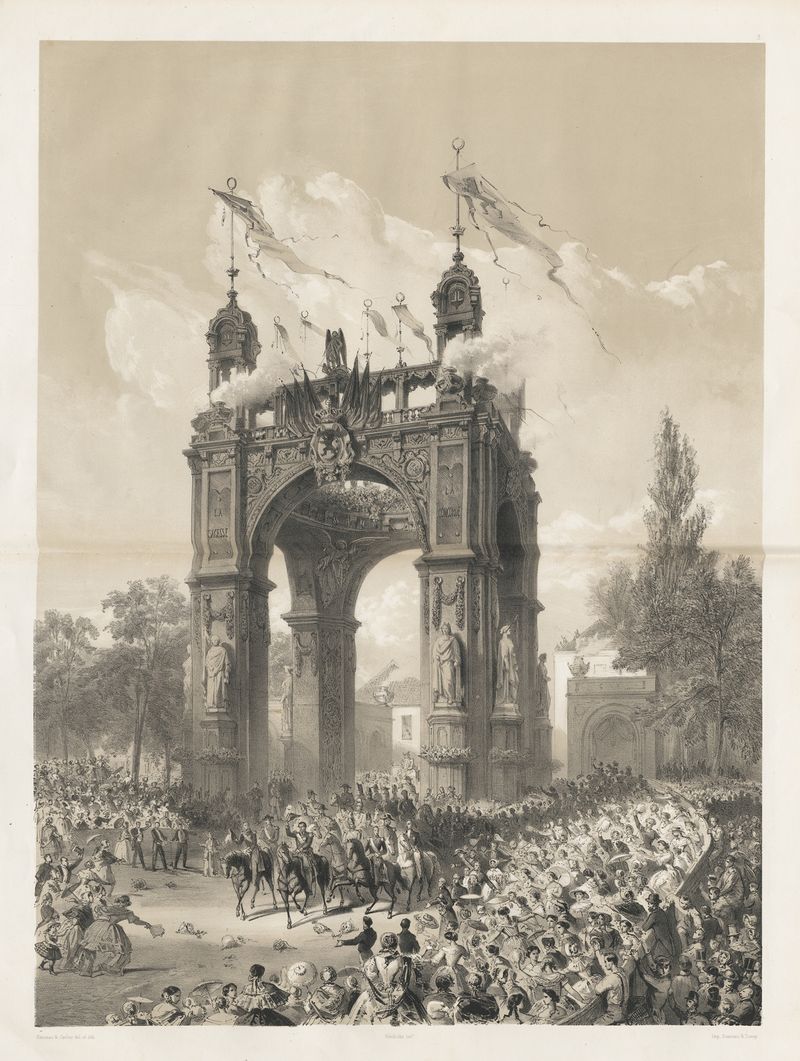
Réception du roi a la Porte de Laeken
Jules Helbig
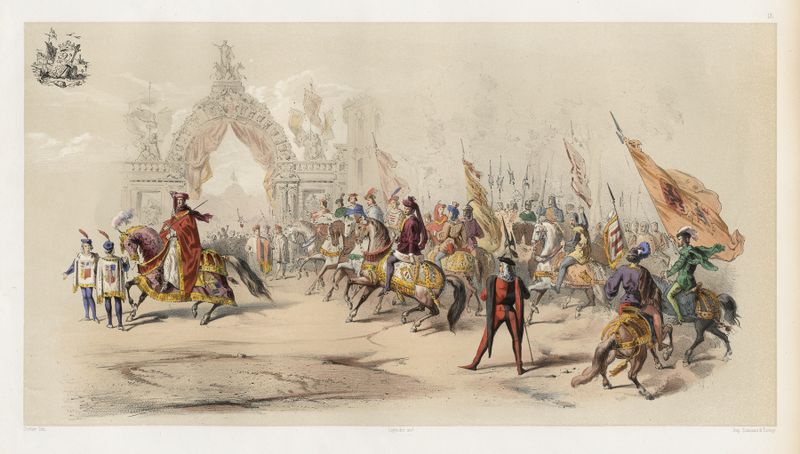
Cortége de la Toison d’or envoyé par la ville de Bruges
Jules Helbig

Char de l’Agriculture envoyé par la ville de Nivelles
Jules Helbig

Cortége de la Toison d’or envoyé par la ville de Bruges
Jules Helbig

Décoration de la Place des Palais
Jules Helbig

Char de l’Armurerie Liégeoise
Jules Helbig
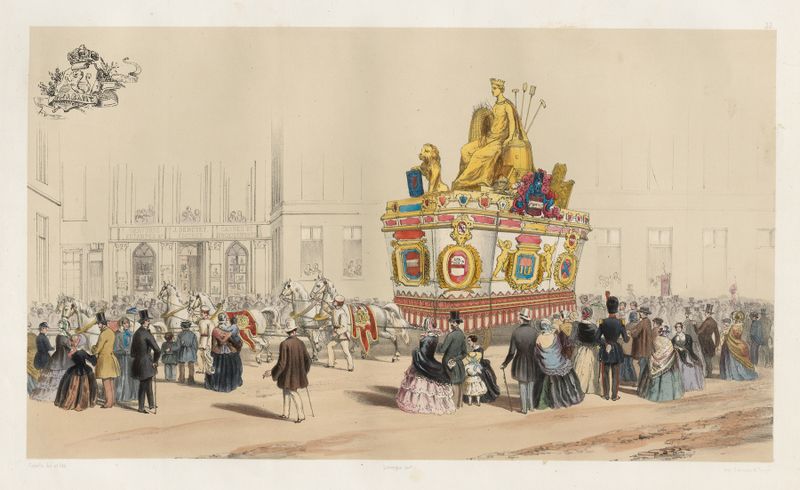
Char des Brasseurs de Louvain
Jules Helbig

Char du Luxembourg ou de Godfroid-de-Bouillon
Jules Helbig
Char du Limbourg ou des Francs Saliens
Jules Helbig
More Historical Art
Browse all →
The Night Watch Militia Company of District II under the Command of Captain Frans Banninck Cocq
Rembrandt van Rijn

Lincoln Memorial
Henry Bacon

The Third of May 1808
Francisco de Goya

Isaac and Rebecca, Known as ‘The Jewish Bride’
Rembrandt van Rijn

The Charge of the Mamelukes (1814)
Francisco de Goya

De vier ruiters van de apocalyps
Albrecht Dürer