
Christ and the Samaritan Woman — History & Facts
Few biblical encounters have inspired as much artistic fascination as the meeting between Christ and the Samaritan woman at the well, but in the hands of Duccio di Buoninsegna, this scene becomes a rare window into the gentle revolution of early Italian painting. Scholars remain uncertain about the exact date and commission of Christ and the Samaritan Woman, yet it stands out for its delicate narrative focus—a hallmark of Duccio’s Siena, where storytelling and human emotion began to eclipse the rigid hierarchies of Byzantine tradition. The painting’s survival is remarkable, as many Sienese panel works from this era have been lost or fragmented over centuries. At the heart of the image, Duccio captures the moment from the Gospel of John when Jesus, weary from travel, asks a Samaritan woman for water.
The well, rendered as a simple stone structure, anchors the composition, while Christ’s right hand is raised in gentle instruction, echoing his words about "living water." The woman’s tilted head and attentive gaze signal both surprise and dawning understanding, her jar a symbol of daily life transformed by spiritual meaning. Unlike later, more theatrical versions by artists such as Veronese, Duccio’s approach is intimate and restrained, focusing on the quiet exchange rather than grand gestures or dramatic backdrops. The precise journey of this panel is not fully documented, but its style and technique link it closely to Duccio’s celebrated Maestà altarpiece, suggesting it may have formed part of a larger narrative cycle. Works like this were often commissioned by religious institutions in Siena during the early 14th century, intended to educate and inspire the faithful.
Over time, pieces were separated, sold, or repurposed, and many now reside in museum collections far from their original context. Today, Christ and the Samaritan Woman is valued not only as a rare survival of Sienese painting, but also as a testament to Duccio’s pioneering vision—where sacred story and human presence meet in quiet conversation.
More Artworks by Duccio di Buoninsegna
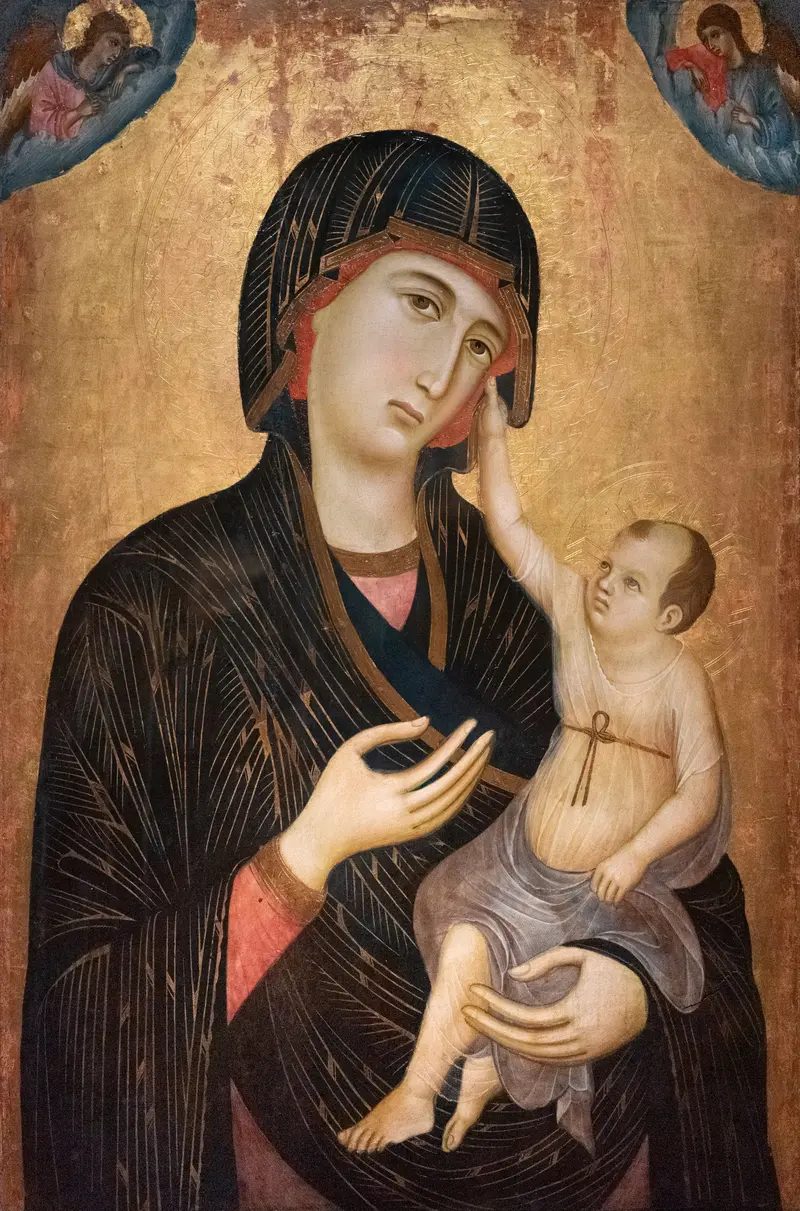
Madonna di Crevole
Duccio di Buoninsegna
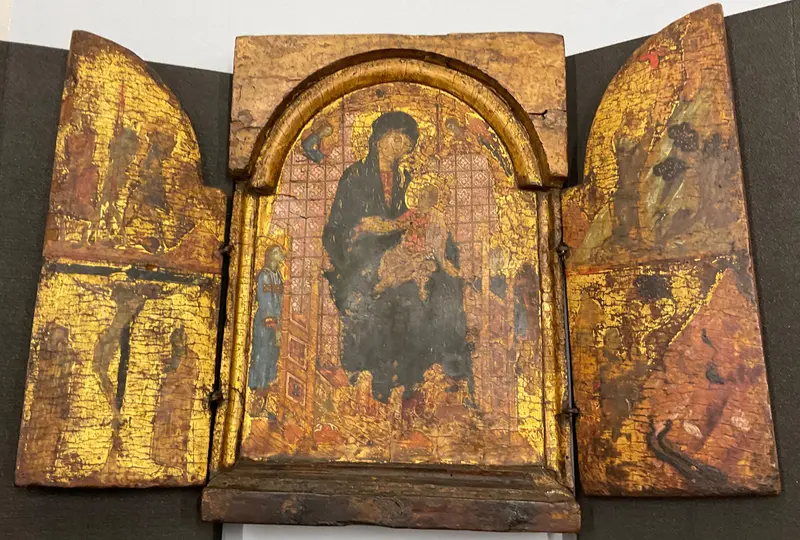
Virgin and Child, with Scenes from the Lives of Christ and Saint Francis
Duccio di Buoninsegna
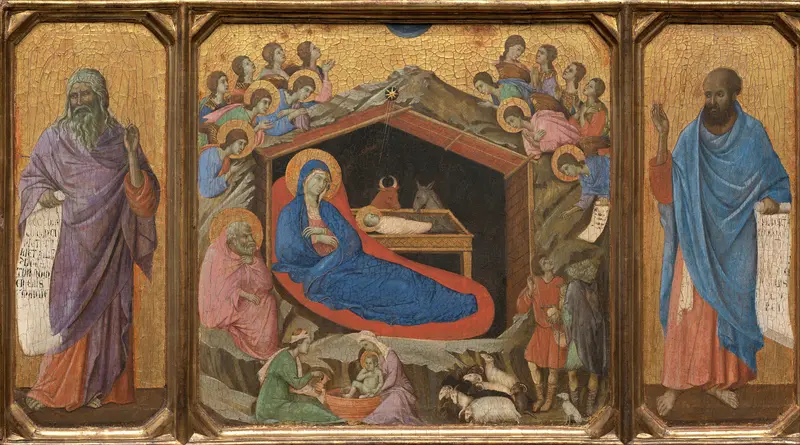
The Nativity with the Prophets Isaiah and Ezekiel
Duccio di Buoninsegna
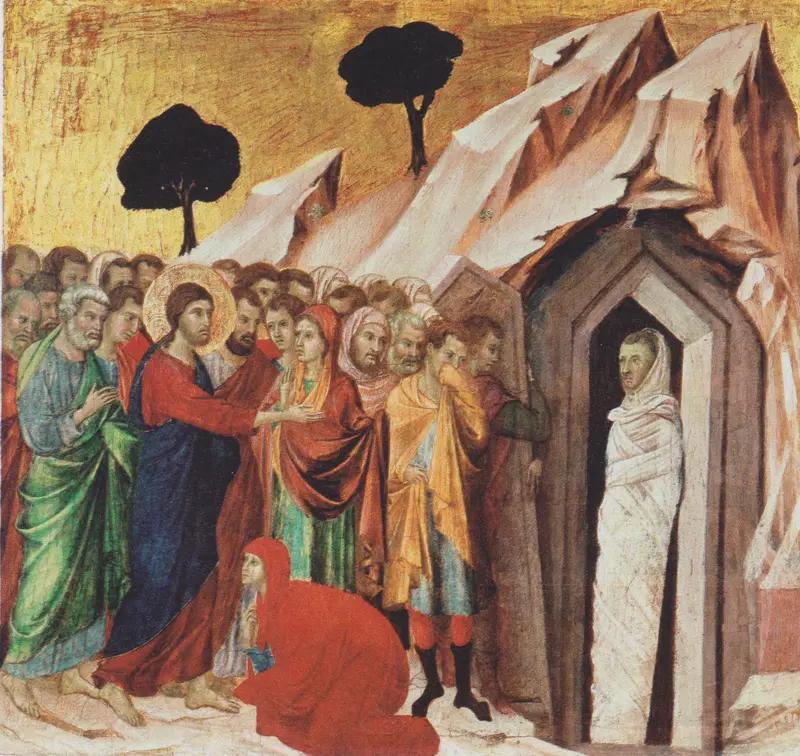
The Raising of Lazarus
Duccio di Buoninsegna
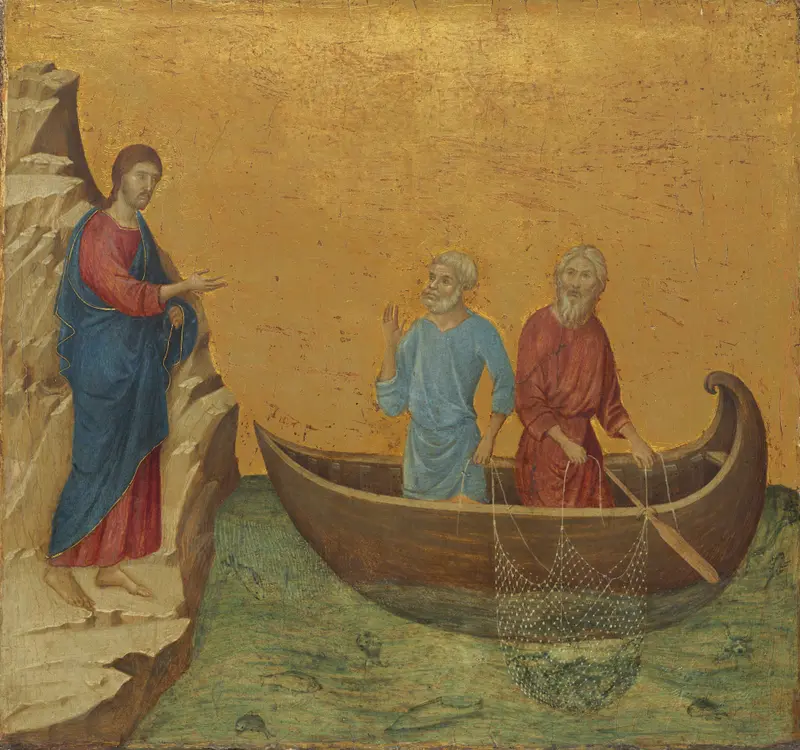
The Calling of the Apostles Peter and Andrew
Duccio di Buoninsegna





