
Madonna di Crevole — History & Facts
Madonna di Crevole is a tempera on panel painting created by Duccio di Buoninsegna around 1283. This work dates from the early period of Duccio’s career, when he was active in Siena and establishing his reputation as a leading painter of the Italian Gothic. The painting is known for its devotional subject and is considered an important example of Marian imagery from late thirteenth-century Tuscany. The image depicts the Virgin Mary holding the Christ Child, who reaches up to touch her face.
The Virgin is shown in a dark blue mantle with gold highlights, set against a gold ground that emphasizes her sacred status. Two angels appear in the upper corners, their presence reinforcing the divine context of the scene. The figures are rendered with delicate linear detail, especially in the drapery and the expressive faces, characteristic of Duccio’s style and the Sienese school’s emphasis on grace and spirituality. The Madonna di Crevole was originally created for the church of Crevole, near Siena, and is one of the earliest securely attributed works by Duccio.
Over the centuries, it has been recognized as a key work in the development of Italian panel painting, influencing later Sienese artists. The painting is now preserved as a significant example of early Italian devotional art, reflecting both the religious culture of its time and the artist’s evolving technique.
More Artworks by Duccio di Buoninsegna
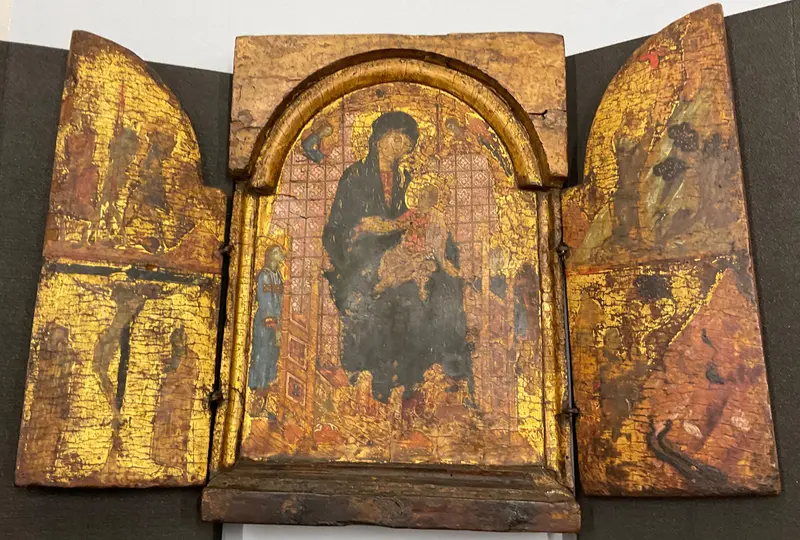
Virgin and Child, with Scenes from the Lives of Christ and Saint Francis
Duccio di Buoninsegna
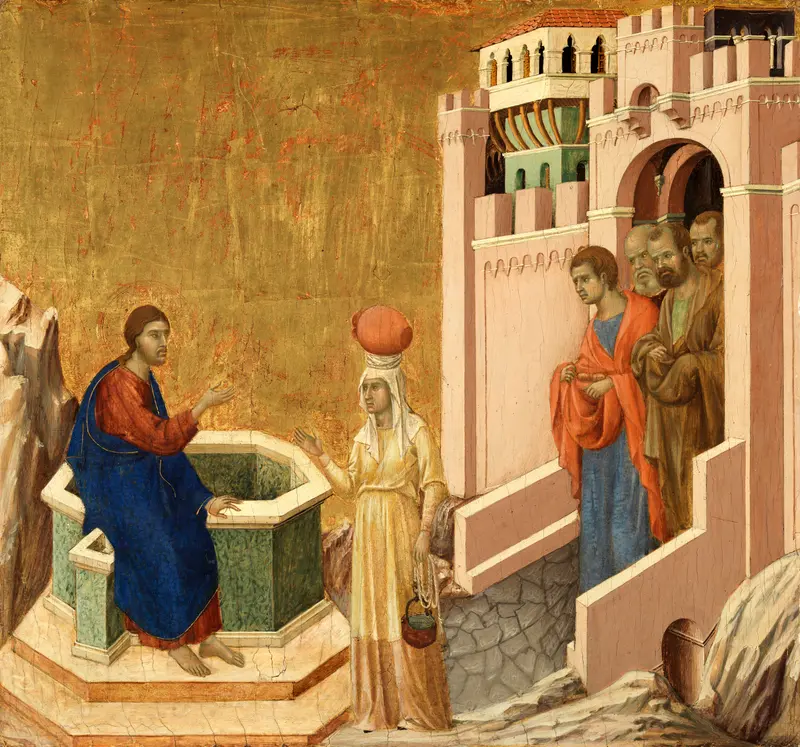
Christ and the Samaritan Woman
Duccio di Buoninsegna
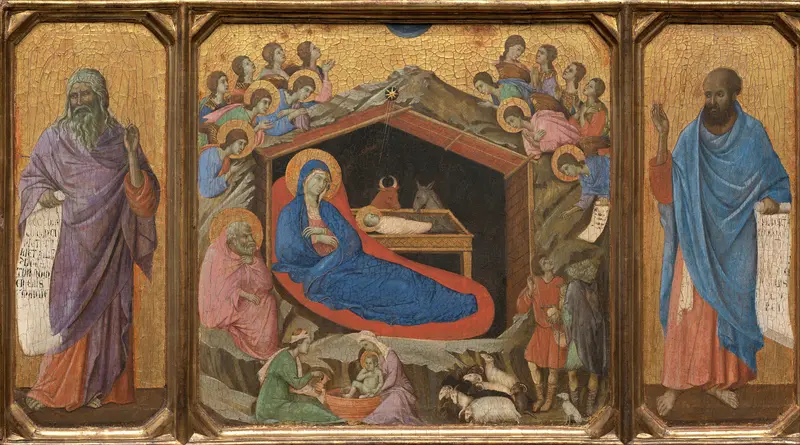
The Nativity with the Prophets Isaiah and Ezekiel
Duccio di Buoninsegna
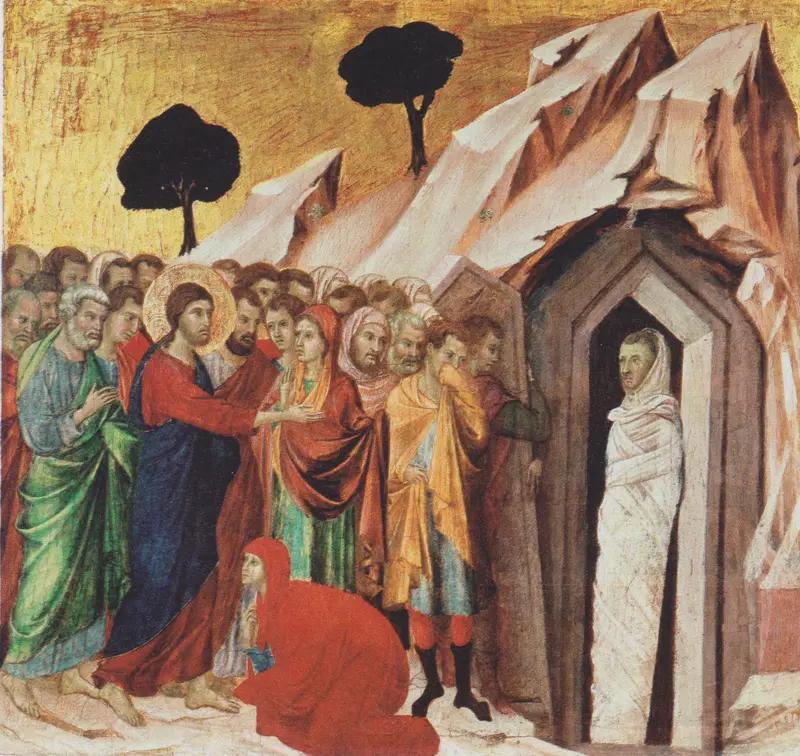
The Raising of Lazarus
Duccio di Buoninsegna
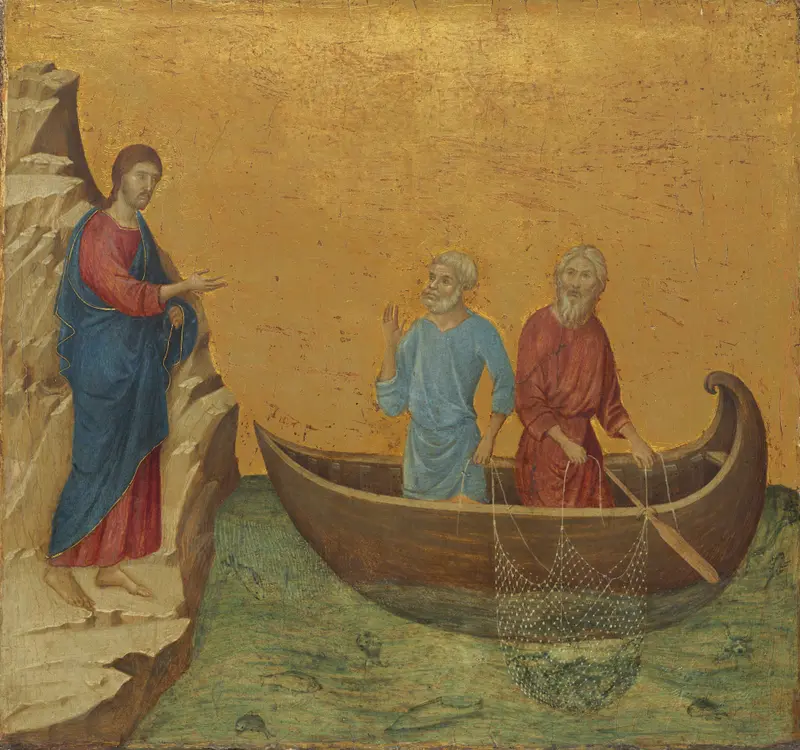
The Calling of the Apostles Peter and Andrew
Duccio di Buoninsegna





