
The Raising of Lazarus — History & Facts
Few scenes in Christian art have inspired as much fascination as the moment Christ calls Lazarus from the tomb, and Duccio di Buoninsegna’s The Raising of Lazarus stands among the earliest surviving treatments of this miracle. Painted in Siena during the early 14th century, this panel once formed part of the grand Maestà altarpiece, a monumental commission for Siena Cathedral that brought together dozens of biblical narratives. The story of Lazarus’s return from death was not only a testament to Christ’s power but also a subject of theological debate in Duccio’s time, as preachers and scholars discussed its meaning for the promise of resurrection. Duccio chooses the instant when Christ, arm outstretched, commands Lazarus to rise.
The figures cluster tightly: Christ stands at the left, his right hand raised in a gesture of authority and blessing, while the astonished onlookers recoil or lean forward, their faces alive with wonder or disbelief. Lazarus, still wrapped in his burial shroud, emerges from the dark mouth of the tomb, his stiff, corpse-like pose contrasting with the animated gestures around him. The gold background, a hallmark of Byzantine tradition, sets the scene outside of earthly time, while the rocky landscape and stylized architecture root it in the world of Siena.
Compared to Giotto’s later Raising of Lazarus in the Scrovegni Chapel, Duccio’s version is more restrained, focusing on the spiritual drama rather than physical realism. The original Maestà was dismantled in the 18th century, and its panels dispersed across Europe and America; The Raising of Lazarus now resides in the Kimbell Art Museum in Fort Worth, Texas. While the exact date and circumstances of its painting remain uncertain, scholars agree it was completed between 1308 and 1311, during Duccio’s most productive years. The work’s delicate tempera technique and gold leaf are typical of Sienese painting, reflecting the city’s taste for elegance and narrative clarity.
Today, this panel is prized not only as a fragment of a lost masterpiece but also as a window into the devotional and artistic life of medieval Siena.
More Artworks by Duccio di Buoninsegna
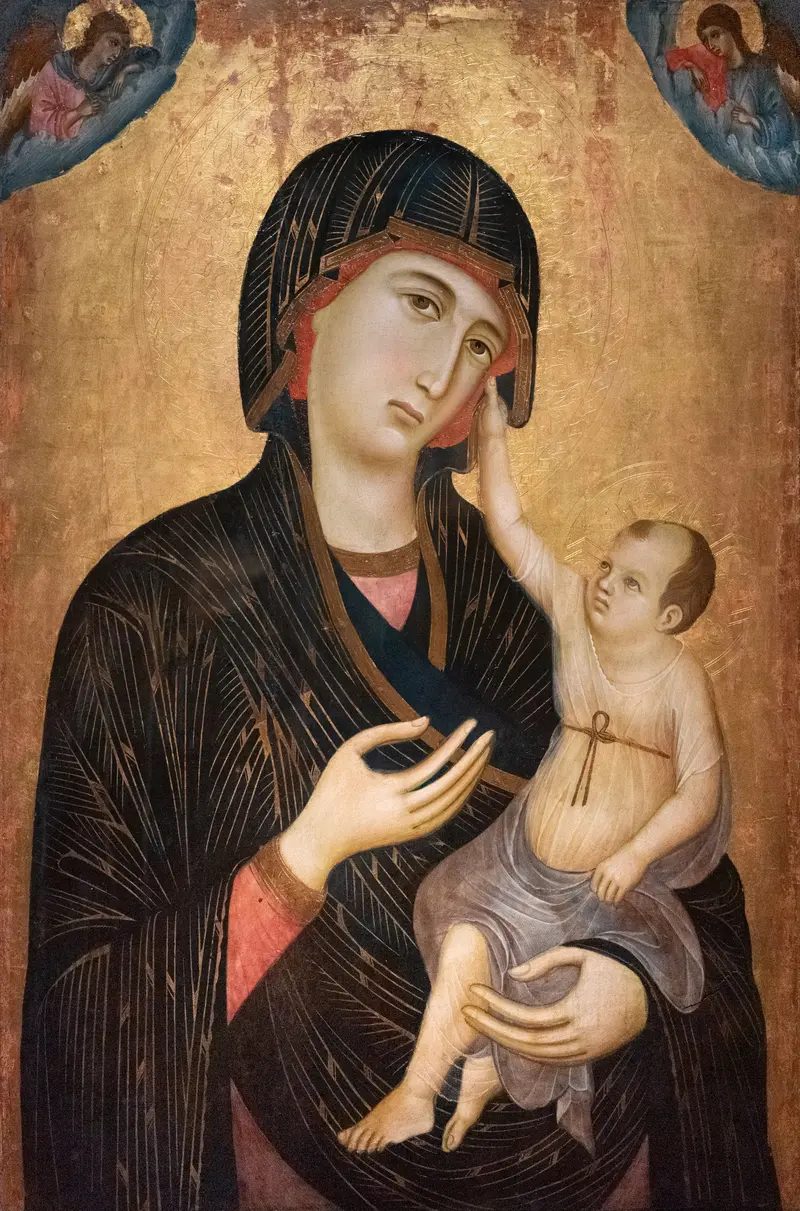
Madonna di Crevole
Duccio di Buoninsegna
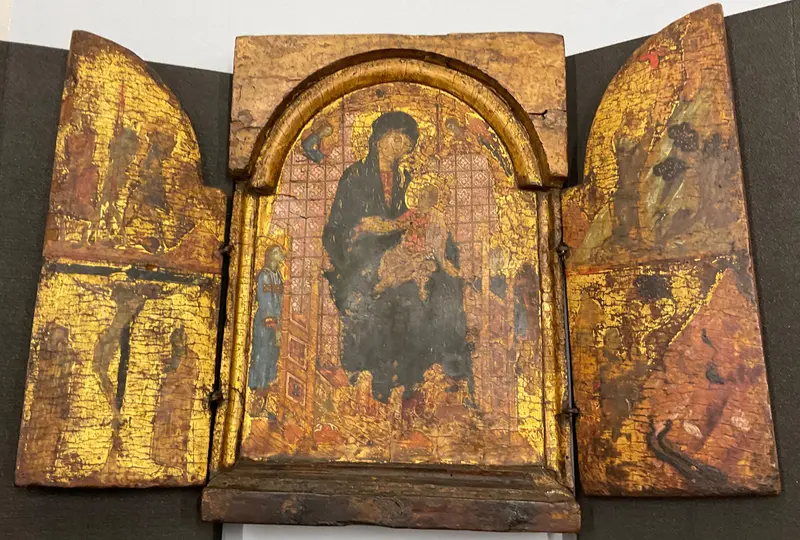
Virgin and Child, with Scenes from the Lives of Christ and Saint Francis
Duccio di Buoninsegna
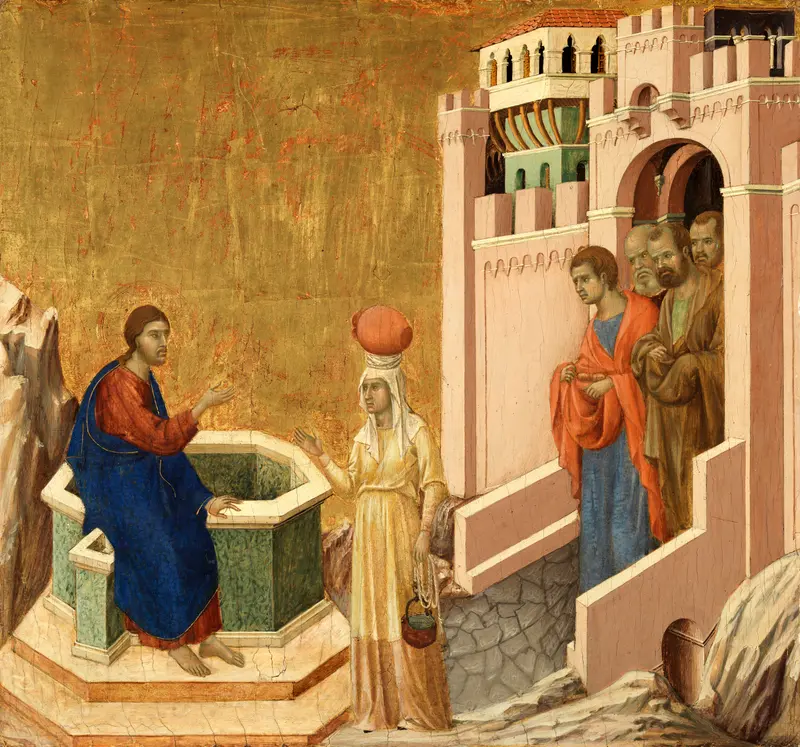
Christ and the Samaritan Woman
Duccio di Buoninsegna
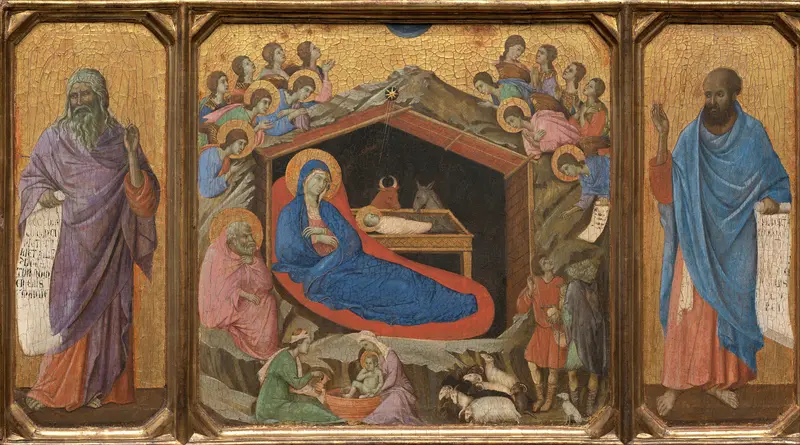
The Nativity with the Prophets Isaiah and Ezekiel
Duccio di Buoninsegna
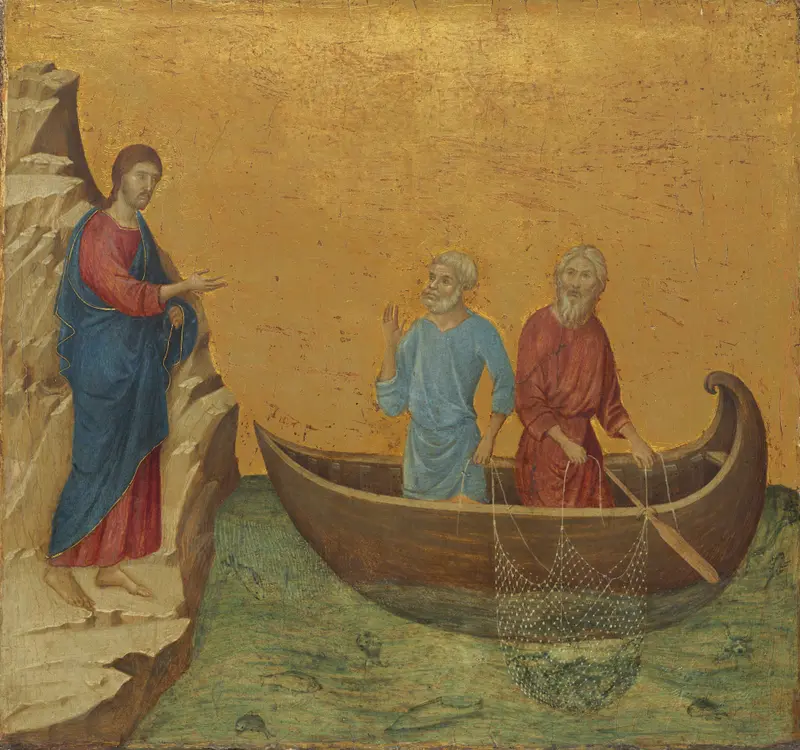
The Calling of the Apostles Peter and Andrew
Duccio di Buoninsegna





