The Calling of the Apostles Peter and Andrew — History & Facts
Few moments in the Gospels have inspired more artists than the instant when two fishermen, Simon Peter and Andrew, are summoned from their nets to follow a wandering teacher. Duccio di Buoninsegna’s The Calling of the Apostles Peter and Andrew stands out for its early and innovative approach to narrative, bridging the Byzantine tradition with the new expressiveness of the Italian Trecento. Scholars note that Duccio’s storytelling in paint helped lay the groundwork for later Renaissance masters, making each biblical scene not just a symbol but a lived event.
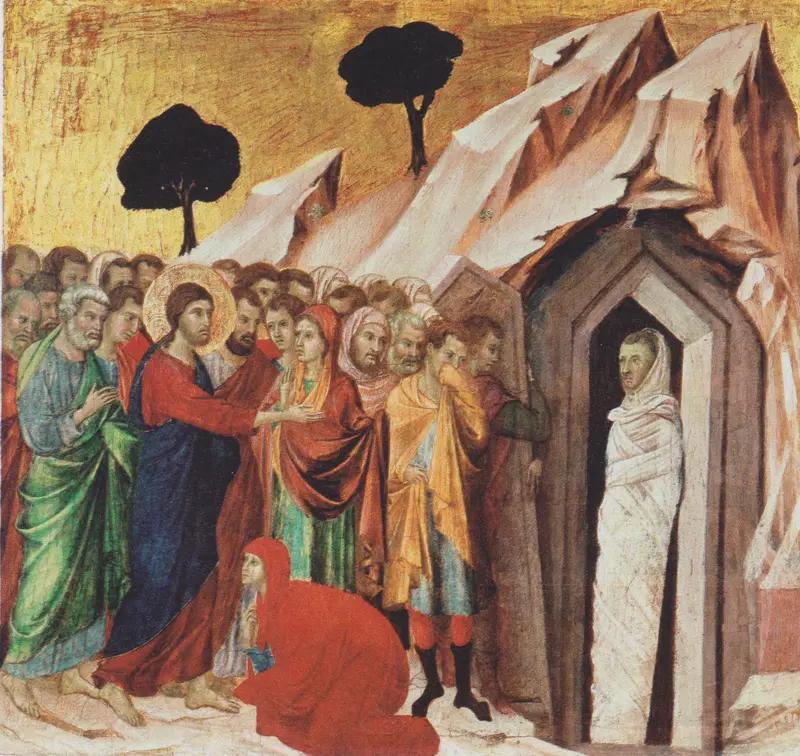
While the precise date and commission of this panel remain uncertain, its impact on devotional art is undisputed. In this scene, Christ stands at the water’s edge, arm extended in a gesture both commanding and gentle, as Peter and Andrew look up from their boat, caught mid-task. The gold background, a hallmark of Duccio’s Sienese school, signals the sacred nature of the moment, while the figures’ faces show a rare individuality for the era. Peter’s hesitant posture and Andrew’s attentive gaze capture the tension of the call: the leap from daily labor to spiritual mission.
Unlike Caravaggio’s later, dramatic Calling of Saint Matthew, Duccio’s approach is quieter, focusing on the subtle exchange of glances and the dignity of ordinary men confronted by the divine. The panel likely formed part of a larger altarpiece, perhaps the famed Maestà commissioned for Siena Cathedral, though its original context is lost to history. Over the centuries, fragments of Duccio’s works have been dispersed, traded, and reassembled, reflecting the shifting fortunes of Italian art and the reverence for his name. Today, The Calling of the Apostles Peter and Andrew is recognized as a pivotal example of early narrative painting, bridging the medieval and the modern.
Its survival allows us to glimpse both the devotional life of fourteenth-century Siena and the beginnings of a new way of seeing.