
Church in Osiek — History & Facts
Is this a mirror — or a memory? Within the serene landscape, one cannot help but feel the weight of absence that lingers in the air, as if the beauty of the scene is veiled by an unspoken sorrow. Look to the left at the gentle curves of the church's roof, where soft sunlight caresses the aged shingles, illuminating their textures with a warm, golden hue. The stillness of the water in the foreground reflects the delicate lines of the architecture, creating a tranquil symmetry that draws the eye deeper into the composition. Notice how the palette of muted greens and earthy browns contrasts with the brighter tones of the sky, echoing a sense of nostalgia that permeates the entire work. Upon closer inspection, the juxtaposition of light and shadow reveals an emotional depth that transcends mere representation.
The quiet landscape hints at a community's presence, yet the absence of figures suggests a haunting loneliness, provoking thoughts of those who have been lost to time. The subtle ripples in the water might symbolize the undulating waves of grief that ebb and flow, reminding us that moments of beauty often coexist with sorrow. Julian Falat painted Church in Osiek in 1906, during a period when he was deeply engaged with the lush landscapes of Poland. His experiences living and working in various regions allowed him to capture the essence of rural life and architecture.
The early 20th century was marked by great social changes, and Falat’s work reflects the shifting tides of memory and loss, preserving the intimate relationship between nature and the human spirit.
More Artworks by Julian Falat
Browse all →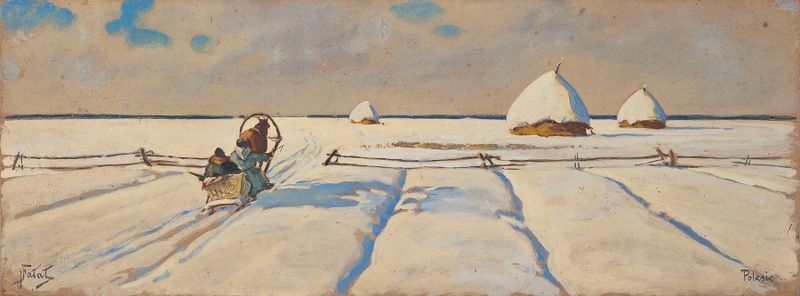
Sleigh in a snowy field – Polesia
Julian Falat
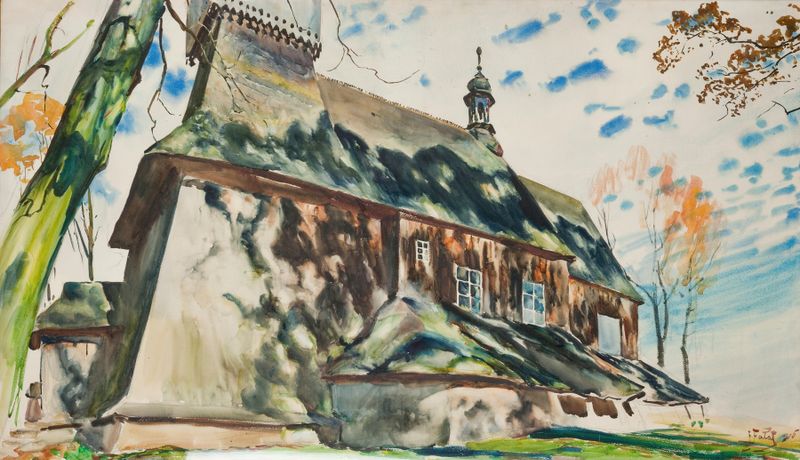
Church in Osiek
Julian Falat
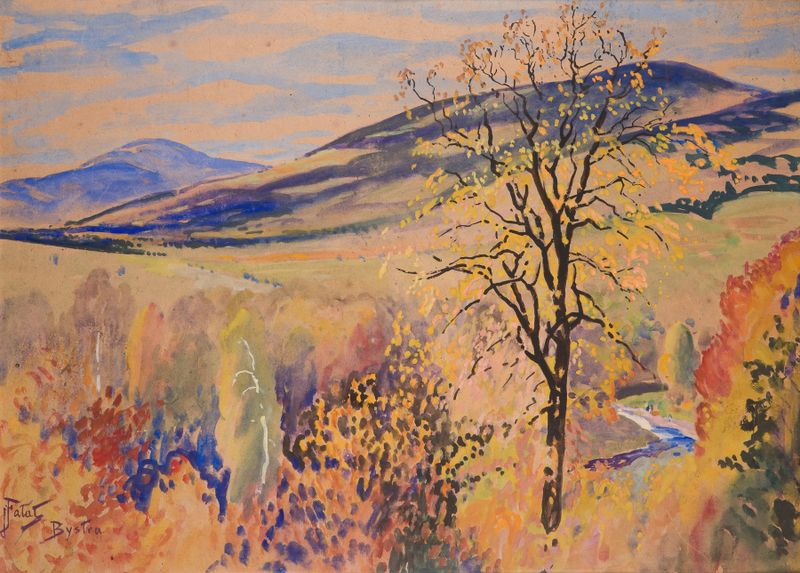
Pejzaż jesienny z Bystrej
Julian Falat
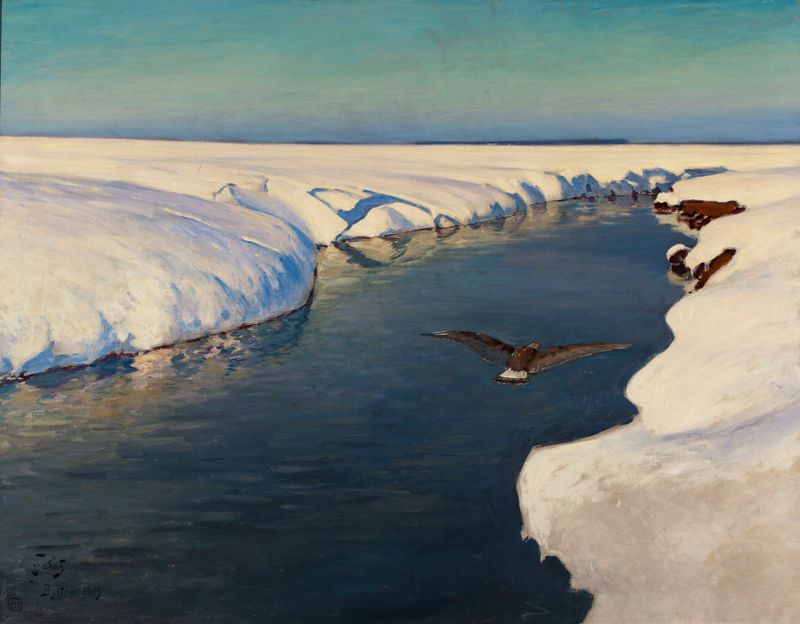
Winter landscape with a river and a bird
Julian Falat
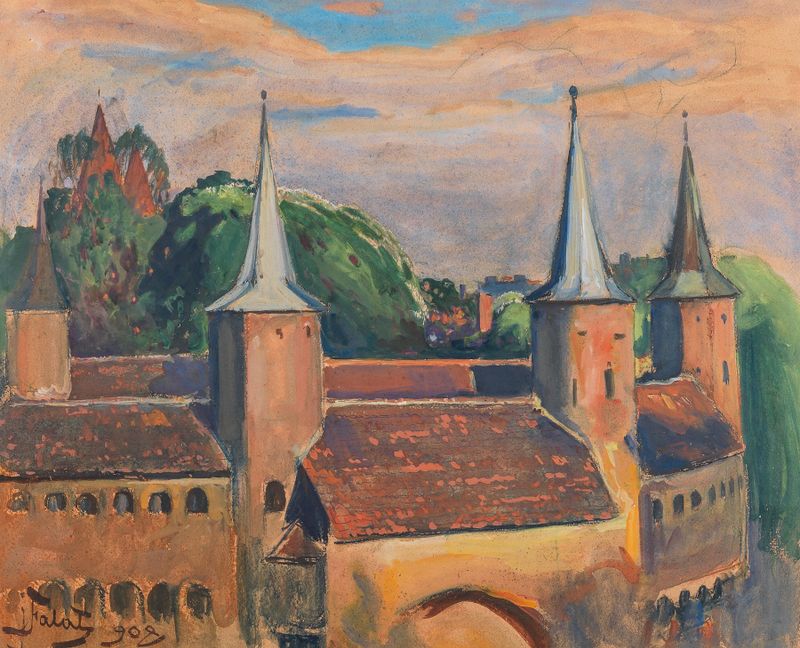
The Kraków Barbican
Julian Falat
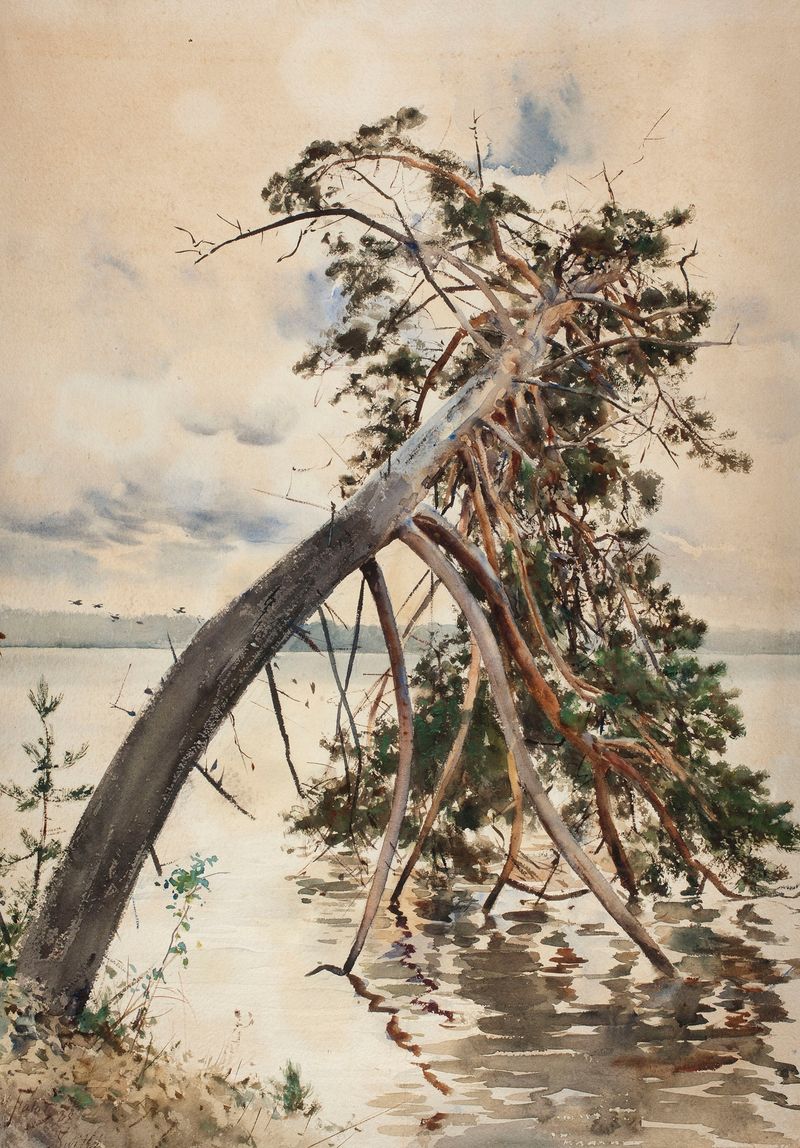
Świteź
Julian Falat
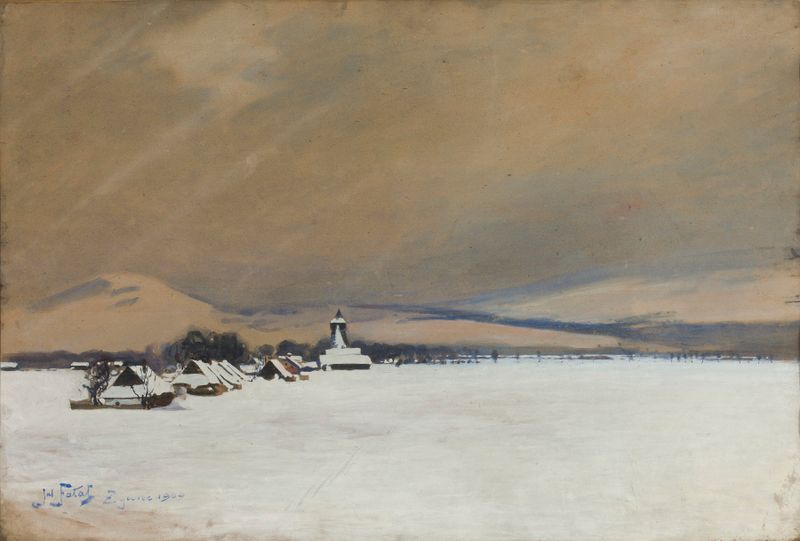
Winter landscape from Żywiec
Julian Falat
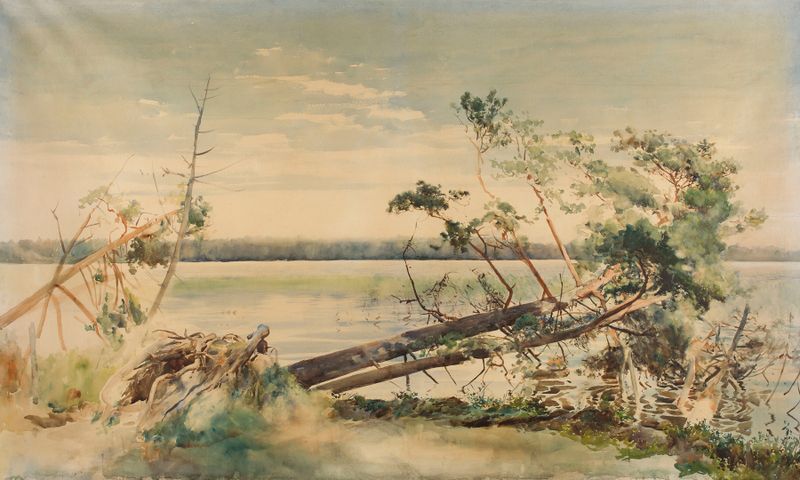
Świteź
Julian Falat
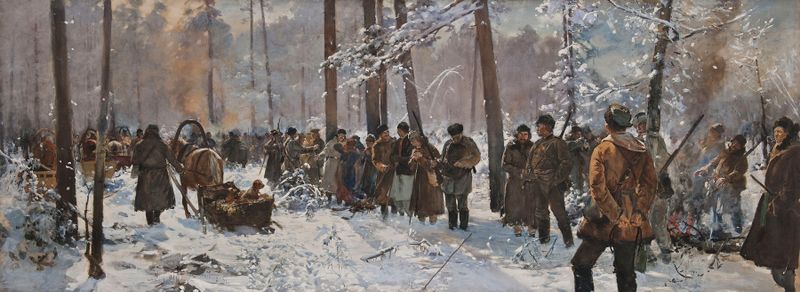
Battue at a hunt in Nieśwież
Julian Falat
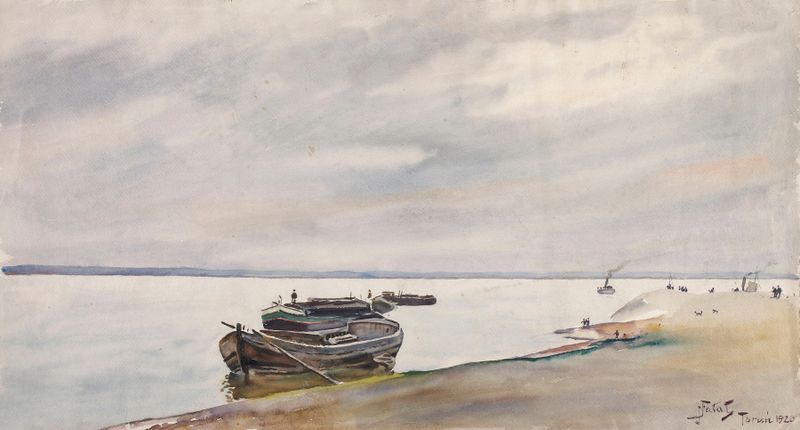
Boats and steamship on the Vistula near Toruń
Julian Falat





