Citron with Moths — History & Facts
What first catches the eye in Citron with Moths is the sense that every element—leaf, fruit, insect—has been caught in the midst of its own quiet drama. The citron’s thick, dimpled rind glows with a waxy yellow, its flesh revealed in a careful cross-section that feels almost surgical. Moths perch on the upper leaves, their wings rendered with a delicacy that rivals the veins of the plant itself.
The artist’s attention to the curling tendrils and the subtle bruising of the leaves invites the viewer to linger, to notice how life and decay intermingle. Each insect is not an accessory but a protagonist, as essential to the composition as the fruit they inhabit. This work belongs to a world where art and science were partners in discovery. Created in 1705 by Maria Sibylla Merian for her groundbreaking Metamorphosis insectorum surinamensium, it is both a botanical portrait and a field note from the age of exploration.
In this era, European curiosity about the natural riches of the Americas was at its height, and Merian’s illustrations offered a vivid, life-sized window onto that unfamiliar world. Her book documented not only plants but the insects that lived on them, their transformations, and their habitats, all observed from life in Suriname. Few records remain of how each individual plate was received, but the series as a whole stands as a testament to a time when the boundaries between art, natural history, and travelogue were thrillingly porous.
Look again, and see how every detail is an invitation to wonder at the complexity of the natural world.
More Artworks by Maria Sibylla Merian
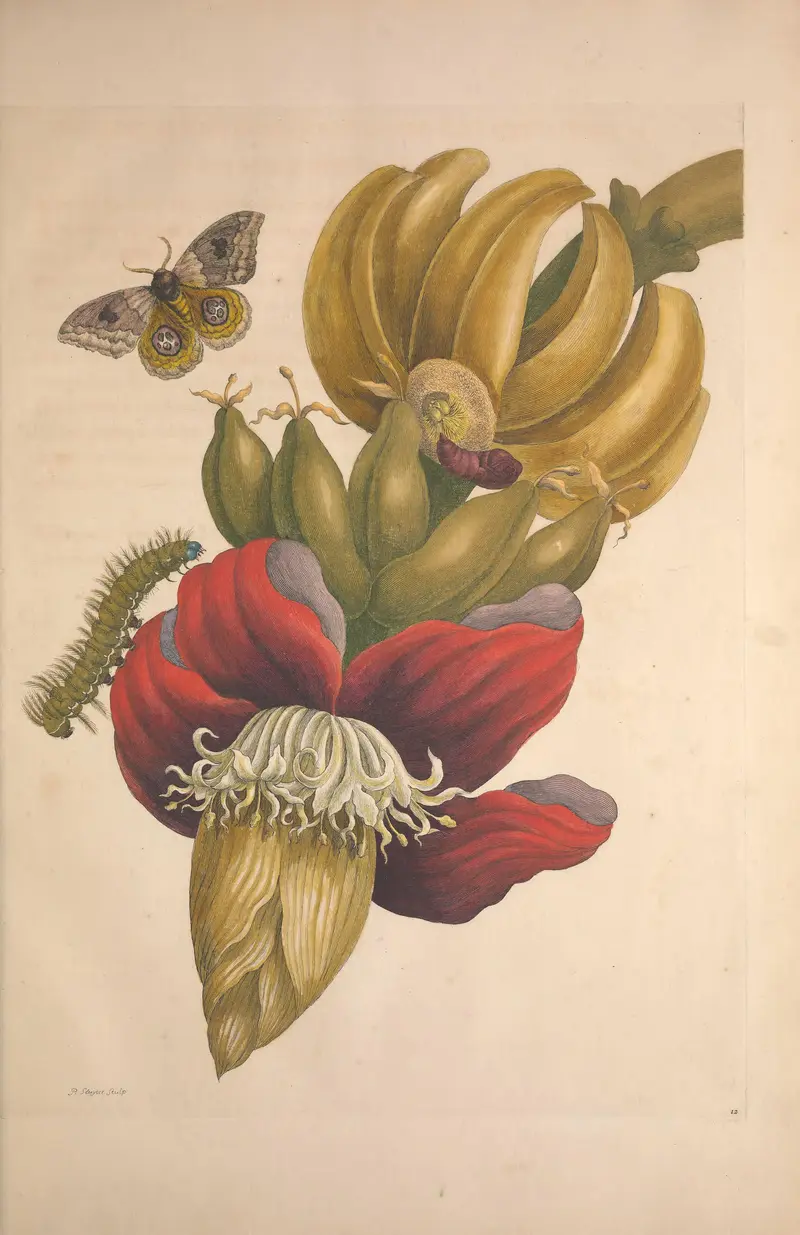
Banana with Bullseye Moth and Caterpillar
Maria Sibylla Merian
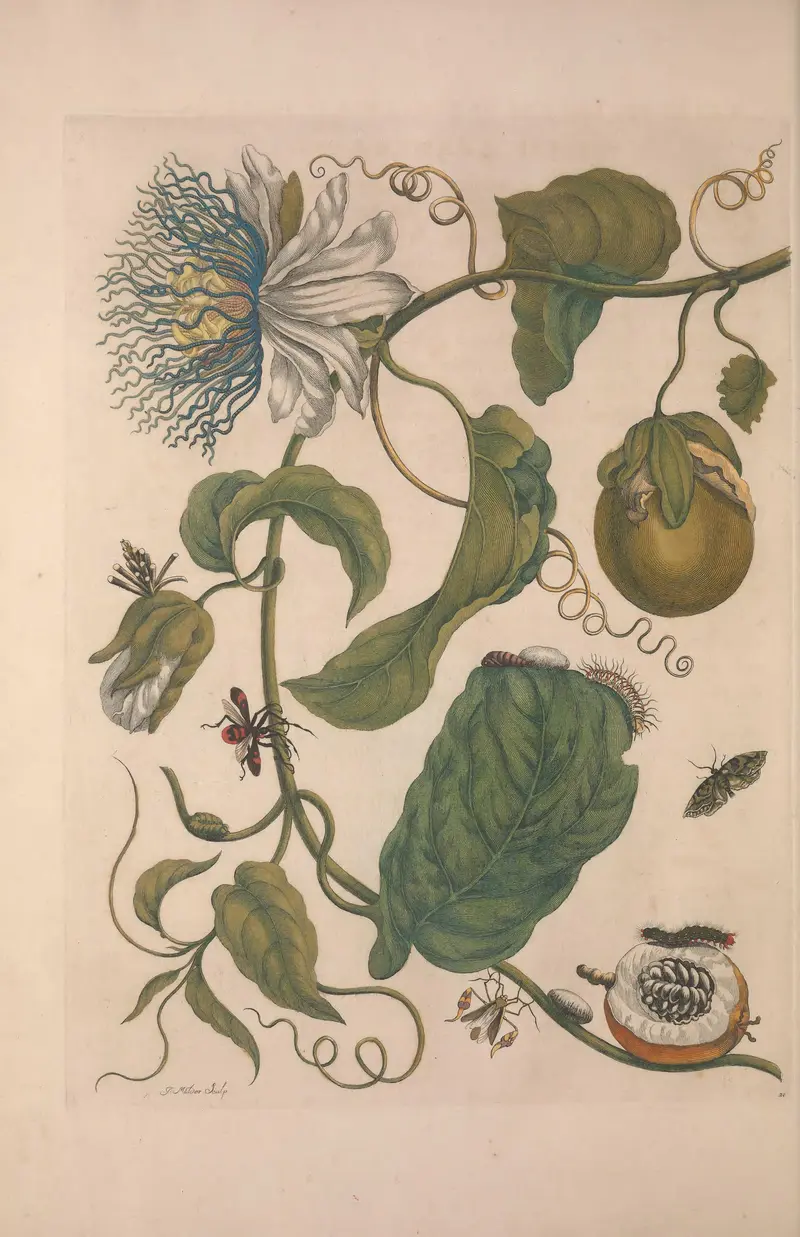
Passionflower with Caterpillars and Insects
Maria Sibylla Merian
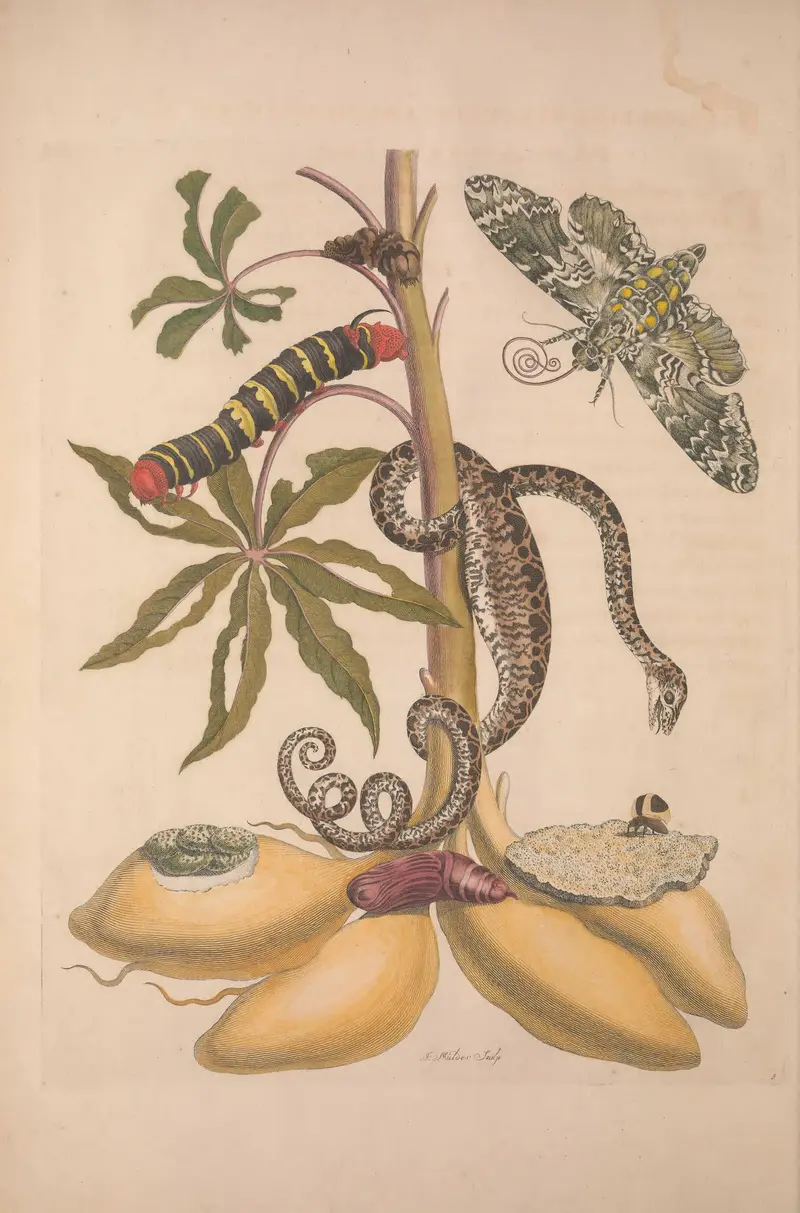
Cassava Root with Tree Boa and Sphinx Moth
Maria Sibylla Merian
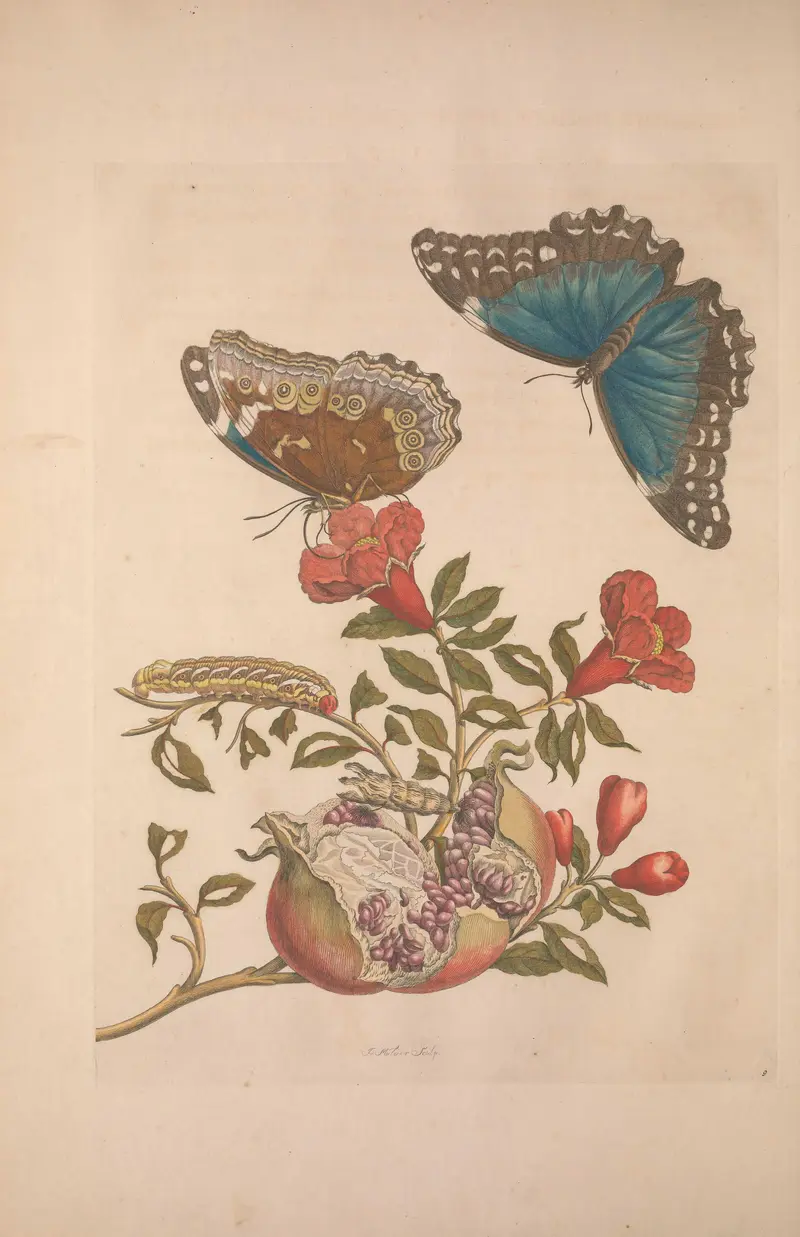
Pomegranate with Caterpillar, Pupa and Blue Butterfly
Maria Sibylla Merian
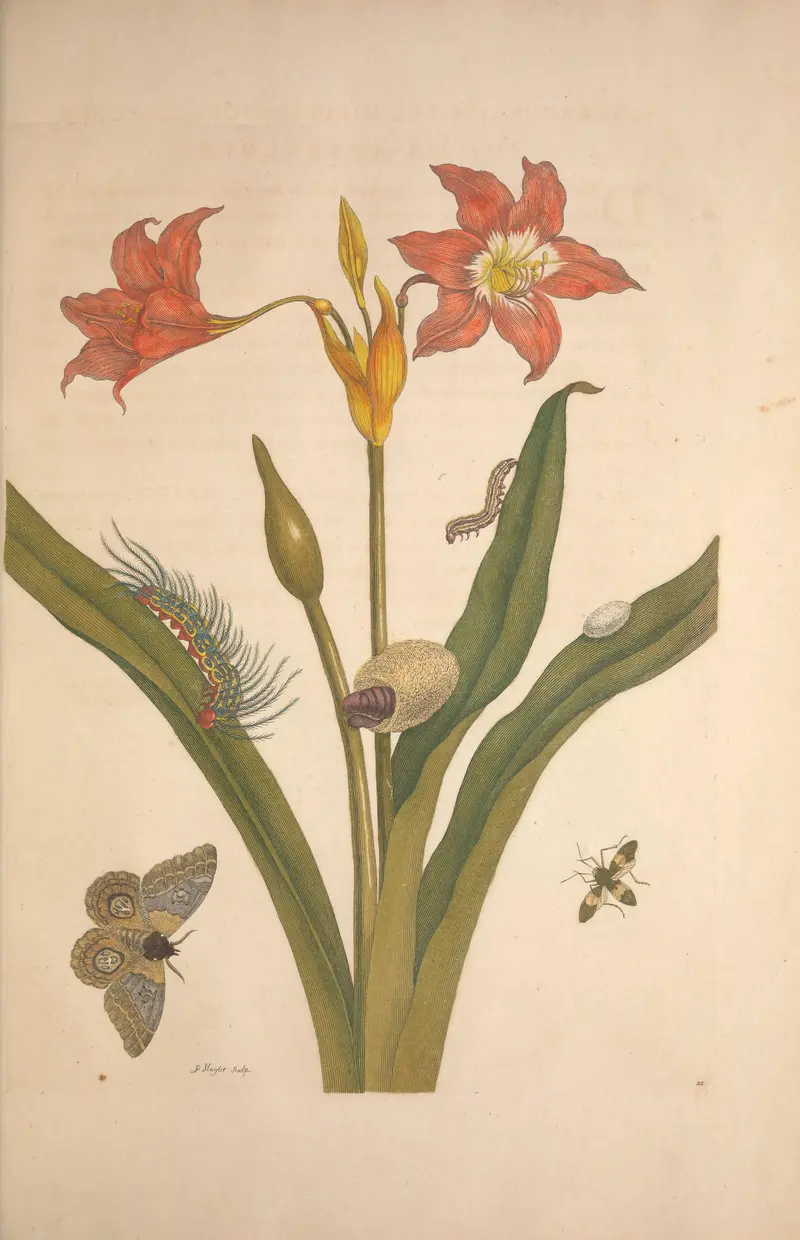
Red Amaryllis Lily with Moth and Caterpillars
Maria Sibylla Merian
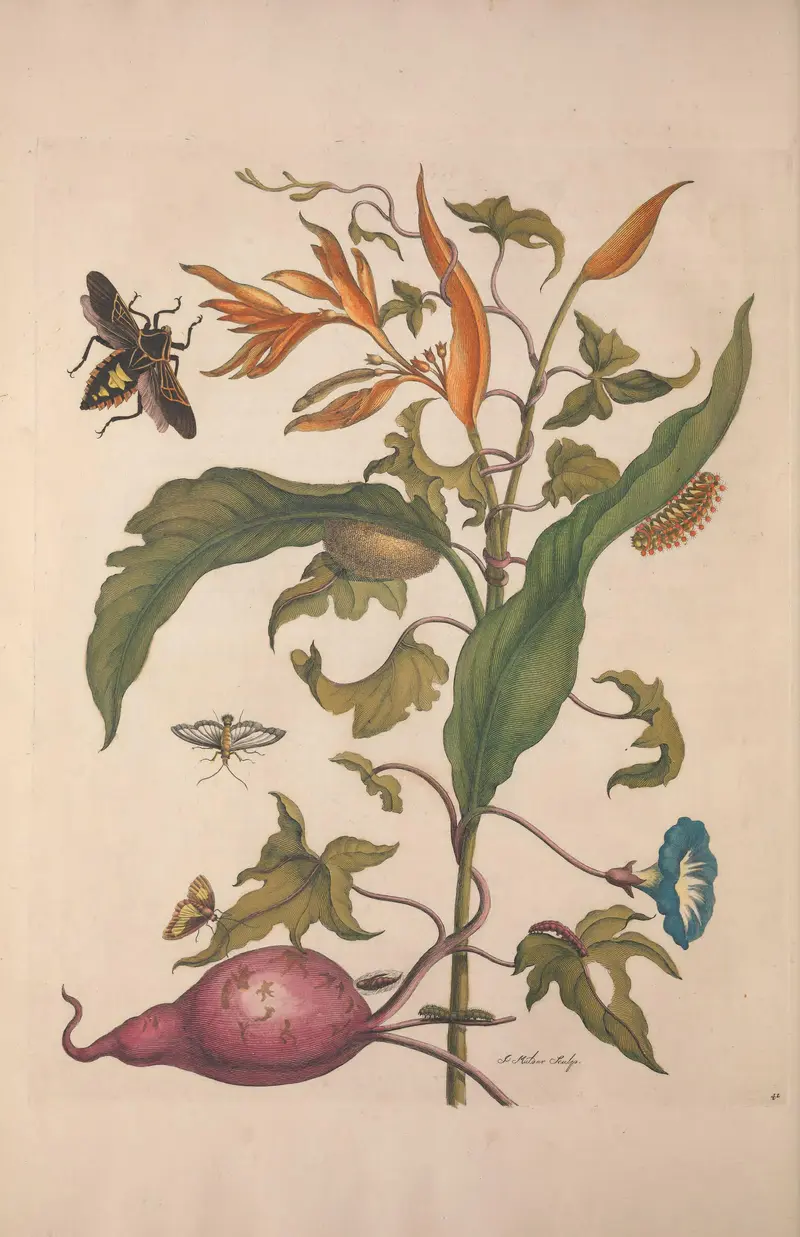
Sweet Potato with Beetle and Butterfly
Maria Sibylla Merian
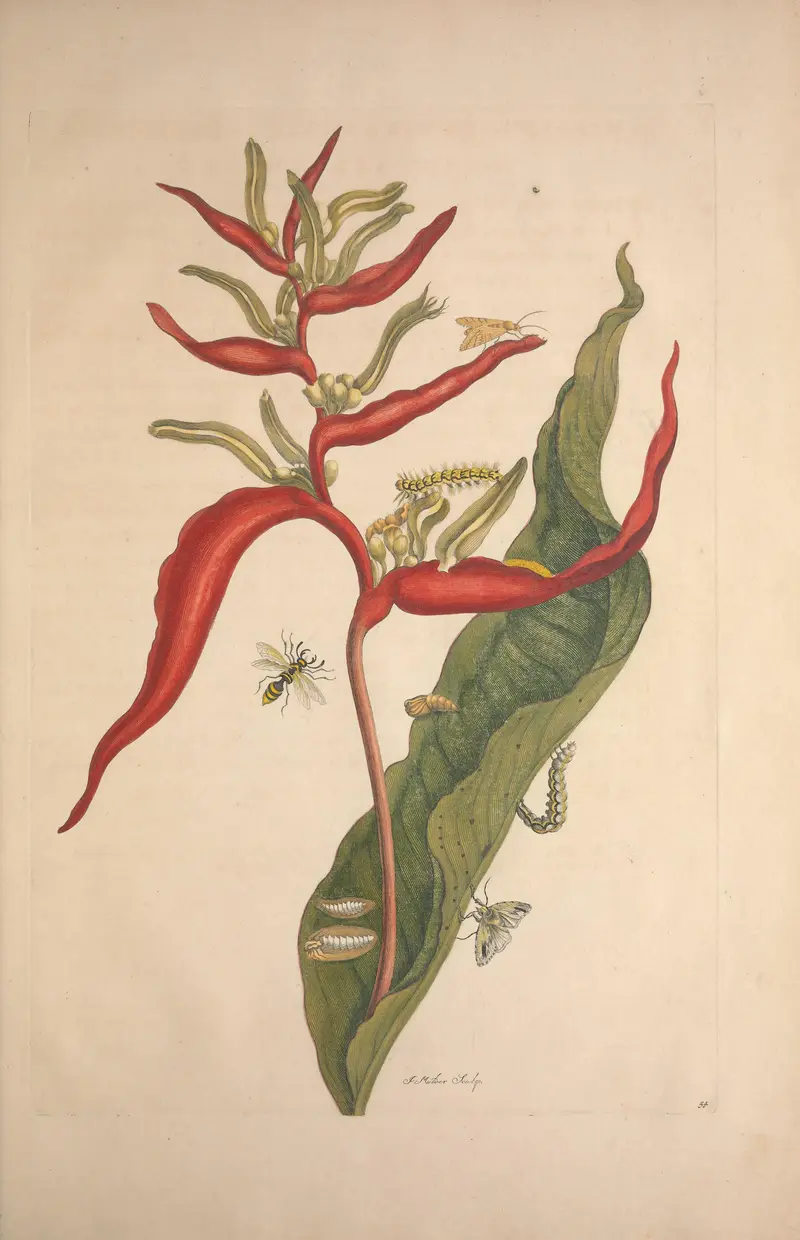
Heliconia with Moth
Maria Sibylla Merian
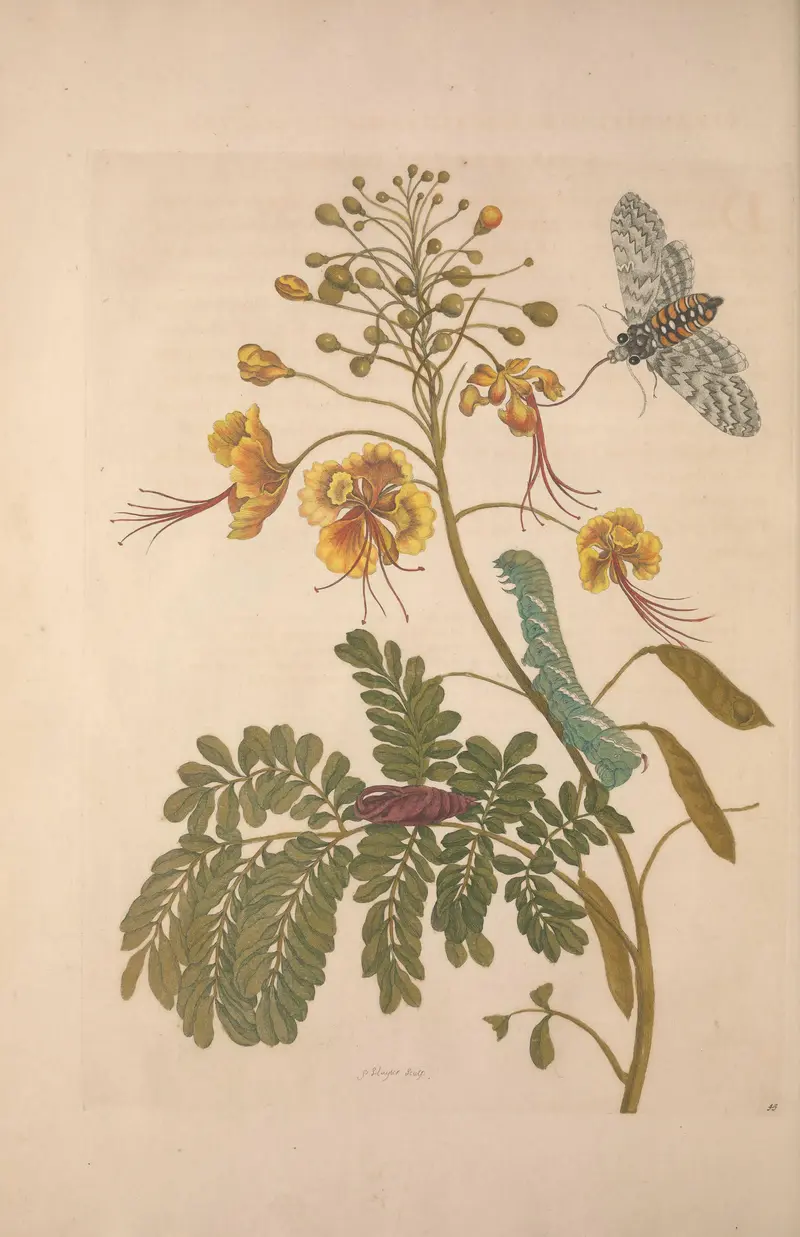
Mimosa with Moth and Caterpillar
Maria Sibylla Merian

Grapevine with Caterpillar and Moth
Maria Sibylla Merian
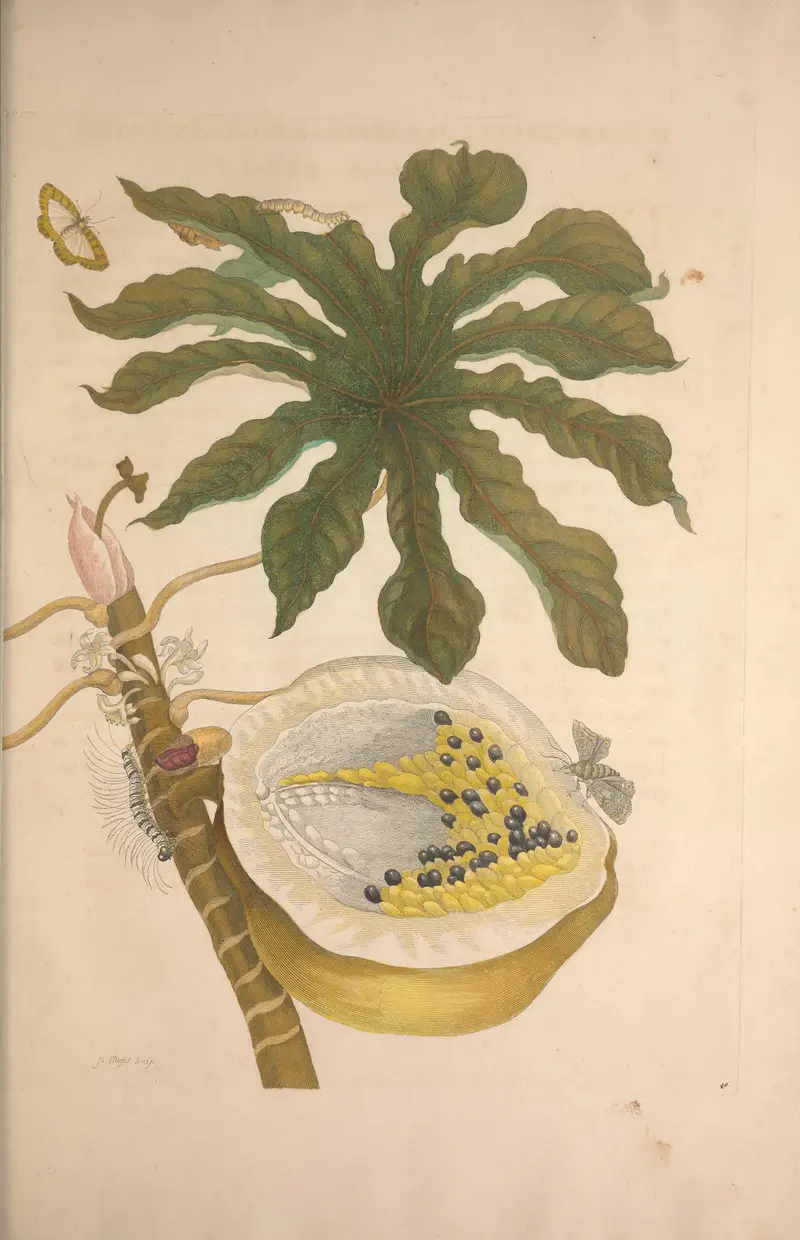
Papaya with Moth and Caterpillar
Maria Sibylla Merian