
Civita Castellana — History & Facts
Is this a mirror — or a memory? The landscape emerges like a whisper of longing, inviting the viewer to traverse the delicate boundaries between desire and reality. Look closely at the foreground, where the soft strokes of green and earthy tones create a gentle lead into the scene. Notice how the ancient architecture of Civita Castellana rises against the fading light, its shadows casting a somber hue across the hills. The brushwork captures both the solidity of stone and the ephemeral quality of dusk, as if the landscape itself holds its breath.
The horizon blurs into a watercolor wash of pastel skies, a juxtaposition of warmth and coolness that stirs a sense of nostalgia. Within this composition lies a tension between permanence and transience. The sturdy structures, timeless yet eroded, speak to the passage of time, while the expansive sky evokes a yearning for moments that slip away. Each element holds a secret—old walls whisper tales of lives once lived, and the distant hills beckon with the allure of uncharted paths.
Desire is palpable here, manifesting as both a connection to history and a longing for the future. Lear painted this piece during his travels in Italy in 1844, a time when he was grappling with both his artistic identity and his personal aspirations. The Romantic movement was flourishing, and he was deeply influenced by its themes of nature and emotion. This period marked a pivotal point in his career, as he sought to balance his whimsical drawings with more serious landscape paintings, reflecting a profound desire to capture the beauty and complexity of places steeped in memory.
More Artworks by Edward Lear
Browse all →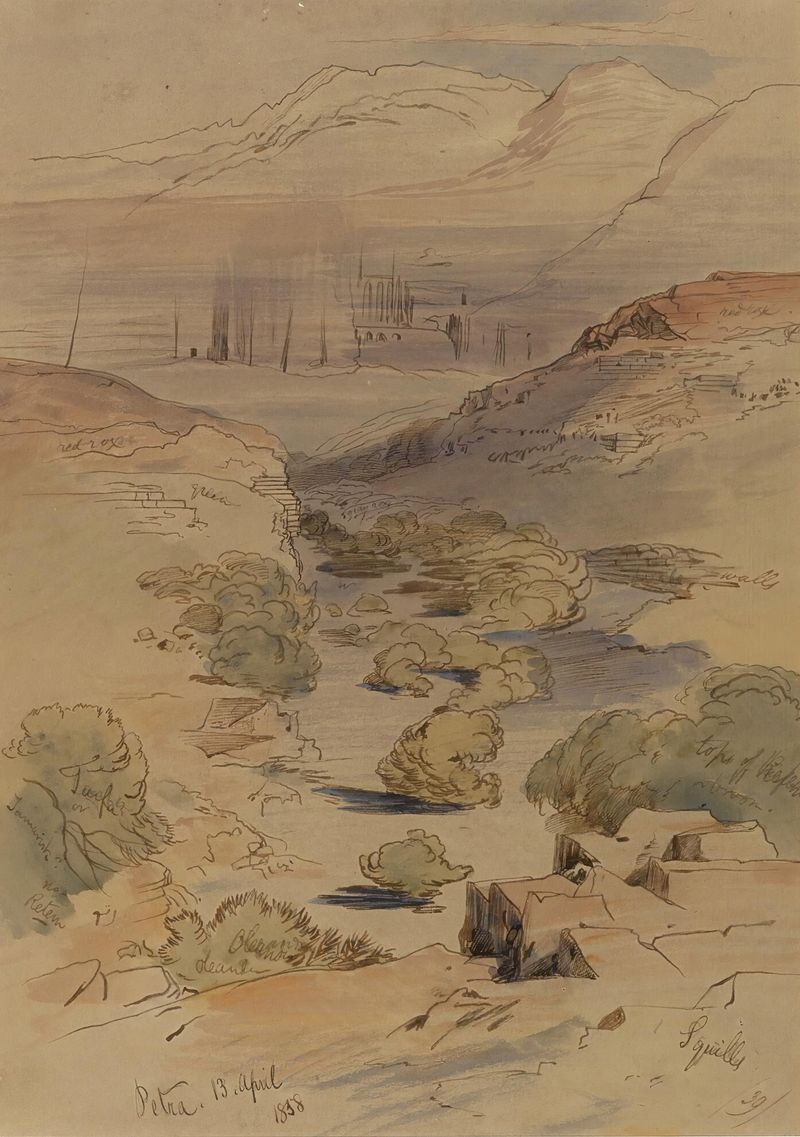
Petra
Edward Lear
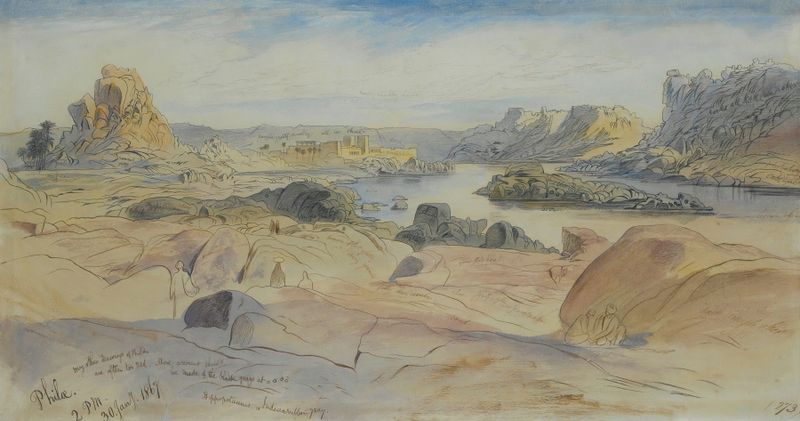
Philae, Egypt
Edward Lear
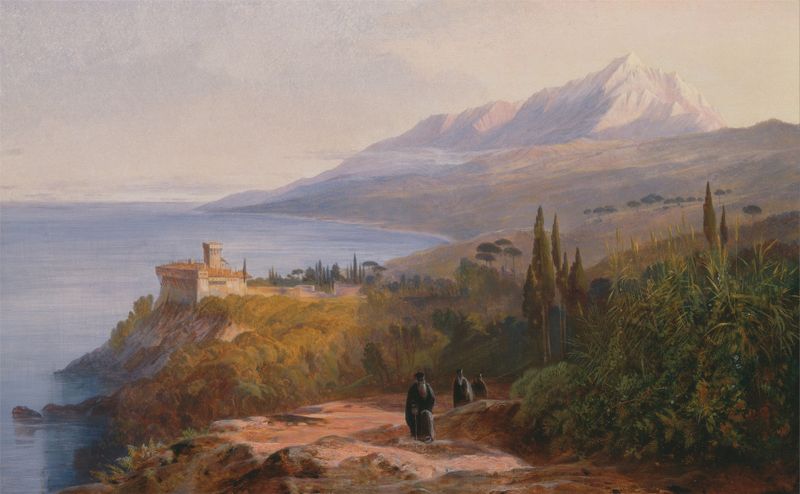
Mount Athos and the Monastery of Stavronikétes
Edward Lear
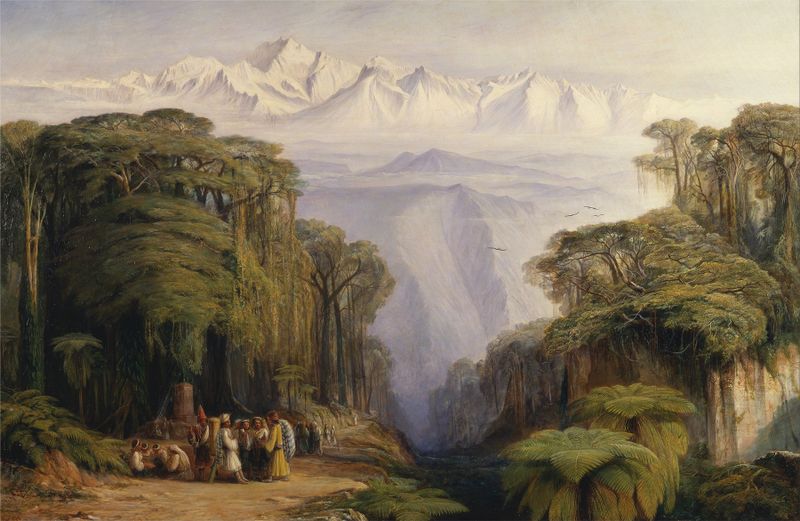
Kangchenjunga from Darjeeling
Edward Lear
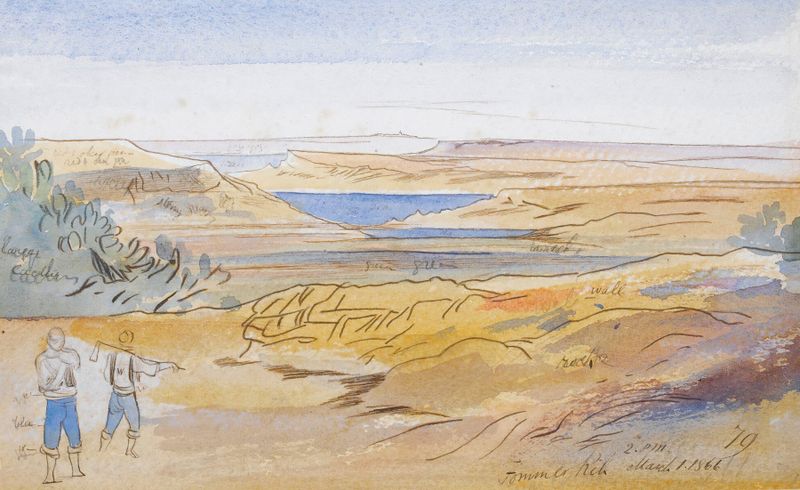
Fomm Ir-Rih, Malta
Edward Lear
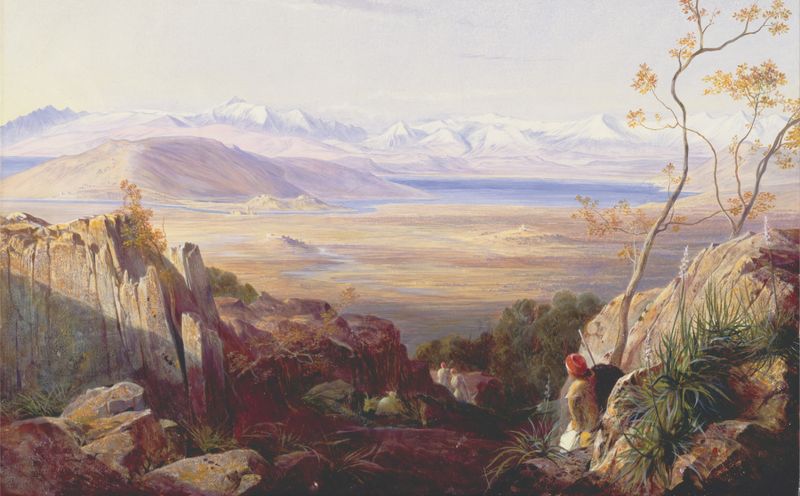
Butrinto, Albania
Edward Lear
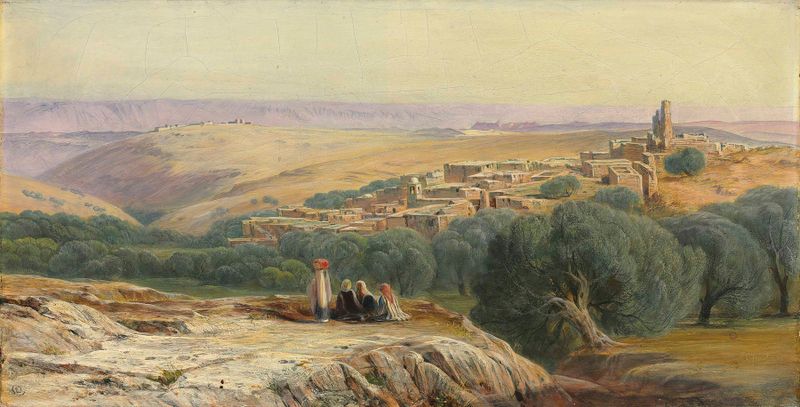
The Plains of Bethany
Edward Lear

Karnak, 9-30 pm, 22 January 1867
Edward Lear
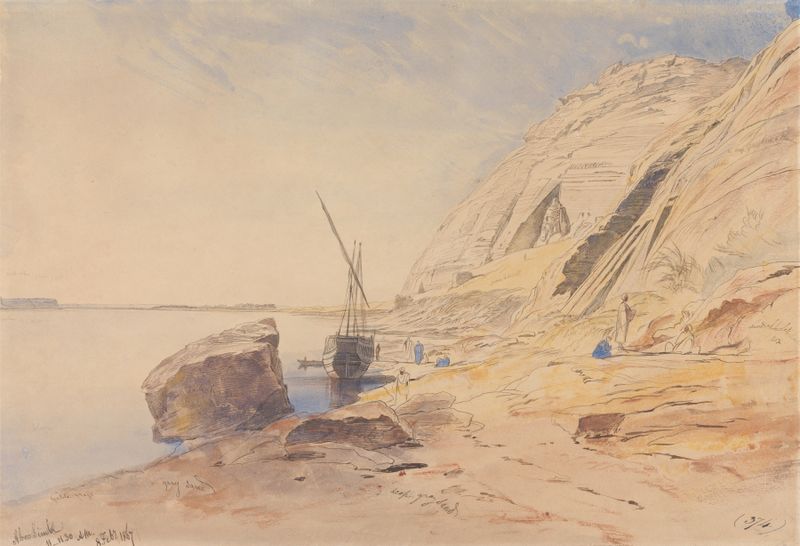
Abu Simbel, 11-11;30 am, 8 February 1867 (374)
Edward Lear

A View Of Mount Athos And The Pantokrator Monastery, Greece
Edward Lear





