
Civitella di Subiaco — History & Facts
What if silence could speak through light? The gentle glow of the setting sun reveals an unspoken longing that permeates the landscape, inviting the viewer to pause and listen. Look to the left at the delicate interplay of warm hues washing over the ancient architecture, hinting at stories untold. The soft pastels blend seamlessly, portraying the serene hills that cradle the village below. Notice how the craggy peaks create a natural frame, guiding your gaze toward the heart of the scene where the village seems to sigh against the horizon, evoking a sense of nostalgia.
Each brushstroke captures not just the physicality of the landscape, but the emotional weight it carries. The contrast between light and shadow evokes deeper reflections on solitude and the passage of time. The distant mountains loom like guardians, both protective and isolating, embodying the duality of yearning for connection while being enveloped in quietude. There's a delicate tension between the vibrant colors of the sky and the muted tones of the village, suggesting a longing for something just out of reach, a moment that exists between memory and reality. Edward Lear painted this work around 1840 during his travels in Italy, a time when he was seeking both artistic inspiration and personal solace.
As a well-known landscape artist and poet, he found himself captivated by the beauty and tranquility of the Italian countryside, reflecting the romantic ideals of the era. His experiences during this period would profoundly shape his artistic vision, capturing not merely what he saw, but what he felt in the ethereal embrace of nature.
More Artworks by Edward Lear
Browse all →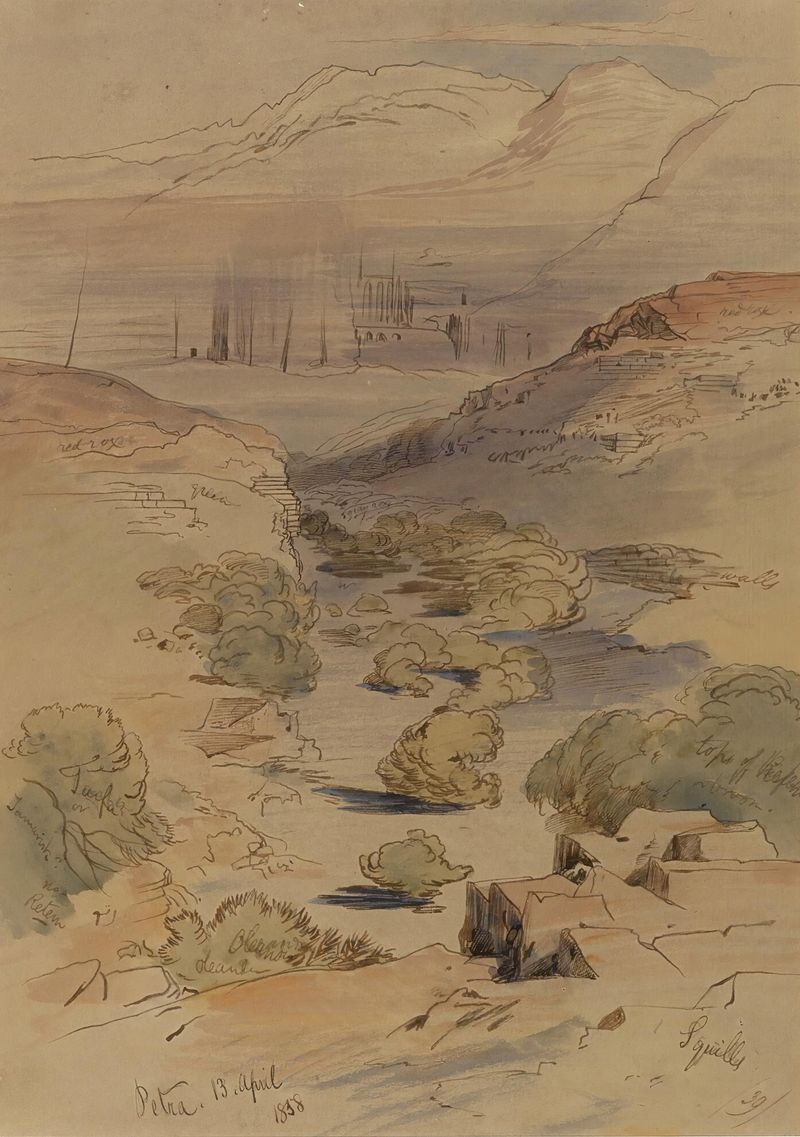
Petra
Edward Lear
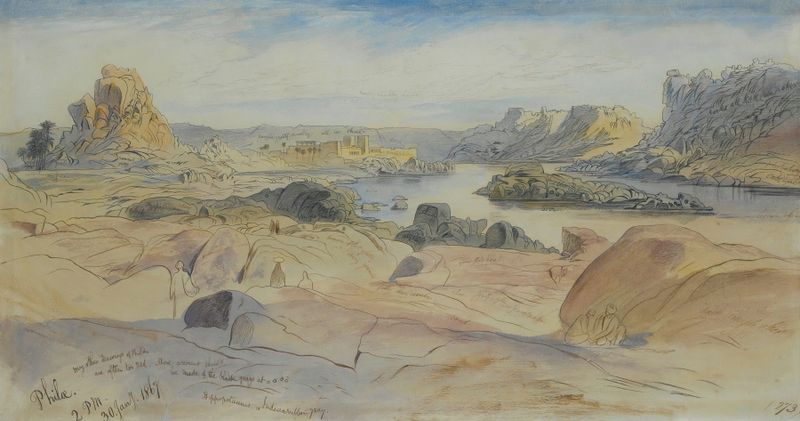
Philae, Egypt
Edward Lear
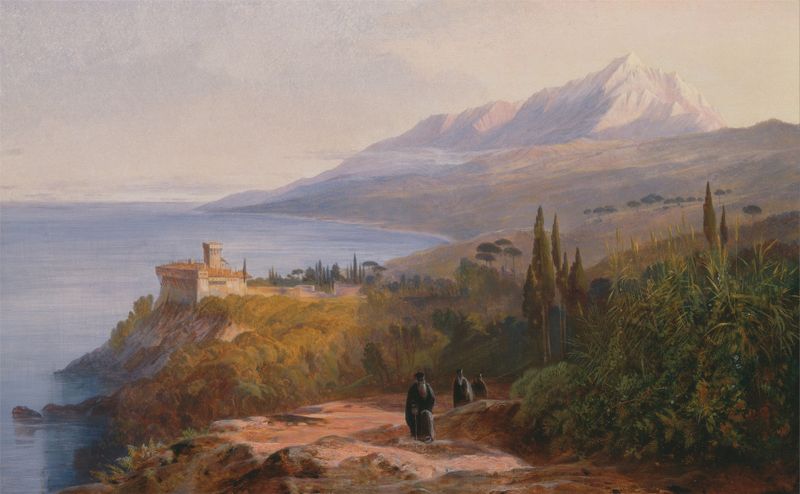
Mount Athos and the Monastery of Stavronikétes
Edward Lear
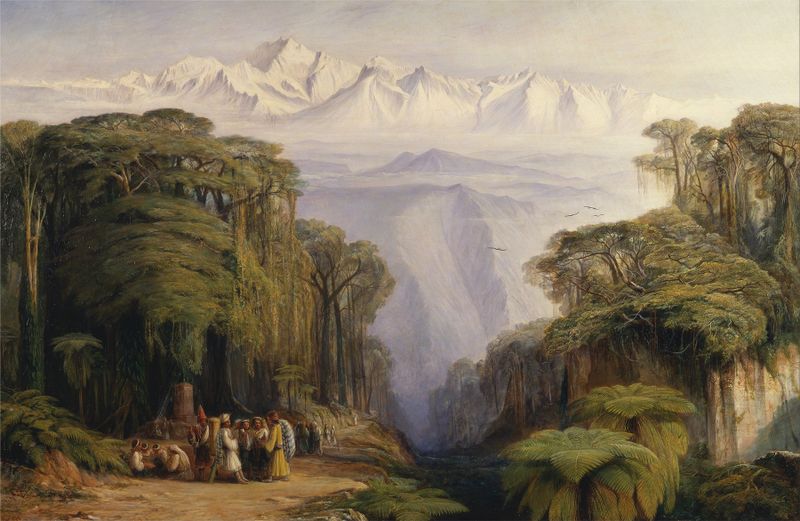
Kangchenjunga from Darjeeling
Edward Lear
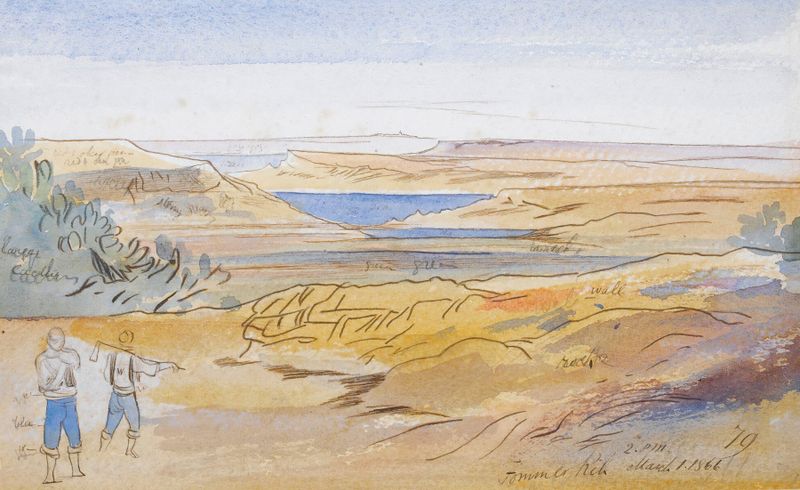
Fomm Ir-Rih, Malta
Edward Lear
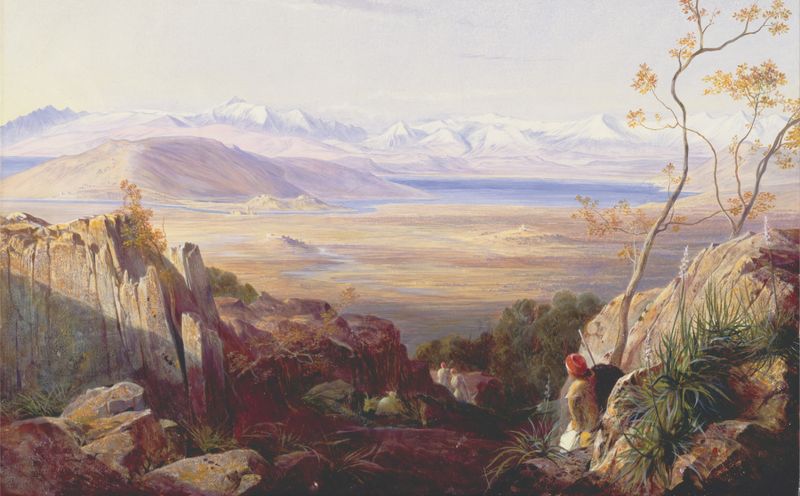
Butrinto, Albania
Edward Lear
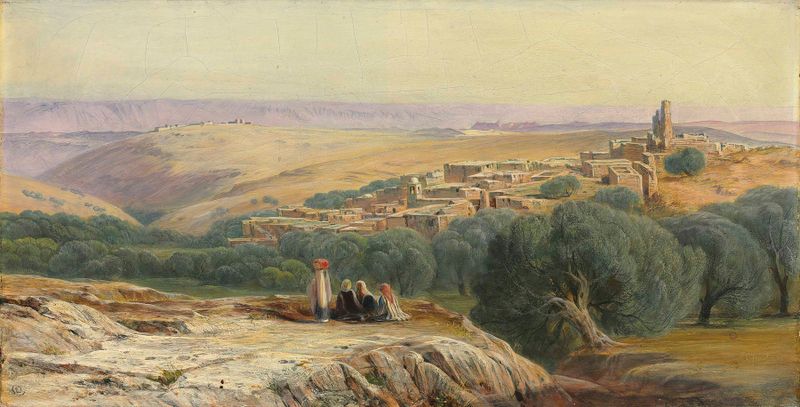
The Plains of Bethany
Edward Lear

Karnak, 9-30 pm, 22 January 1867
Edward Lear
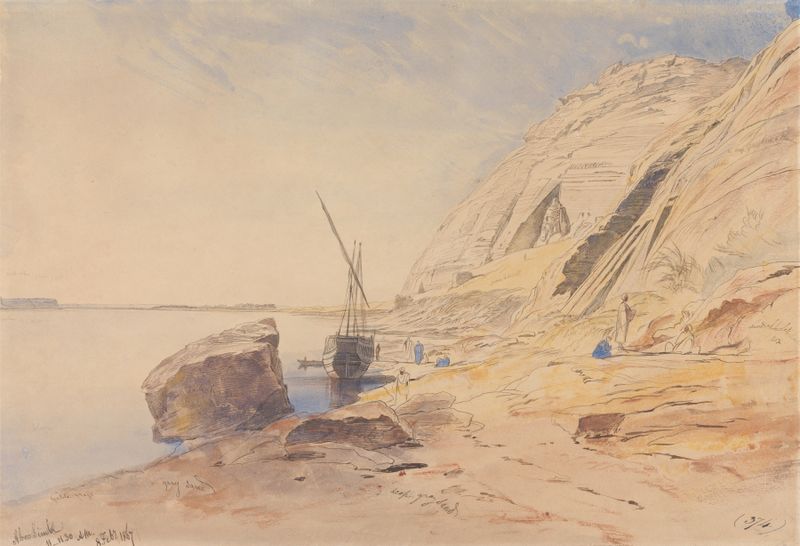
Abu Simbel, 11-11;30 am, 8 February 1867 (374)
Edward Lear

A View Of Mount Athos And The Pantokrator Monastery, Greece
Edward Lear





