Classical Woman's Head — History & Facts
What first catches the eye in Classical Woman's Head is the gentle inwardness of the sitter’s gaze, as if she is caught in a moment of quiet thought or memory. The artist leads us into this private world with a hand that is both precise and tender—notice how the delicate lines of her fingers seem to echo the soft curves of her hair, which itself is crowned by a netted headdress traced with rhythmic, looping lines. The drawing’s restraint is its strength: there is no background to distract, no color to compete with the interplay of line and form.
The woman’s face tilts slightly downward, her lips just parted, inviting the viewer to linger on the subtlety of her expression and the almost musical flow of her curls. Drawings like this, inspired by the classical tradition, were a touchstone for artists and architects in the nineteenth century—a period fascinated by the ideals of ancient Greece and Rome. Augustus Welby Northmore Pugin, whose signature appears on this sheet and who is better known for his revolutionary work in Gothic Revival architecture, here turns his hand to the study of ideal beauty. Such works were often exercises in discipline and taste, created for personal study, for students, or as models to be copied.
Now housed in the Vanderbilt University Fine Arts Gallery, this drawing is a rare glimpse into a quieter side of Pugin’s creative life, where the pursuit of line and harmony takes precedence over the drama of buildings. The simplicity of the image invites us to look again, and to imagine the world of ideas and aspirations that shaped it.
More Artworks by Augustus Charles Pugin

All Soul’s College from the Radcliffe Library
Augustus Charles Pugin
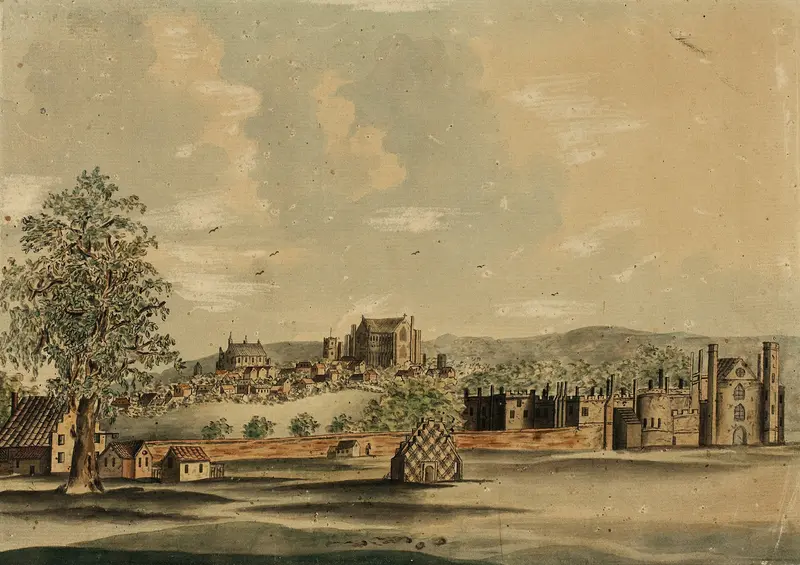
St. James’s with the Village of Charing as It Appeared in ye Reign of Henry VIII
Augustus Charles Pugin

The exterior of the Henry VII Chapel, Westminster Abbey
Augustus Charles Pugin
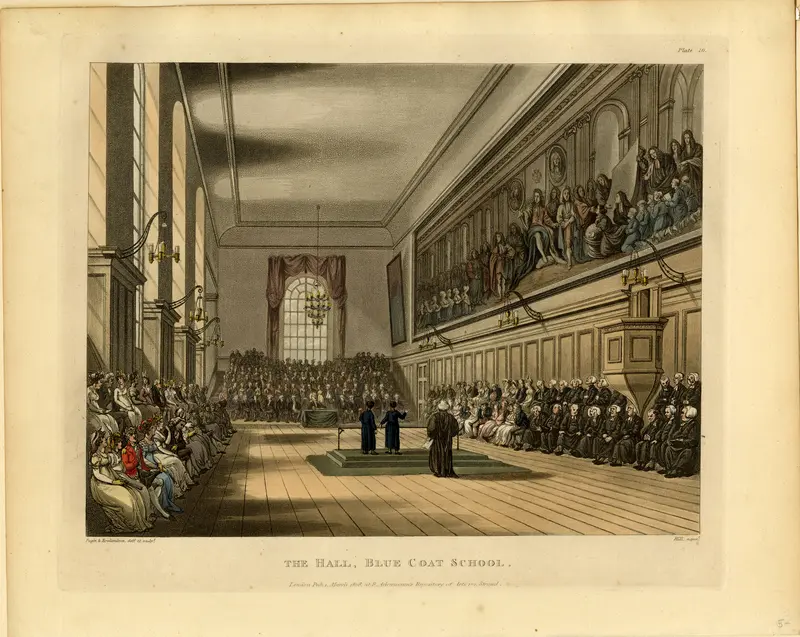
The Hall, Blue Coat School
Augustus Charles Pugin
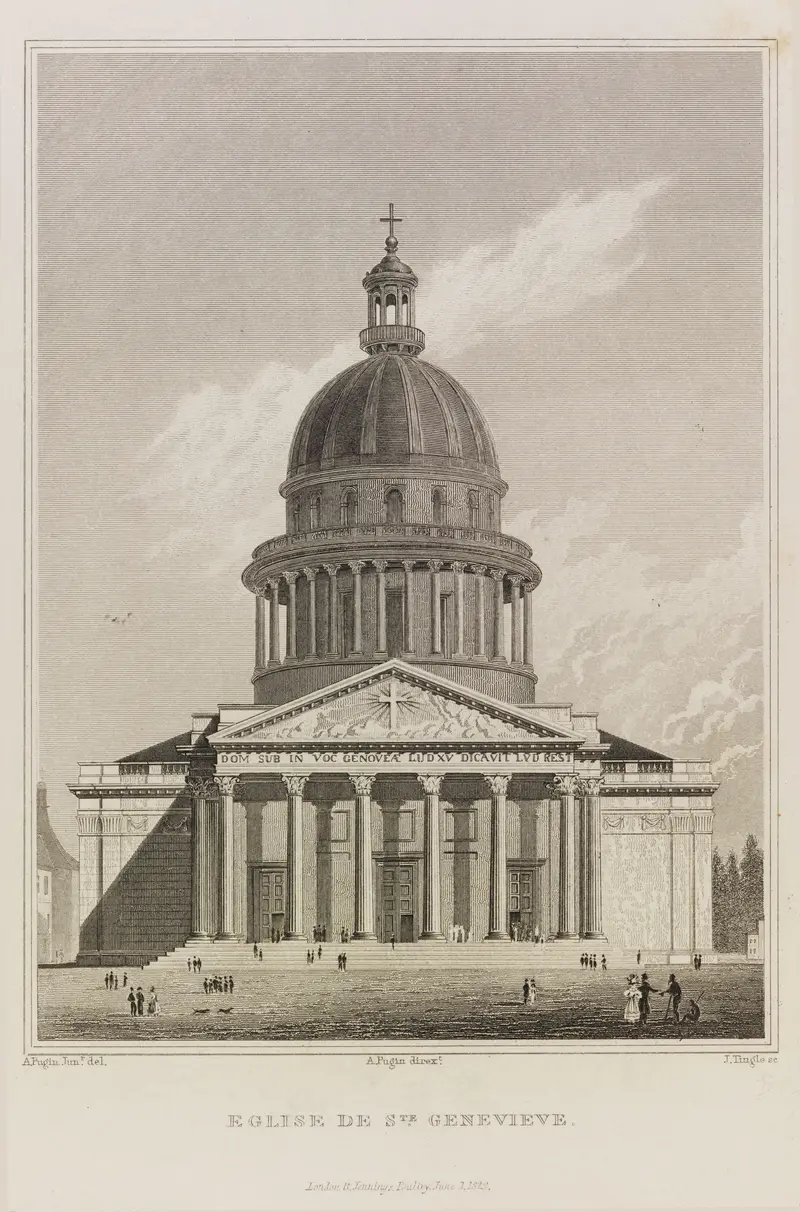
Panthéon - Eglise Sainte-Geneviève (phbw10 0880)
Augustus Charles Pugin
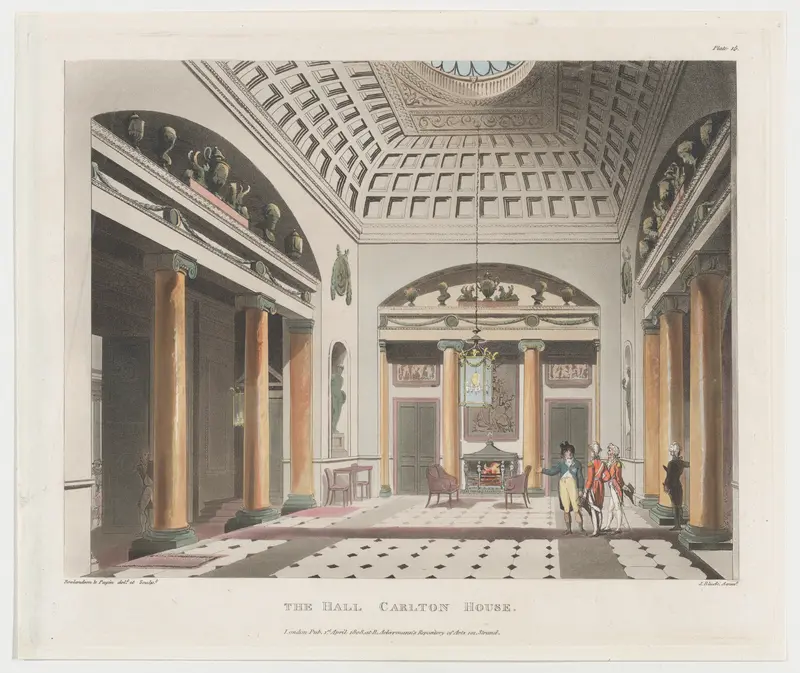
The Hall, Carlton House
Augustus Charles Pugin
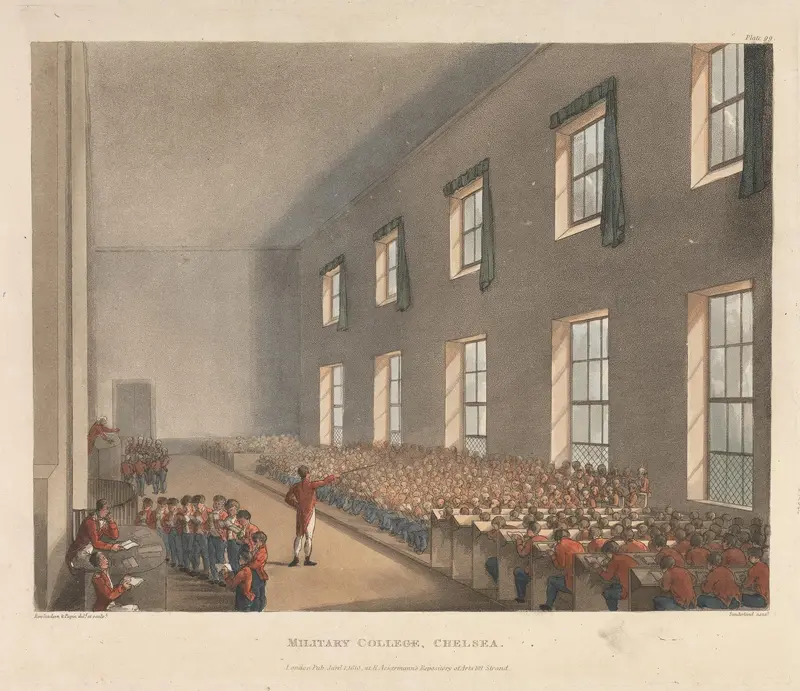
Military College, Chelsea
Augustus Charles Pugin
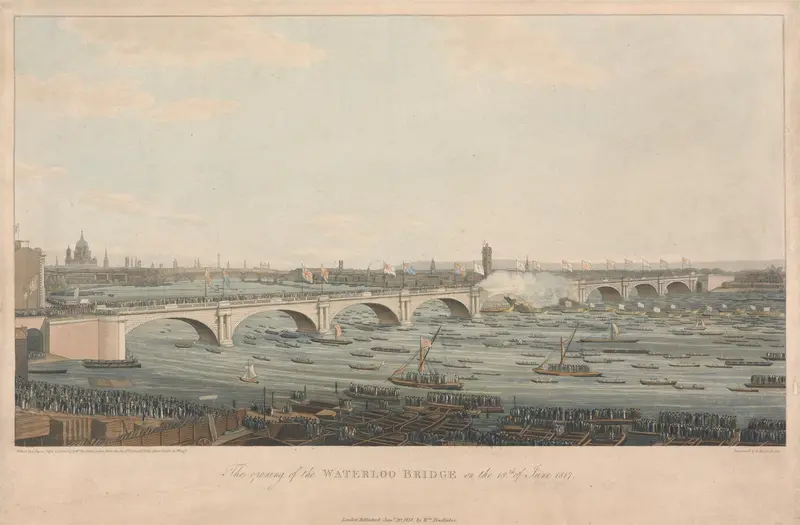
The Opening of the Waterloo Bridge on the 18th June
Augustus Charles Pugin