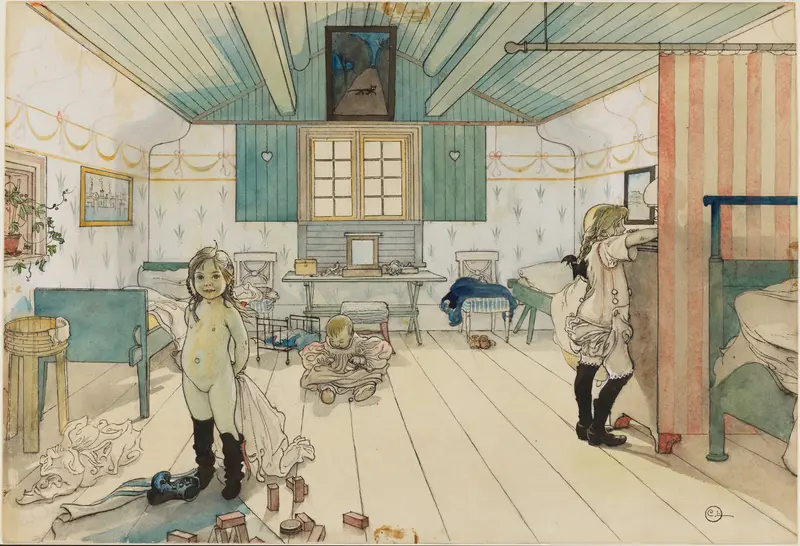
Military College, Chelsea — History & Facts
What first grips the eye in Military College, Chelsea is not the vastness of the hall, but the almost mathematical precision of the young cadets, arrayed in rows so regular they seem to merge into a single disciplined body. Augustus Charles Pugin draws you into a world where order is the highest virtue: the instructor at center stage, arm raised, commands attention, while the boys at their desks, clad in matching red jackets, bow over their work as if the future of the empire itself depends on their diligence. The light pours in through tall, bare windows, slicing across the regimented space and catching the sheen of uniforms and the pale faces bent in concentration.
Every element is a lesson in hierarchy — from the officials at their table in the left foreground, overseeing with pens poised, to the smallest figure at the farthest bench, all eyes fixed forward. This is the architecture of discipline, rendered at the height of Britain’s military and educational reforms. In the early nineteenth century, institutions like the Royal Military College at Chelsea were laboratories for a new kind of officer — one shaped as much by classroom rigor as by parade-ground drill. Works like this, often commissioned for publication or as records of institutional pride, offered the public a glimpse of the machinery behind national power.
Today, Military College, Chelsea is held by the Yale Center for British Art, a reminder of how even the most anonymous faces in history were shaped by the spaces and systems that trained them. The longer you look, the more the symmetry gives way to the individuality of each cadet, each a story waiting to be told.
More Artworks by Augustus Charles Pugin

All Soul’s College from the Radcliffe Library
Augustus Charles Pugin
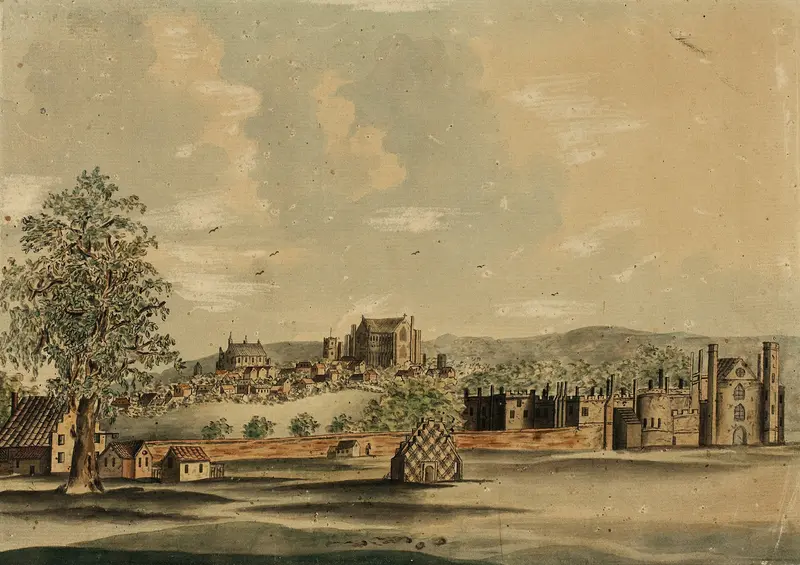
St. James’s with the Village of Charing as It Appeared in ye Reign of Henry VIII
Augustus Charles Pugin

The exterior of the Henry VII Chapel, Westminster Abbey
Augustus Charles Pugin
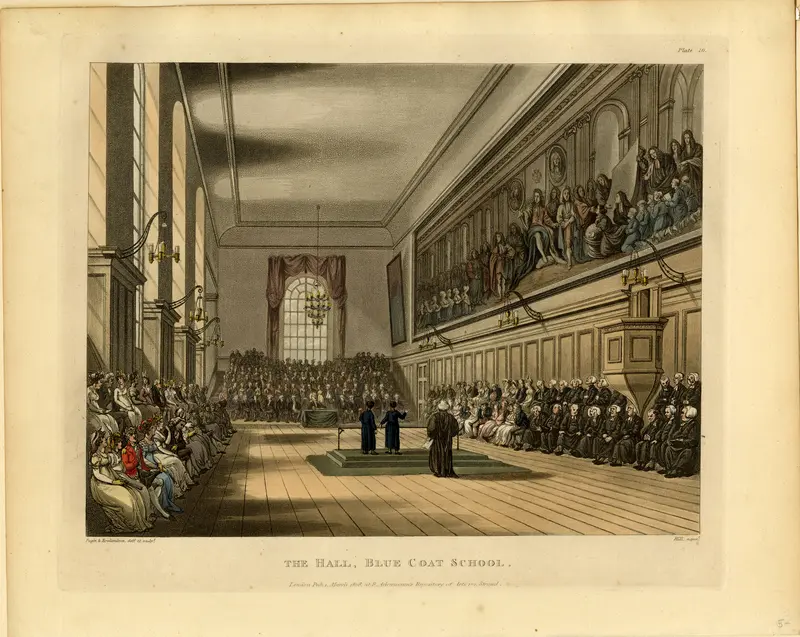
The Hall, Blue Coat School
Augustus Charles Pugin
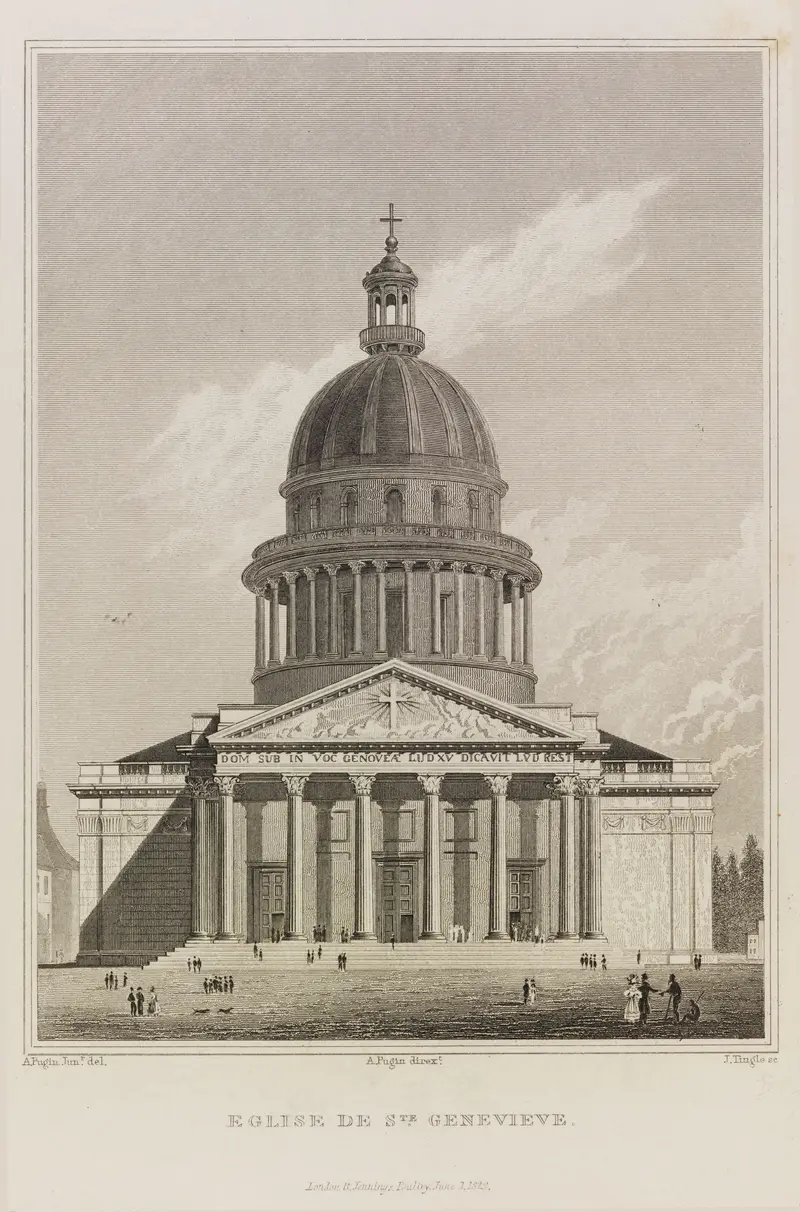
Panthéon - Eglise Sainte-Geneviève (phbw10 0880)
Augustus Charles Pugin
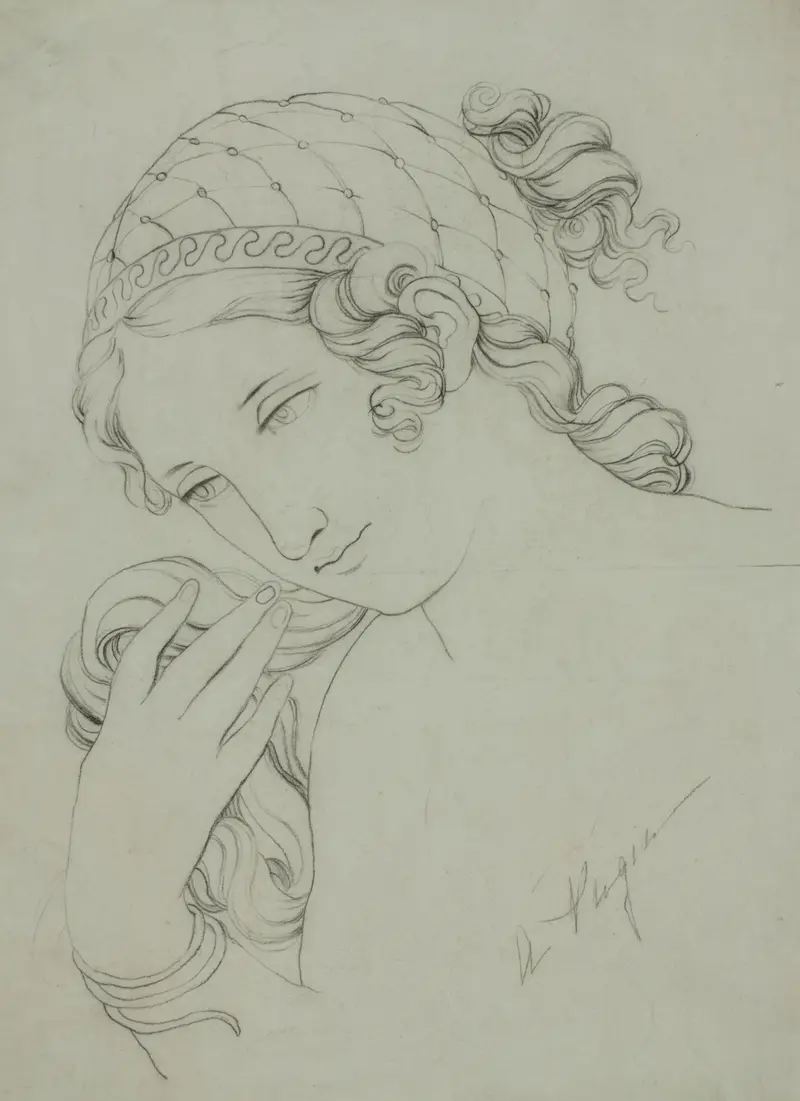
Classical Woman's Head
Augustus Charles Pugin
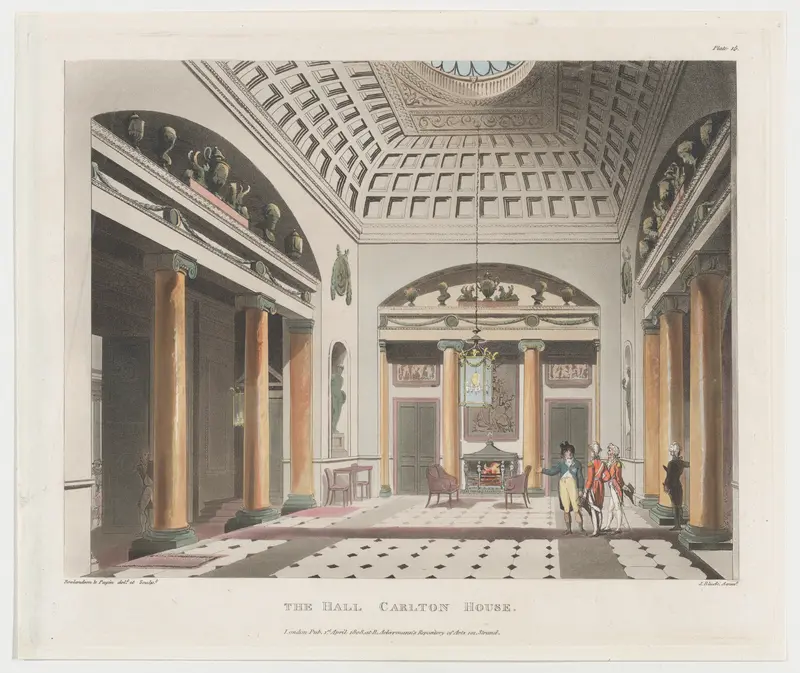
The Hall, Carlton House
Augustus Charles Pugin
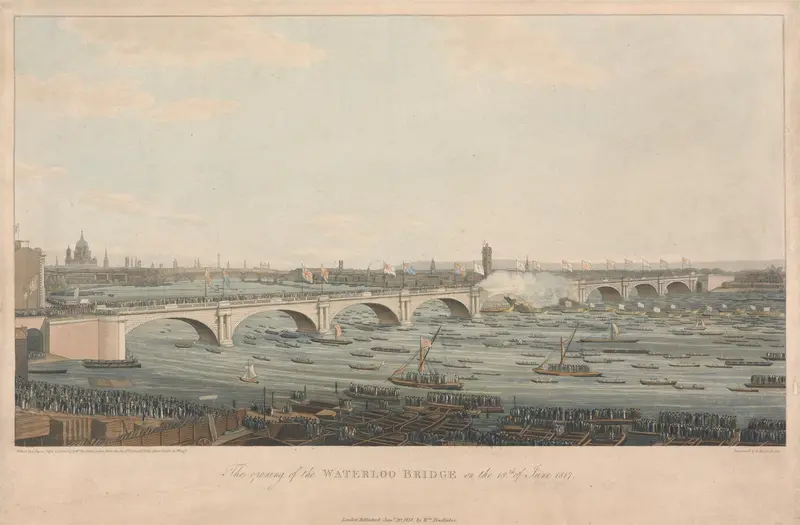
The Opening of the Waterloo Bridge on the 18th June
Augustus Charles Pugin