The Hall, Carlton House — History & Facts
The eye is immediately drawn upward, following the sweep of sunlight as it pours through the domed skylight and dances across the patterned floor of this grand interior. Every detail in The Hall, Carlton House by Augustus Charles Pugin is designed to impress: the marble columns march in stately rhythm, their capitals echoing the classical urns and friezes that crown the walls. A group of figures, dwarfed by the scale of the room, seem both at home and slightly in awe—one gestures expansively as if introducing a guest to the splendors of the hall, while another lingers near the threshold, caught in the act of arrival or departure.
The fire crackling in the distant hearth adds a note of warmth to the otherwise cool geometry, inviting the viewer to imagine the conversations and intrigues that might have unfolded beneath this soaring ceiling. Created in 1808, this work belongs to a moment when architectural illustration was both a celebration of taste and a tool of social aspiration. The early nineteenth century in Britain saw a flourishing of grand domestic interiors, commissioned by the elite not just for comfort, but as statements of lineage and learning. Artists like Pugin specialized in rendering these spaces with an accuracy that bordered on the theatrical, producing images for publication or private display that allowed viewers to tour the latest fashions in neoclassical design.
Today, The Hall, Carlton House resides in the Yale Center for British Art, a reminder of an era when rooms themselves were stages for power and display. Look again at the careful play of light and shadow—every inch is calculated to show not just a place, but a world of ambition and ceremony.
More Artworks by Augustus Charles Pugin

All Soul’s College from the Radcliffe Library
Augustus Charles Pugin
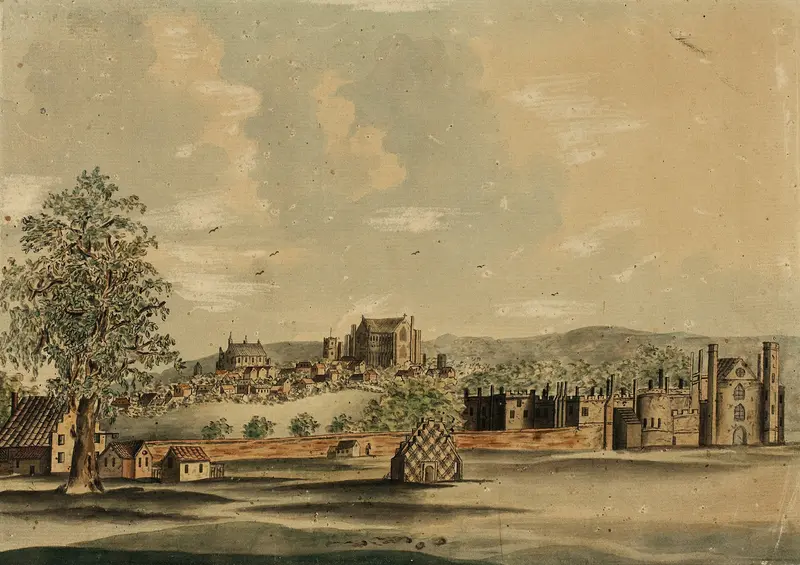
St. James’s with the Village of Charing as It Appeared in ye Reign of Henry VIII
Augustus Charles Pugin

The exterior of the Henry VII Chapel, Westminster Abbey
Augustus Charles Pugin
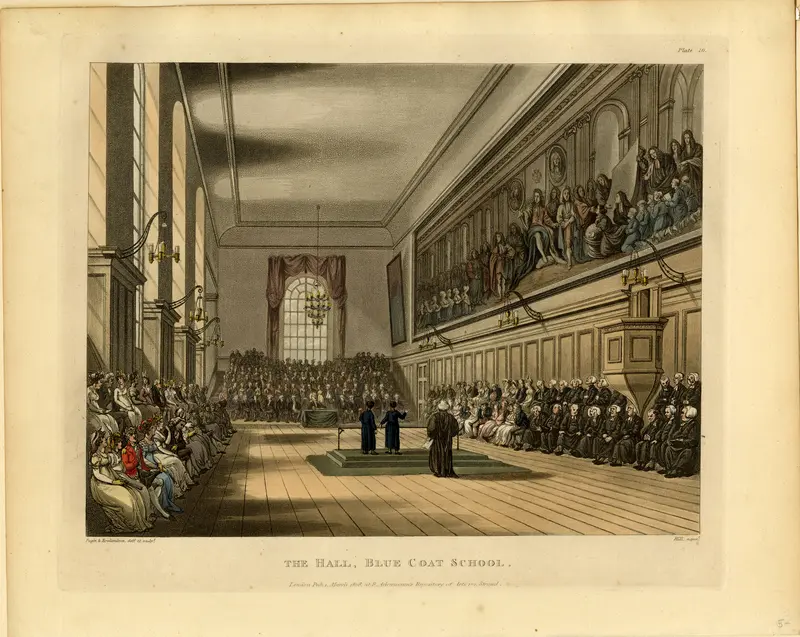
The Hall, Blue Coat School
Augustus Charles Pugin
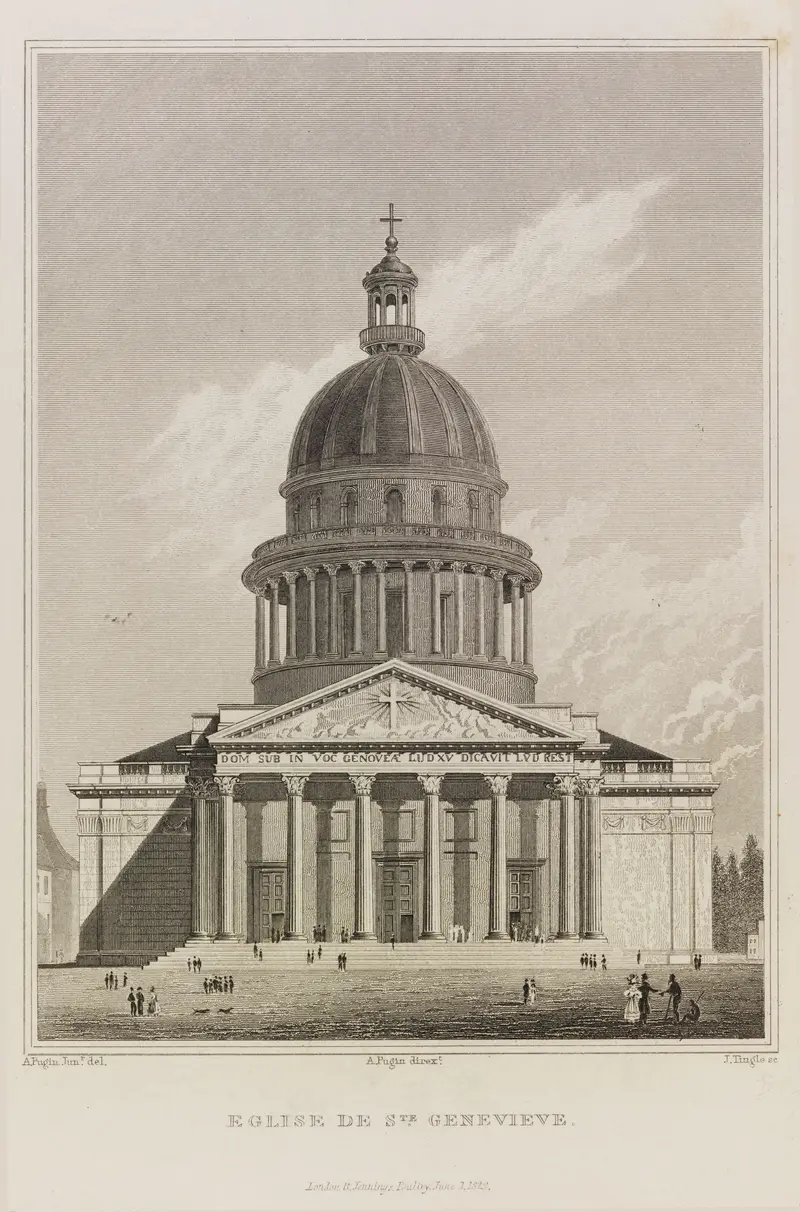
Panthéon - Eglise Sainte-Geneviève (phbw10 0880)
Augustus Charles Pugin
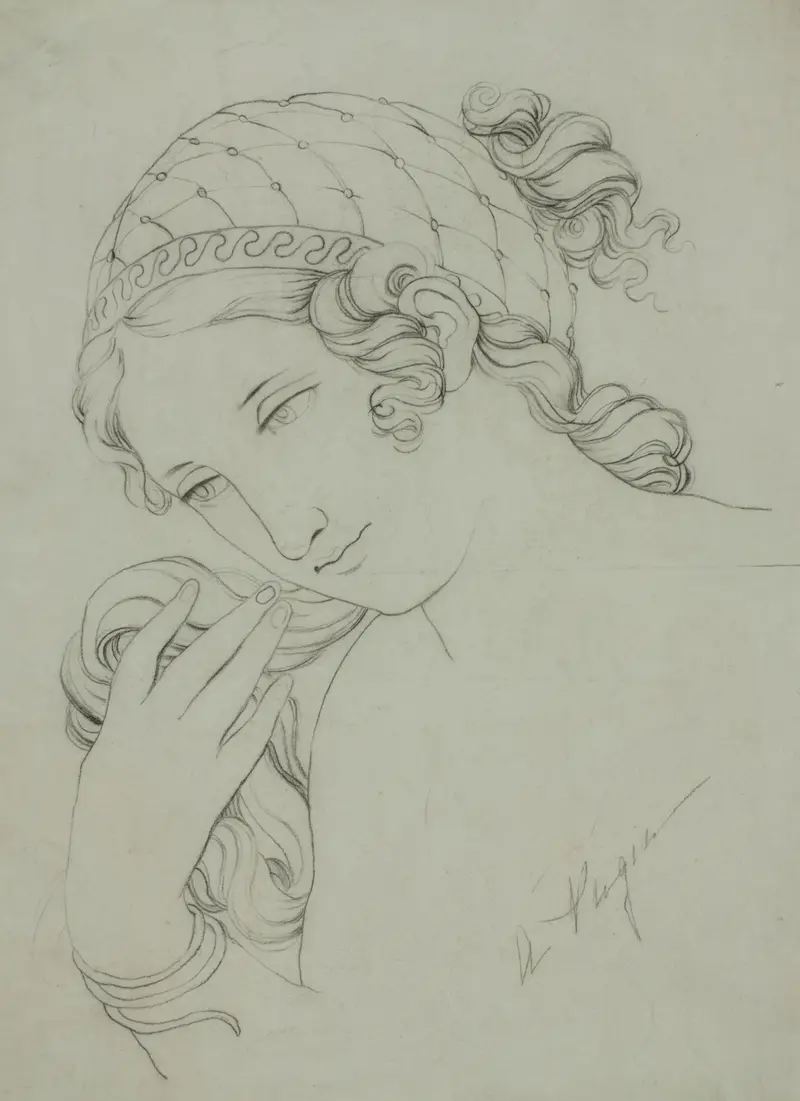
Classical Woman's Head
Augustus Charles Pugin
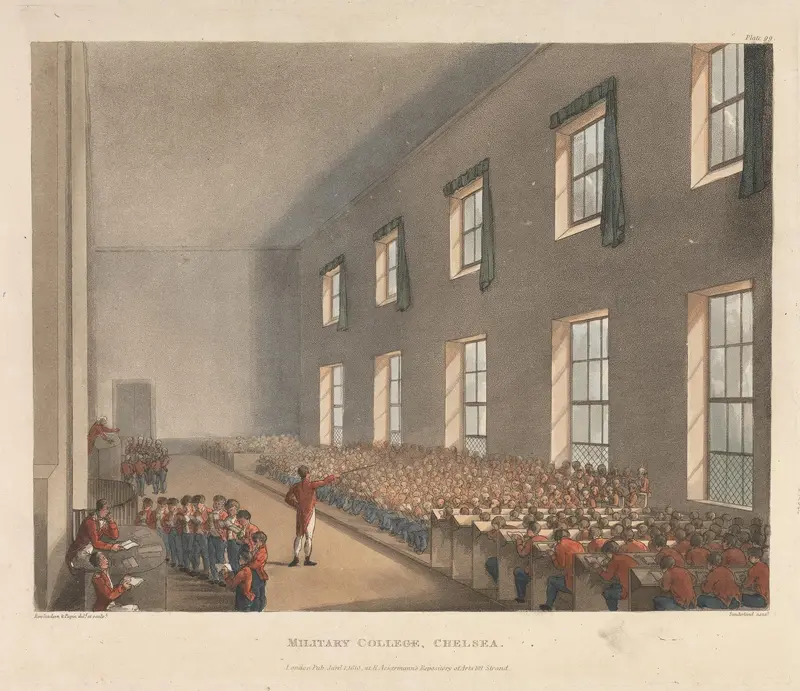
Military College, Chelsea
Augustus Charles Pugin

The Opening of the Waterloo Bridge on the 18th June
Augustus Charles Pugin