Cloud Study — History & Facts
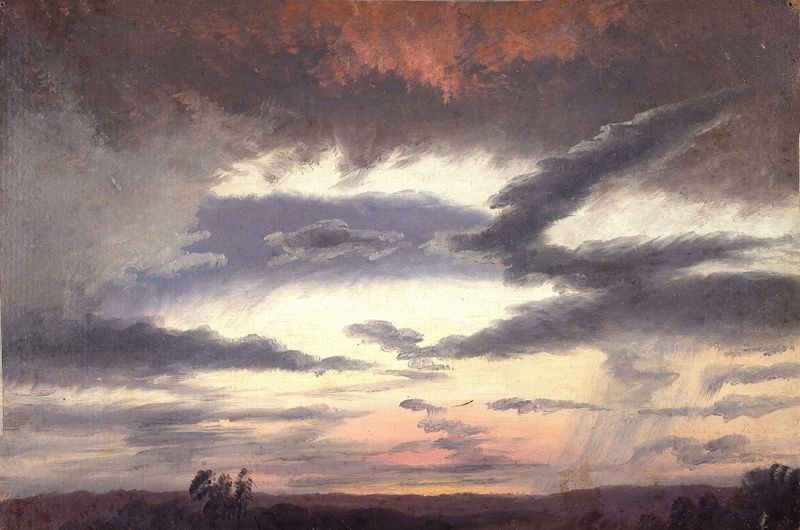
Could beauty survive in a century of chaos? In Cloud Study, we find a glimmer of hope amid the tumultuous shifts of the mid-19th century. The artist captures the sky, a vast canvas of dynamic clouds that dance across the horizon, serving as a reminder that nature's splendor endures even in uncertain times. Look to the upper left corner, where wisps of soft, white clouds seem to cascade like silk against an azure backdrop. Notice how the artist employs a delicate touch, blending subtle hues of blue and gray to create a sense of depth that draws the viewer’s gaze toward the ever-changing sky.
The composition leads the eye across the painting, illustrating the fleeting nature of clouds—an emblem of transience. Each brushstroke evokes a gentle breeze, whispering stories of serenity and anticipation. Yet, within the beauty of this serene sky lies an underlying tension. The darker clouds on the right suggest an encroaching storm, a foreshadowing of disruption.
This contrast between light and shadow reflects the duality of existence—a reminder that hope can exist alongside despair. The interplay of colors invites contemplation on the resilience of the human spirit in the face of adversity, suggesting that even in chaos, solace can be found within nature's embrace. Created in 1850, during a period of personal and societal upheaval for the artist, Cloud Study reflects Baade’s quest for peace in a world marked by unrest. Living in Norway, he was deeply influenced by the Romantic movement, which celebrated the sublime beauty of nature.
Baade's exploration of the sky serves as both an artistic pursuit and a personal meditation, capturing the essence of hope amid the challenge of his times.