
Clouds — History & Facts
Did the painter know this moment would outlive them? In Clouds, the delicate balance between the ephemeral and the eternal unravels before our eyes, inviting a reflection on the nature of existence itself. Look to the center, where a swirling mass of clouds dominates the canvas, each brushstroke filled with motion and intent. The interplay of light and shadow reveals blues and grays that capture both tumult and tranquility, as beams of sunlight pierce through the tumultuous skies. Notice how the subtle transitions from dark to light evoke an emotional depth, with the swirling forms almost seeming to breathe, as if caught in a moment suspended in time. Within this vast expanse, contrasts emerge: the chaotic energy of the clouds against the calm beneath, suggesting a tension between uncertainty and peace.
The painter's mastery of atmospheric perspective creates an illusion of depth, drawing the viewer’s gaze upward and outward, prompting us to ponder our place in the grand expanse of nature. In this ethereal vision, one can sense the fleeting nature of beauty, encapsulating both the awe of the sublime and the inevitability of change. Created in 1838, Thomas Cole painted Clouds during a time when the Hudson River School movement was gaining prominence, marking a shift towards American landscape painting. At this moment in his life, Cole was deeply influenced by the Romantic ideals of nature as a reflection of the human spirit.
While the world around him witnessed rapid industrialization, he sought to capture the profound beauty of the American landscape, making a statement about the power and fragility of the natural world.
More Artworks by Thomas Cole
Browse all →
View from Mount Holyoke, Northampton, Massachusetts, after a Thunderstorm—The Oxbow
Thomas Cole
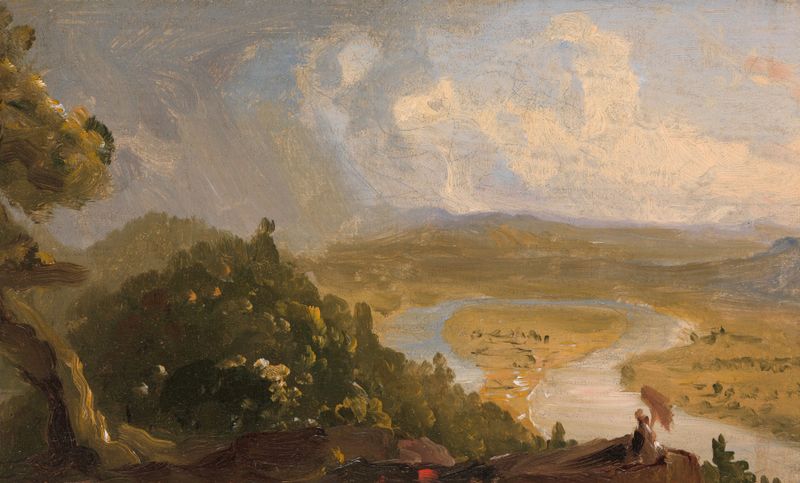
Sketch for View from Mount Holyoke, Northampton, Massachusetts, after a Thunderstorm (The Oxbow)
Thomas Cole
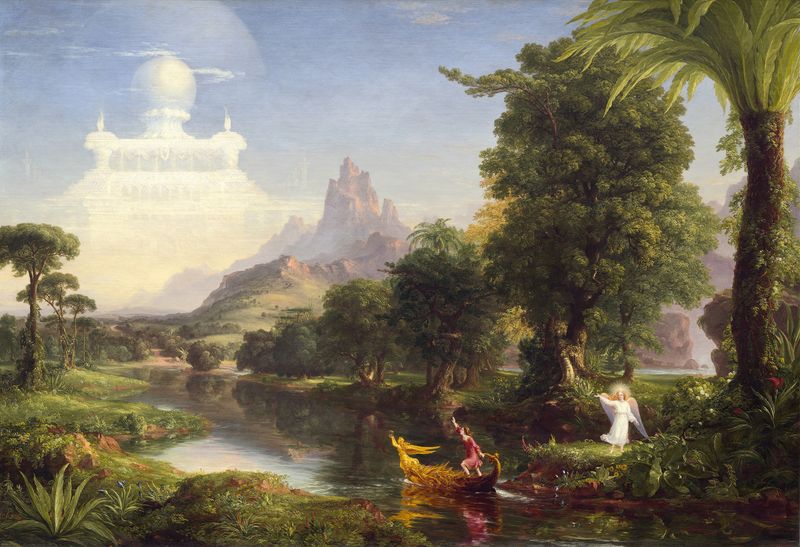
The Voyage of Life – Youth
Thomas Cole
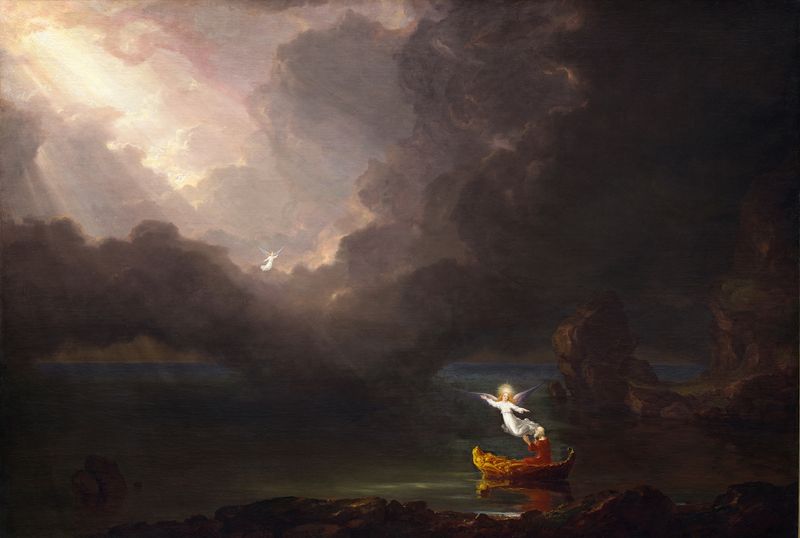
The Voyage of Life – Old Age
Thomas Cole
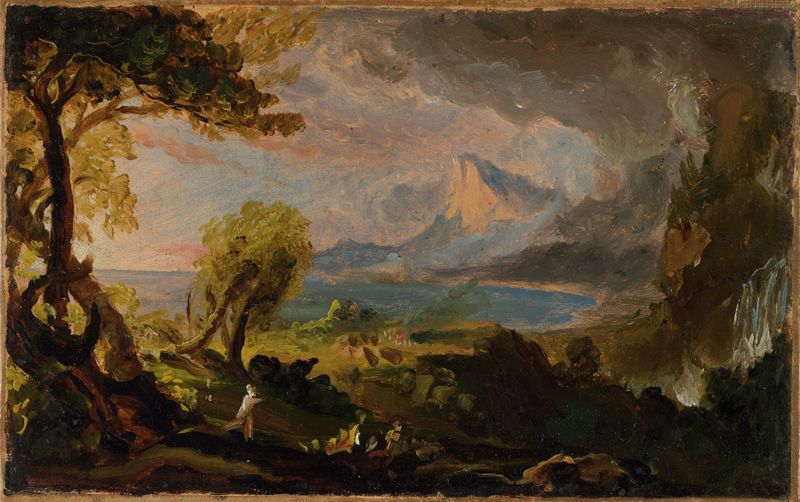
The Course of Empire–The Savage State
Thomas Cole

Landscape
Thomas Cole

New England Scenery
Thomas Cole

Sunrise in the Catskills
Thomas Cole
Tornado in an American Forest
Thomas Cole
The Voyage of Life – Childhood
Thomas Cole





