
Communion of the Apostles / Apostles in a wooded landscape — History & Facts
What first catches the eye in Communion of the Apostles / Apostles in a wooded landscape is not the sacred ritual, but the wild, living forest that seems to press in on the figures from every side. The apostles gather in a loose, almost accidental cluster beneath towering trees, their bright robes flaring against the cool, mossy shadows. The painter, Albrecht Altdorfer, draws the viewer’s gaze from the golden halos and gentle gestures of the apostles to the ruined archway and distant blue mountains, where the sky breaks open with light.
The landscape is not a backdrop but a presence, suggesting a world where the divine and the natural are deeply entwined. Created around 1523, this painting belongs to a moment when artists of the German Renaissance were reimagining sacred history in their own countryside. The apostles’ actions—sharing bread, kneeling, touching—are rendered with quiet intimacy, but their placement in a lush, almost untamed landscape is a hallmark of Altdorfer’s vision. Unlike the ordered spaces of Italian Last Suppers, here the ancient ritual unfolds under open sky, among ruins and trees, with distant figures wandering the paths beyond.
Such works were often commissioned for private devotion, inviting viewers to find the sacred in the familiar woods and hills of their own world. History has kept few traces of the painting’s early life, but its survival lets us stand, centuries later, beneath those same trees and wonder what might be waiting just beyond the edge of the scene.
More Artworks by Albrecht Altdorfer

Landscape with Two Pines
Albrecht Altdorfer
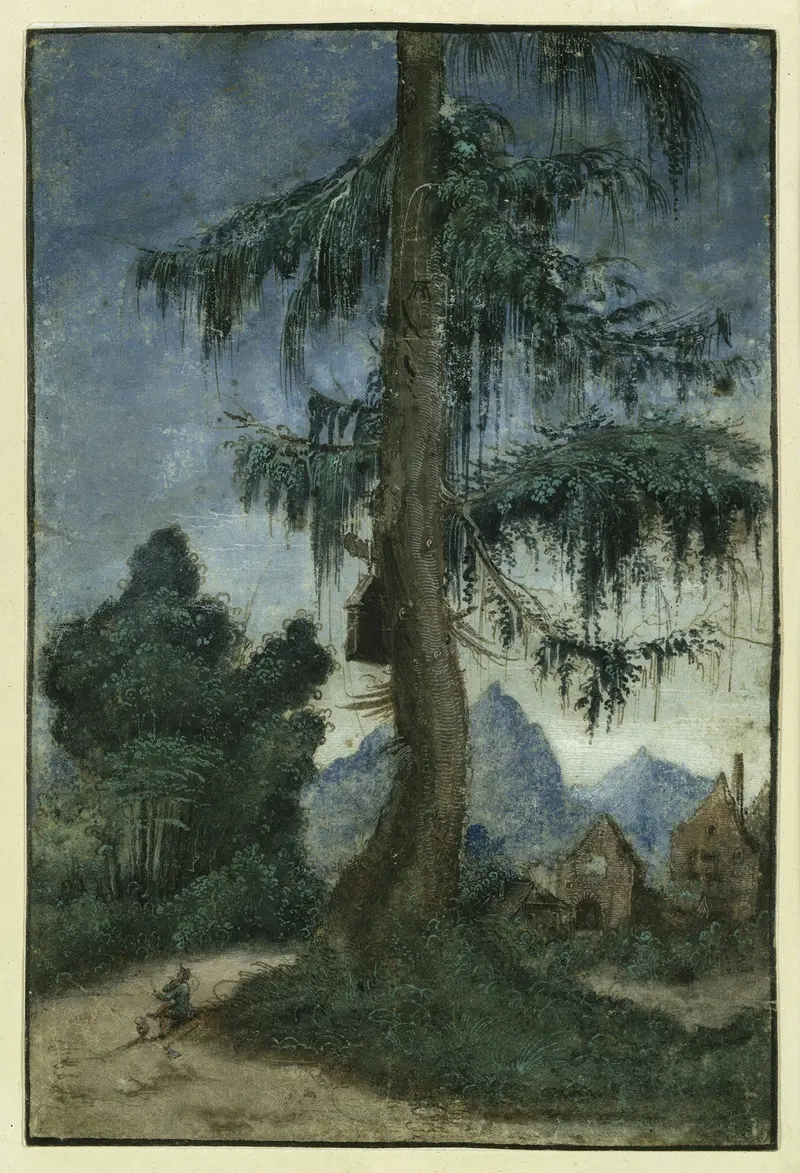
Landscape with spruce
Albrecht Altdorfer
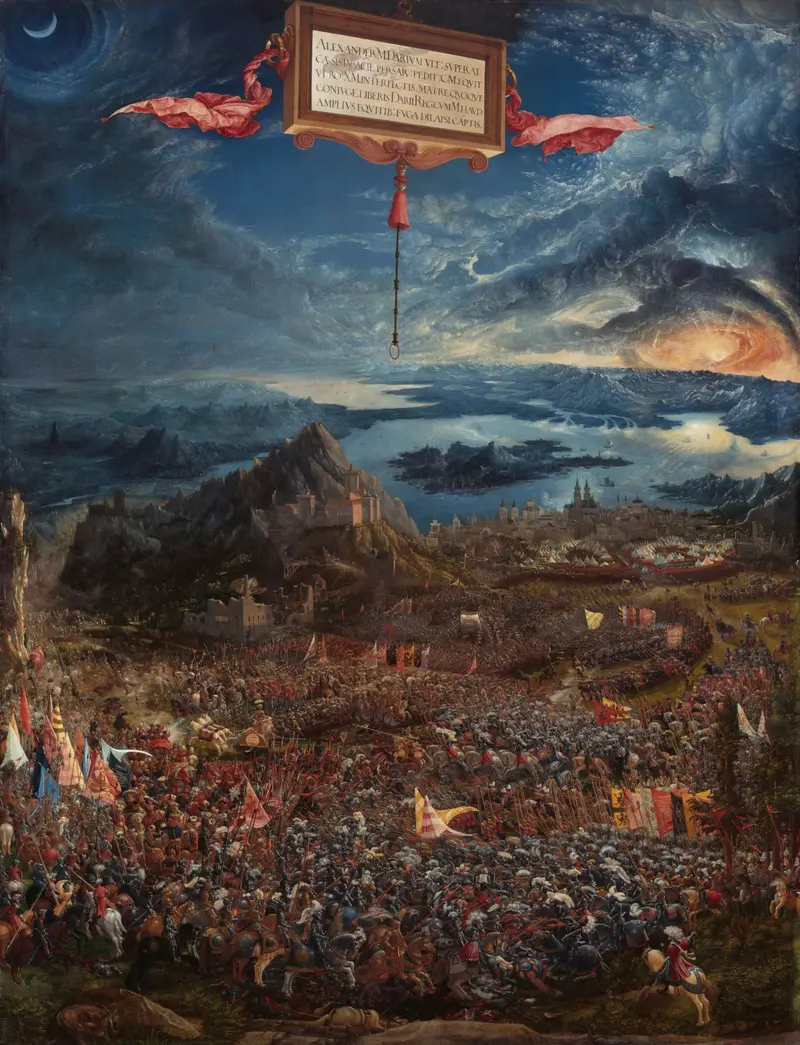
The Battle of Alexander at Issus
Albrecht Altdorfer
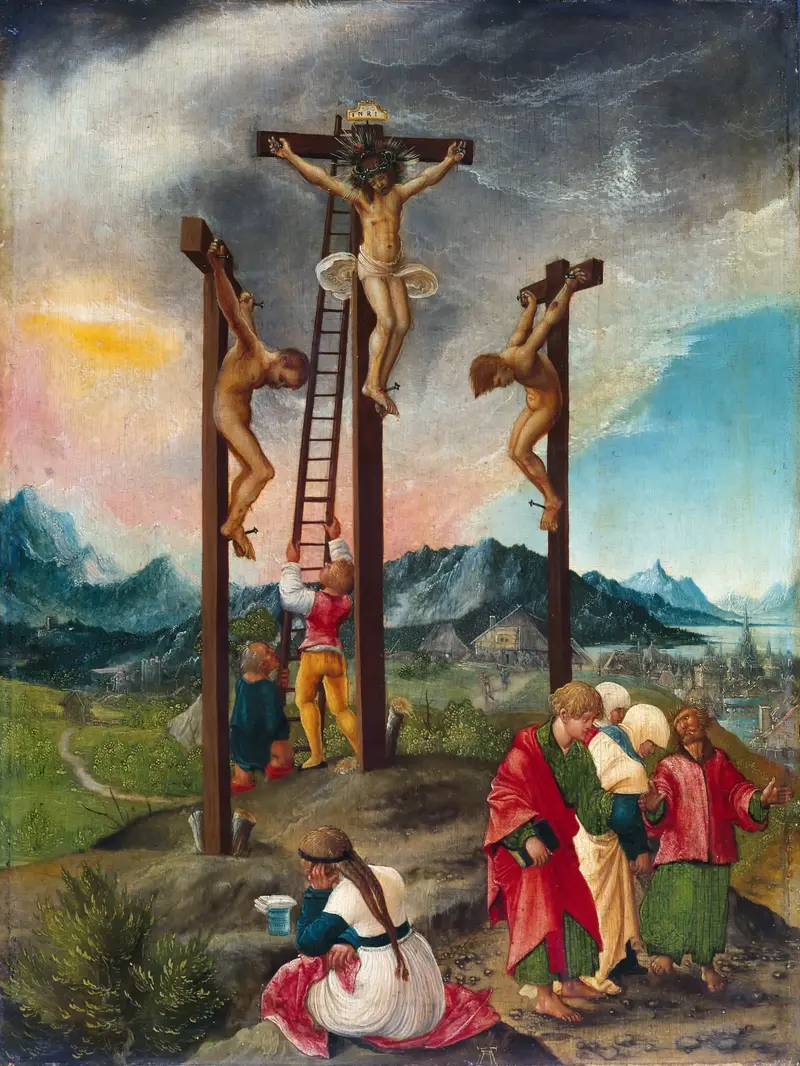
Christ on the Cross between the Two Thieves
Albrecht Altdorfer
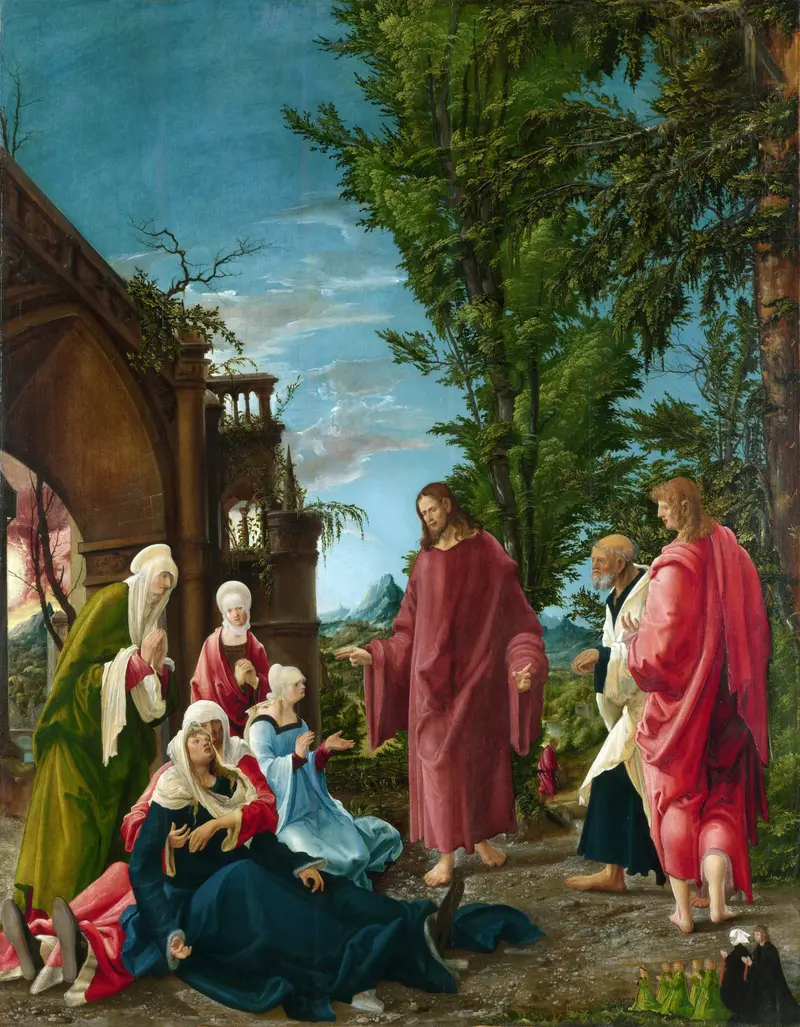
Christ Taking Leave of his Mother
Albrecht Altdorfer
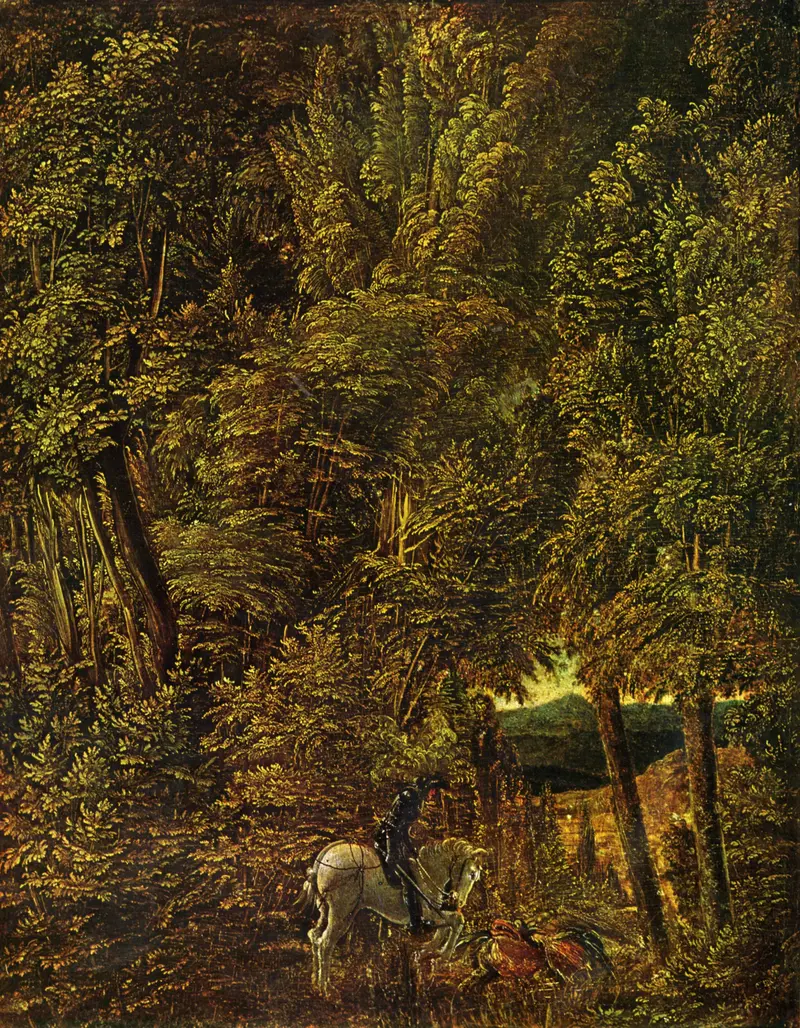
Countryside of Wood With Saint George Fighting the Dragon
Albrecht Altdorfer
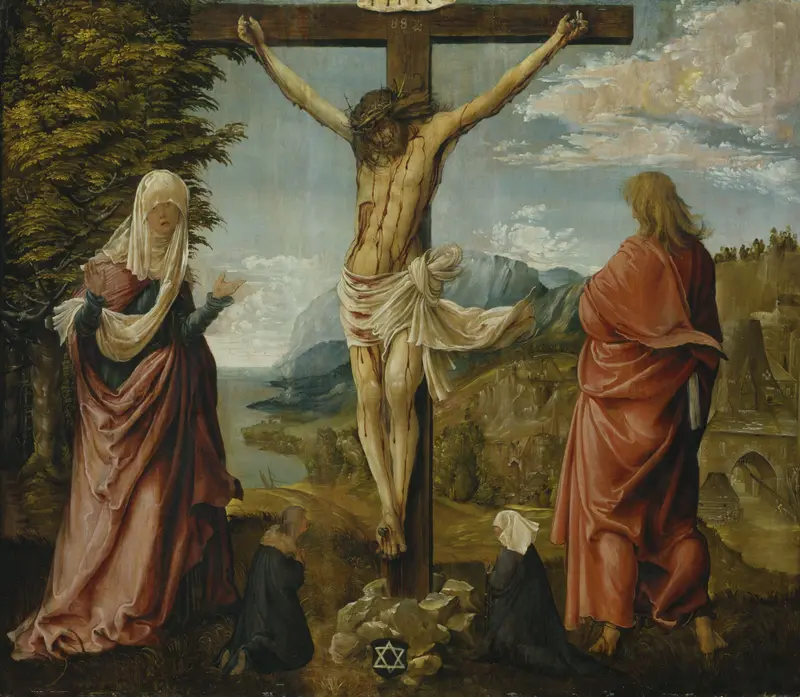
Crucifixion with Mary and John
Albrecht Altdorfer
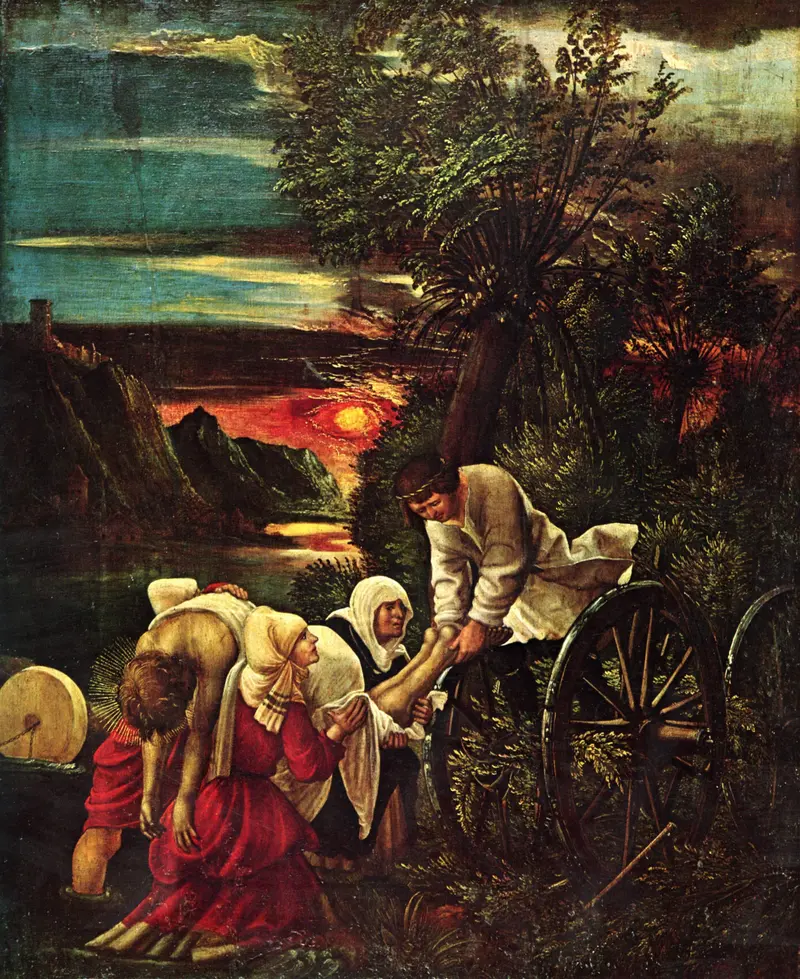
Finding of the Body of Saint Florian
Albrecht Altdorfer
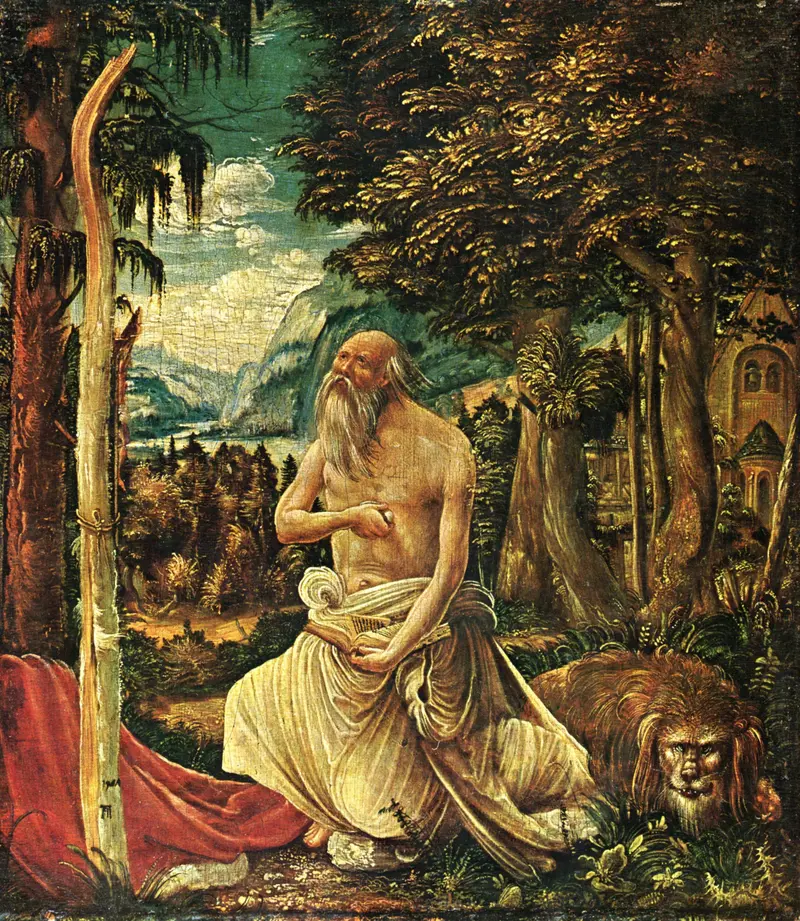
Penitent Hieronymus
Albrecht Altdorfer
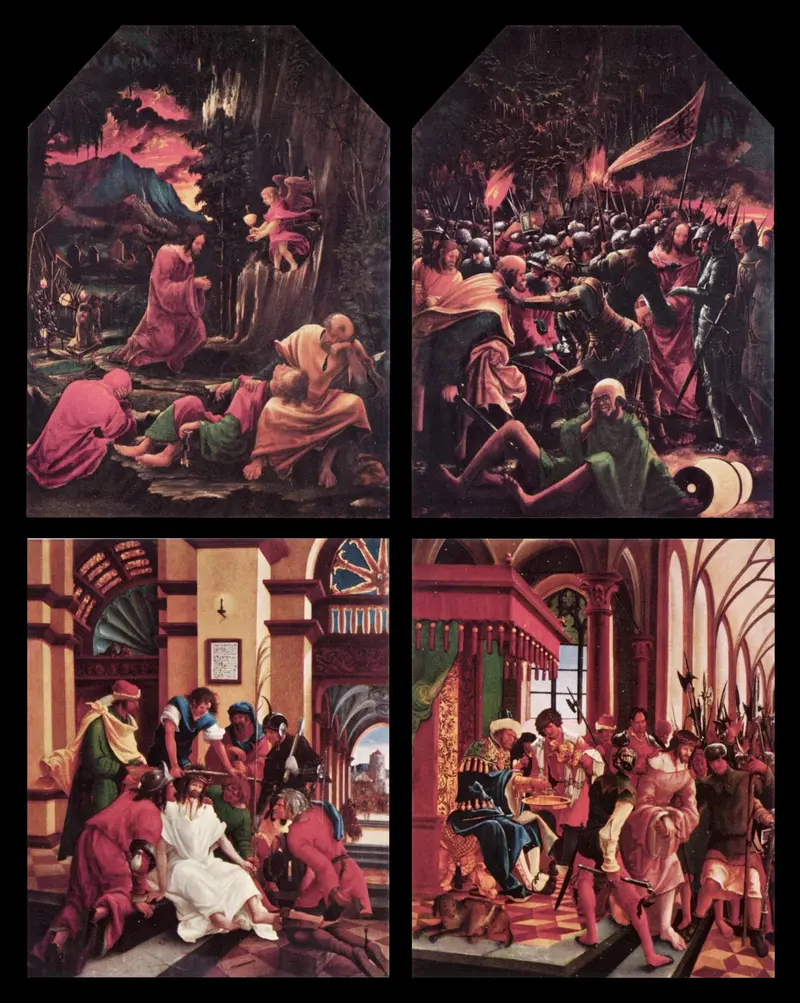
Pilate Washing His Hands by Altdorfer
Albrecht Altdorfer





