Composition No. III, with Red, Blue, Yellow and Black — History & Facts
Composition No. III, with Red, Blue, Yellow and Black was painted by Piet Mondrian in 1929, more than a decade after he helped found the De Stijl movement. This work is an example of his commitment to geometric abstraction and the use of primary colors, black, and white.
By 1929, Mondrian had refined his style to focus on the balance of form and color within a strict grid of horizontal and vertical lines. The painting consists of a series of rectangular fields, defined by thick black lines that divide the canvas into segments of varying size. The upper left quadrant is dominated by a large red rectangle, while smaller fields of blue and yellow are placed at the lower right and bottom edges respectively. The remaining areas are filled with white, creating a sense of order and clarity.
The brushwork is smooth and even, with the colors applied flat and without visible texture. This work is part of a series of compositions that Mondrian produced in the late 1920s, which became influential in the development of modern abstract art. Its date and style place it within the mature phase of Mondrian’s career, when his theories of neoplasticism were widely recognized in international exhibitions and publications.
More Artworks by Piet Mondrian

Composition II in Red, Blue, and Yellow
Piet Mondrian

Composition with Yellow, Blue, Black and Light Blue
Piet Mondrian

Composition with Large Blue Plane, Red, Black, Yellow, and Gray
Piet Mondrian
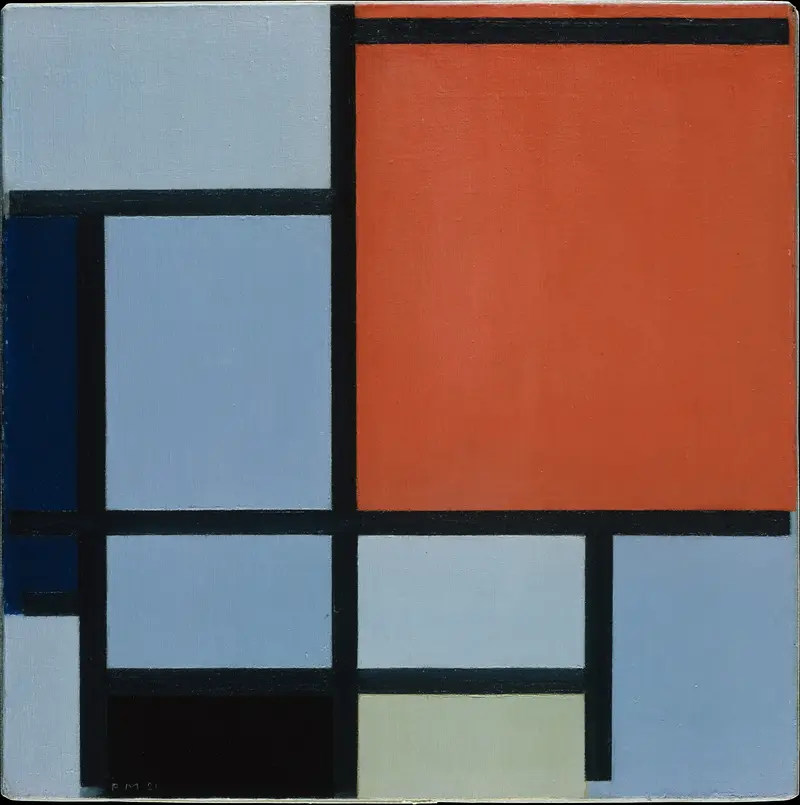
Composition
Piet Mondrian
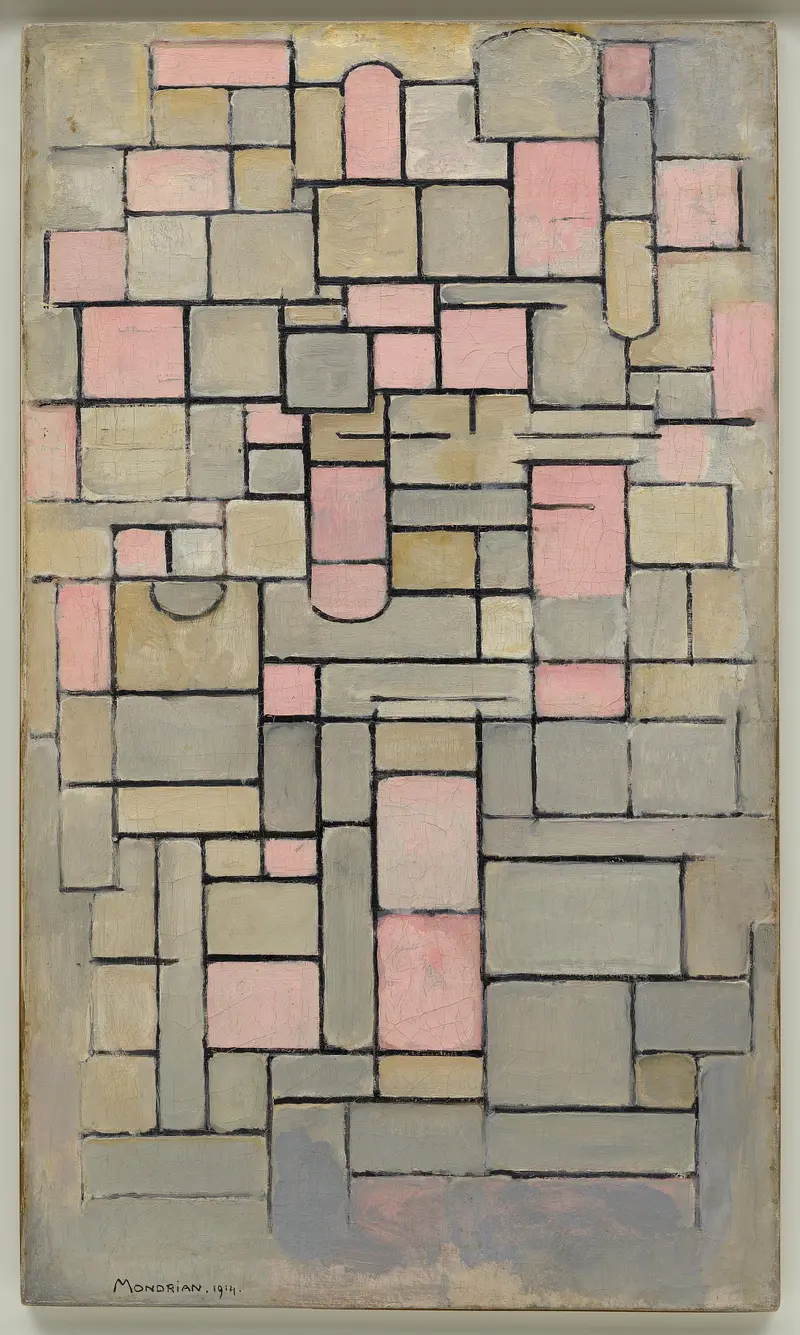
Composition 8
Piet Mondrian
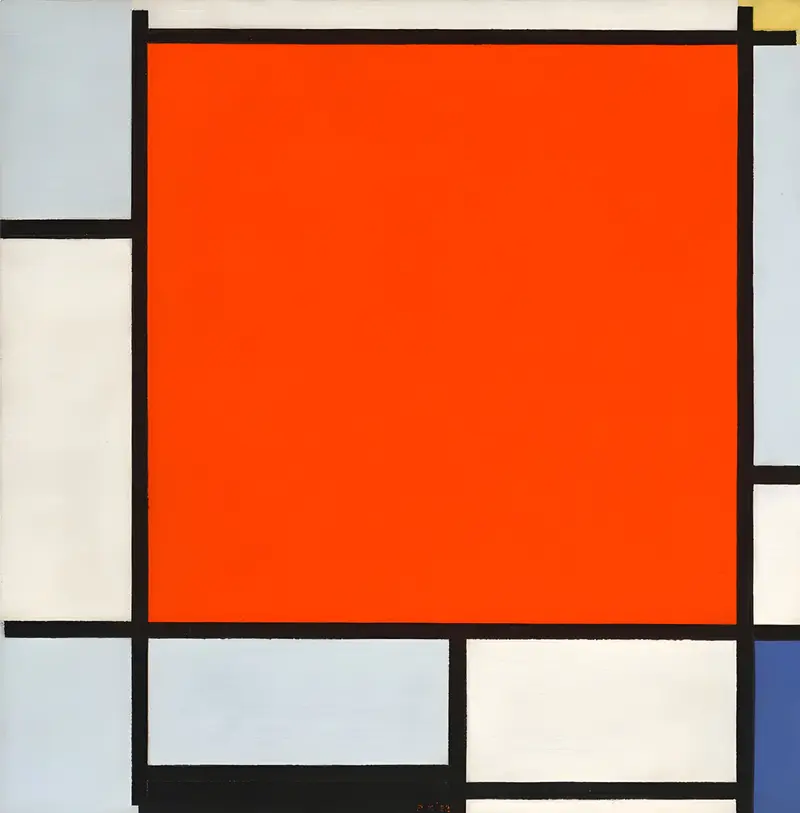
Composition with Large Red Plane, Bluish Gray, Yellow, Black and Blue
Piet Mondrian
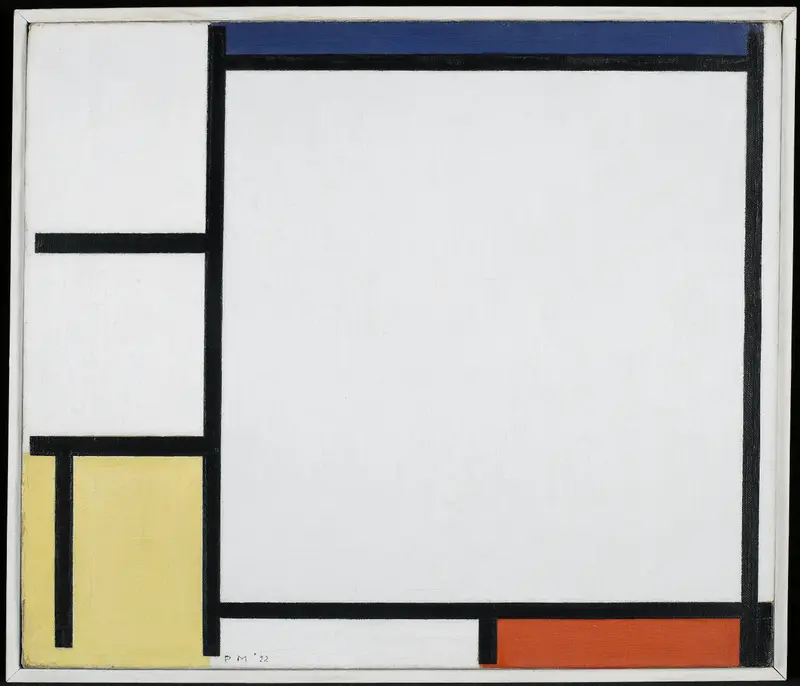
Composition with Blue, Red, Yellow, and Black
Piet Mondrian
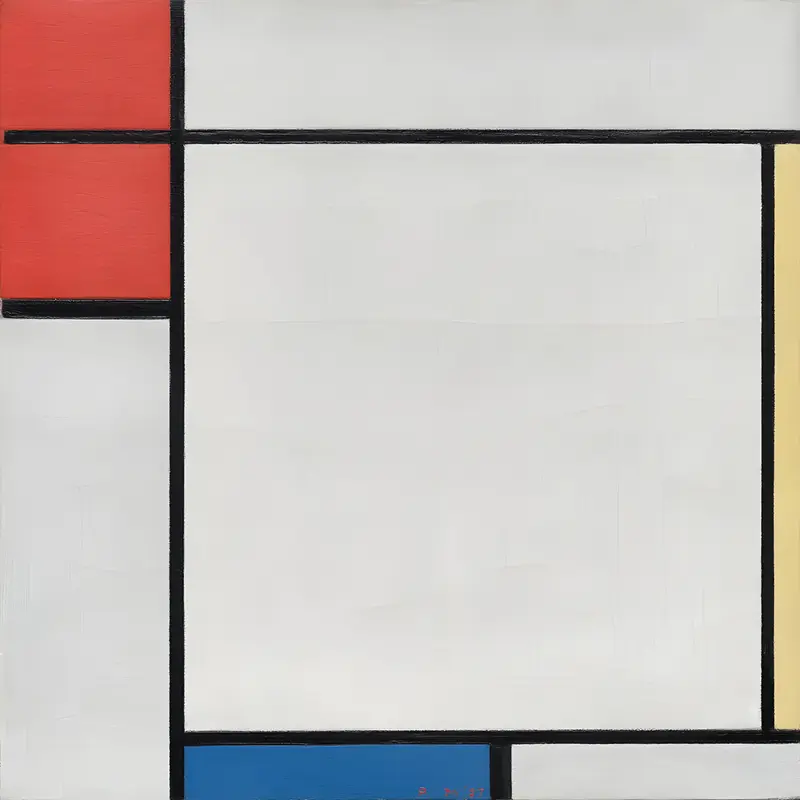
Composition with Red, Yellow, and Blue
Piet Mondrian
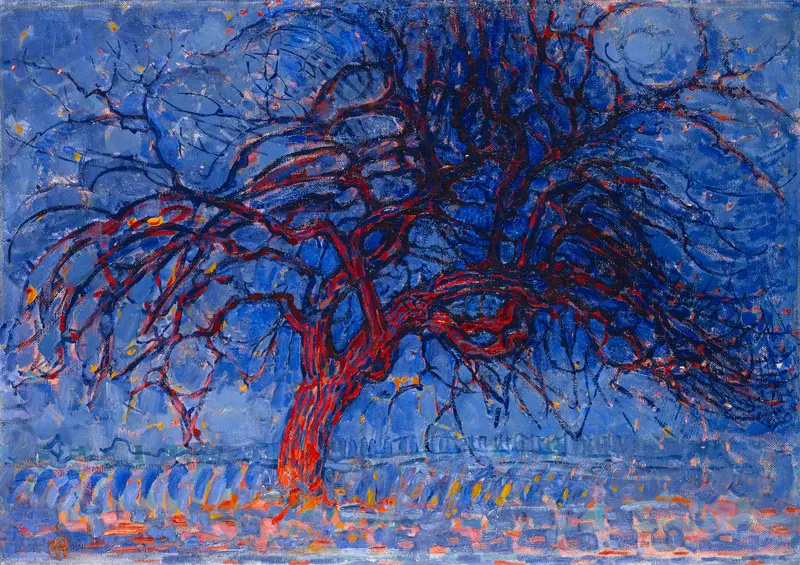
The Red Tree (Evening)
Piet Mondrian
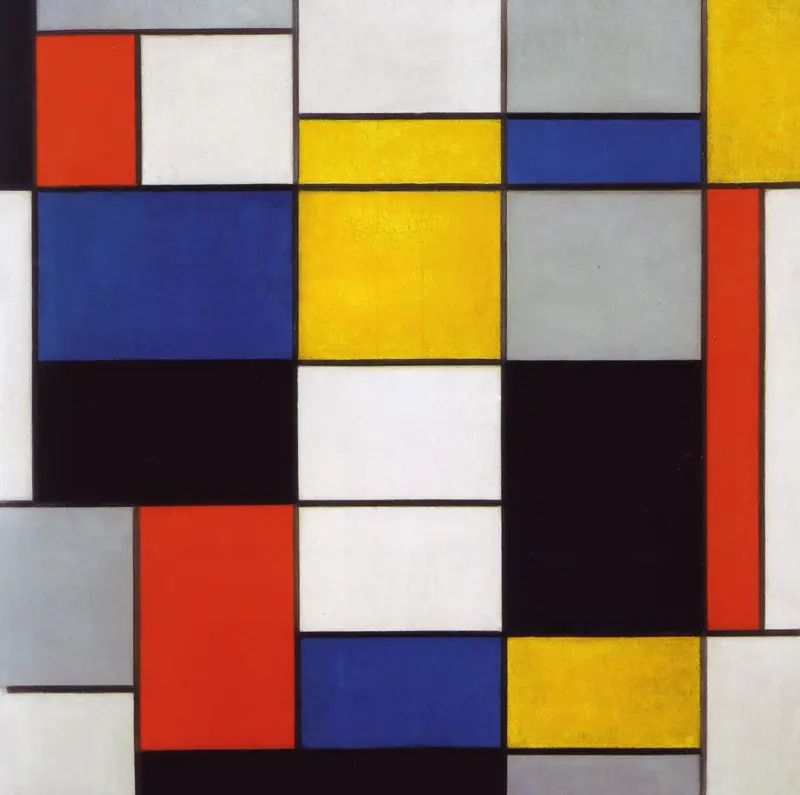
Composition A
Piet Mondrian