
Composition with Blue, Red, Yellow, and Black — History & Facts
A wide expanse of white dominates the center and right side of the composition, bordered by thick, straight black lines that form a grid of rectangles and squares. At the very top, a narrow horizontal band of deep blue runs from the upper right corner to just past the center, confined by black lines on three sides. On the left, a vertical black line descends from the blue band, meeting a horizontal line that stretches to the left edge, creating a small white rectangle in the upper left corner, surrounded on three sides by black lines and on one by the edge of the canvas.
Below this, two black verticals and a horizontal enclose a pale yellow square in the lower left quadrant, its surface smooth and even, with the brushwork nearly invisible. A long horizontal black line crosses the lower part of the painting, separating the large white field from a vibrant red rectangle that sits in the lower right corner. The composition balances color and space, with each colored area—blue, yellow, and red—confined to one edge or corner, while the rest remains white.
The black lines vary slightly in thickness but are uniformly straight, creating a sense of order and clarity. Near the bottom edge, just left of center, the artist has signed 'P M '22' in small, neat letters. The red rectangle in the lower right corner is sharply defined, with its color appearing opaque and flat compared to the softer white areas.
The black lines have crisp, clean edges, but in some places, especially at intersections, the paint appears slightly thicker and glossier. At the top right and bottom right corners, the black lines meet the frame at precise right angles, reinforcing the geometric structure. Light falls evenly across the surface, revealing a faint texture of the canvas beneath the white paint, especially in the large central area.
Sources: Minneapolis Institute of Art, record 65.5 · Wikidata Q20891041
More Artworks by Piet Mondrian

Composition II in Red, Blue, and Yellow
Piet Mondrian

Composition with Yellow, Blue, Black and Light Blue
Piet Mondrian

Composition with Large Blue Plane, Red, Black, Yellow, and Gray
Piet Mondrian
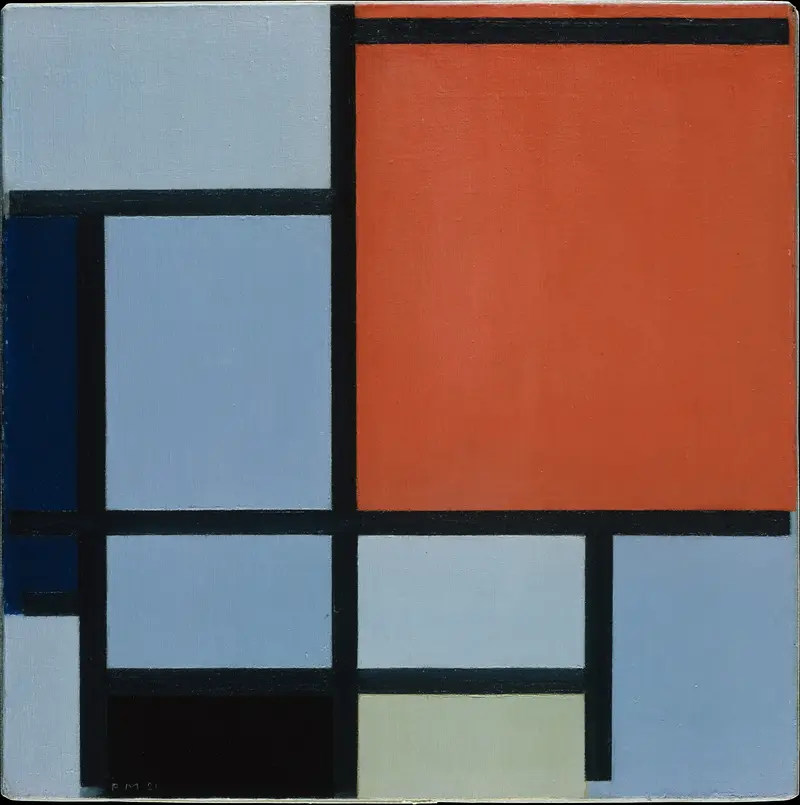
Composition
Piet Mondrian
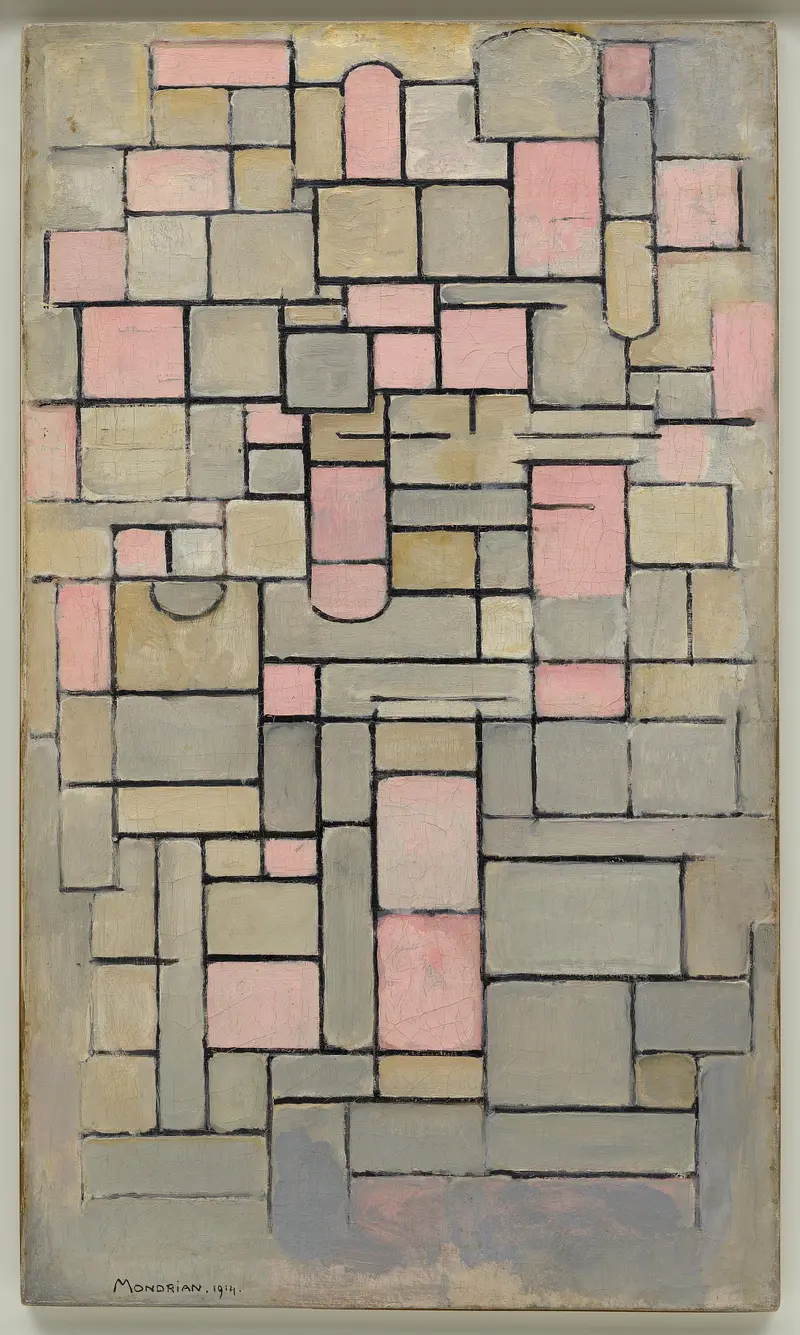
Composition 8
Piet Mondrian
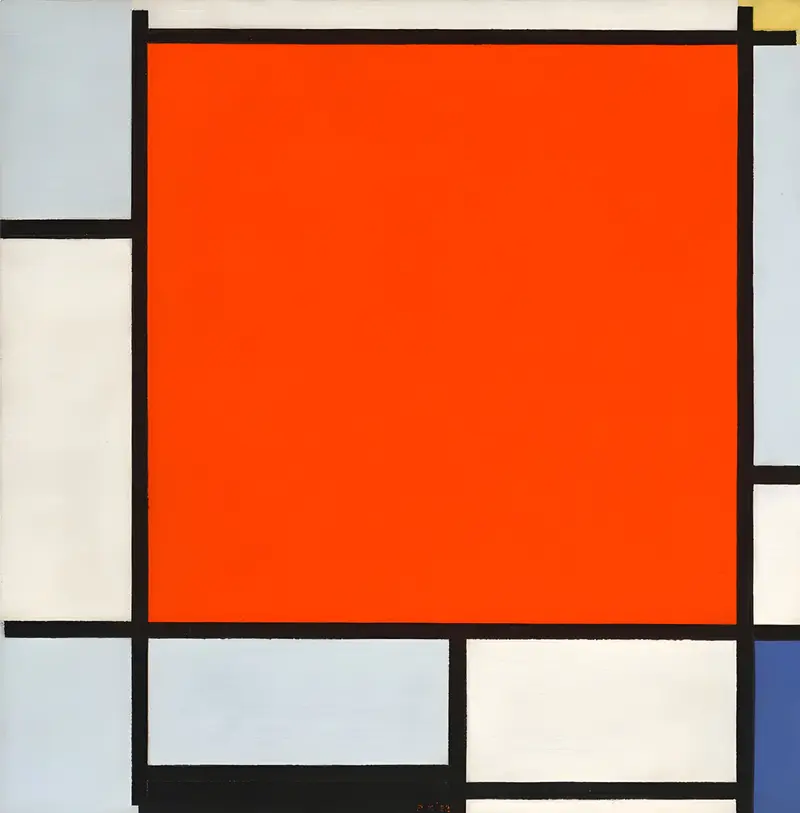
Composition with Large Red Plane, Bluish Gray, Yellow, Black and Blue
Piet Mondrian
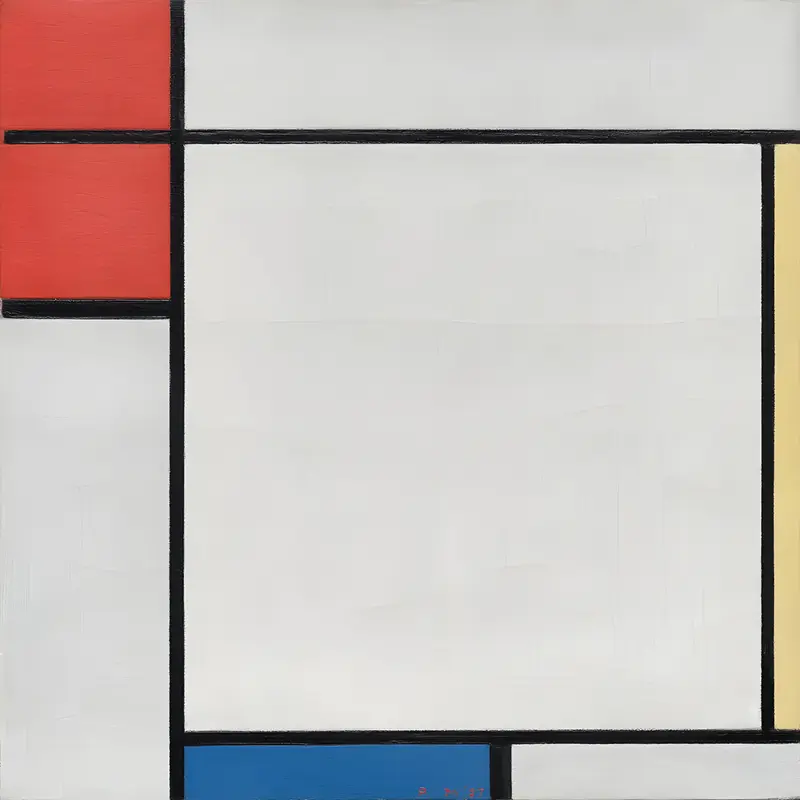
Composition with Red, Yellow, and Blue
Piet Mondrian
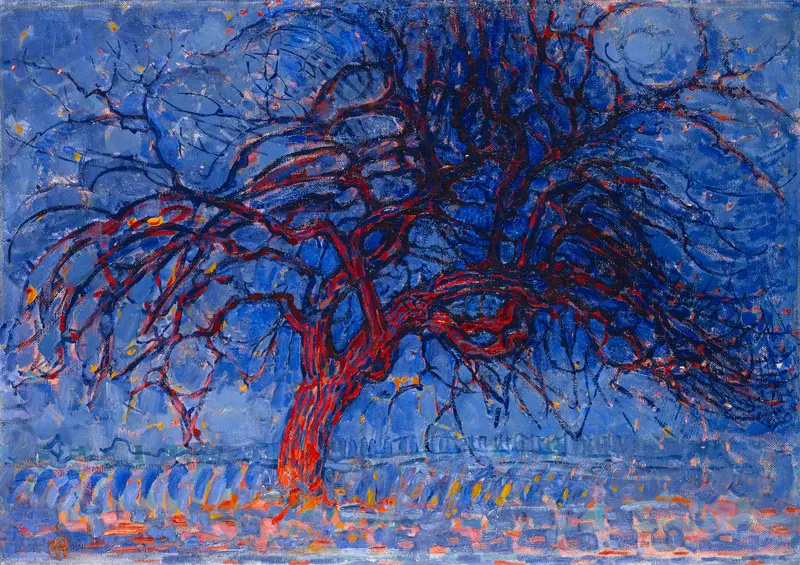
The Red Tree (Evening)
Piet Mondrian
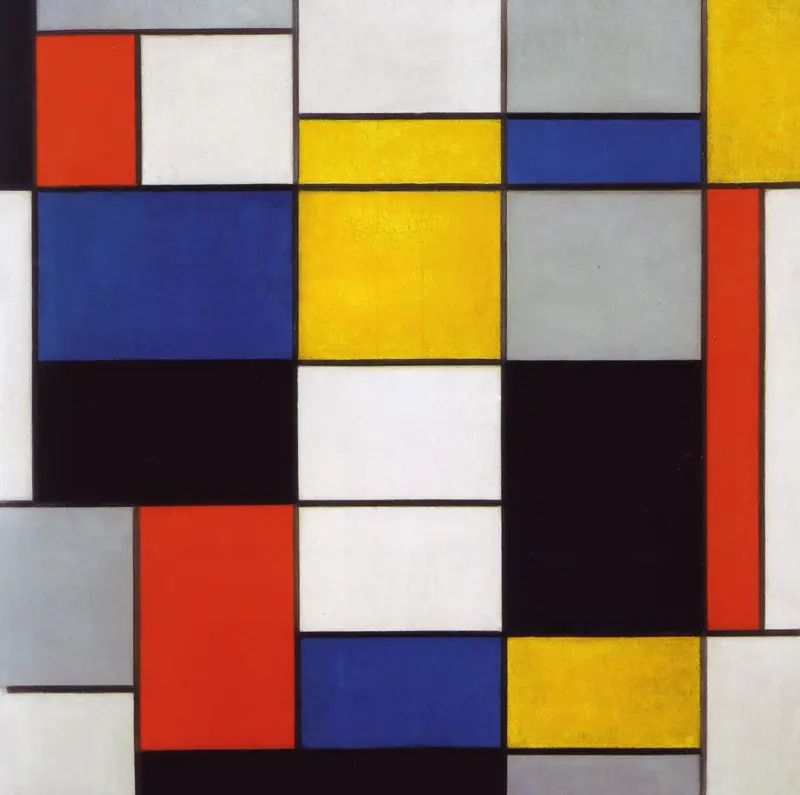
Composition A
Piet Mondrian
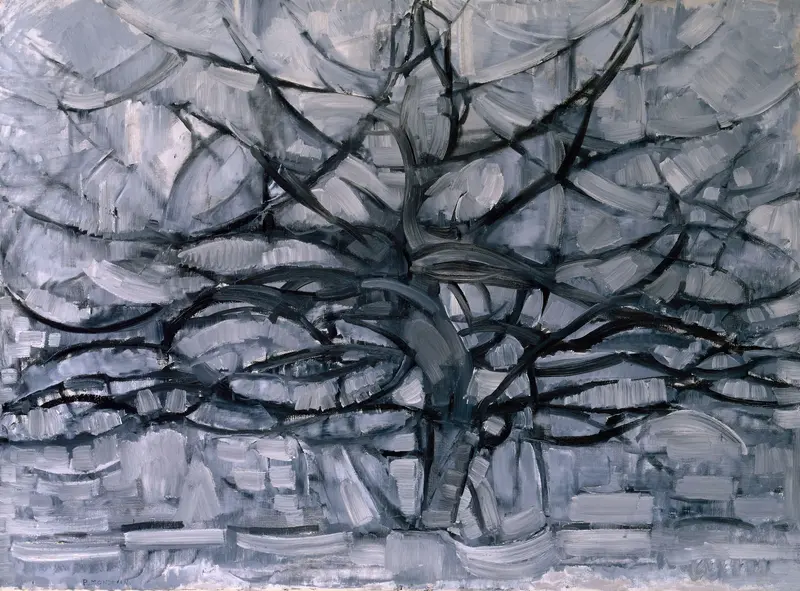
Gray Tree
Piet Mondrian




