About Composition 8
Cubist paintings by Georges Braque and Pablo Picasso, seen at an Amsterdam exhibition in 1911, inspired Piet Mondrian (1872–1944) to go to Paris, according to the Guggenheim. His Composition 8 of 1914, which Wikidata also labels Compositie 8 in Dutch, is based on studies of Parisian building façades. The oil on canvas is in the Solomon R. Guggenheim Museum in New York, whose collection site tags it with Cubism and De Stijl.
- No illusion: The Guggenheim’s essay says that in works such as Composition 8 Mondrian went even further in his refusal of illusionism and the representation of volume.
- Paris façades: According to the same essay, the painting is based on studies of Parisian building façades.
- Cubist starting point: The essay uses Tableau No. 2 / Composition No. VII to show how his procedure was indebted to high Analytic Cubism, with interlocking black lines and planes of colour in close-valued ocher and gray tones, and says he still went beyond the Parisian Cubists’ degree of abstraction.
- Spiritual impetus: The museum writes that Mondrian’s impetus was largely spiritual and that his thinking drew on texts by authors connected with the Theosophical Society, whose Dutch branch had counted him a member since 1909.
- Size and support: Oil on canvas, 37 1/4 × 22 inches (94.6 × 55.9 cm) in the Guggenheim’s caption, about 1.7 times as tall as wide. Accession 49.1227 according to Wikidata and the RKD catalogue raisonné.
Sources: Guggenheim Museum: collection record for Composition 8 (49.1227), with the essay by Jennifer Blessing · Wikidata Q19882854 (Composition 8) · Wikidata Q151803 (Piet Mondrian, 1872–1944)
Questions and answers about the painting
What does Mondrian’s Composition 8 mean?
The Guggenheim does not give the painting a single meaning; its essay describes what Mondrian was doing. The picture is based on studies of Parisian building façades, and the essay says that here he went even further in refusing illusionism and the representation of volume. The same essay calls his impetus largely spiritual: he aimed to distill the real world to its pure essence.
What is Mondrian’s 1914 Guggenheim painting based on?
It is based on studies of Parisian building façades, according to the Guggenheim’s essay by Jennifer Blessing. The essay adds that during the war years Mondrian moved toward greater abstraction, relying less on his favored subjects of trees, seascapes and architecture. Wikidata dates this painting to 1914, the same year the museum’s caption gives.
Source: Guggenheim Museum: collection record for Composition 8 (49.1227), with the essay by Jennifer Blessing · Wikidata Q19882854 (Composition 8)
Which museum owns Mondrian’s 1914 painting, and is it on view?
The Solomon R. Guggenheim Museum in New York owns it; Wikidata and the RKD catalogue raisonné give the accession number 49.1227 (the RKD lists the picture as Composition no. III, B47). As of November 2026 the museum’s online collection record names no gallery, and displays change, so check with the museum before a visit.
Source: Guggenheim Museum: collection record for Composition 8 (49.1227), with the essay by Jennifer Blessing · Wikidata Q19882854 (Composition 8)
How big is Mondrian’s Guggenheim canvas of 1914?
Composition 8 measures 37 1/4 × 22 inches (94.6 × 55.9 cm), oil on canvas, in the Guggenheim’s own caption. It is an upright canvas, about 1.7 times as tall as it is wide. Wikidata gives 94.4 × 55.5 cm, a slightly different figure, so the museum’s measurement is the one to quote.
Source: Guggenheim Museum: collection record for Composition 8 (49.1227), with the essay by Jennifer Blessing · Wikidata Q19882854 (Composition 8)
How is Mondrian’s 1914 Guggenheim painting connected to Cubism?
Mondrian saw Cubist paintings by Braque and Picasso at a 1911 exhibition in Amsterdam and was inspired to go to Paris, the Guggenheim says. Its essay calls the technique of another work it discusses, Tableau No. 2 / Composition No. VII, indebted to high Analytic Cubism, yet beyond the Cubists’ degree of abstraction, and names this painting as going further still. The museum’s collection site tags it with both Cubism and De Stijl.
Is Mondrian’s 1914 Guggenheim painting in the public domain?
Partly, depending on the country. Piet Mondrian died in 1944, so his work is in the public domain in the European Union and in other countries that protect works for the author’s life plus 70 years or less; in the United States, a painting like this is in the public domain only if it was published before 1931. A few countries protect works for longer, so check your own country. A faithful photograph of a public-domain painting adds no new copyright in the United States or the European Union. Public Domain Images for Commercial Use explains how to use this image.
Source: Wikidata Q151803 (Piet Mondrian, died 1944) · Wikidata Q19882854 (Composition 8)
More Artworks by Piet Mondrian
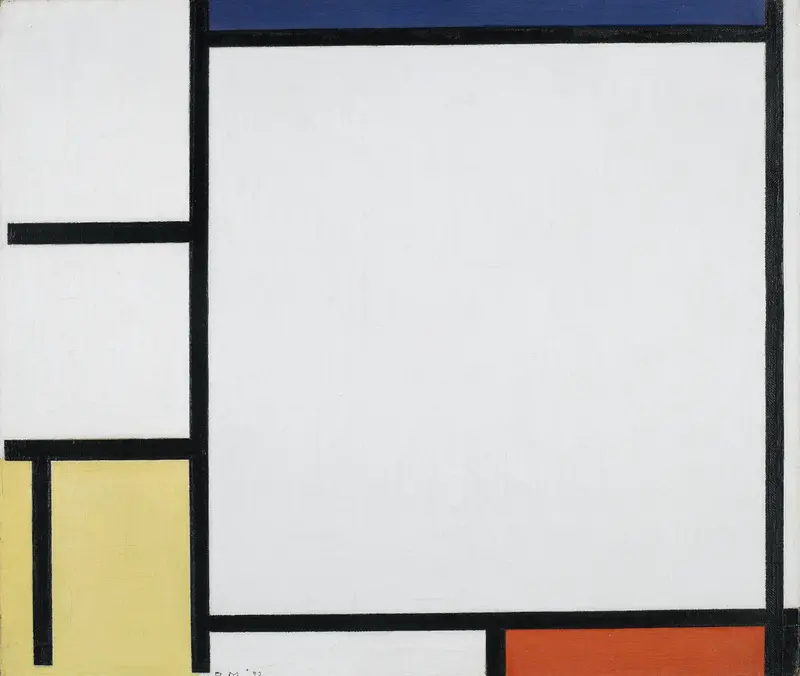
Composition with Blue, Red, Yellow, and Black
Piet Mondrian
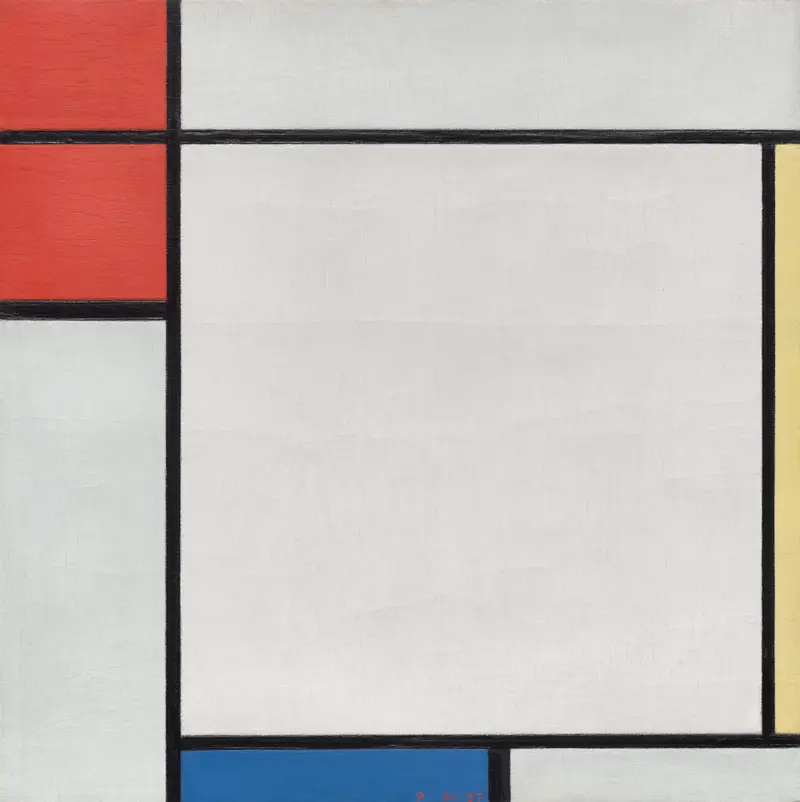
Composition with Red, Yellow, and Blue
Piet Mondrian
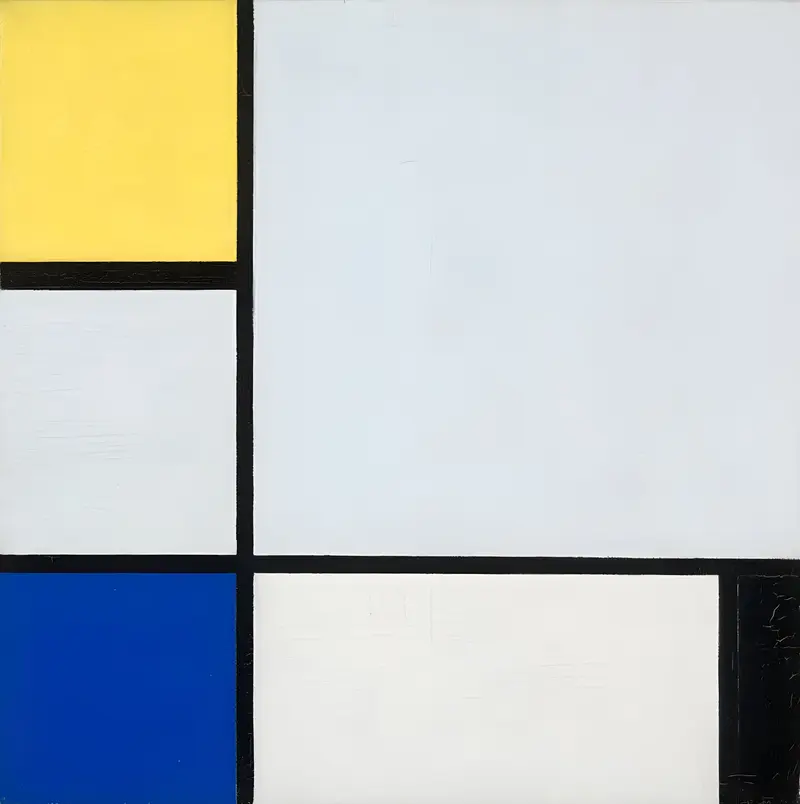
Composition with Yellow, Blue, Black and Light Blue
Piet Mondrian

Composition II in Red, Blue, and Yellow
Piet Mondrian
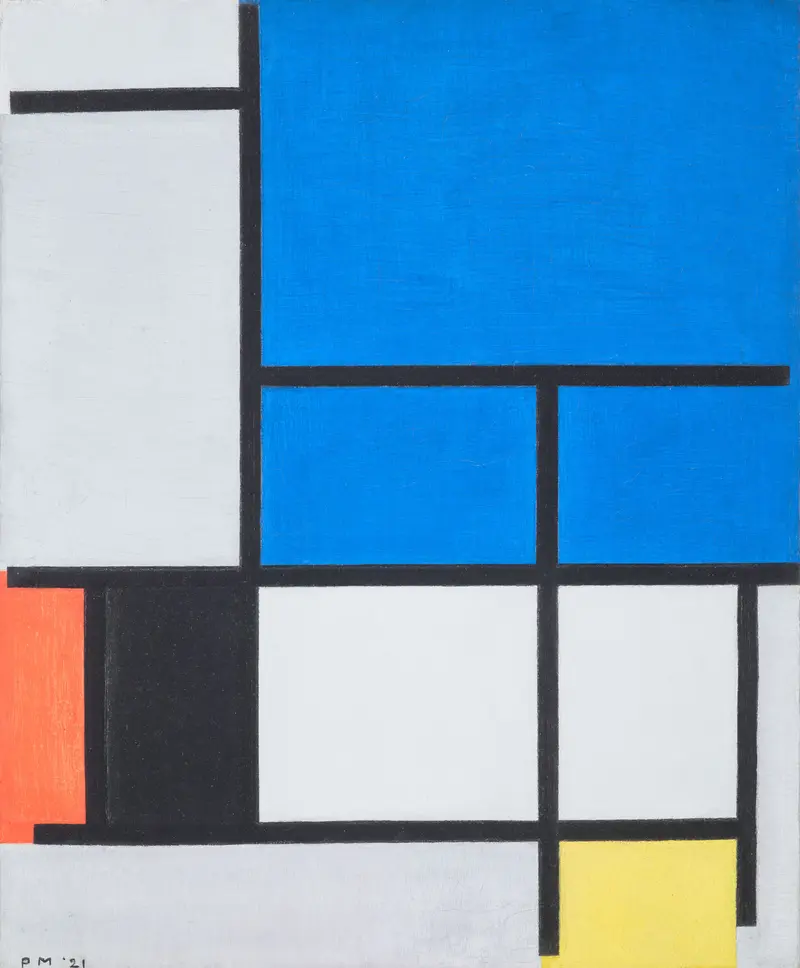
Composition with Large Blue Plane, Red, Black, Yellow, and Gray
Piet Mondrian
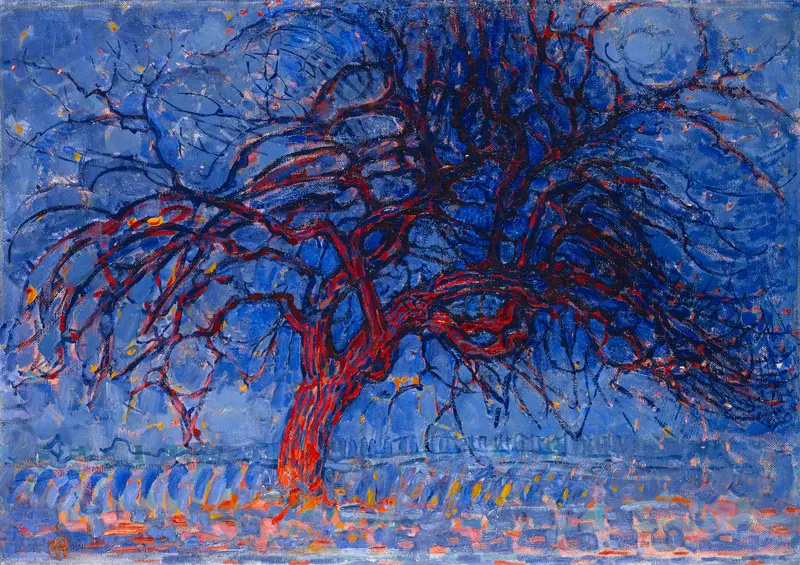
Evening: The Red Tree
Piet Mondrian
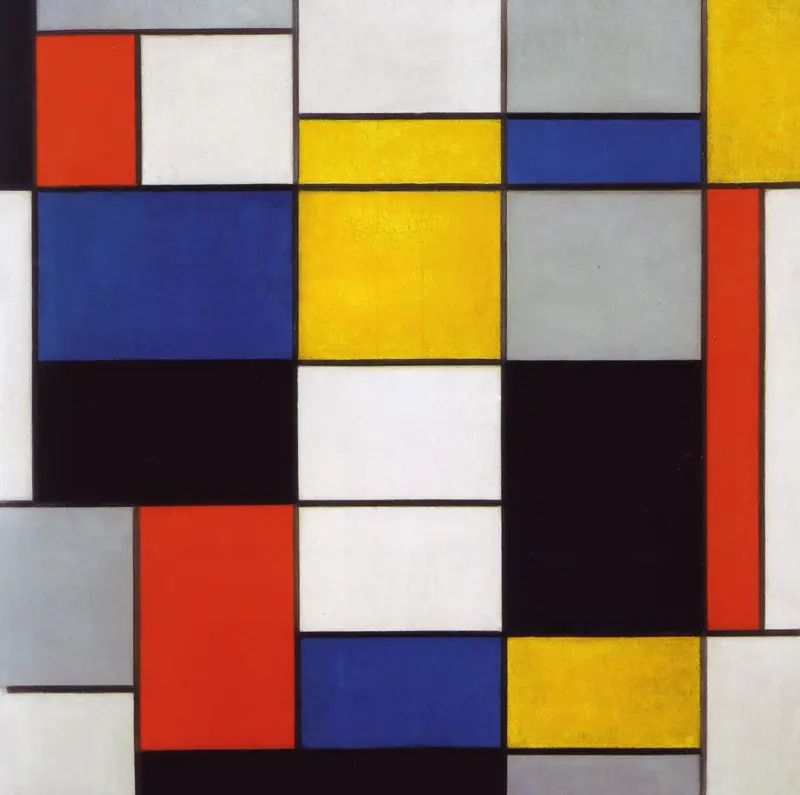
Composition A
Piet Mondrian
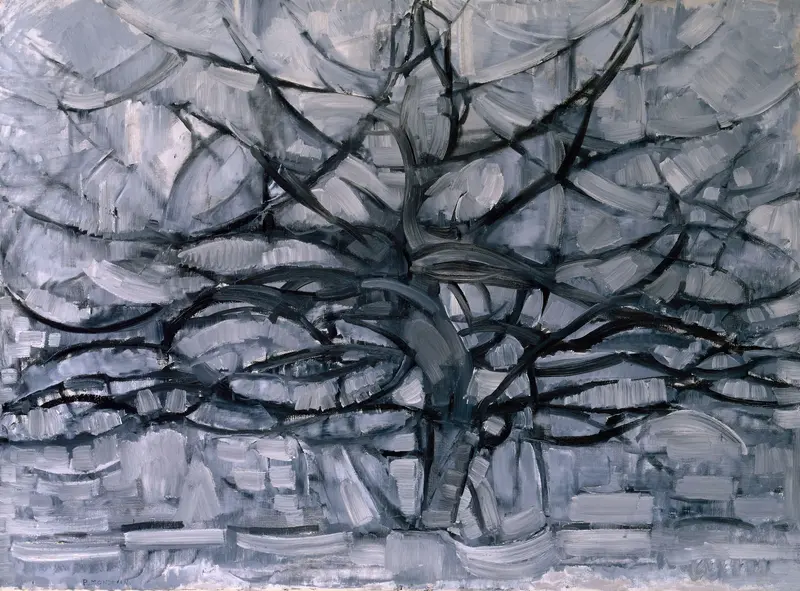
Gray Tree
Piet Mondrian
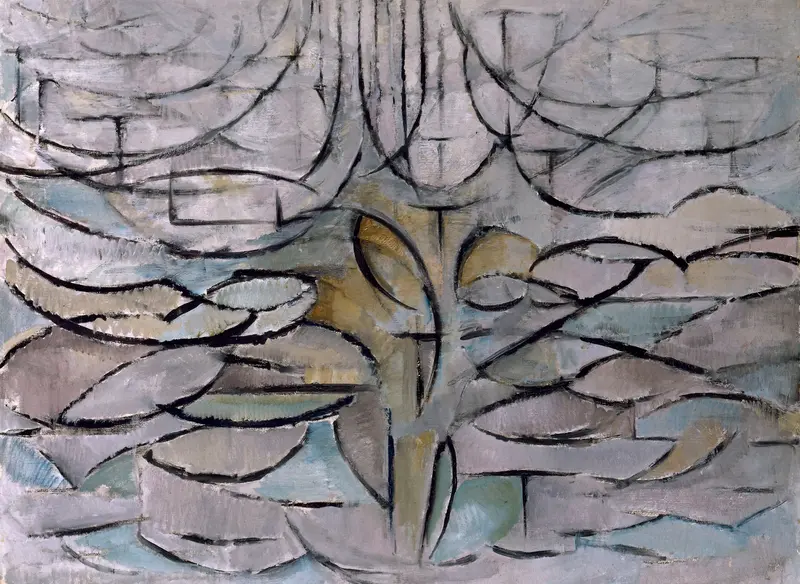
Blossoming Apple Tree
Piet Mondrian
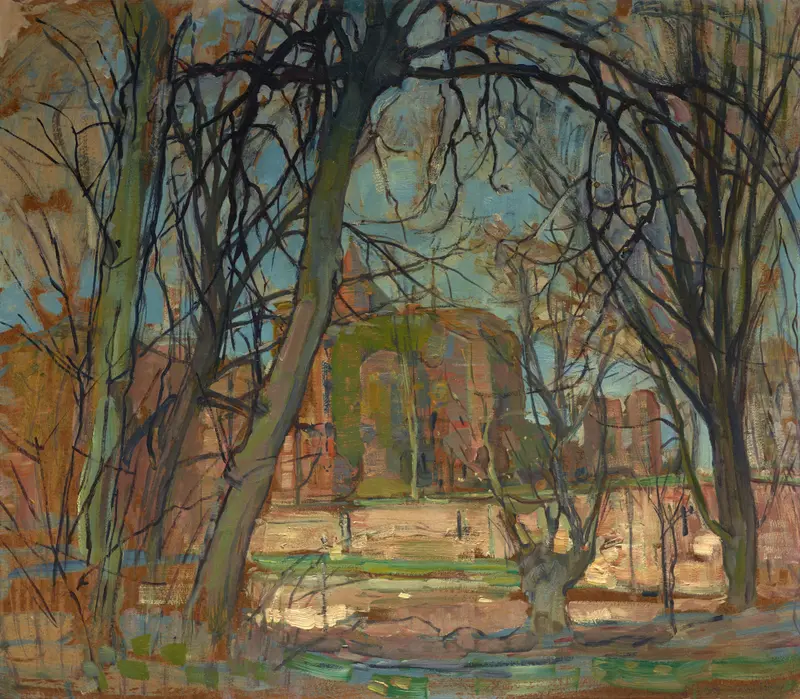
Spring Sun (Lentezon): Castle Ruin: Brederode
Piet Mondrian