
Composition with Red, Yellow, and Blue — History & Facts
A large white rectangle dominates the centre of the composition, bordered by thick black lines that divide the surface into distinct geometric sections. In the upper left corner, a vibrant red square is set off by horizontal and vertical black lines, creating a strong contrast with the adjacent white area. Directly below the red square, a white rectangle fills the lower left corner, separated from the central white field by a vertical black band.
A narrow band of yellow runs vertically along the right edge, bordered by a black line that separates it from the central white area. At the bottom edge, a deep blue rectangle sits in the lower centre, flanked by white and bordered above by a bold horizontal black line. The lower right corner is occupied by a small white rectangle, which is framed by black lines and adjoins the yellow band and the blue rectangle.
Each coloured shape is sharply defined, with the black lines serving as both dividers and structural elements that organize the surface. The paint appears smooth and even, with subtle brushstrokes visible in the white areas, lending a gentle texture to the otherwise flat fields of colour. The composition relies on a careful balance of horizontal and vertical elements, creating a sense of stability and clarity.
Small details, such as the alignment of the black lines and the precise edges of each coloured area, reveal the artist’s meticulous approach to structure. Piet Mondrian creates this work around 1929, as stated in the title line. The title, Composition with Red, Yellow, and Blue, identifies the primary colours featured in the painting’s geometric arrangement. Mondrian’s use of distinct colour blocks and strict geometry is characteristic of the abstract style visible in this work.
More Artworks by Piet Mondrian

Composition II in Red, Blue, and Yellow
Piet Mondrian

Composition with Yellow, Blue, Black and Light Blue
Piet Mondrian

Composition with Large Blue Plane, Red, Black, Yellow, and Gray
Piet Mondrian
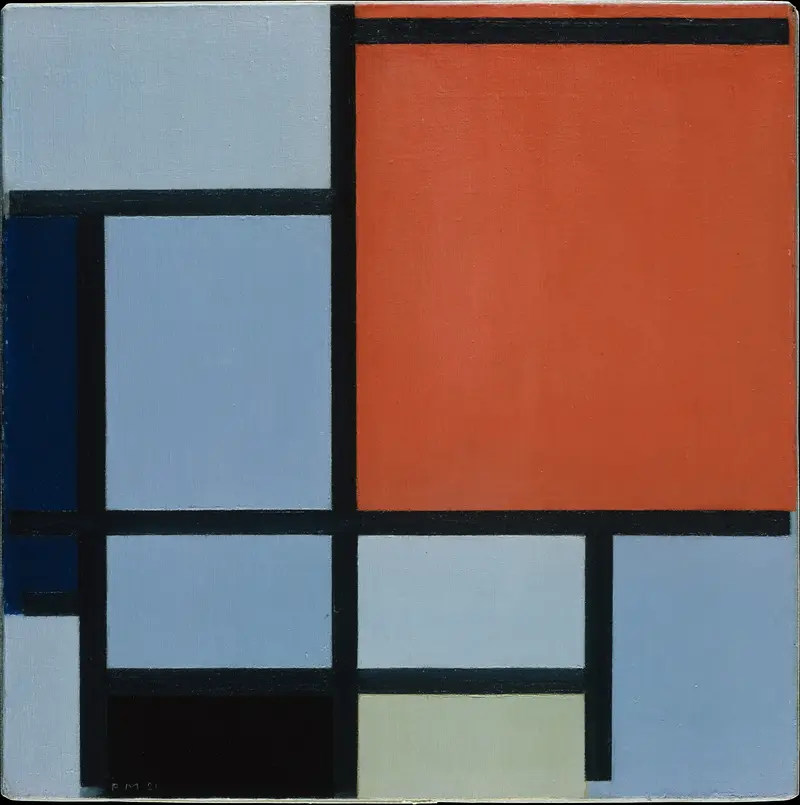
Composition
Piet Mondrian
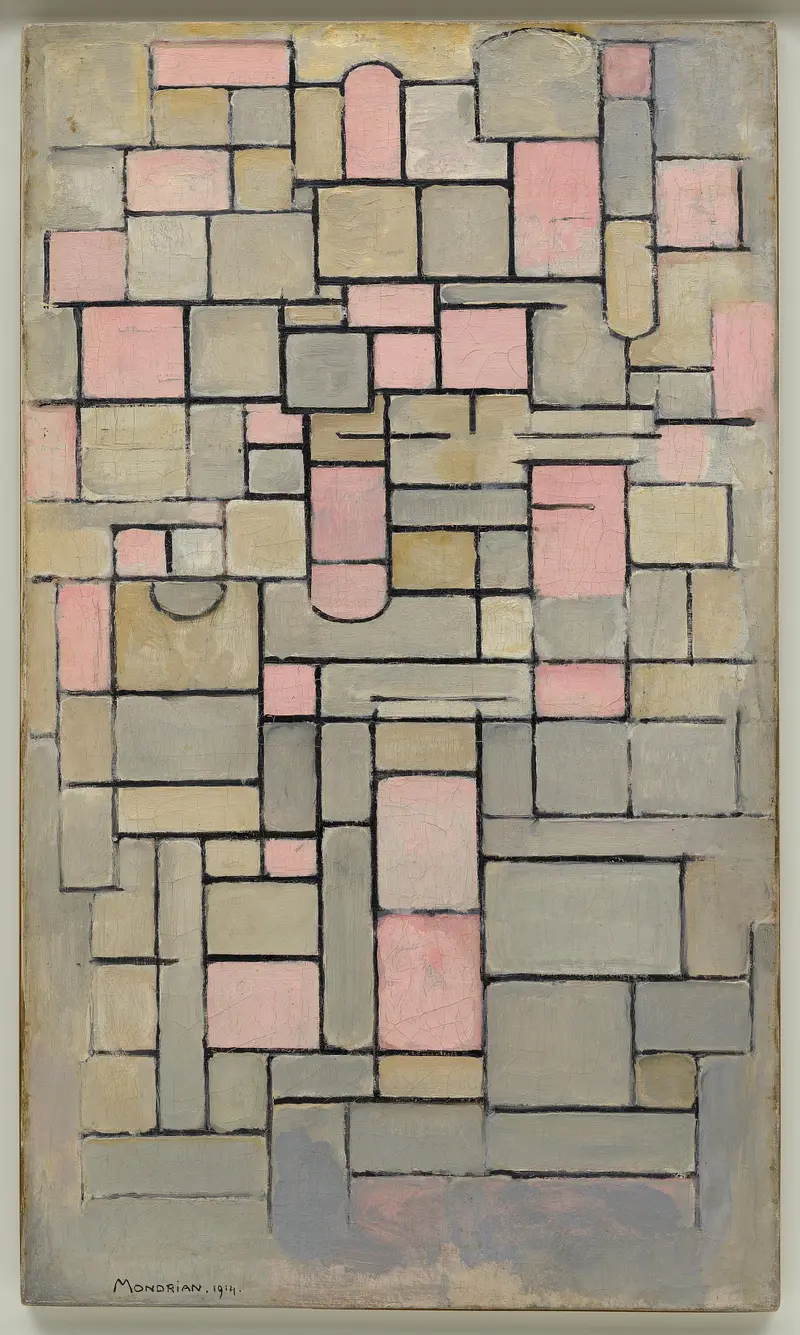
Composition 8
Piet Mondrian
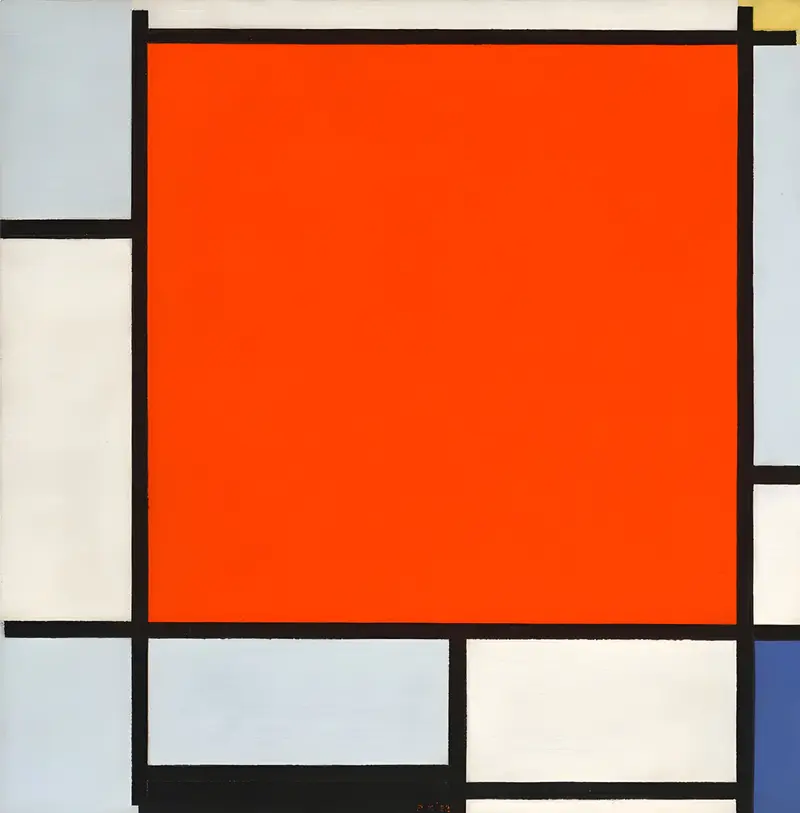
Composition with Large Red Plane, Bluish Gray, Yellow, Black and Blue
Piet Mondrian
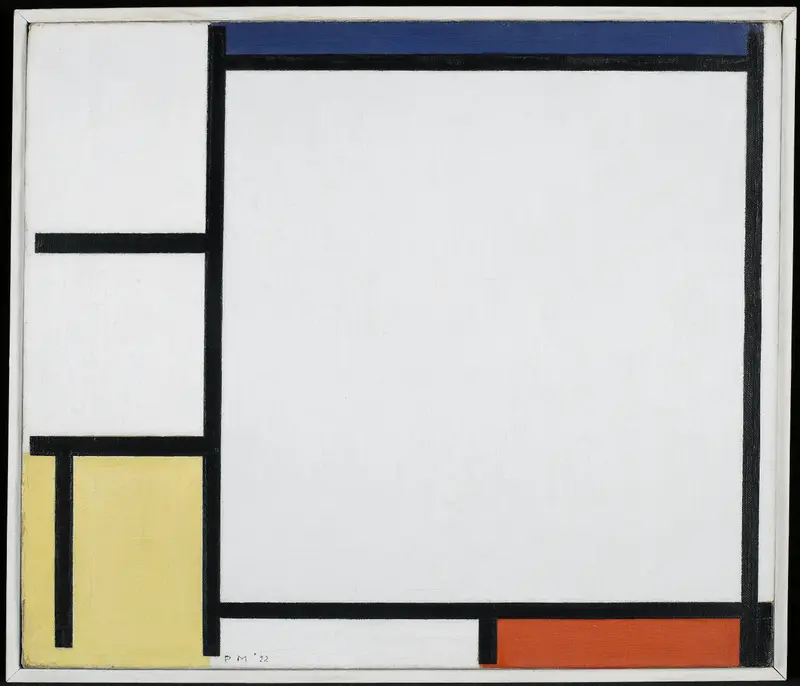
Composition with Blue, Red, Yellow, and Black
Piet Mondrian
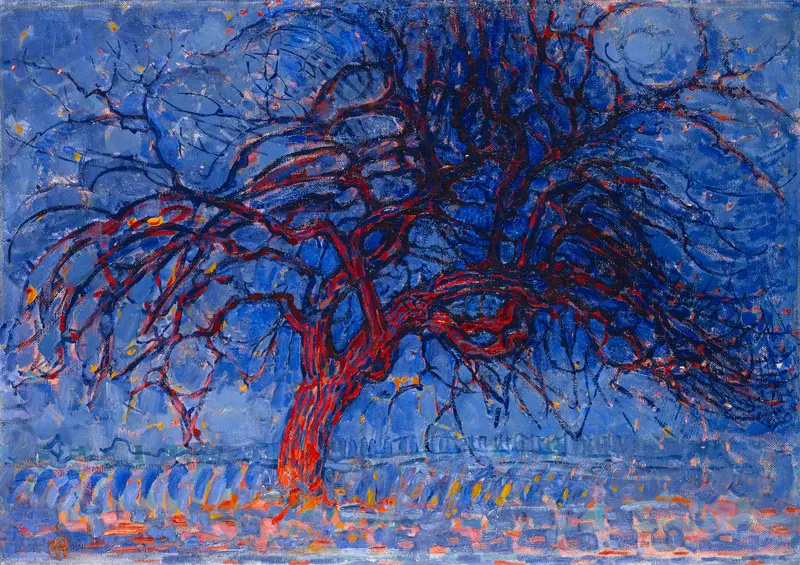
The Red Tree (Evening)
Piet Mondrian
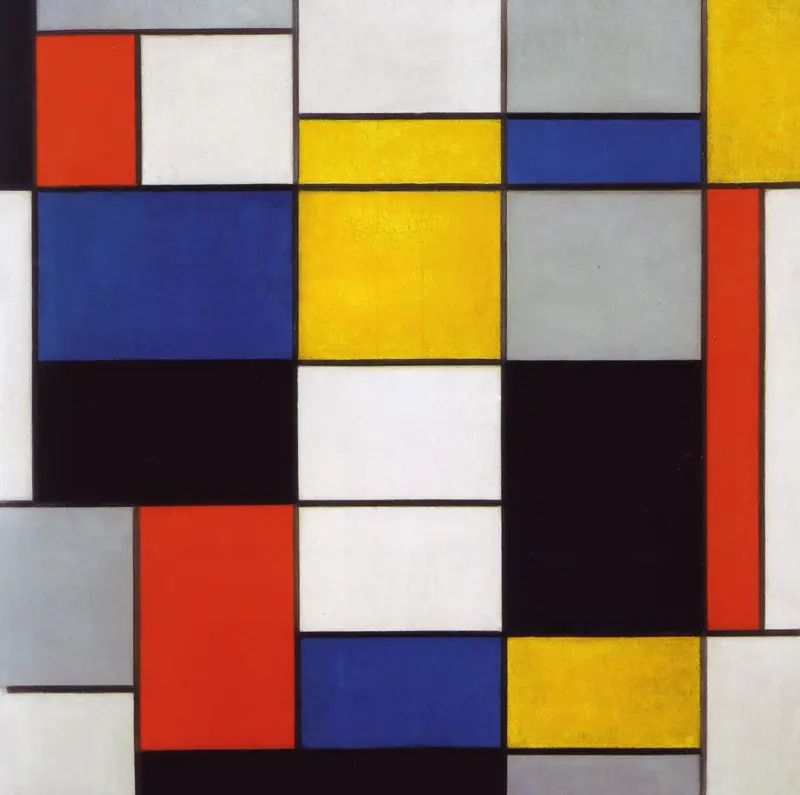
Composition A
Piet Mondrian
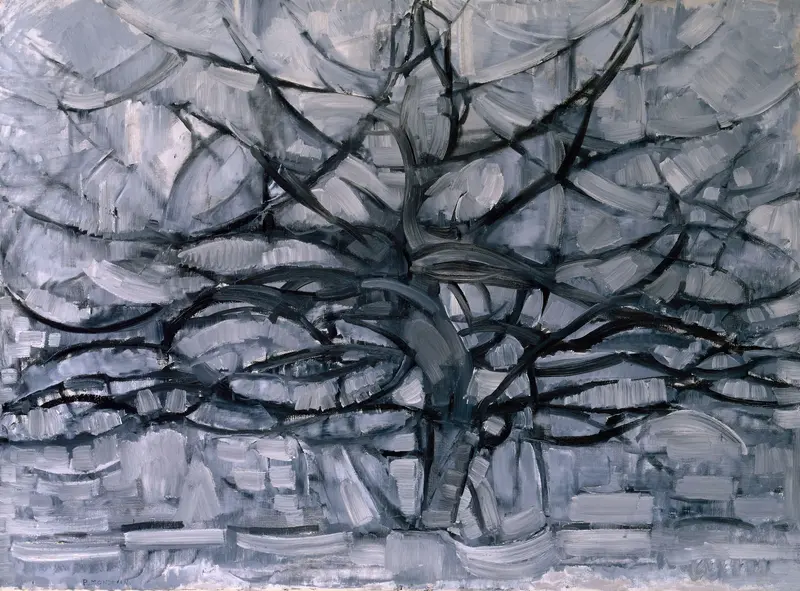
Gray Tree
Piet Mondrian




