
Conflagration in a Dutch city — History & Facts
The first thing that seizes the eye in Conflagration in a Dutch city is not the fire itself, but the way the painter orchestrates the drama through light and shadow. Aert van der Neer, working in the heart of the Dutch Golden Age, sets the city ablaze not with frantic brushwork, but with a luminous core that glows from within the darkness. The fire’s reflection ripples across the water, pulling the viewer’s gaze from the quiet figures on the muddy shore toward the distant chaos.
Look at the group in the left foreground: their postures—some bent low, others upright—suggest a mix of urgency and helpless curiosity, as if they are both witnesses and participants in the unfolding disaster. The vast, smoky sky presses down, dwarfing the city and its people, while the boats and houses on either side seem caught between flight and fate. This painting belongs to a tradition of Dutch cityscapes and nocturnes that flourished in the seventeenth century, when artists competed to capture the spectacle of urban life and its sudden calamities. Scenes of fire were not only dramatic but also spoke to the fragility of prosperity in a time of rapid urban growth.
Works like this, painted between 1630 and 1677, were sought after by collectors who wanted reminders of both civic pride and the ever-present threat of disaster. Now housed in the Staatliche Museen zu Berlin, this canvas stands as a testament to the era’s fascination with light, reflection, and the unpredictable forces that could reshape a city overnight. The longer you look, the more the fire’s glow seems to flicker, drawing you into the uneasy balance between safety and chaos.
More Artworks by Aert van der Neer

A Moonlit River Landscape With Figures Standing By A Gate, A Village Beyond
Aert van der Neer
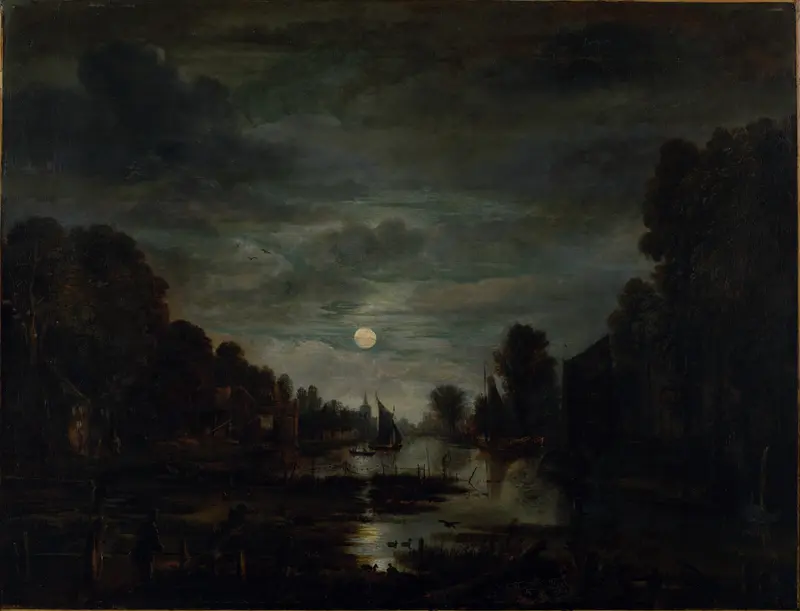
River Landscape in Moonlight
Aert van der Neer
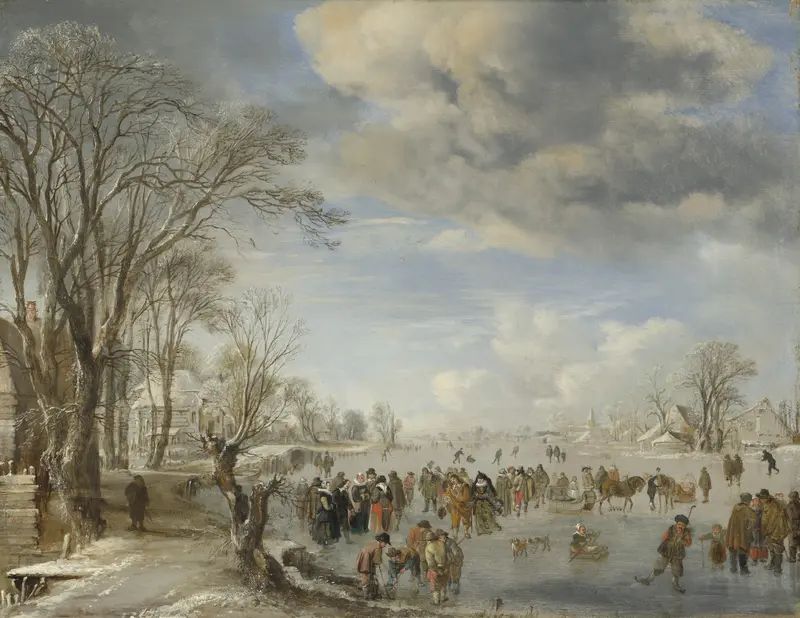
Winter in Holland – Skating Scene
Aert van der Neer

River Landscape
Aert van der Neer
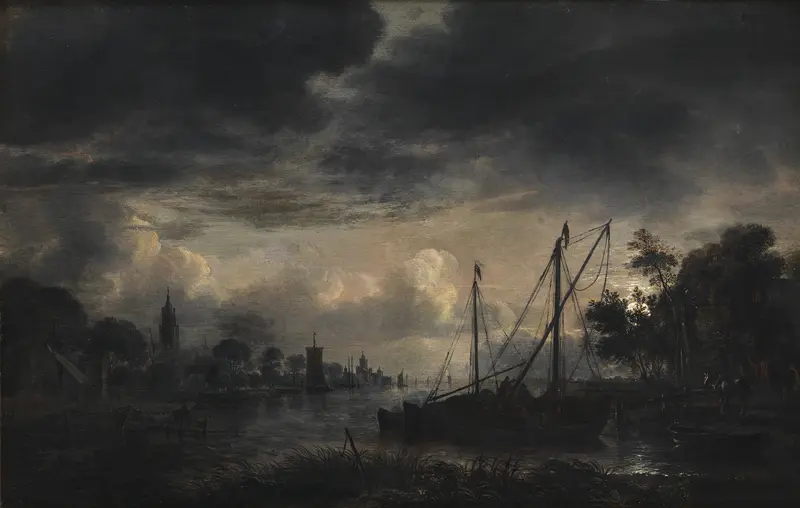
River Landscape in Moonlight
Aert van der Neer
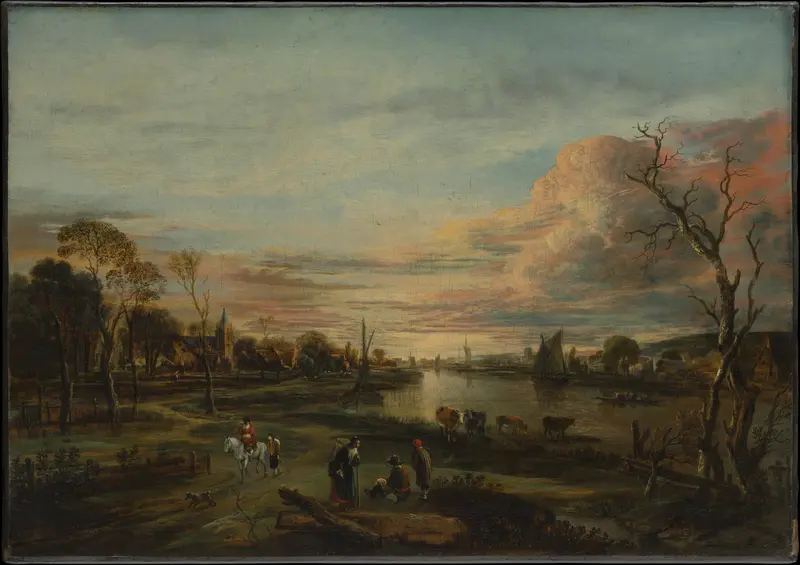
Landscape at Sunset
Aert van der Neer
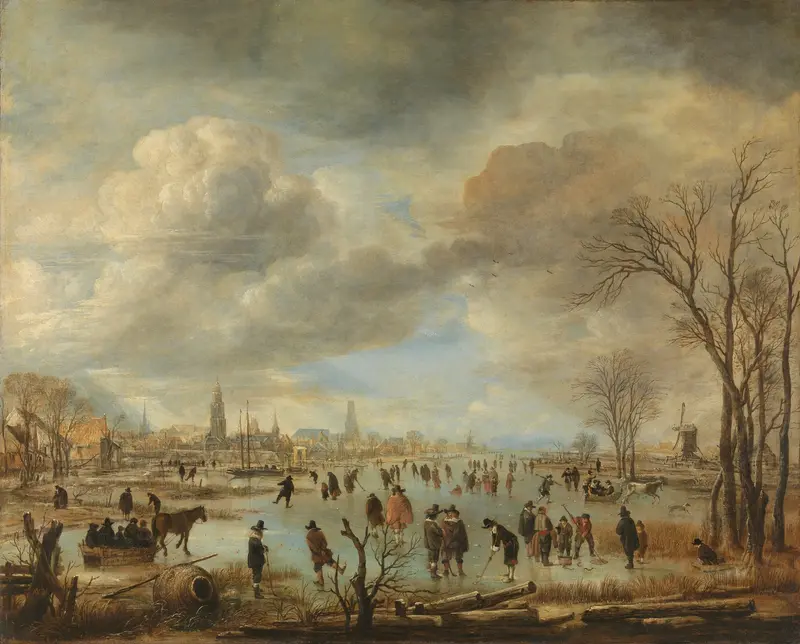
Winter Landscape near a Town with Kolf Players and Horse-Drawn Sleighs
Aert van der Neer

Winter Landscape with Skaters on a Frozen River
Aert van der Neer
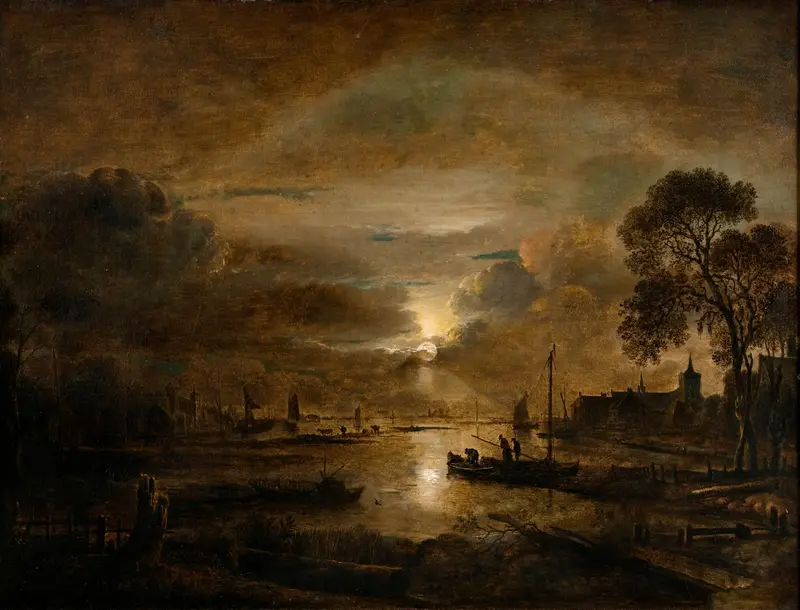
Moonlight at a Dutch River
Aert van der Neer
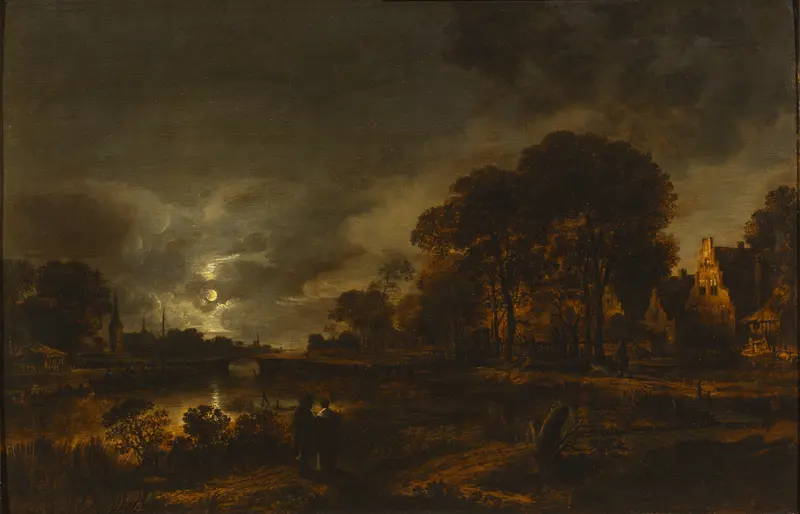
Moonlight Landscape
Aert van der Neer
More Landscape Art

The Starry Night
Vincent van Gogh

View of Delft
Johannes Vermeer

Water Lilies
Claude Monet

The Grand Canal, Venice, looking north-west from the Ca' Corner to the Ca' Contarini degli Scrigni, with the campanile of Santa Maria della Carità
Canaletto

Windsor Castle
Canaletto

The Grand Canal looking North-East from the Palazzo Dolfin-Manin to the Rialto Bridge
Canaletto