
Connecticut Village (Going to School) — History & Facts
The morning sun casts a gentle glow over a quaint village, illuminating the dusty path that winds toward the schoolhouse. Children, their laughter mingling with the soft whispers of the wind, traverse the road, their backpacks bouncing with every eager step. Amidst the playful chaos, a sense of nostalgia hangs in the air, as though the moment is aware of its fleeting nature. Look to the left at the figure of a young girl, her bright red dress a striking contrast against the muted greens and browns of the landscape.
Notice how the light falls delicately on her shoulder, capturing the innocence of youth as she glances back toward the village. The composition draws your eye along the path, where brush strokes create a rhythm that mimics the children’s journey, inviting viewers to partake in their anticipation for the day ahead. Yet beneath this picturesque scene lies a palpable tension, as the children move toward the promise of knowledge while the village appears rooted in stillness. The shadows cast by the surrounding trees whisper of memories and loss, suggesting that not all journeys are carefree.
The road, laden with hints of nostalgia, beckons both joy and melancholy, reminding us that each step taken toward the future is shadowed by what is left behind. Julian Alden Weir painted this work after 1891, amidst a blossoming American Impressionism movement that favored naturalistic themes and emotional depth. During this time, Weir was deeply immersed in his art, exploring a synthesis of light and color that reflected both personal experiences and broader cultural shifts. The world was evolving, and so was the artist, capturing fleeting moments that would resonate long after they were created.
More Artworks by Julian Alden Weir
Browse all →
My Back Yard no. 1
Julian Alden Weir
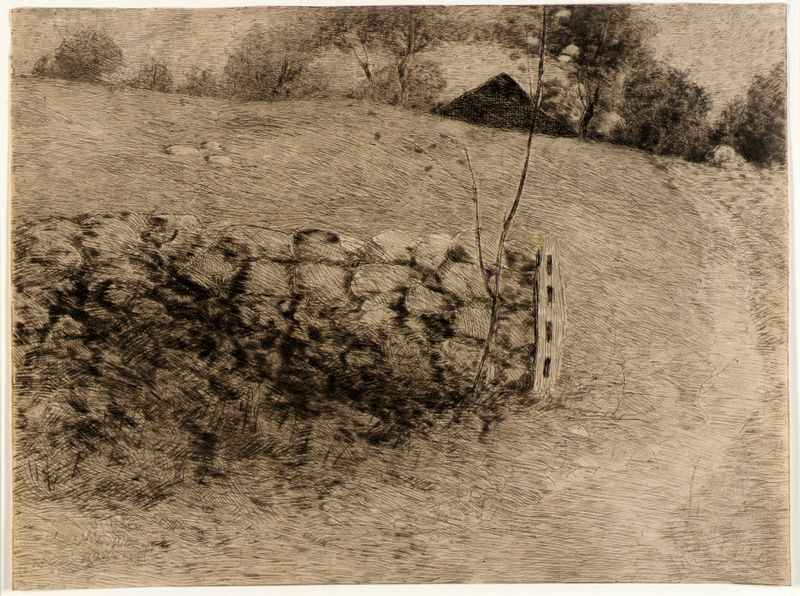
The Barn Lot
Julian Alden Weir

The Webb Farm
Julian Alden Weir
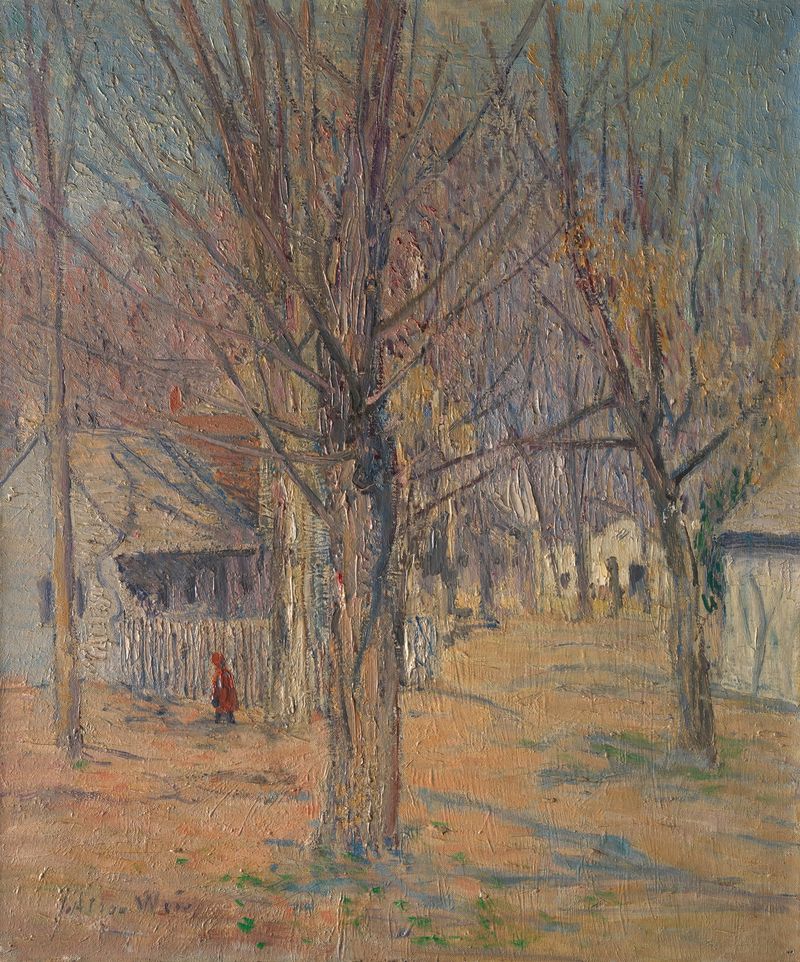
Connecticut Village (Going to School)
Julian Alden Weir

The Stone Bridge
Julian Alden Weir

The Webb Farm 2
Julian Alden Weir
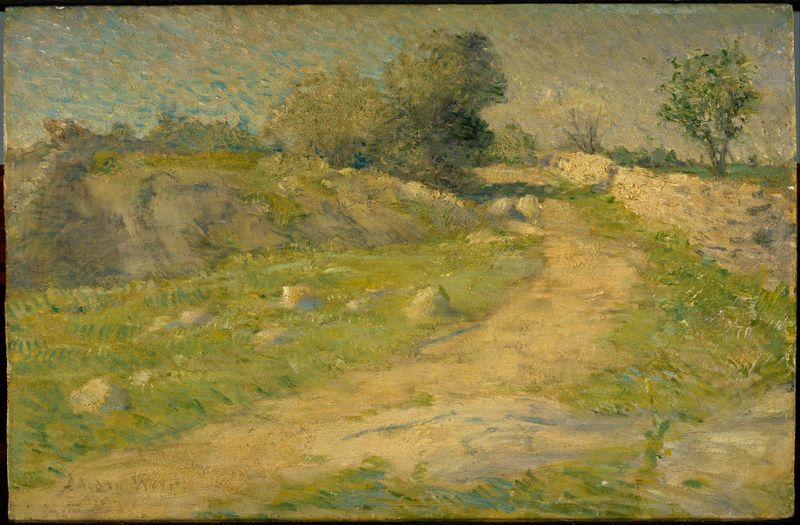
The Lane
Julian Alden Weir
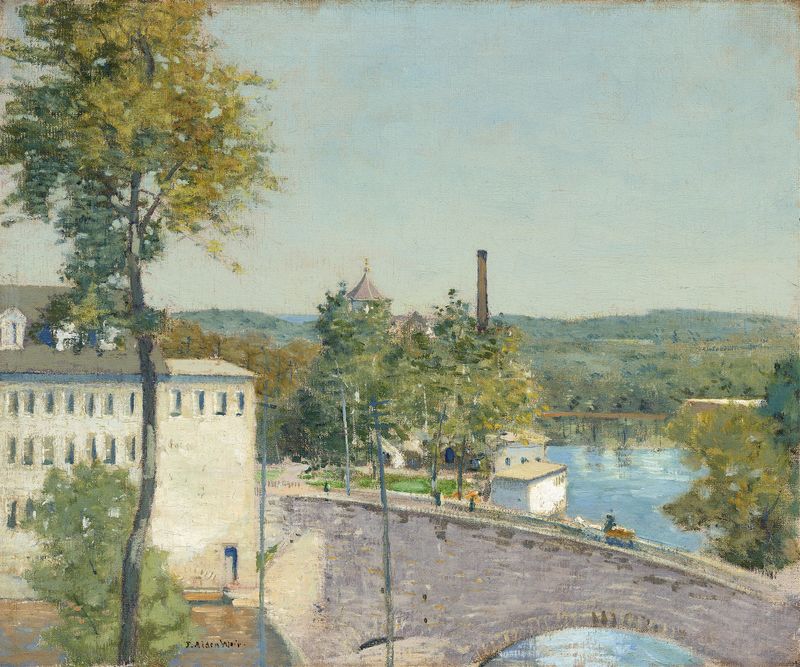
U.S. Thread Company Mills,Willimantic,Connecticut
Julian Alden Weir

Neighboring Farm
Julian Alden Weir

Coon Alley
Julian Alden Weir





