
Constitution of the 3 May. Four-Year Seym. Commission of Education. Partition 1795 AD, from the series “History of Civilization in Poland” — History & Facts
In 1888, as Poland languished under foreign rule, Jan Matejko unveiled a painting that dared to remember a nation’s brightest hope and its darkest hour. The work centers on the events of May 3, 1791, when the Polish-Lithuanian Commonwealth adopted Europe’s first modern constitution—an act of courage and reform soon crushed by the Third Partition of 1795. In the late nineteenth century, this subject was not just history but a rallying cry: Poles, divided between Russia, Prussia, and Austria, saw in Matejko’s vision a reminder of lost sovereignty and the enduring spirit of their culture. Matejko’s Constitution of the 3 May.
Four-Year Seym. Commission of Education. Partition 1795 AD, from the series History of Civilization in Poland captures the moment when hope and despair collide.
At the painting’s heart, reformers and statesmen gather in the flickering light of the Sejm, the Polish parliament, their faces a study in resolve and anxiety. The Constitution itself is held aloft, a tangible symbol of progress, while shadows at the canvas’s edge hint at the encroaching forces of partition. The inclusion of the Commission of National Education, Europe’s first ministry of education, signals the enlightenment ideals at stake.
Unlike Eugène Delacroix’s Liberty Leading the People, which exalts revolution, Matejko’s scene is somber—his figures not triumphant, but bracing for the loss to come. The painting forms part of Matejko’s monumental series chronicling Poland’s history, a project he undertook to educate and inspire his compatriots. While the original medium is not always clearly documented, the work’s importance is undiminished: it has been exhibited in major Polish institutions and reproduced in countless textbooks and prints. Matejko’s historical canvases, often vast in scale, became touchstones for national identity during the partitions, and this painting stands among his most ambitious.
Today, it remains a fixture in Polish museum collections, a testament to art’s power to preserve memory and kindle hope even in the darkest times.
More Artworks by Jan Matejko
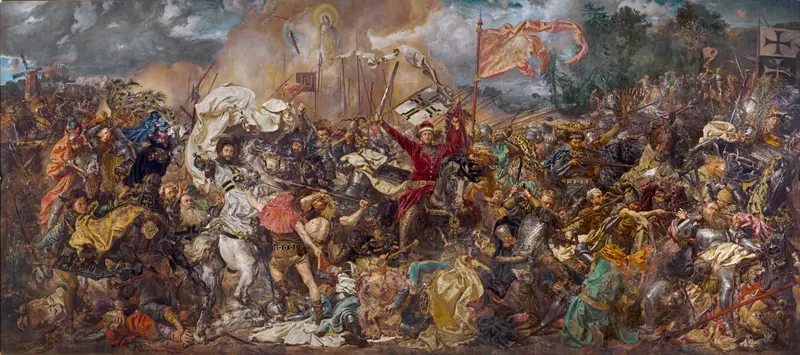
Battle of Grunwald
Jan Matejko

Stańczyk
Jan Matejko

Battle of Raclawice
Jan Matejko
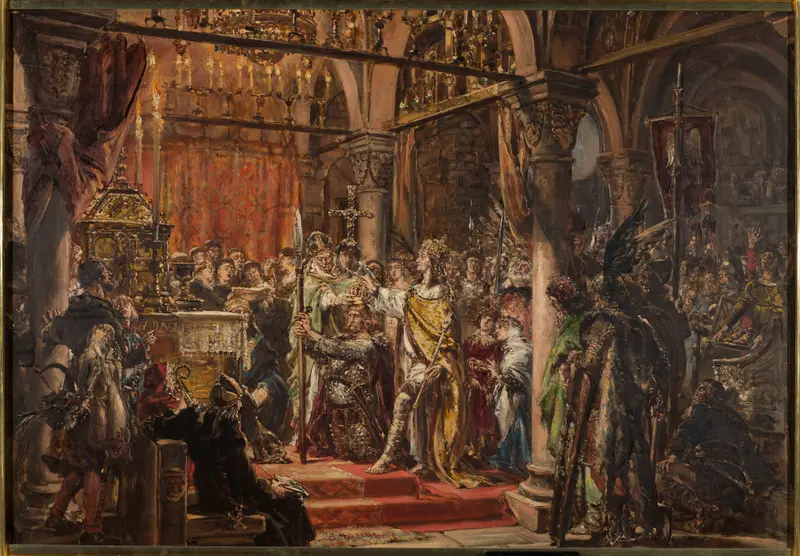
Coronation of the First King, 1001 AD, from the series “History of Civilization in Poland”
Jan Matejko
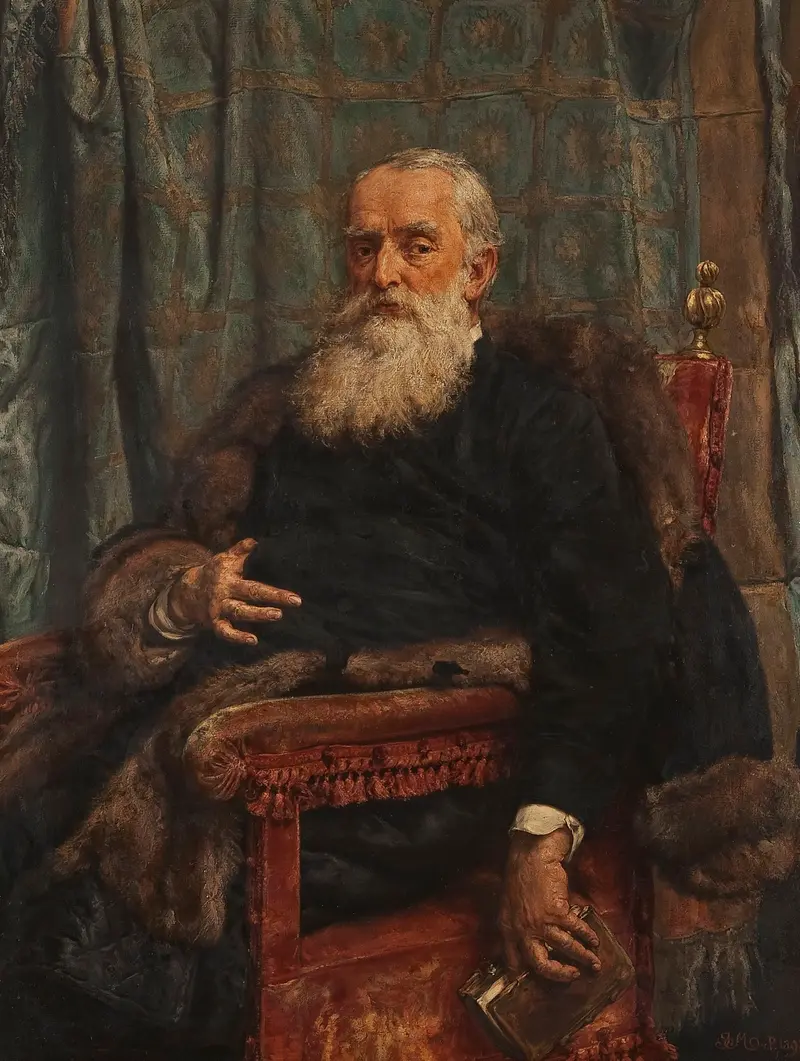
Portrait of Henryk Krajewski
Jan Matejko
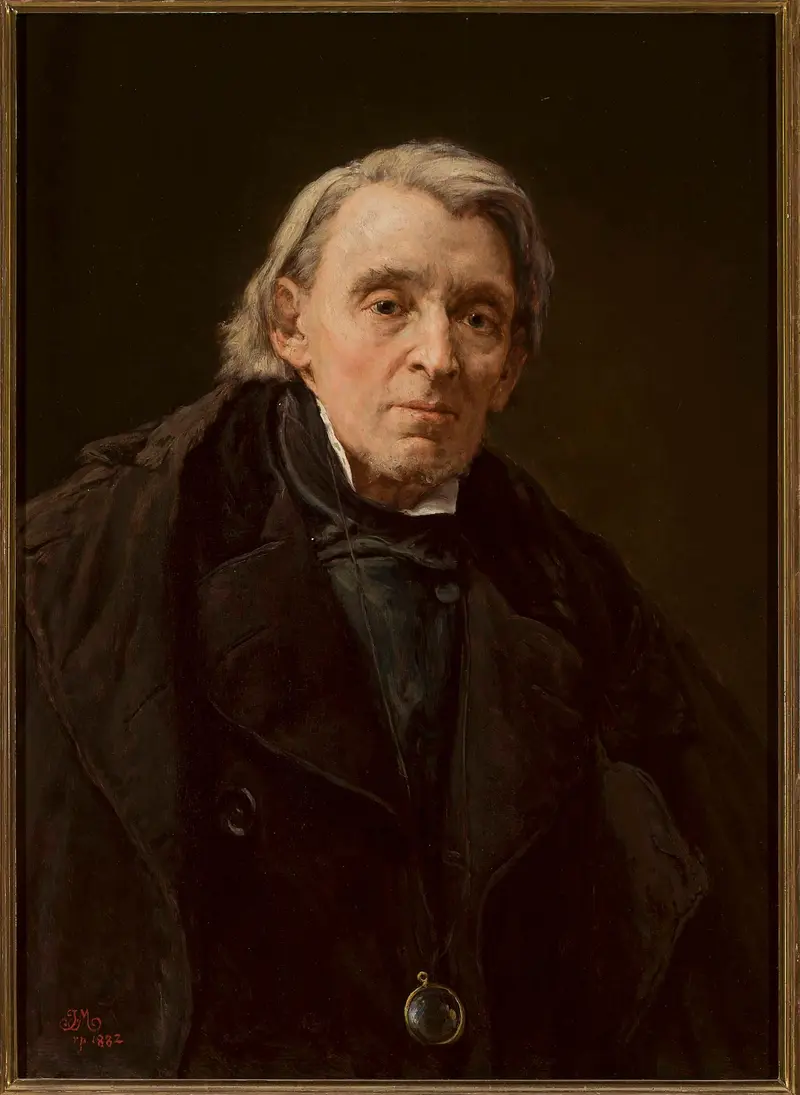
Portrait of Karol Podlewski
Jan Matejko
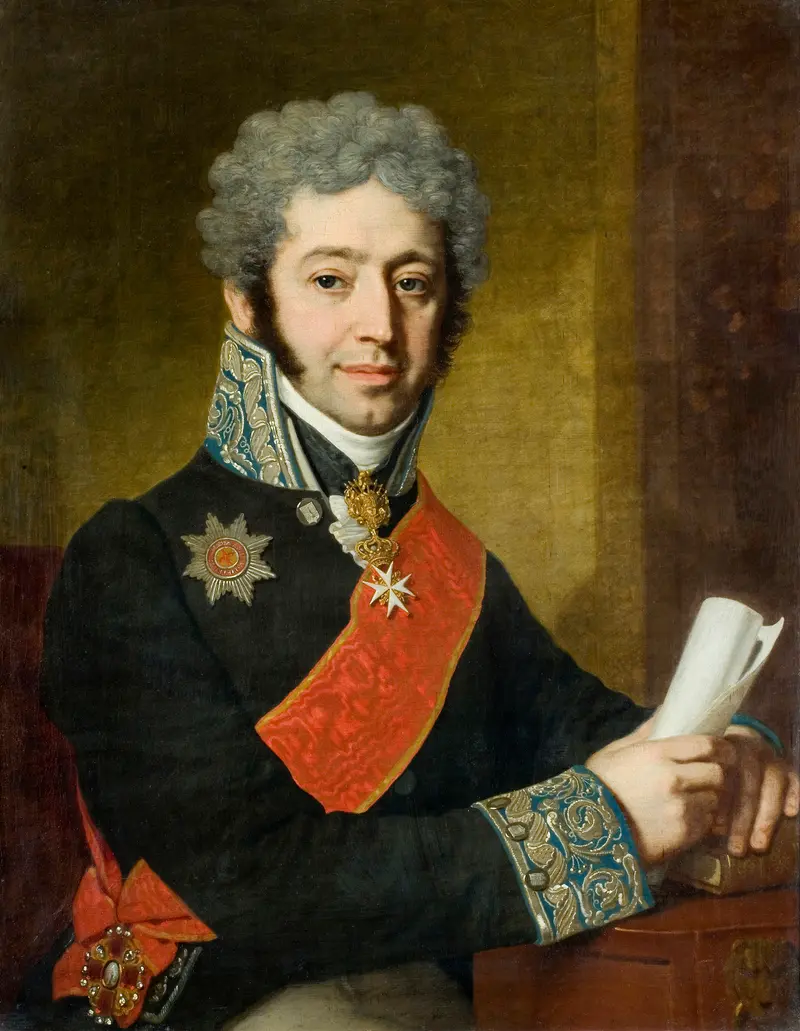
Portrait of Potocki and Poninski
Jan Matejko
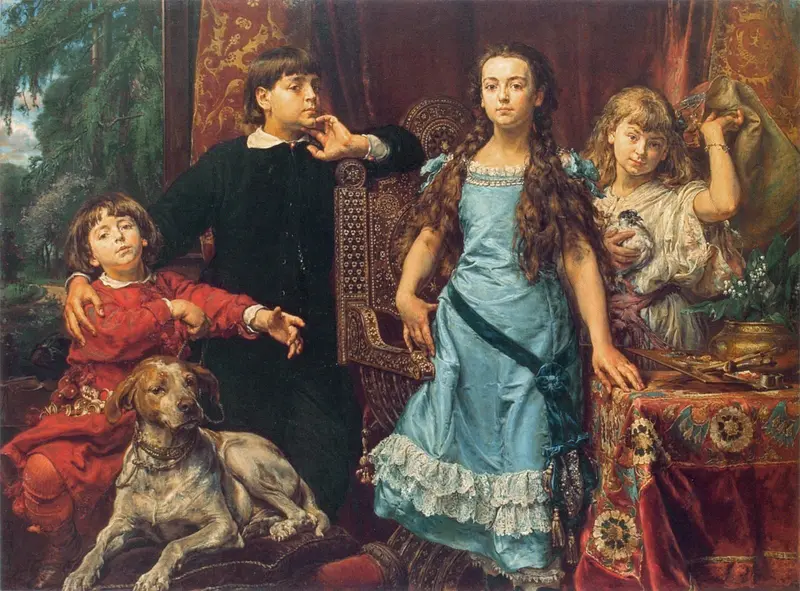
Portrait of the artist's four children
Jan Matejko
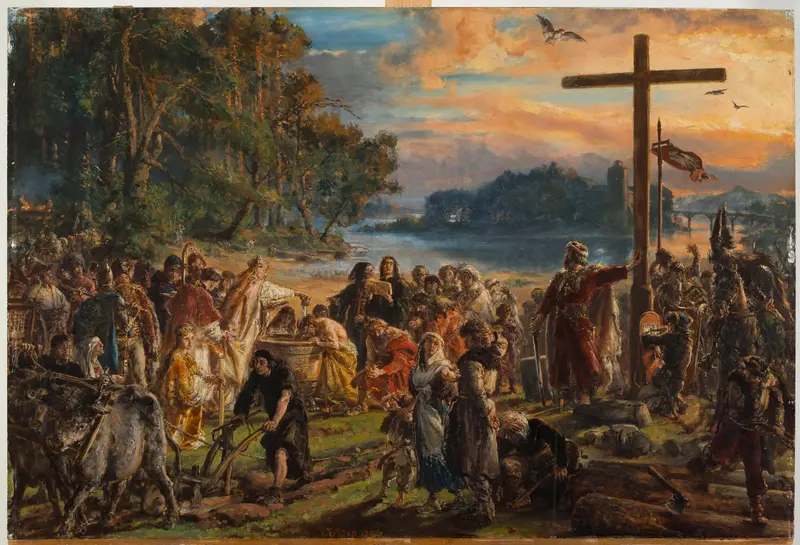
Introduction of Christianity in Poland
Jan Matejko
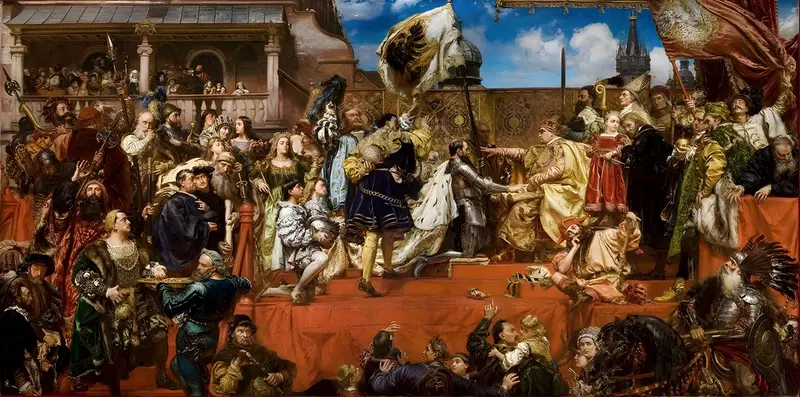
Prussian Homage
Jan Matejko





