
Corfu from Santa Decca — History & Facts
When did color learn to lie? In the gentle embrace of Corfu from Santa Decca, hues whisper secrets of serenity and illusion, inviting us to question the very essence of perception. Look to the left at the verdant hills, their lush greens breathing life into the canvas. The soft blues of the sky and sea merge seamlessly, creating a tranquil horizon that beckons the eye. Notice how the light dances over the landscape, transforming the ordinary into a dreamlike tableau, while the meticulous brushwork offers a sense of texture, inviting you to explore the depths of this idyllic view. Hidden within the tranquil beauty lies a subtle tension.
The contrast between the stillness of the sea and the vibrant, bustling life of the hills hints at the dichotomy of nature — calmness versus chaos. The play of light across the scene draws you deeper, suggesting an unspoken narrative of travelers and dreamers who linger in this timeless setting. Each detail, from the wispy clouds to the distant architecture, evokes a longing for peace and refuge. During the mid-19th century, Edward Lear created this landscape, likely while residing in Corfu, where he found solace from his turbulent life.
As a prominent figure in the English art scene, he was grappling with his own inner struggles while also navigating a world captivated by Romanticism and the beauty of nature. His travels and experiences deeply influenced his work, resulting in serene compositions that continue to resonate with viewers today.
More Artworks by Edward Lear
Browse all →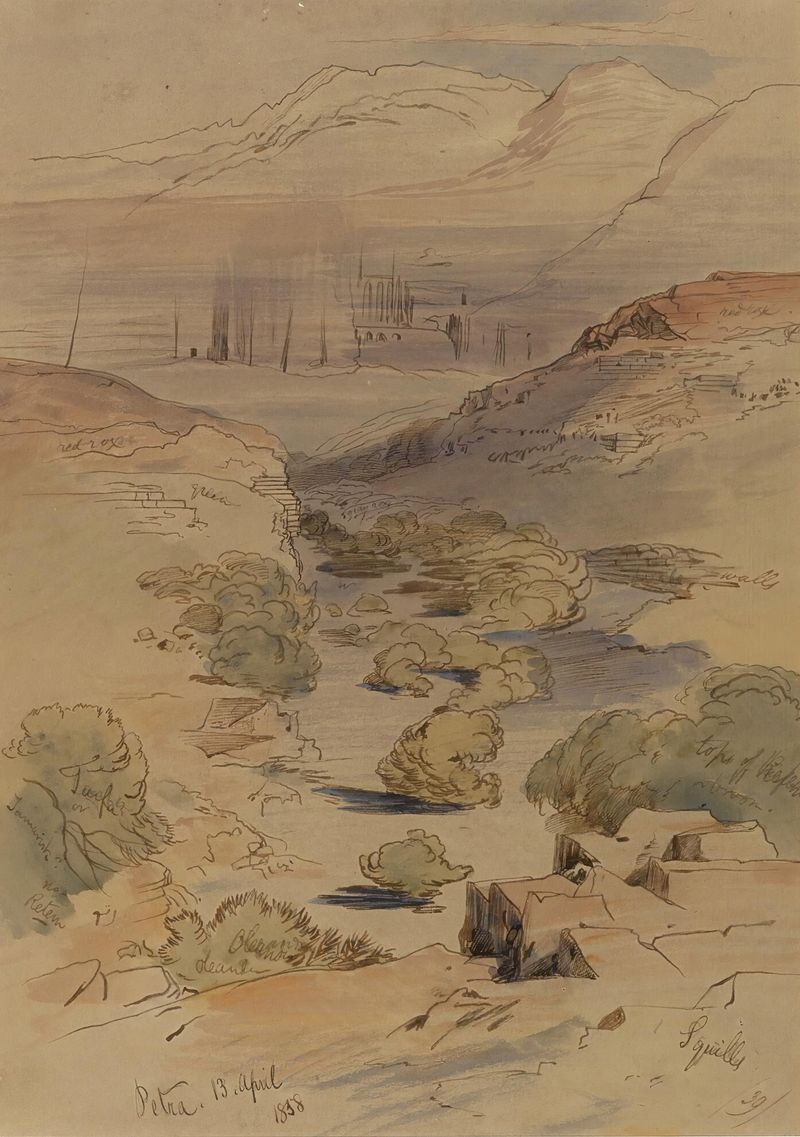
Petra
Edward Lear
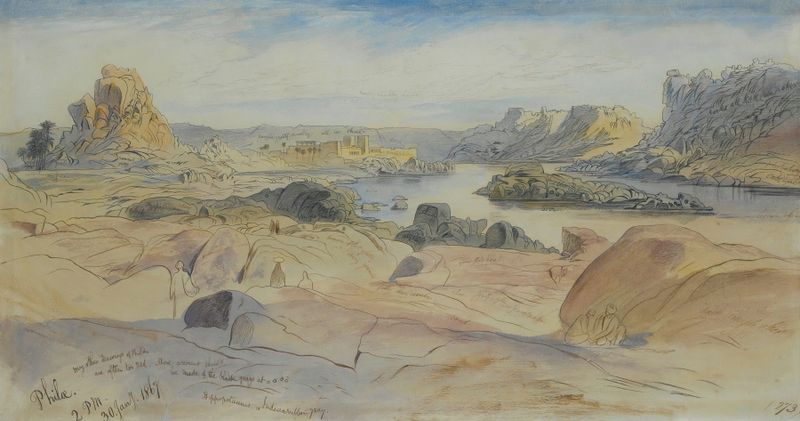
Philae, Egypt
Edward Lear
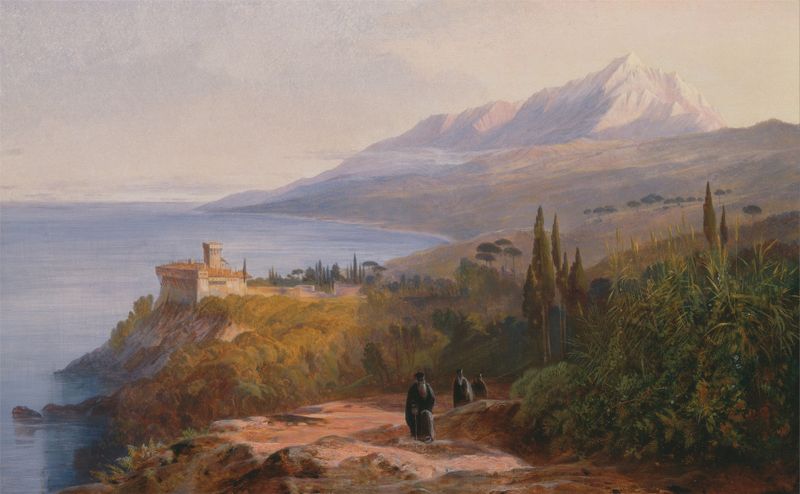
Mount Athos and the Monastery of Stavronikétes
Edward Lear
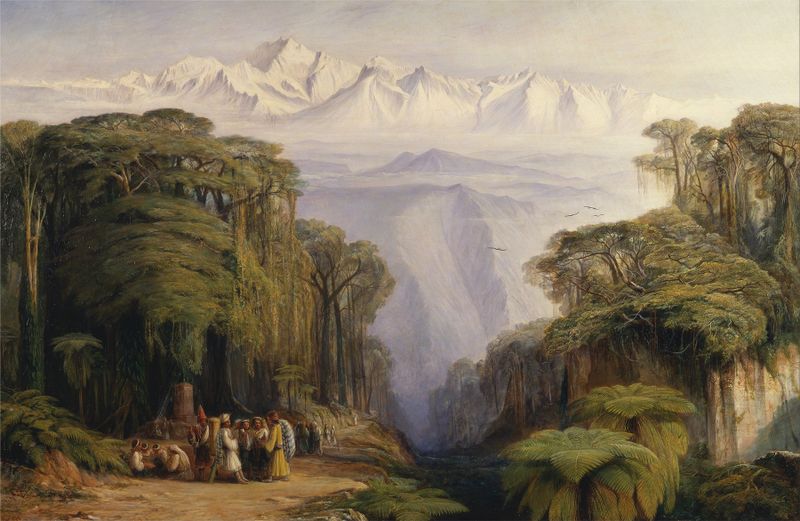
Kangchenjunga from Darjeeling
Edward Lear
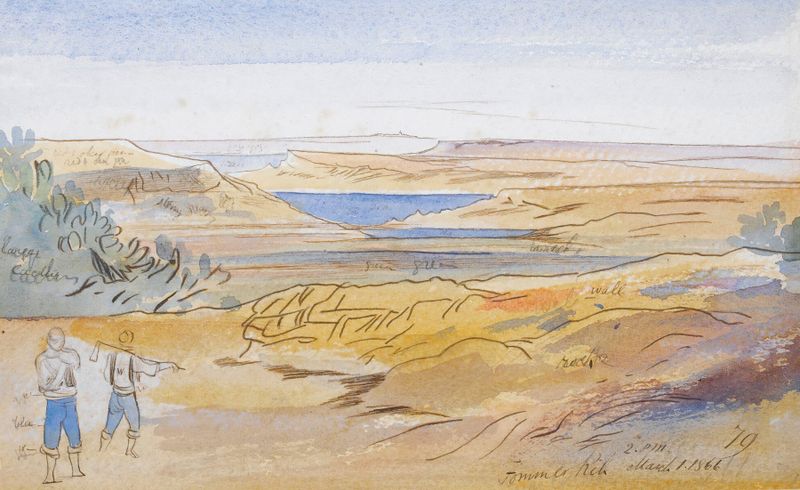
Fomm Ir-Rih, Malta
Edward Lear
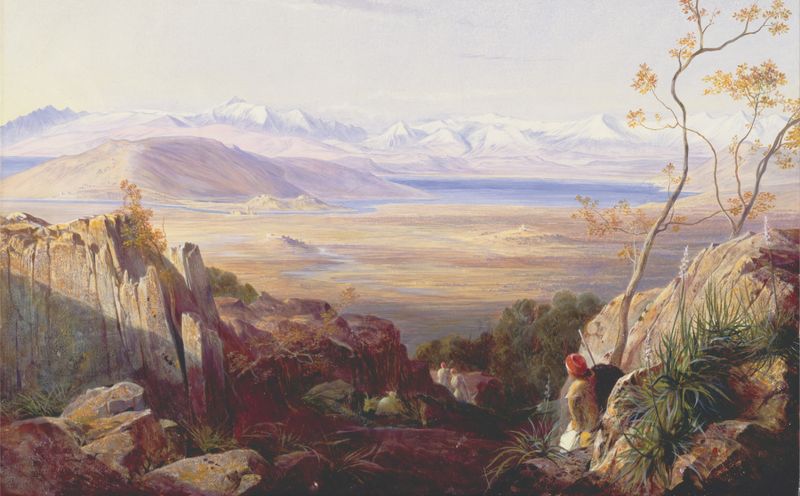
Butrinto, Albania
Edward Lear
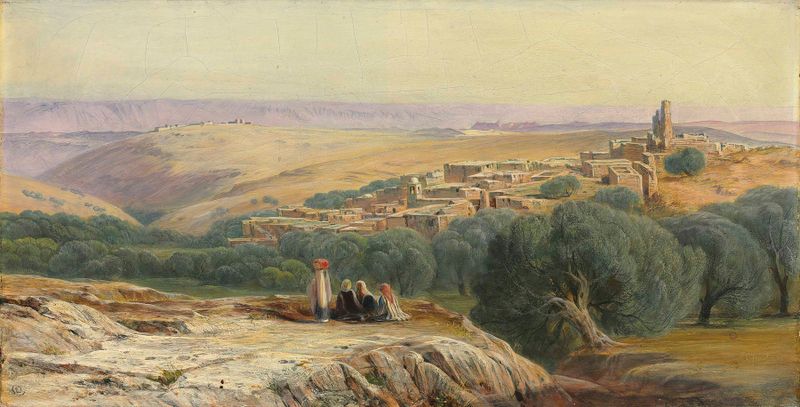
The Plains of Bethany
Edward Lear

Karnak, 9-30 pm, 22 January 1867
Edward Lear
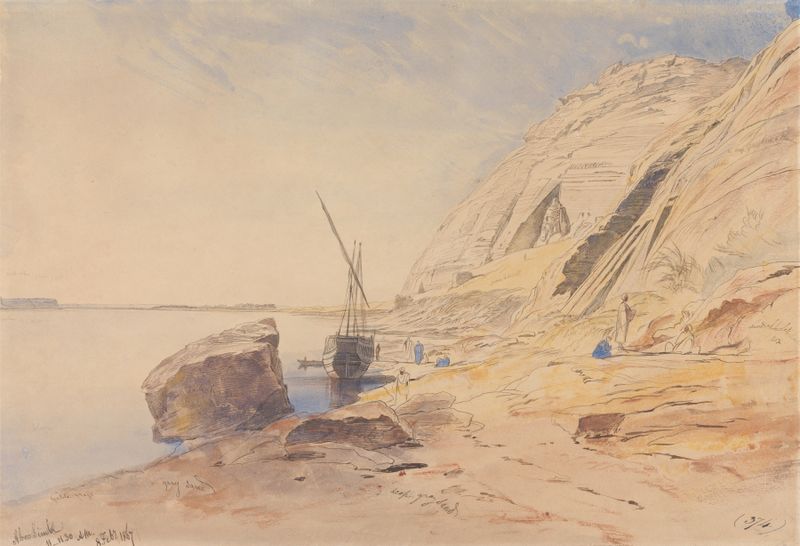
Abu Simbel, 11-11;30 am, 8 February 1867 (374)
Edward Lear

A View Of Mount Athos And The Pantokrator Monastery, Greece
Edward Lear





