
Corpo di Cava, 28 June 1838 — History & Facts
This profound transformation speaks to the heart of creation itself. Focus on the striking contrast between the deep, shadowed caves and the vibrant greens that spill into the scene. Immediately, your gaze is drawn to the rugged texture of the rock face, where strokes of ochre and sienna evoke a sense of solidity and ancient wisdom. Notice how the light dances upon the foliage, casting dappled patterns that pulse with life, breathing energy into the otherwise still landscape.
Through Lear's meticulous attention to detail, the chaotic elements of nature are harmonized into a serene composition. As you delve deeper, consider the juxtaposition of light and shadow—a metaphor for the duality of existence. The shadows in the cave suggest mystery and the unknown, while the bright foliage outside embodies vitality and clarity. This tension invites contemplation about the interplay of dark and light in our own lives, how chaos can lead to serenity, and the grace found in the act of creation.
Each brushstroke is a whisper of Lear’s journey, revealing the delicate balance between turmoil and peace. During the late 1830s in Italy, the artist found himself immersed in nature, traveling and sketching landscapes that captivated his imagination. In this period, Lear, primarily known for his poetry and illustrations, was exploring his abilities as a painter, embracing the lush Italian scenery as a backdrop for his artistic development. This work reflects a pivotal moment when he was honing his craft, navigating the intersections of art and nature, and laying the groundwork for his future contributions to both fields.
More Artworks by Edward Lear
Browse all →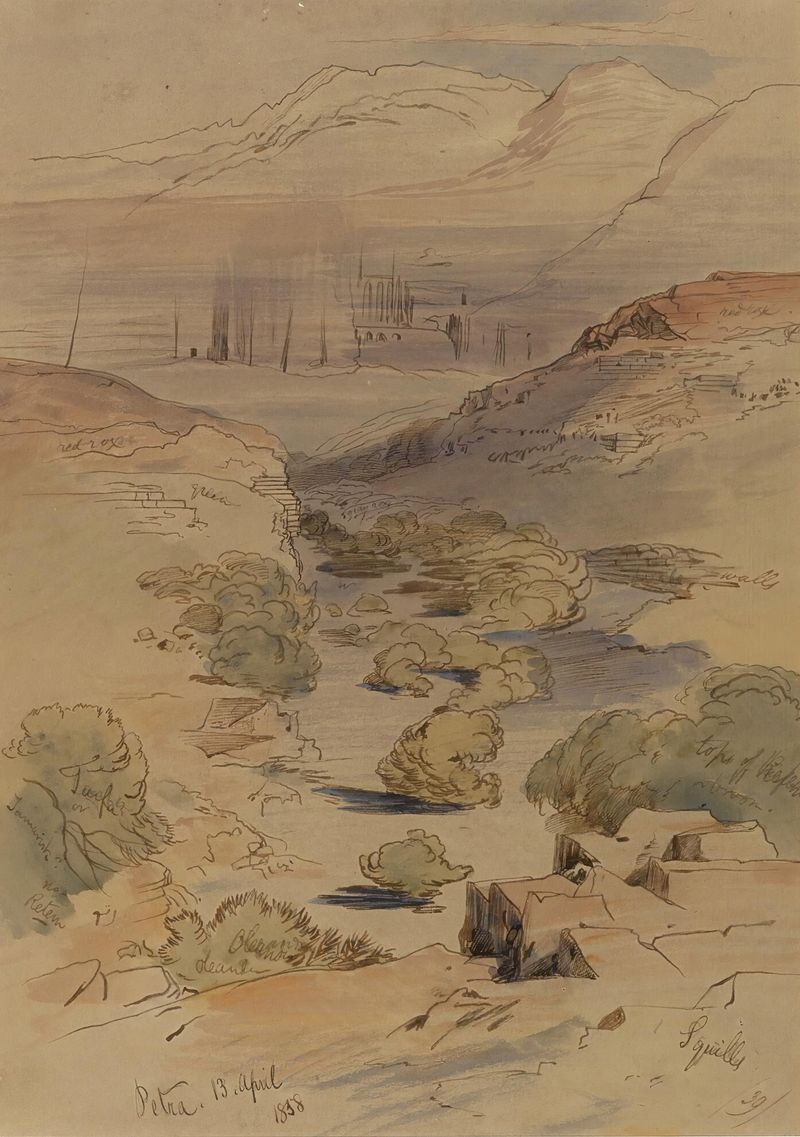
Petra
Edward Lear
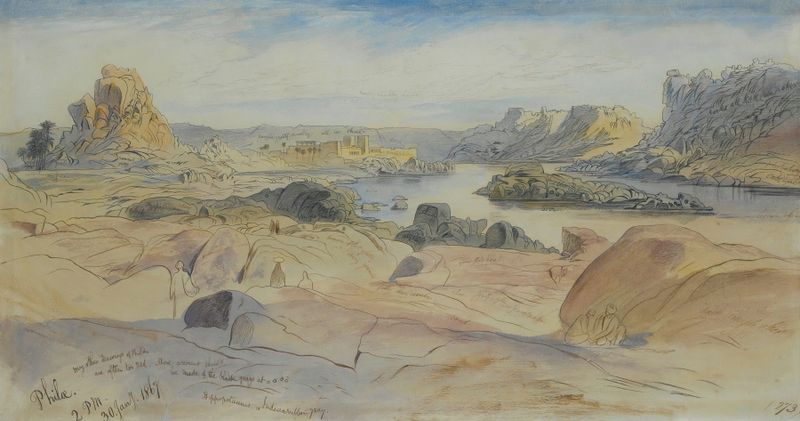
Philae, Egypt
Edward Lear
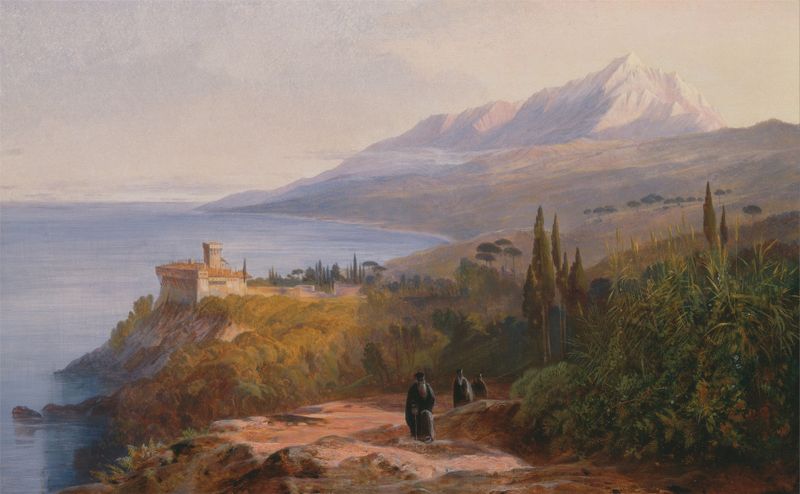
Mount Athos and the Monastery of Stavronikétes
Edward Lear
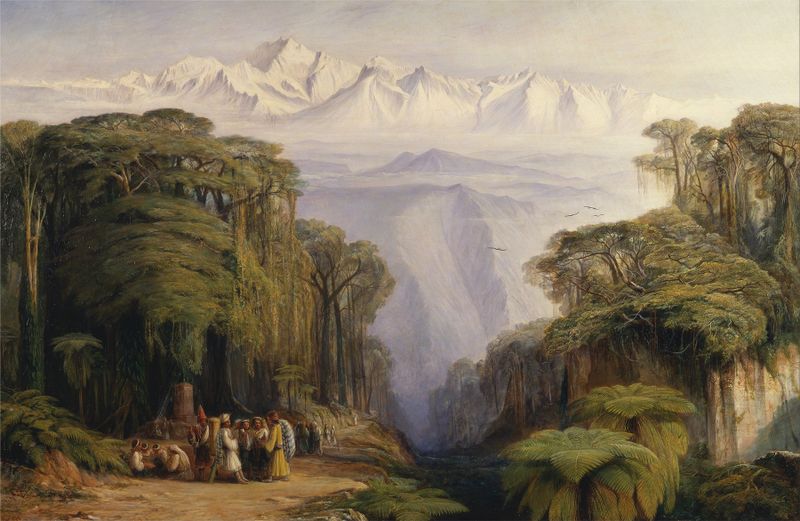
Kangchenjunga from Darjeeling
Edward Lear
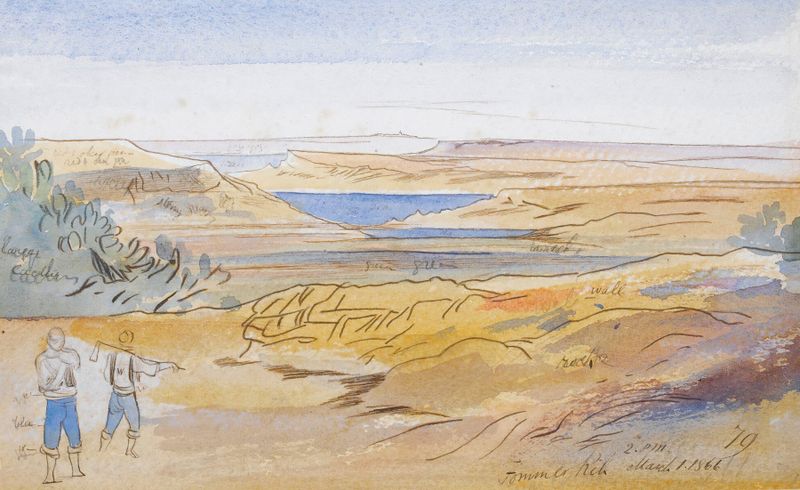
Fomm Ir-Rih, Malta
Edward Lear
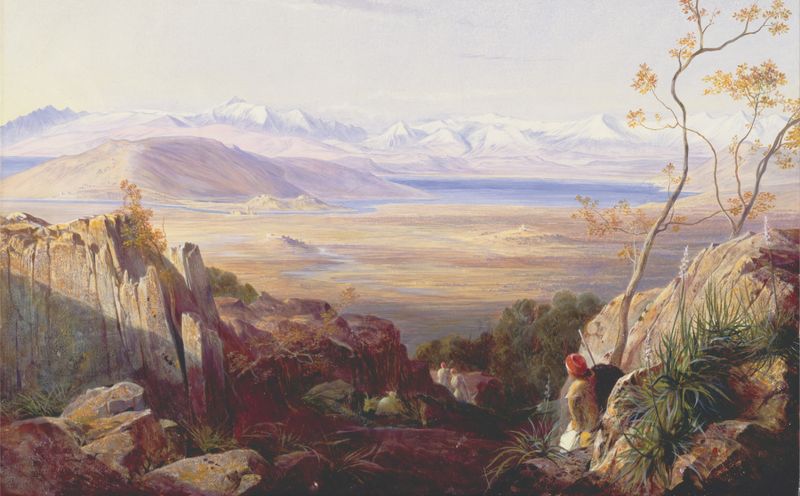
Butrinto, Albania
Edward Lear
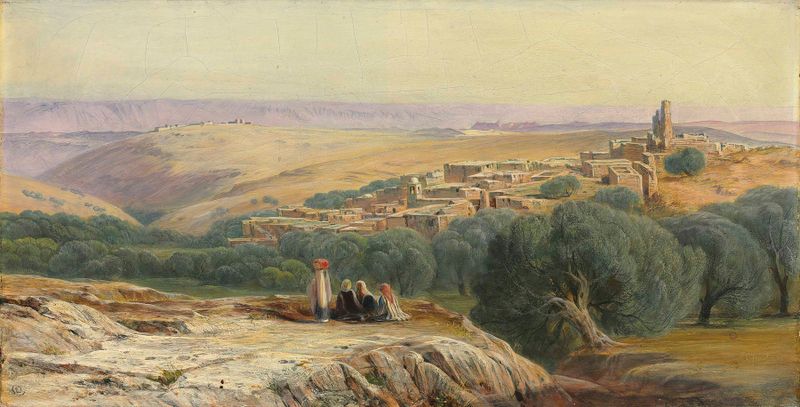
The Plains of Bethany
Edward Lear

Karnak, 9-30 pm, 22 January 1867
Edward Lear
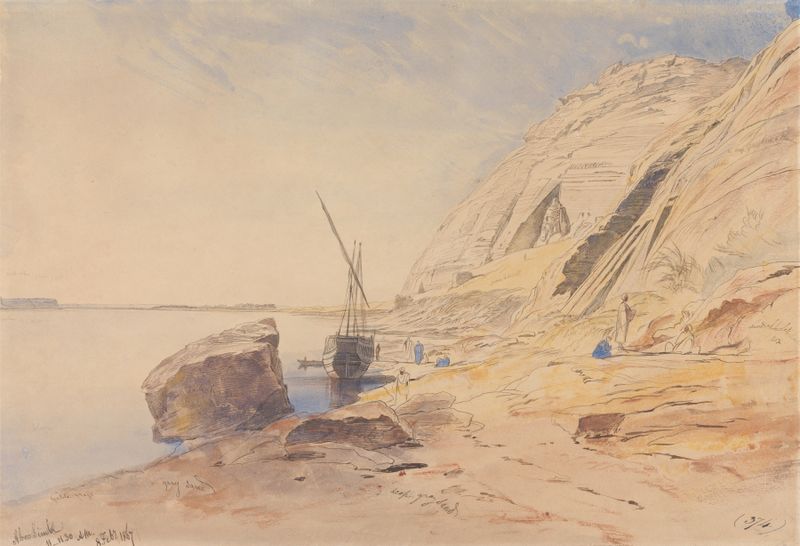
Abu Simbel, 11-11;30 am, 8 February 1867 (374)
Edward Lear

A View Of Mount Athos And The Pantokrator Monastery, Greece
Edward Lear





