
Cour de ferme avec un cavalier et une petite fille au premier plan — History & Facts
Could a single brushstroke hold eternity? In Cour de ferme avec un cavalier et une petite fille au premier plan, fear lingers in the air, cloaked beneath the serene surface of pastoral life. Look to the center of the canvas where a young girl stands, her small figure contrasting against the robust silhouette of the horseman beside her. Notice how the light plays with its warm brightness, illuminating the girl's delicate features while casting the rider in shadow, hinting at a tension that simmers just beneath the idyllic setting. The soft greens and browns of the farmyard evoke a sense of tranquility, yet the slight twist of the horse's body suggests an unease, as if it senses something amiss, something lurking beyond the tranquil façade. Delving deeper, the juxtaposition of innocence and the looming figure of the horseman raises questions of safety and vulnerability.
The girl’s wide-eyed gaze implies an openness to the world, yet it can also suggest a fear of the unknown that prowls just outside her perception. The subtle strokes of paint create a textured atmosphere where every blade of grass and shadow seems imbued with a sense of impending change, as if it were a moment suspended in time — beautiful yet fraught with uncertainty. Jean-Baptiste-Camille Corot created this piece during a period of artistic transition in France, likely in the mid-19th century when the Realist movement began to challenge Romantic ideals. Amid rising industrialization, Corot turned his gaze to rural life and landscapes, embodying both nostalgia and a reflection on the complexities of human emotion against nature.
His works were becoming celebrated for their lightness and serenity, yet, in moments such as this, they also capture the fragility of innocence amidst an ever-changing world.
More Artworks by Jean-Baptiste-Camille Corot
Browse all →
View of Genoa
Jean-Baptiste-Camille Corot
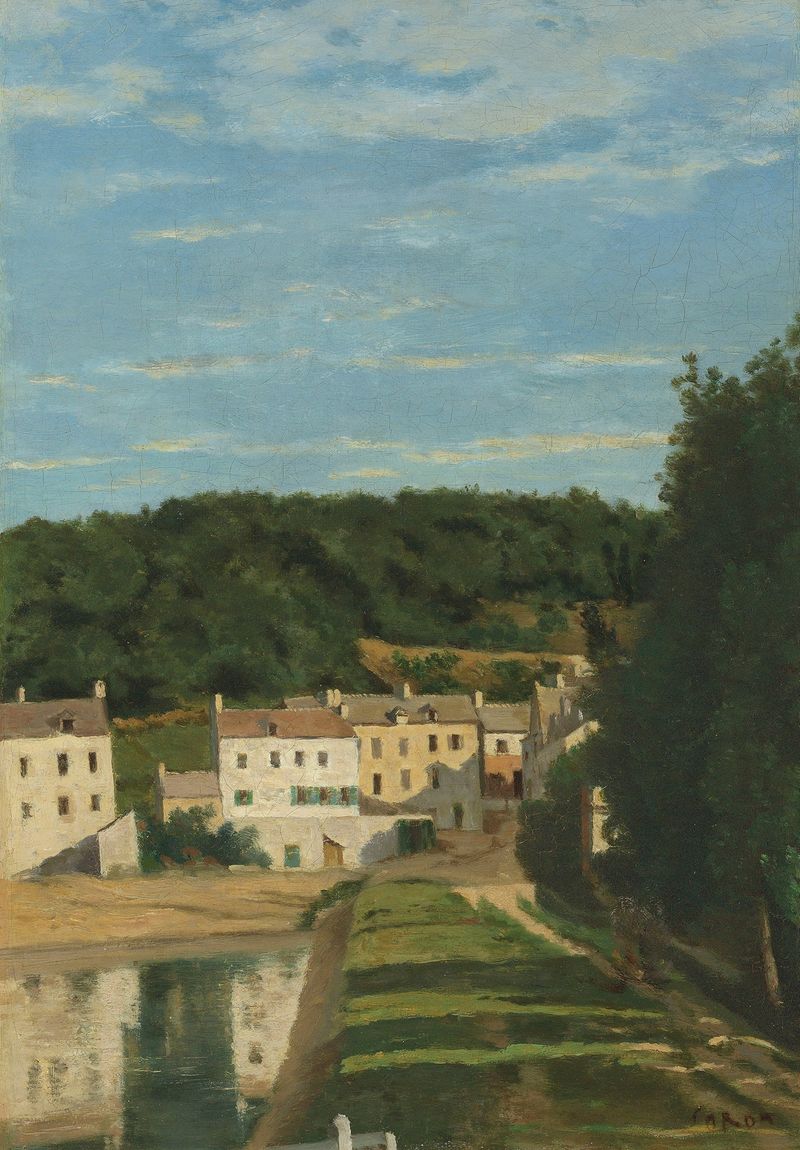
Les Maisons Cabassud À Ville D’avray
Jean-Baptiste-Camille Corot

La solitude. Souvenir de Vigen (Limousin)
Jean-Baptiste-Camille Corot
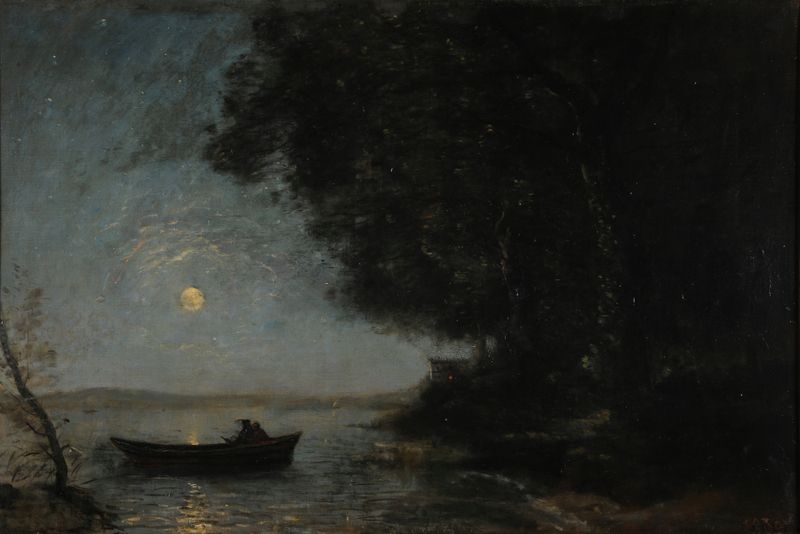
Le lac ; effet de nuit
Jean-Baptiste-Camille Corot
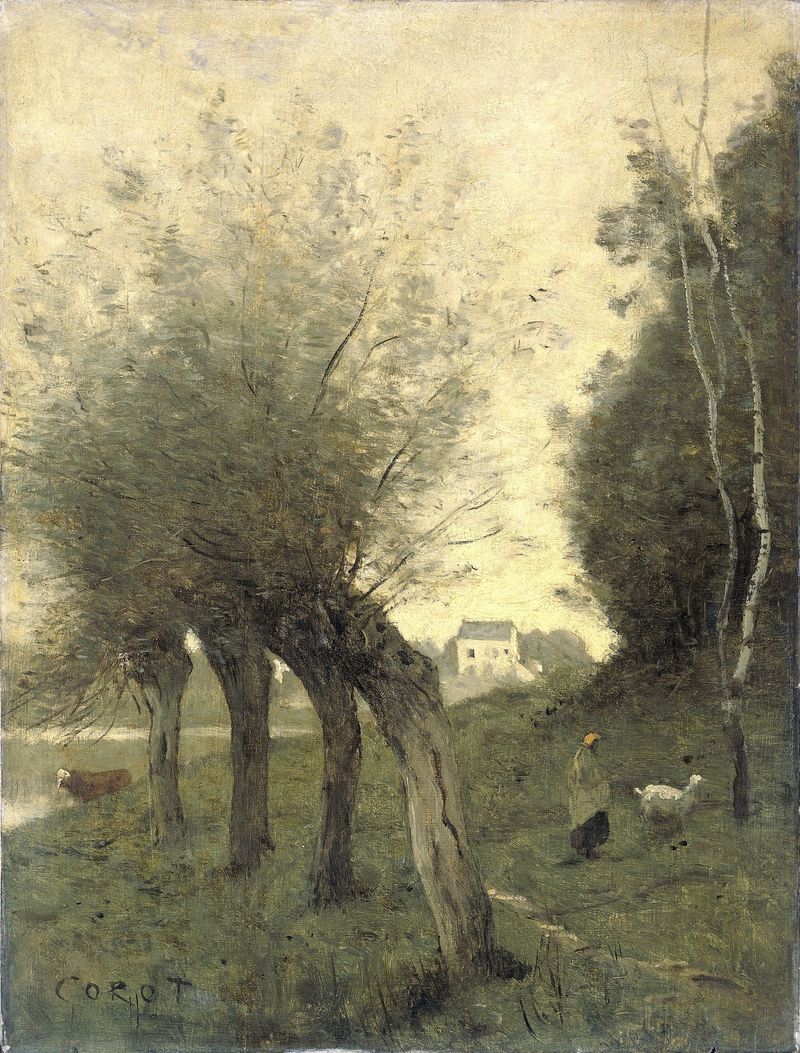
Landscape with Pollard Willows
Jean-Baptiste-Camille Corot
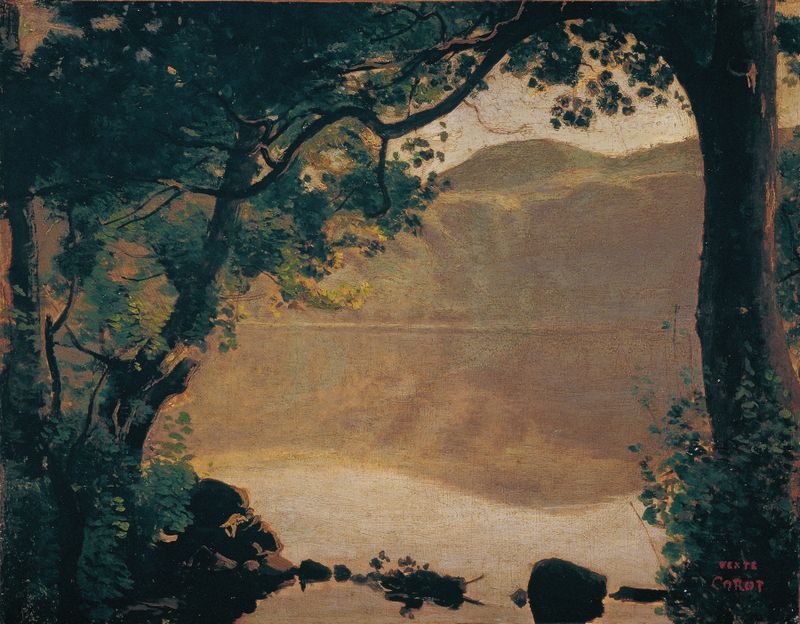
Der Nemisee
Jean-Baptiste-Camille Corot
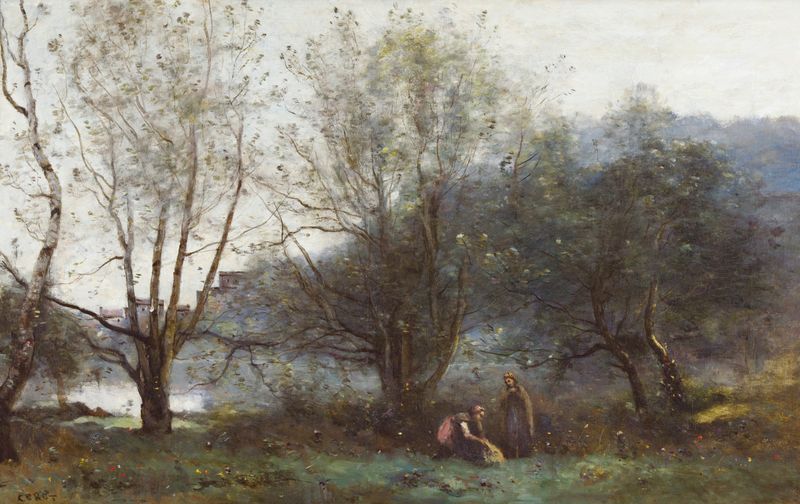
Les Étangs De Ville D’avray
Jean-Baptiste-Camille Corot
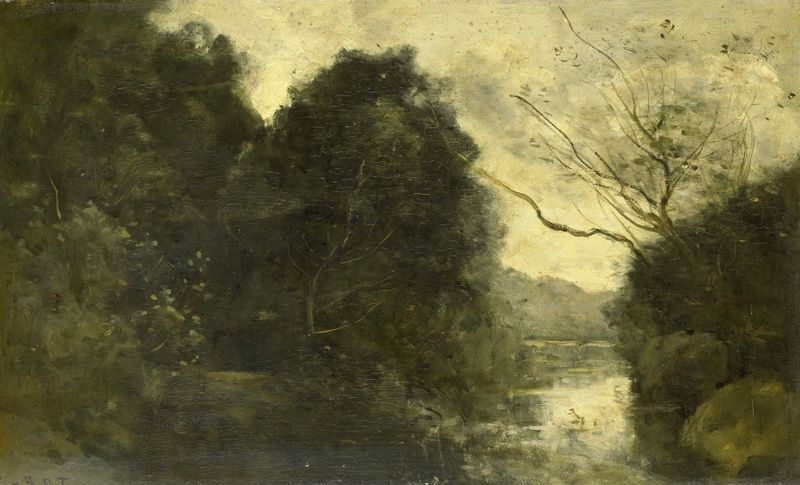
Pond in the Woods
Jean-Baptiste-Camille Corot
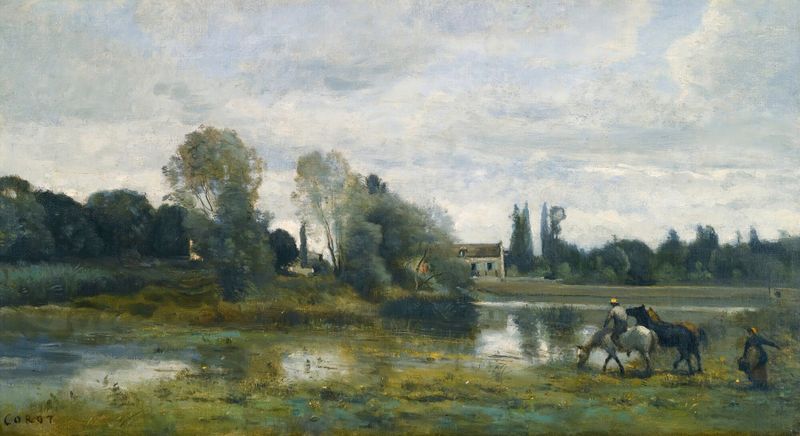
Ville D’avray; L’abreuvoir Des Chevaux
Jean-Baptiste-Camille Corot
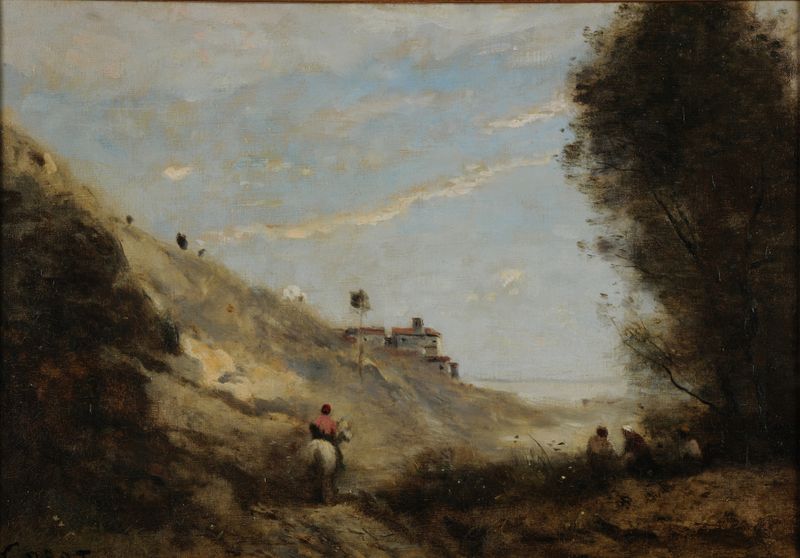
Le vallon au cavalier
Jean-Baptiste-Camille Corot





