
Courtyard of an Ancient Palace — History & Facts
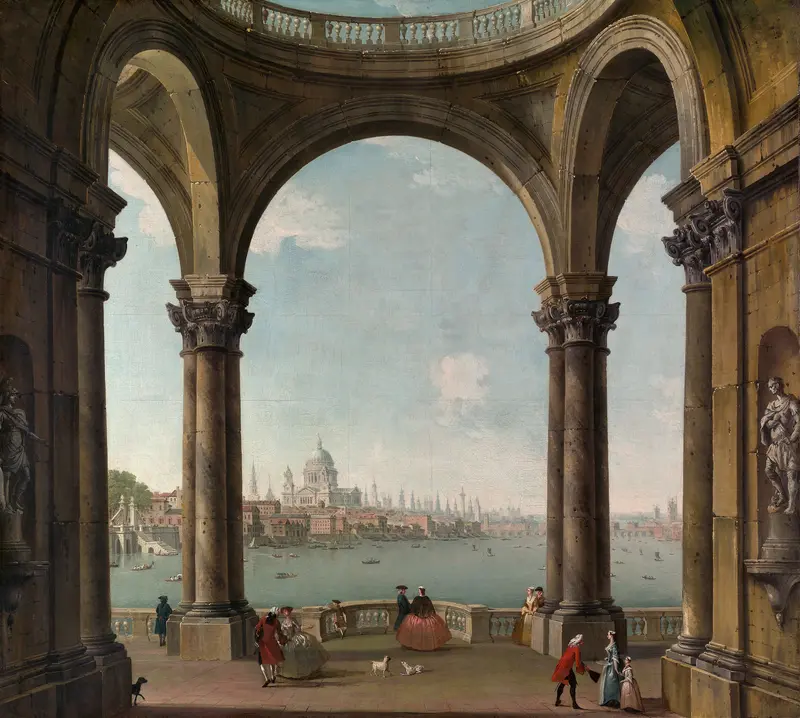
A shaft of sunlight slices through the vaulted gloom, catching on marble statues and the bright red of a discarded cloak: this is a stage set for history, frozen in a moment that feels both grand and strangely intimate. The eye is drawn first to the deep perspective, where arches frame a distant palace and blue sky, but it is the human figures—soldiers conferring, a child tugging at a woman's hand, a pair of men in animated discussion—that animate the scene. Every architectural detail, from the coffered ceilings to the balustrades, seems designed to amplify the sense of scale and order, while the scattered shields and helmets hint at stories of conflict and peace, of life lived within these imposing walls.
The statues, posed in their niches, serve as silent witnesses to the fleeting dramas of the mortals below. Painted before 1777 by Antonio Joli, this vision belongs to a world enamored with the grandeur of antiquity and the possibilities of illusion. In the eighteenth century, such capricci—imagined views of ancient ruins and palaces—were prized by collectors eager to possess a fragment of Rome’s lost glory, or perhaps to dream themselves into the roles of philosopher, conqueror, or muse. The painting now resides in the collection of the Royal Castle in Warsaw, a reminder that history has kept few traces of the specific stories behind these invented palaces, but the fascination with their imagined past remains as lively as ever.
Look again, and let your eye wander through the arches: every shadow and shaft of light is an invitation to invent your own chapter in this silent epic.
More Artworks by Antonio Joli

Monastery Di San Martino, Naples
Antonio Joli
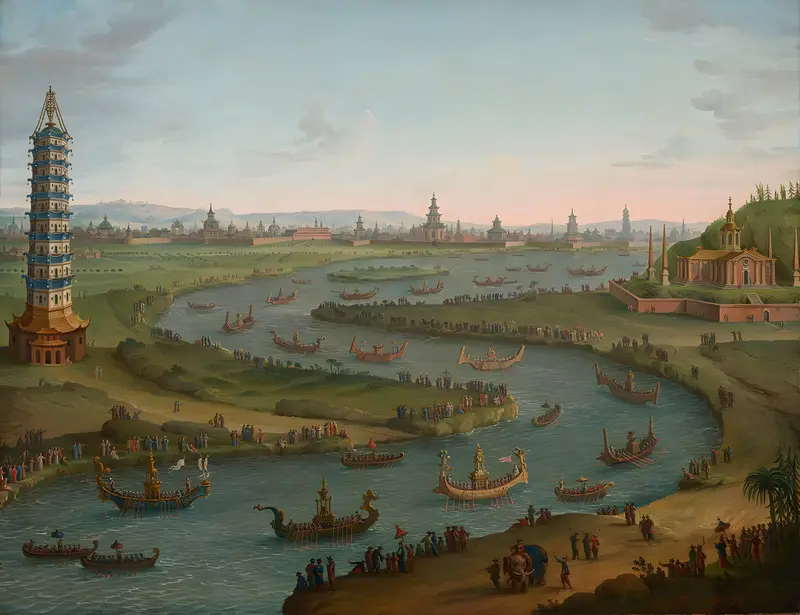
A capriccio with the French Ambassador approaching the King of Siam’s Palace in a state barge, in October
Antonio Joli
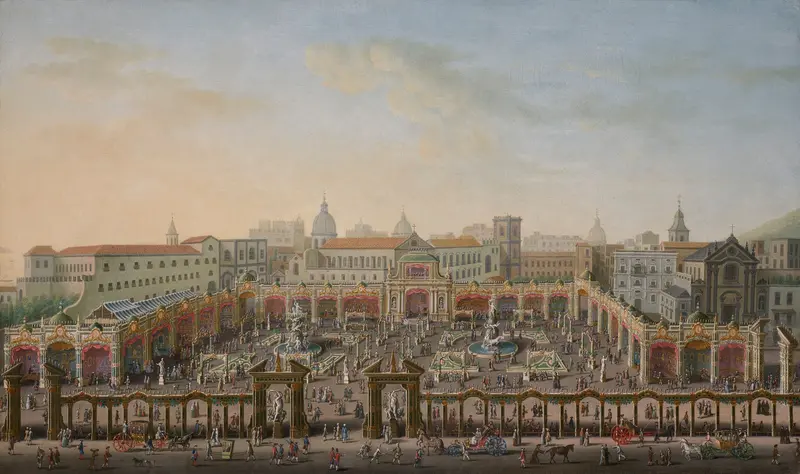
Naples, Piazza Trieste e Trento with a fair viewed from a balcony of the Palazzo Reale
Antonio Joli
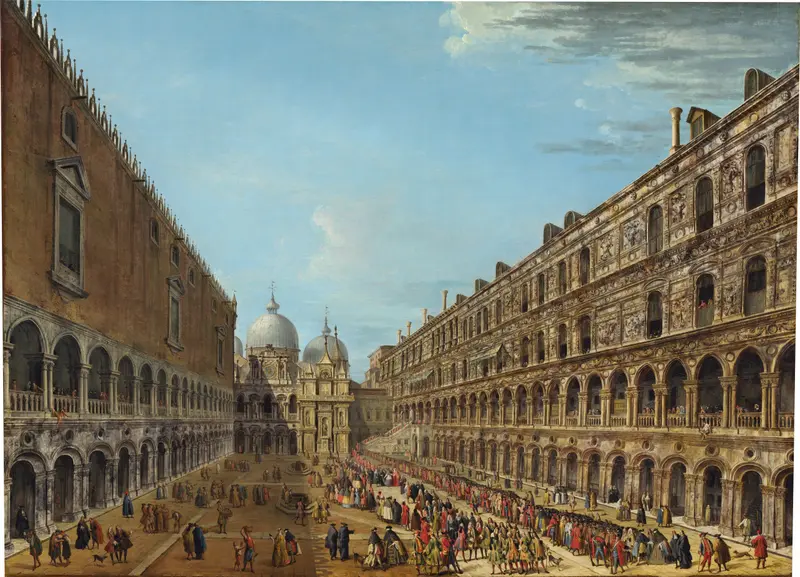
Procession in the Courtyard of the Ducal Palace,Venice
Antonio Joli
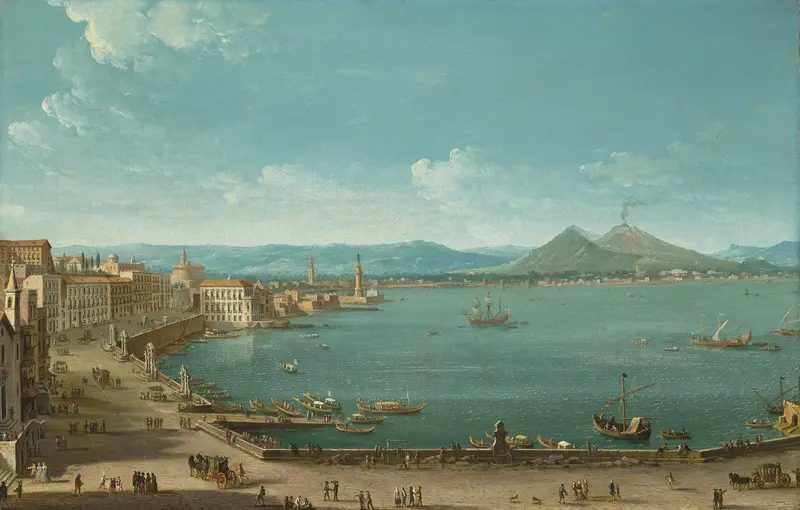
Naples with the Bay of Santa Lucia and Vesuvius beyond
Antonio Joli
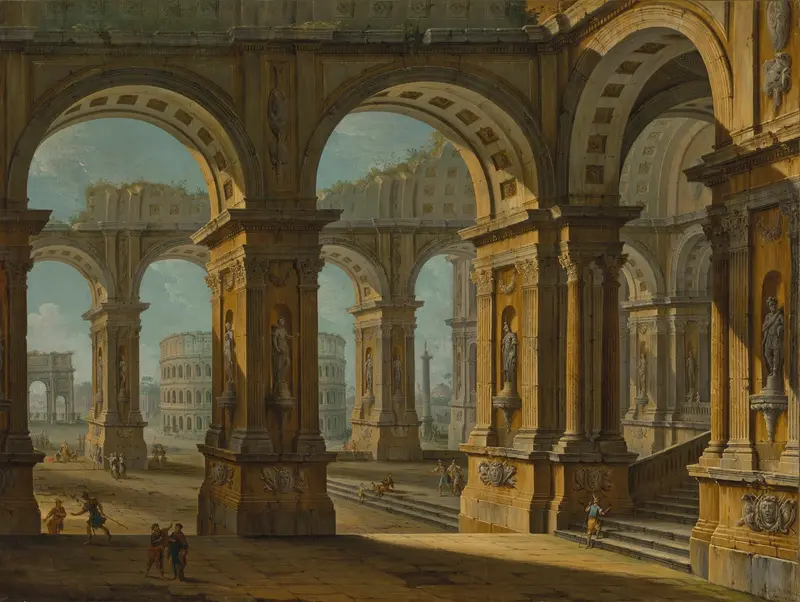
A capriccio of Rome with the Colusseum and Arch of Titus
Antonio Joli
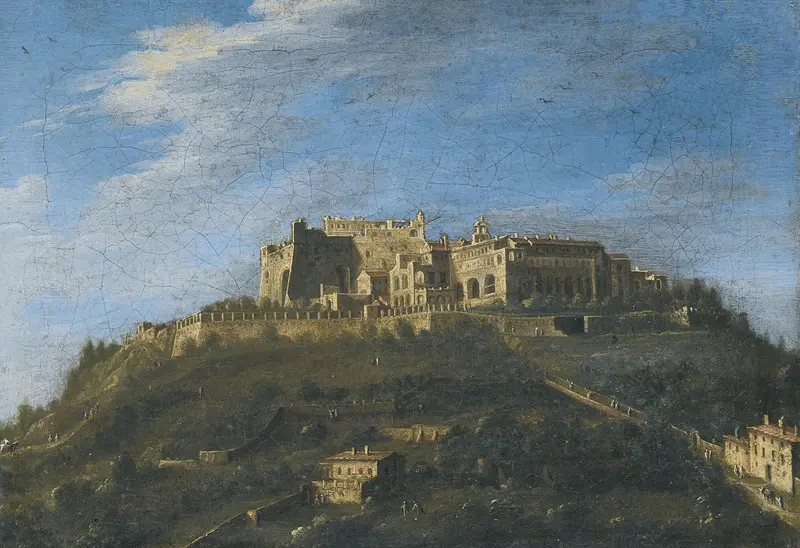
Monastery Di San Martino, Naples
Antonio Joli
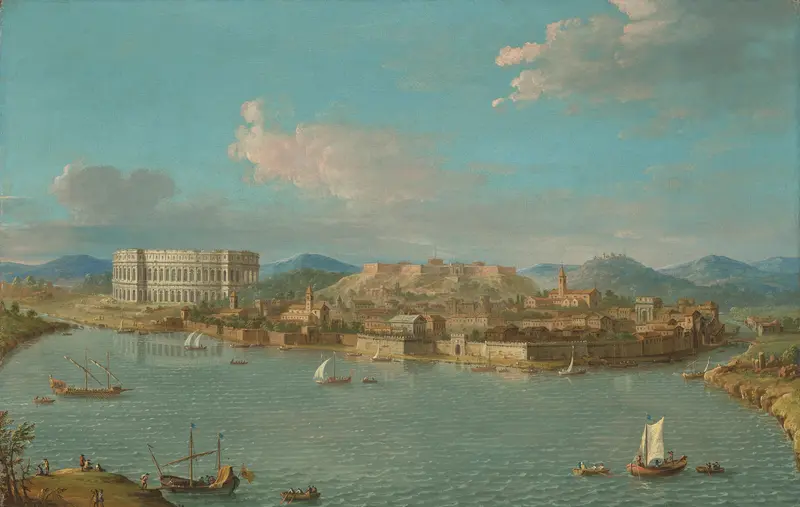
Pula, with the Pula Arena
Antonio Joli
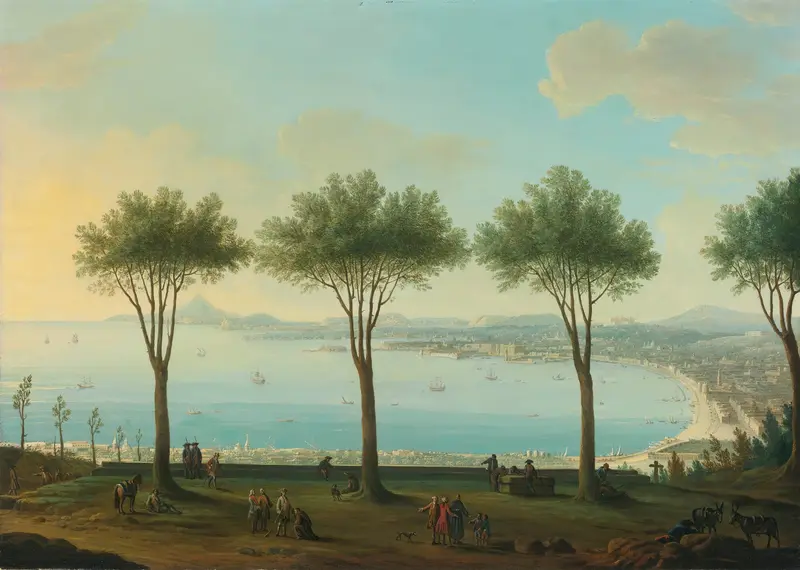
View Of The Bay Of Naples From The South (Possibly Poggioreale), Looking North With A King Of The Bourbon Family, Possibly Ferdinand Iv, In The Foreground
Antonio Joli
Capriccio with St. Paul’s and Old London Bridge
Antonio Joli





