
Crossing the Bridge — History & Facts
In the delicate balance of nature and human intervention lies a fragility often overlooked, a whisper of existence amidst the vastness of life. Look to the left at the bridge stretching across the water, its wooden planks gracefully arching into the landscape. The gentle ripples in the river reflect the muted hues of the sky, a blend of soft greys and warm earth tones. Notice how the light plays off the scene, casting shadows that dance upon the water’s surface, creating a sense of tranquility entwined with uncertainty.
The figures crossing the bridge seem almost ephemeral, caught in a moment of transition, their presence both integral and fleeting. The interplay between the firm structure of the bridge and the fluidity of the water symbolizes the tension between permanence and impermanence. In the background, the dark silhouettes of trees stand sentinel, grounding the scene, while the ethereal clouds above hint at the fragility of nature's beauty. This contrast echoes a deeper emotional narrative: life is a journey across uncertain waters, where each crossing is laced with vulnerability and the possibility of change. In 1838, Dupré painted this piece during a period marked by the Romantic movement's celebration of nature and emotional expression.
Living in France, he was surrounded by a burgeoning interest in landscapes that reflected not only the physical world but also the inner emotional states of humanity. This work exemplifies his ability to capture the essence of fleeting moments, offering a glimpse into the fleeting nature of life itself.
More Artworks by Jules Dupré
Browse all →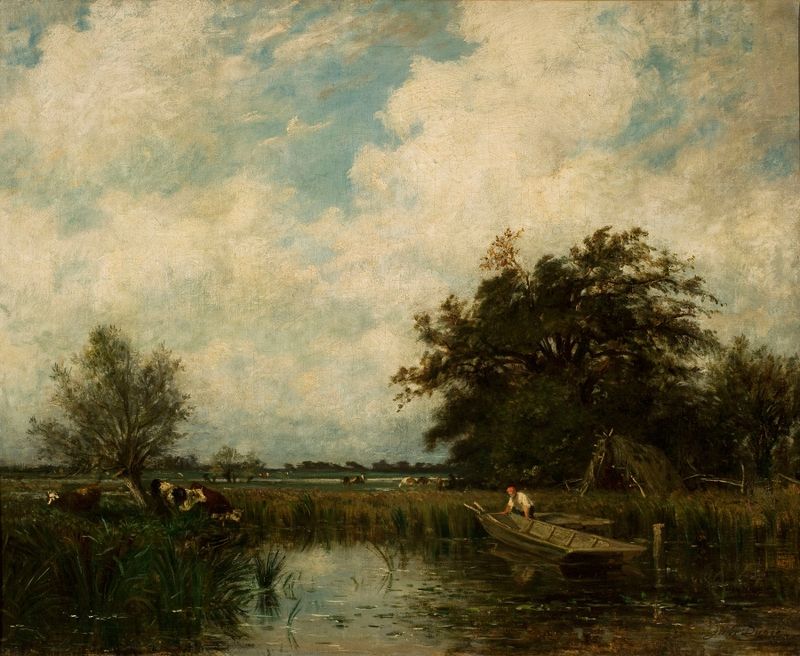
Landscape with a pond
Jules Dupré

The Cottage by the Roadside, Stormy Sky
Jules Dupré
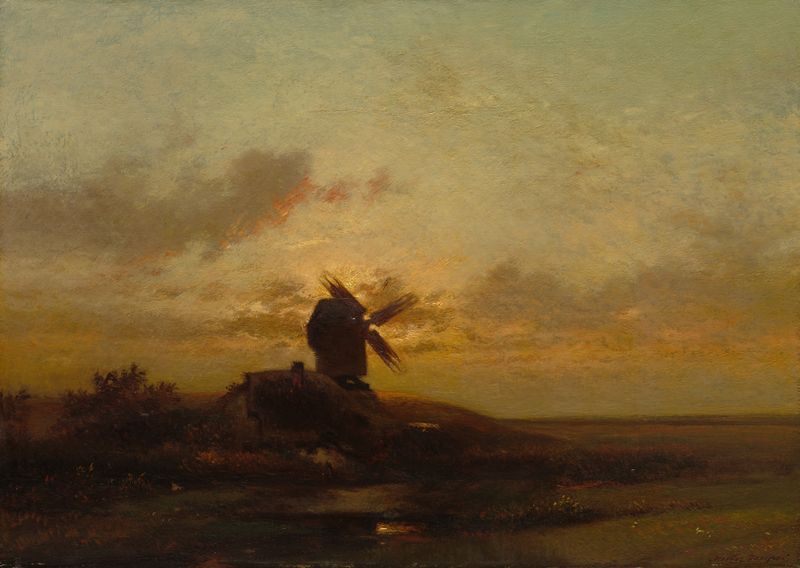
The Windmill
Jules Dupré

The Estuary Farm
Jules Dupré

Fontainebleau Oaks
Jules Dupré

Village Scene, Sunset
Jules Dupré

Barks Fleeing Before the Storm
Jules Dupré

Cows Crossing a Ford
Jules Dupré

The Old Oak
Jules Dupré

Weidelandschaft im Limousin
Jules Dupré





