
Crépuscule, Vue Prise À Djergeh — History & Facts
In the fleeting embrace of twilight, the colors of life give way to the shadows of mortality. The soft hues of dusk evoke a sense of nostalgia, reminding us that beauty is transitory and that every moment is a precious whisper in the grand tapestry of existence. Look to the horizon where the sun retreats, casting a warm amber glow over the tranquil landscape. The gentle strokes of the artist's brush create a seamless blend of oranges and purples, guiding the viewer’s gaze across the serene waters and the silhouettes of distant hills.
Notice how the light dances on the water's surface, imbuing the scene with a sense of sublime calm that contrasts sharply with the inevitability of the coming night. Delve deeper into the painting’s layers, where the stillness conveys a poignant tension. The boats tethered in the foreground suggest moments of pause in life’s journey, while the encroaching shadows hint at the inexorable passage of time. Each element, from the delicate ripples in the water to the ethereal glow of the sky, reflects an existential meditation on the beauty of the present intertwined with the awareness of mortality. During the time Crépuscule, Vue Prise À Djergeh was painted, the artist was immersed in the vibrant milieu of 19th-century France, where Orientalism was gaining popularity.
Frère, who traveled to North Africa, was likely inspired by the serene coastal landscapes he encountered. This period saw a blending of cultures through art, as artists sought to capture not only the external beauty of foreign places but also the deeper reflections on life and death that such scenes evoke.
More Artworks by Charles Théodore Frère
Browse all →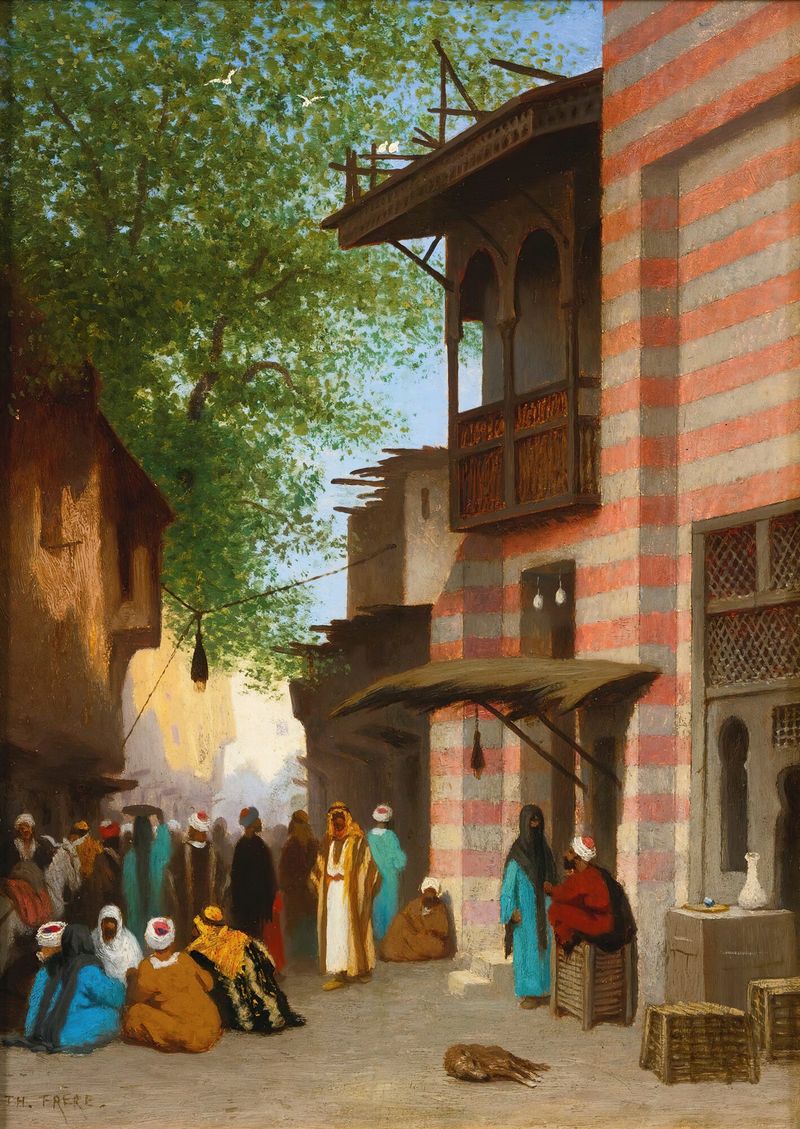
A street scene, North Africa
Charles Théodore Frère
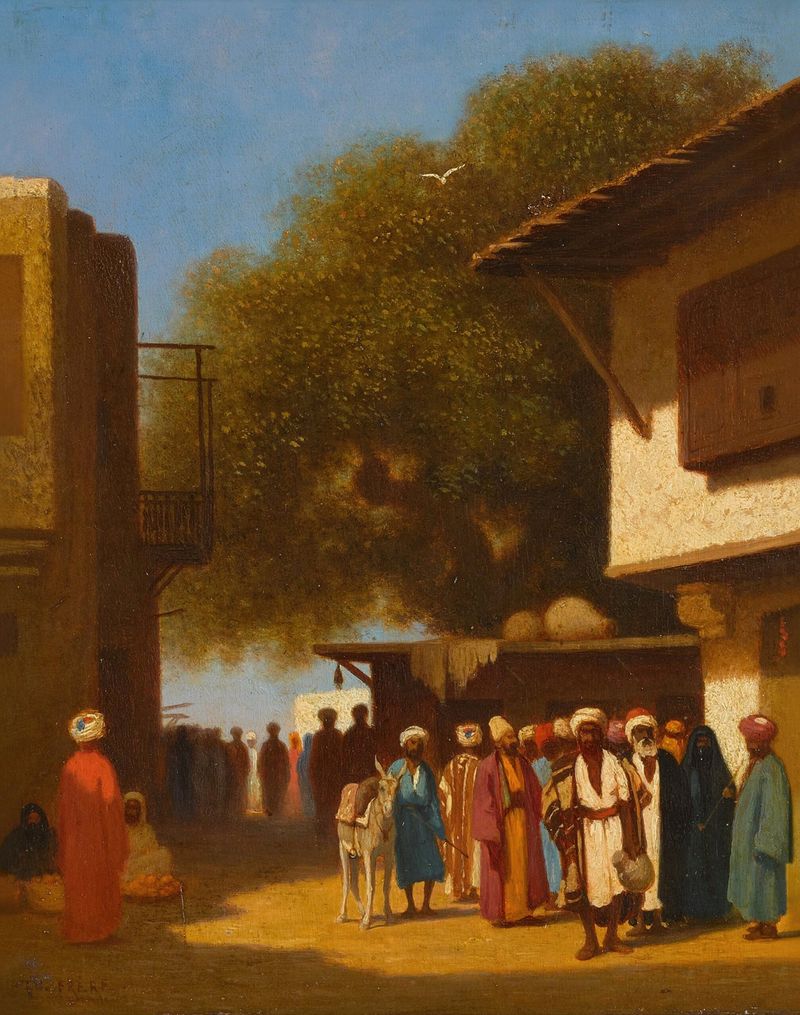
Street in Cairo
Charles Théodore Frère
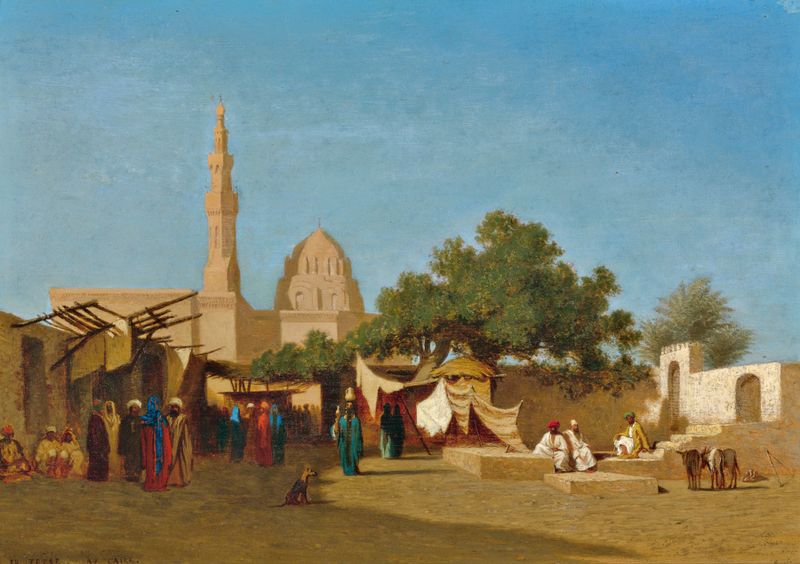
La Mosquée Du Sultan Hassan, Caire
Charles Théodore Frère
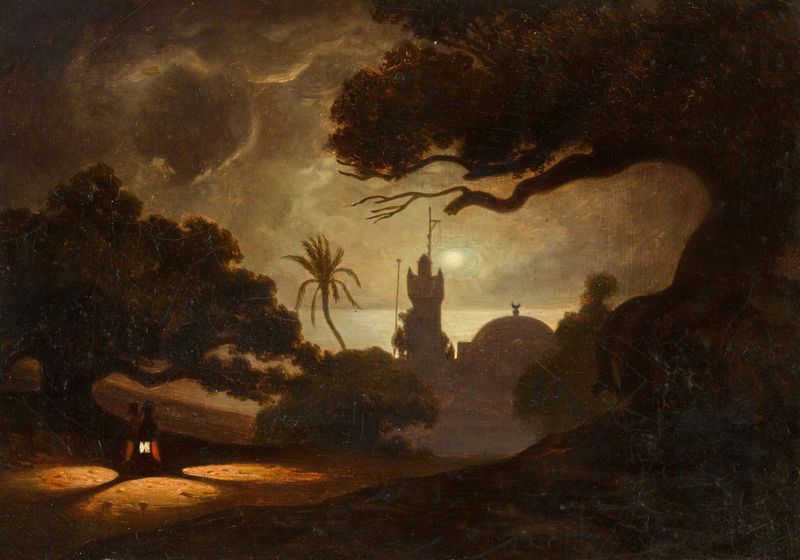
Mosque in the Moonlight
Charles Théodore Frère
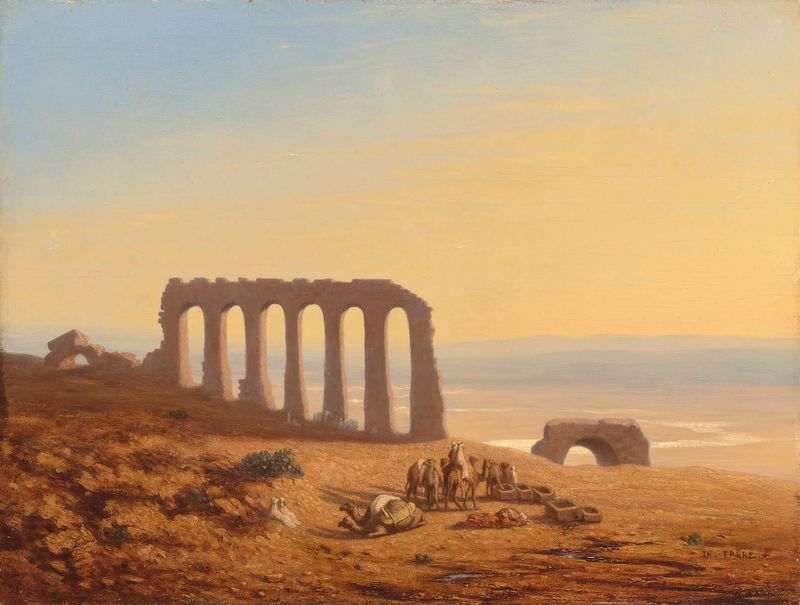
A Bedouin encampment surrounded by ruins
Charles Théodore Frère

A Camel Caravan
Charles Théodore Frère

Caravane traversant le désert
Charles Théodore Frère
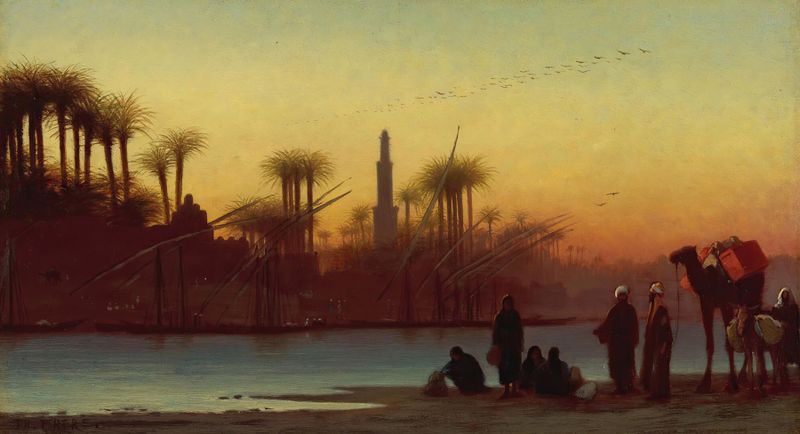
Near Manfalout, Egypt
Charles Théodore Frère

A Bazaar in Cairo
Charles Théodore Frère
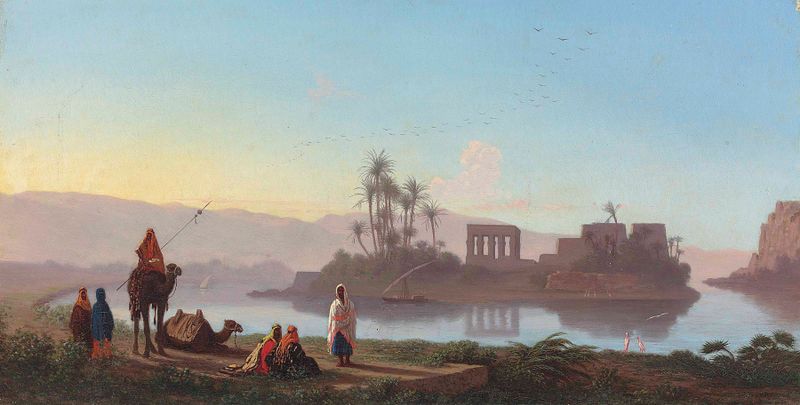
Vue de L’Ile de Philae, Nubie
Charles Théodore Frère





