
Dakkeh — History & Facts
What if silence could speak through light? In Dakkeh, the unseen whispers of tranquility resonate, inviting the viewer into a realm where illusion dances with reality. Focus on the emerald green hues that envelop the landscape, the colors rich and inviting, drawing your gaze towards the horizon. Notice how Lear's brushstrokes suggest both softness and intricacy in the foliage, creating a lush texture that feels alive. The interplay of light and shadow subtly guides the eye across the canvas, enhancing the feeling of depth while the distant hills fade softly into the background, blurring the lines between the tangible and the ephemeral. Within this work lies a powerful contrast: the solidity of the foreground versus the ethereal quality of the sky.
The delicate rendering of the clouds reveals a moment poised between day and night, vibrating with possibility. This tension embodies the heart of illusion, where the viewer is caught between admiration of the serene landscape and the recognition of its transitory nature, evoking a profound sense of longing. Created in an uncertain period of Lear’s life, the painting reflects his exploration of landscapes infused with imagination. As he traversed Italy, capturing the beauty of its vistas, Lear was carving out his own niche amidst a shifting art world defined by Romanticism and burgeoning Impressionism, allowing him to fuse realism with dreamlike qualities in his work.
More Artworks by Edward Lear
Browse all →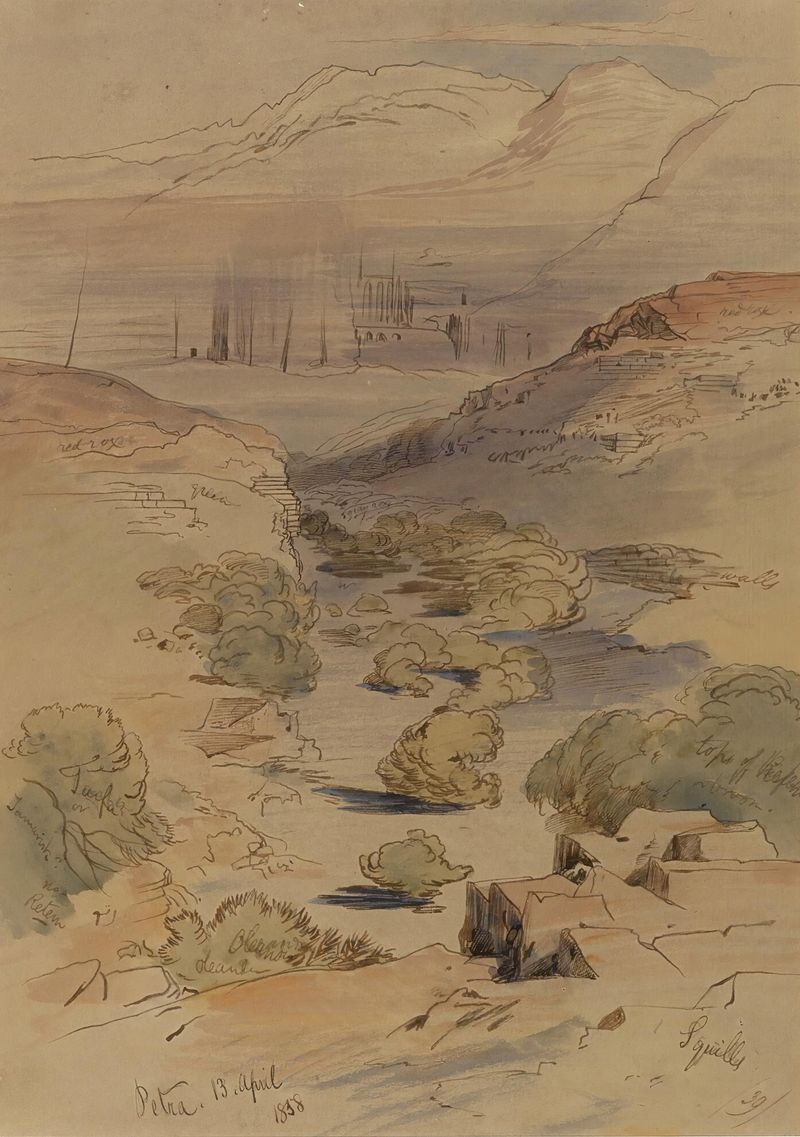
Petra
Edward Lear
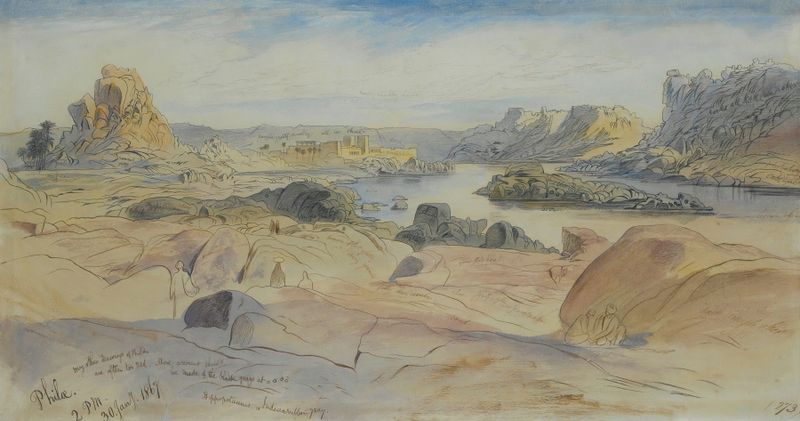
Philae, Egypt
Edward Lear
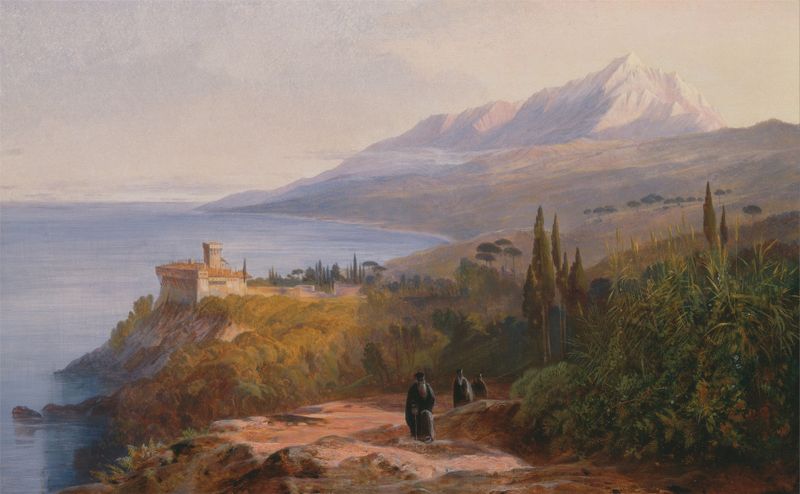
Mount Athos and the Monastery of Stavronikétes
Edward Lear
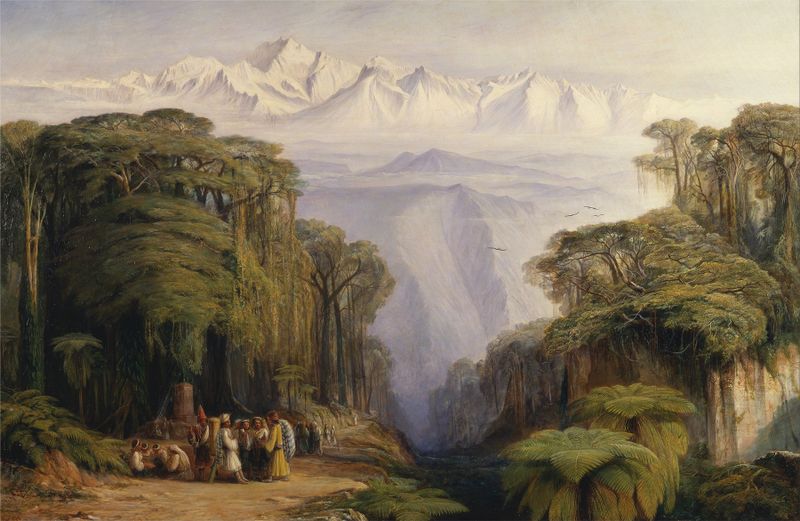
Kangchenjunga from Darjeeling
Edward Lear
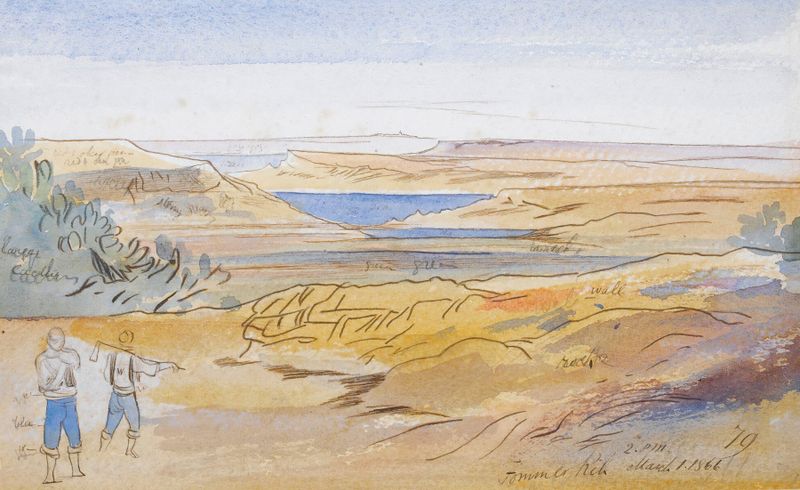
Fomm Ir-Rih, Malta
Edward Lear
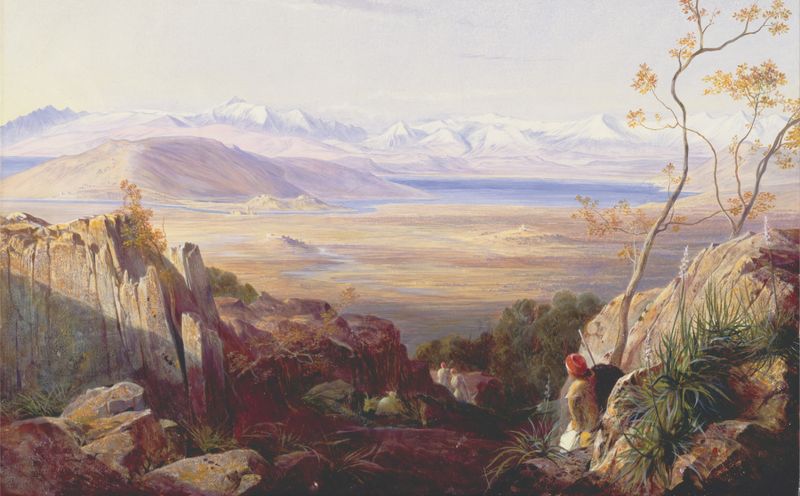
Butrinto, Albania
Edward Lear
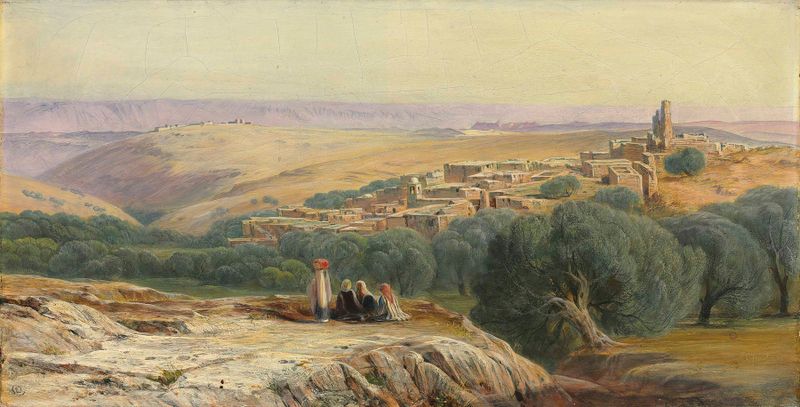
The Plains of Bethany
Edward Lear

Karnak, 9-30 pm, 22 January 1867
Edward Lear
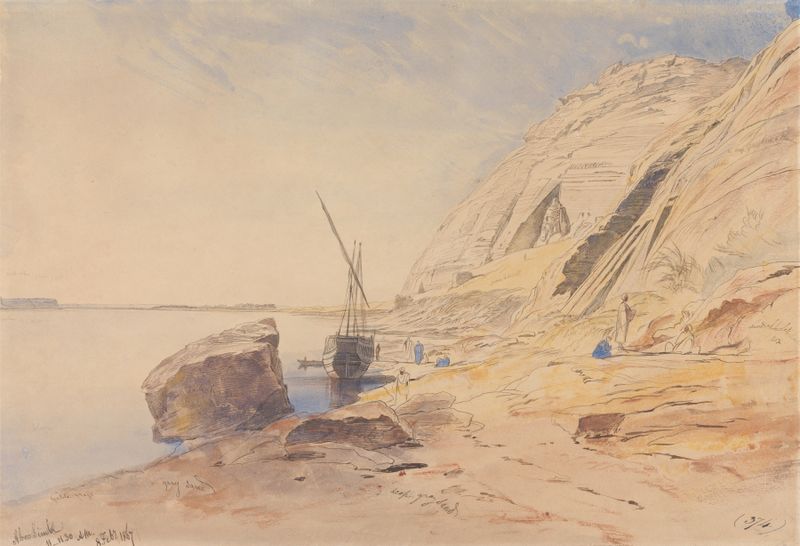
Abu Simbel, 11-11;30 am, 8 February 1867 (374)
Edward Lear

A View Of Mount Athos And The Pantokrator Monastery, Greece
Edward Lear





