
Dartmouth Castle — History & Facts
In the stillness of Dartmouth Castle, the weight of history mingles with the echo of unspoken thoughts, inviting a contemplative exploration of transcendent spaces. Look to the right at the imposing stone walls rising against a soft blue sky, their textures rendered with a delicate yet assertive hand. Notice how light dances on the castle’s craggy surface, revealing intricate shadows that evoke both strength and fragility. The meticulous brushwork captures not only the architectural grandeur but also the solitude of the scene, where nature’s embrace gently cradles the fortification, imbuing it with a sense of timelessness. Deeper insights reveal a rich tapestry of contrasts.
The solid fortifications, symbols of protection, stand in stark relief to the fluidity of the surrounding water, suggesting a dialogue between permanence and transience. The interplay of light and shadow hints at the passage of time—each stroke a silent whisper of those who have walked these grounds, their histories intertwined with the very stone. This duality encapsulates the essence of transcendence: a moment where the tangible and ethereal coexist. Paul Sandby painted Dartmouth Castle during the early 19th century, likely at a time when Romanticism was flourishing in Britain.
Known for his contributions to landscape and topographical art, he sought to capture the beauty and drama of the English countryside. His work during this period reflects a period of personal exploration amidst the broader artistic dialogue of his time, as he navigated between realism and a newfound appreciation of emotional landscapes.
More Artworks by Paul Sandby
Browse all →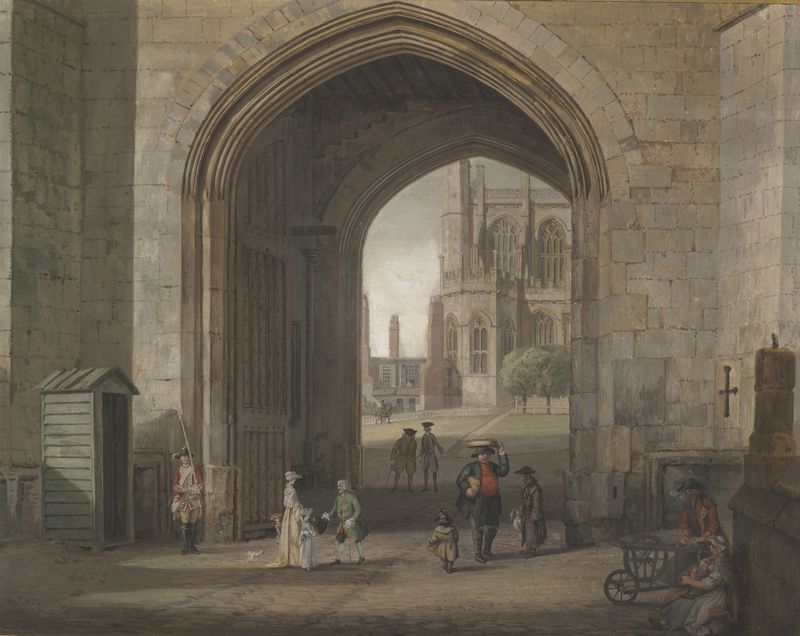
The Tower Gate at Windsor Castle
Paul Sandby

A Distant View of Maidstone, from Lower Bell Inn, Boxley Hill
Paul Sandby
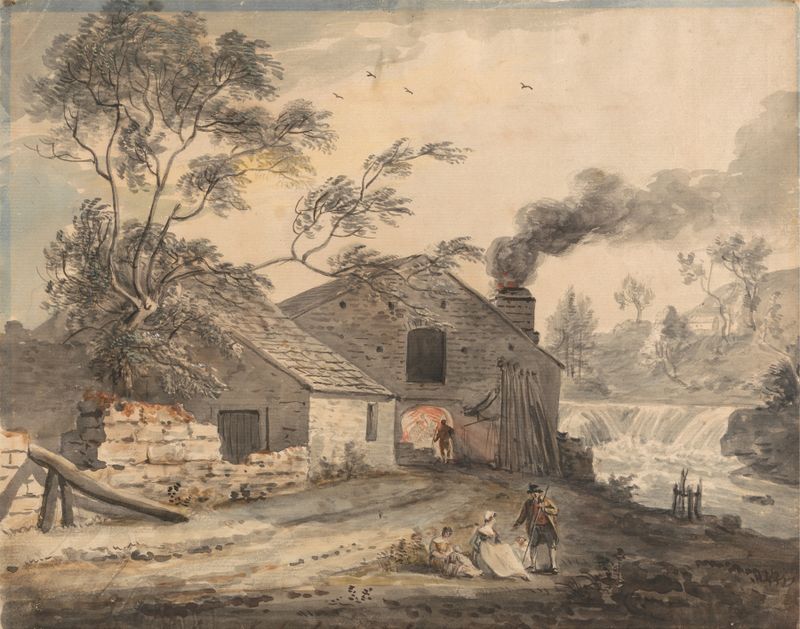
Iron Forge on the River Kent, Westmorland
Paul Sandby
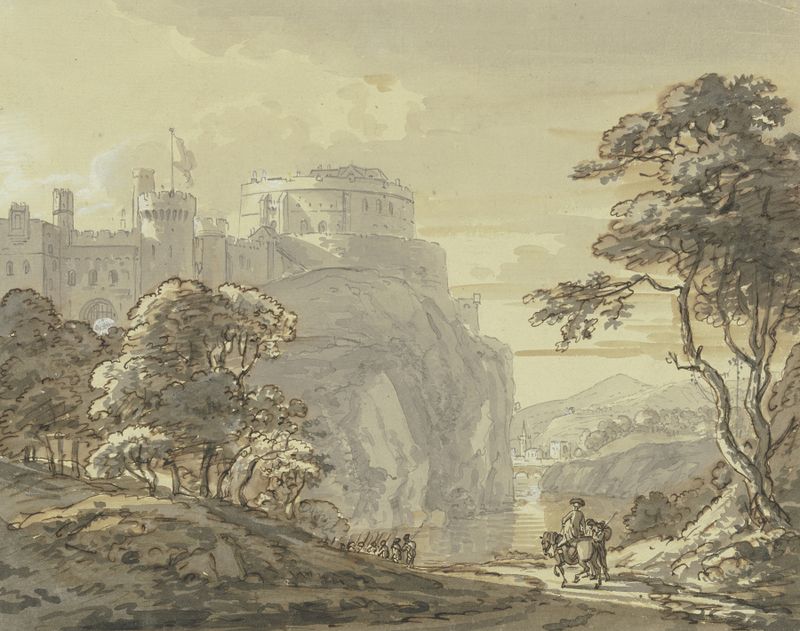
View of Windsor Castle
Paul Sandby

Hackwood Park, Hampshire
Paul Sandby

Roslin Castle, Midlothian
Paul Sandby
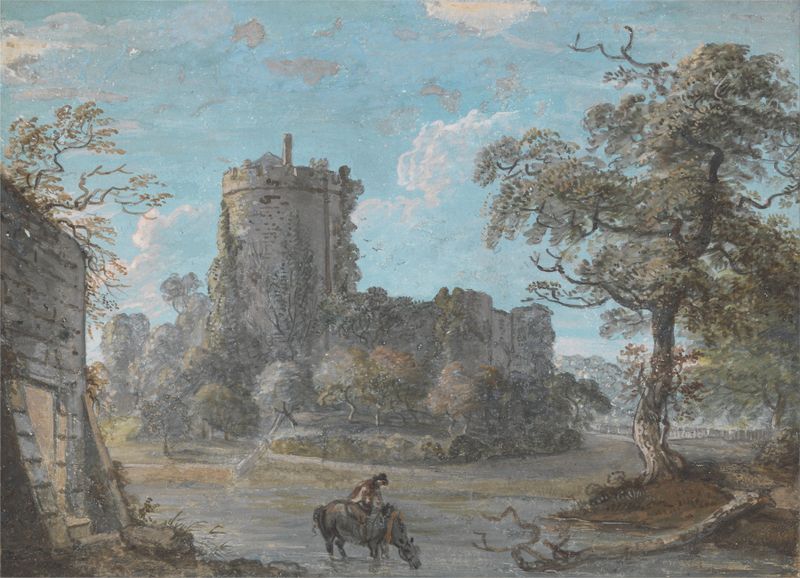
The Entrance to Chepstow Castle
Paul Sandby
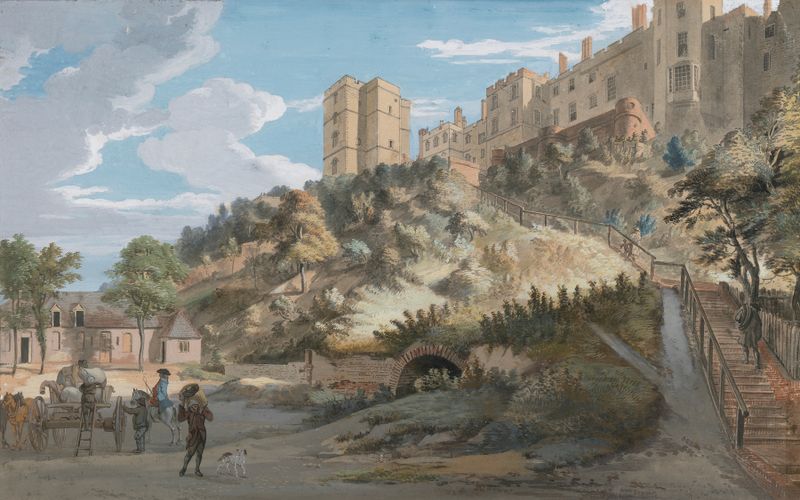
The Hundred Steps and Winchester Tower, Windsor Castle, Berkshire
Paul Sandby

Brook End, Essex
Paul Sandby
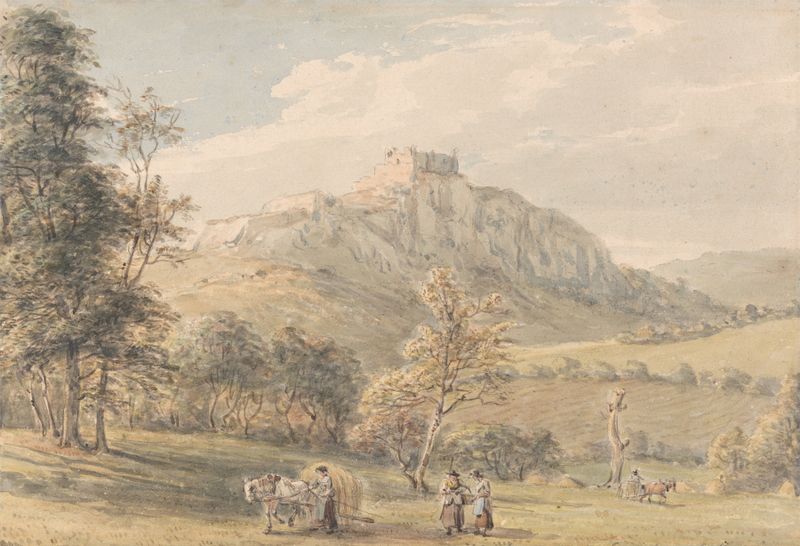
Carreg Cennen Castle
Paul Sandby
More Architecture Art
Browse all →
The statue of Liberty
Frédéric Auguste Bartholdi

View of Houses in Delft, Known as ‘The Little Street’
Johannes Vermeer

View of Houses in Delft, Known as ‘The Little Street’
Johannes Vermeer

The Cathedral in Rouen. The portal, Grey Weather
Claude Monet

The yellow house
Vincent van Gogh

The Church in Auvers-sur-Oise, View from the Chevet
Vincent van Gogh