
De dood van de Heilige Benedictus — History & Facts
What if silence could speak through light? The haunting weight of mortality lingers in the air, inviting contemplation and reverence. Focus on the somber hues that envelop the canvas, drawing attention first to the figure of Saint Benedict, whose lifeless body lies at the center, surrounded by a disarray of loss. The muted color palette of browns and grays emphasizes the gravity of the moment, while subtle highlights play across the faces of the mourning figures. Notice how their expressions, etched with anguish, seem to capture the breath of a collective sorrow that penetrates the silence surrounding the scene. Within the composition, contrasts abound—between the stillness of death and the emotional turmoil of the living.
The stark division of light and shadow reflects the thin veil that separates the mortal realm from the divine. Each mourner’s gesture speaks volumes, their hands raised as if grasping at something beyond reach, embodying the struggle between acceptance and despair. This poignant interplay uncovers the fragility of life and the heavy burden of remembrance that accompanies mortality. Jacques Callot painted this work between 1608 and 1611, during a time when Baroque art was beginning to flourish, characterized by its dramatic expressions and intricate details.
Living in Nancy, France, Callot was influenced by the political and religious turmoil of his time, which often found its way into his art. At this juncture in his career, he was establishing his reputation, blending technical skill with deep emotional resonance, a hallmark that would define his legacy.
More Artworks by Jacques Callot
Browse all →
Titelprent voor de prentreeks 'De kleine apostelen' (Het martelaarschap van de apostelen)
Jacques Callot
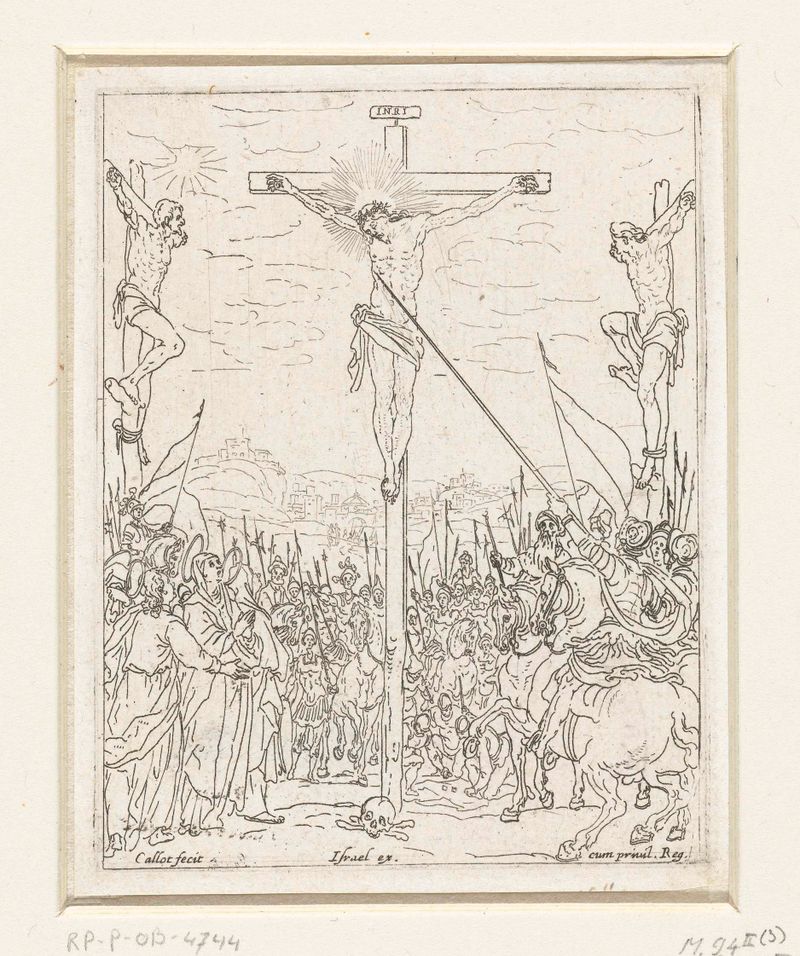
Kruisiging
Jacques Callot

De doortocht door de Rode Zee
Jacques Callot

De verloren zoon als zwijnenhoeder
Jacques Callot

Annunciatie
Jacques Callot
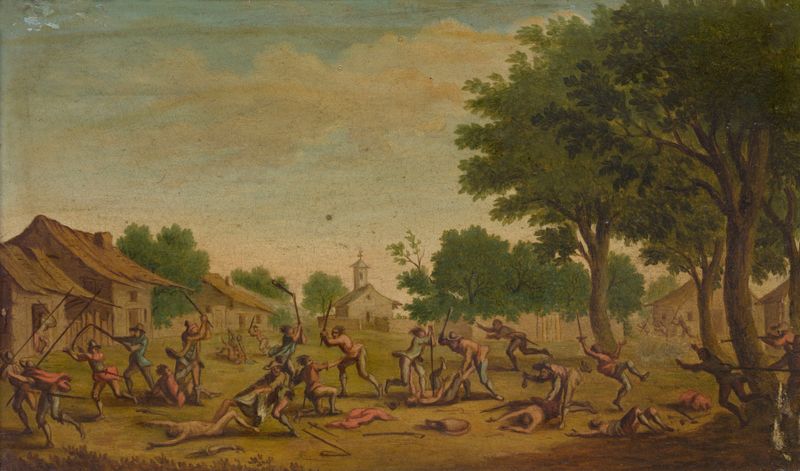
Village Fight
Jacques Callot

Titelprent voor prentreeks 'Het leven van Maria'
Jacques Callot
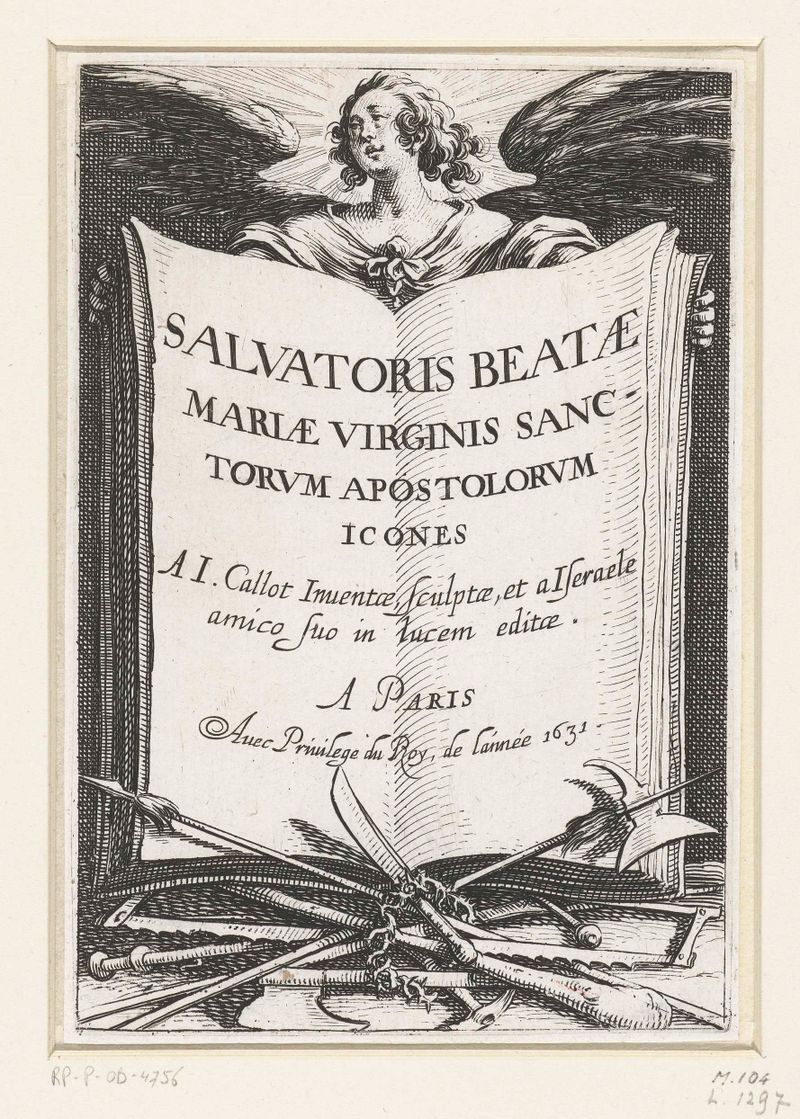
Titelprent voor de prentreeks 'De grote apostelen' (Christus, Maria en de apostelen)
Jacques Callot

Christus aan het volk getoond (Ecce homo)
Jacques Callot
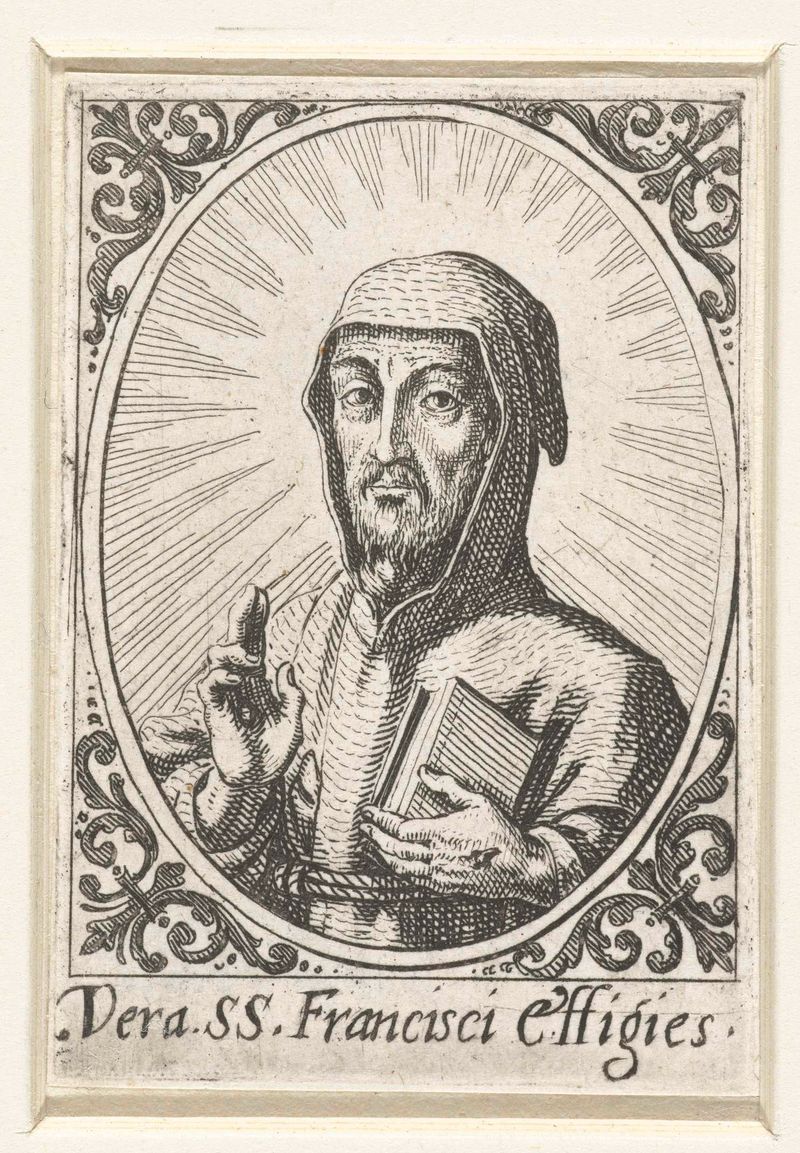
Portret van de Heilige Franciscus
Jacques Callot
More Religious Art
Browse all →
The Return of the Prodigal Son
Rembrandt van Rijn

The Garden of Earthly Delights
El Bosco

Count Orgaz’ funeral
El Greco

The Hundred Guilder Print: the central piece with Christ preaching, the plate arched
Rembrandt van Rijn

The Descent from the Cross
Rogier van der Weyden

The return of the prodigal son
Rembrandt van Rijn