
De soldaat en de Dood — History & Facts
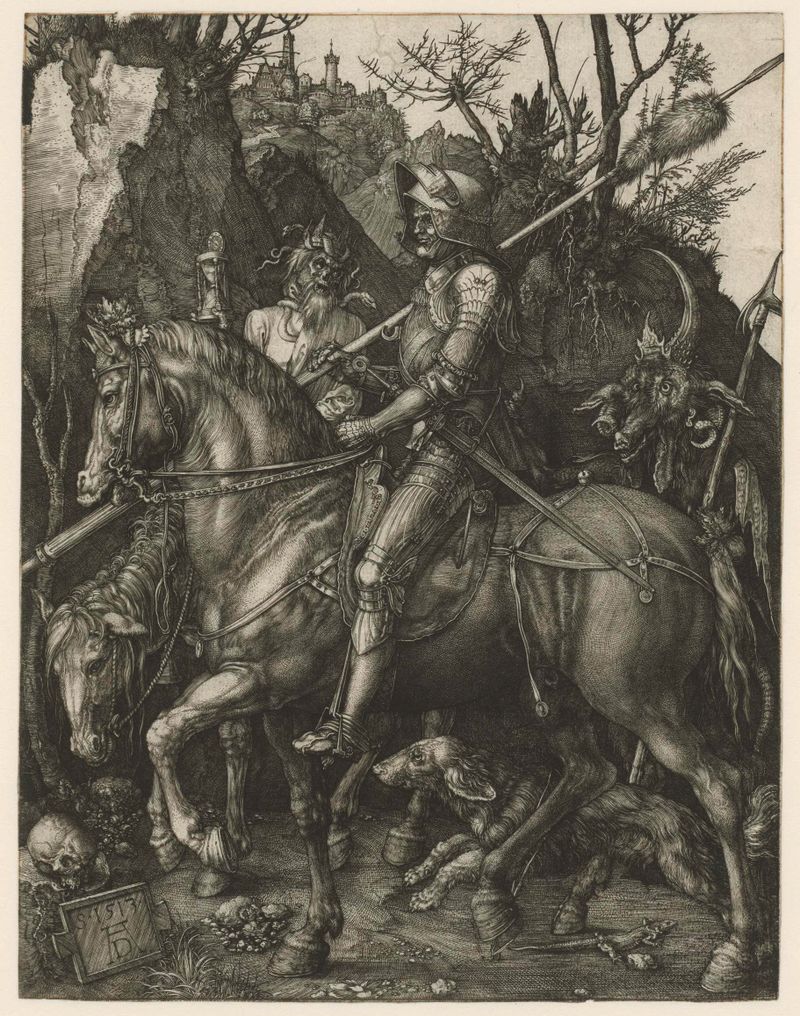
In a world overflowing with ephemeral distractions, how often do we pause to reflect upon our mortality? An unflinching confrontation awaits within the depths of art, where a soldier encounters a figure cloaked in the inevitability of death. Look closely at the soldier, his body tense and alert, positioned in the lower left corner. The intricate details of his armor shimmer against a muted landscape, drawing our gaze to his steely expression. The ghostly figure of Death looms beside him, skeletal yet strangely dignified, rendered in delicate lines that contrast with the soldier’s robust form.
Notice how the muted palette of earth tones amplifies the gravity of the scene, evoking a somber mood that invites contemplation of life’s fragility. The interplay of light and shadow encapsulates a profound tension between valor and vulnerability. The soldier's bravado speaks to human strength, while the haunting presence of Death reflects the inescapable fate that awaits all. Together, they embody the duality of existence — the urgent drive for life in confrontation with its impermanence.
This tension resonates throughout the composition, awakening a visceral acknowledgment of our own mortality. Created in 1510, during a period of social and religious upheaval in Europe, the work aligns with Albrecht Dürer’s exploration of human experience and existential themes. At this time, Dürer was deeply entrenched in the Renaissance's spirit of inquiry, blending detailed realism with philosophical contemplation. The painting reflects not only his mastery of technique but also an era grappling with the meaning of life and death, making it a timeless meditation on the human condition.
More Artworks by Albrecht Dürer
Browse all →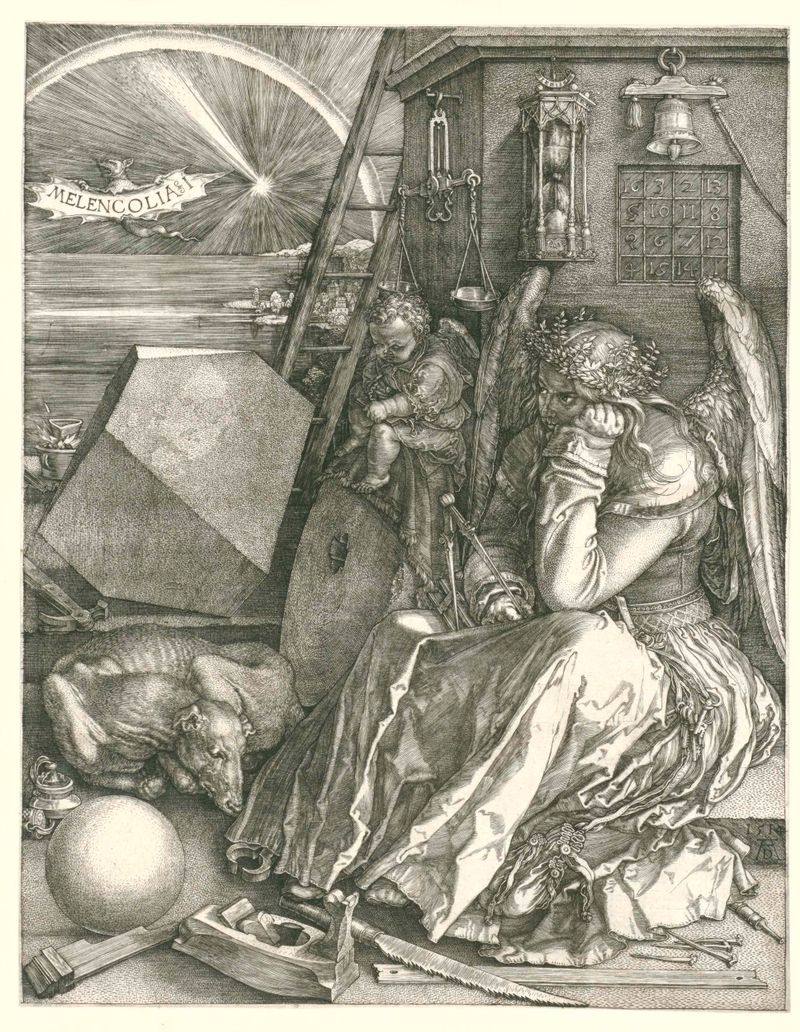
Melancholia
Albrecht Dürer
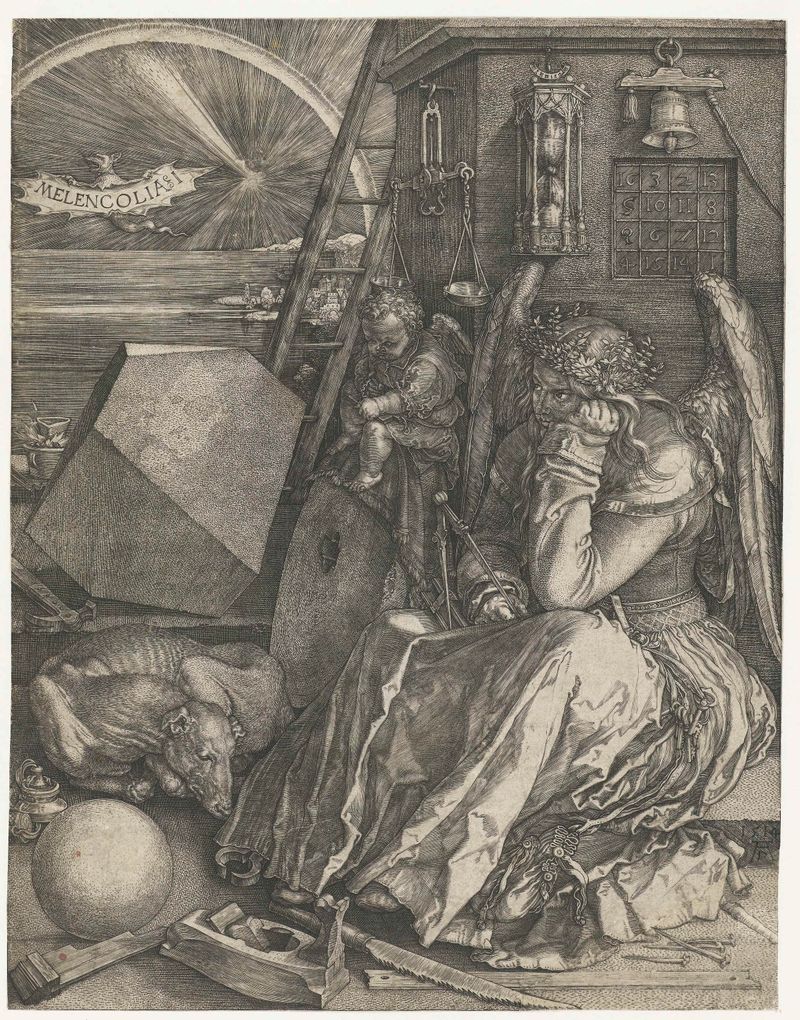
Melancholie
Albrecht Dürer

Neushoorn
Albrecht Dürer
Knight, Death, and the Devil
Albrecht Dürer

De vier ruiters van de apocalyps
Albrecht Dürer

De vier ruiters van de apocalyps
Albrecht Dürer
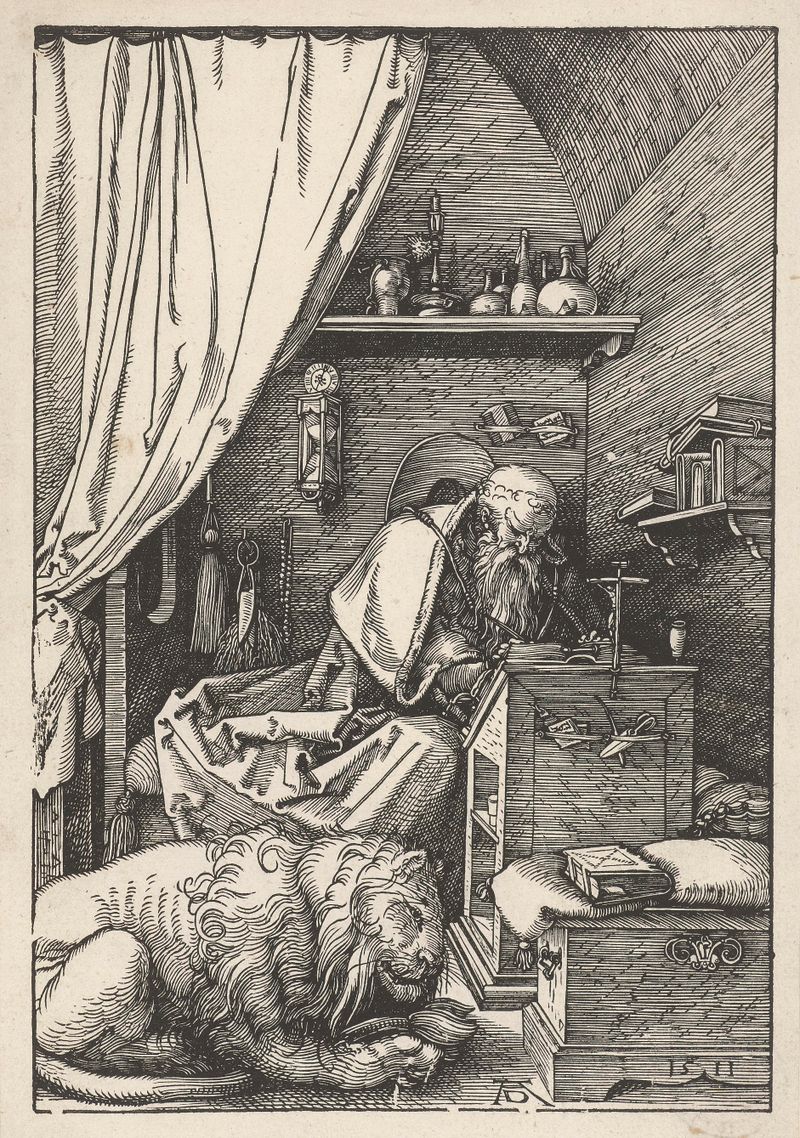
De Heilige Hiëronymus in zijn studeervertrek
Albrecht Dürer
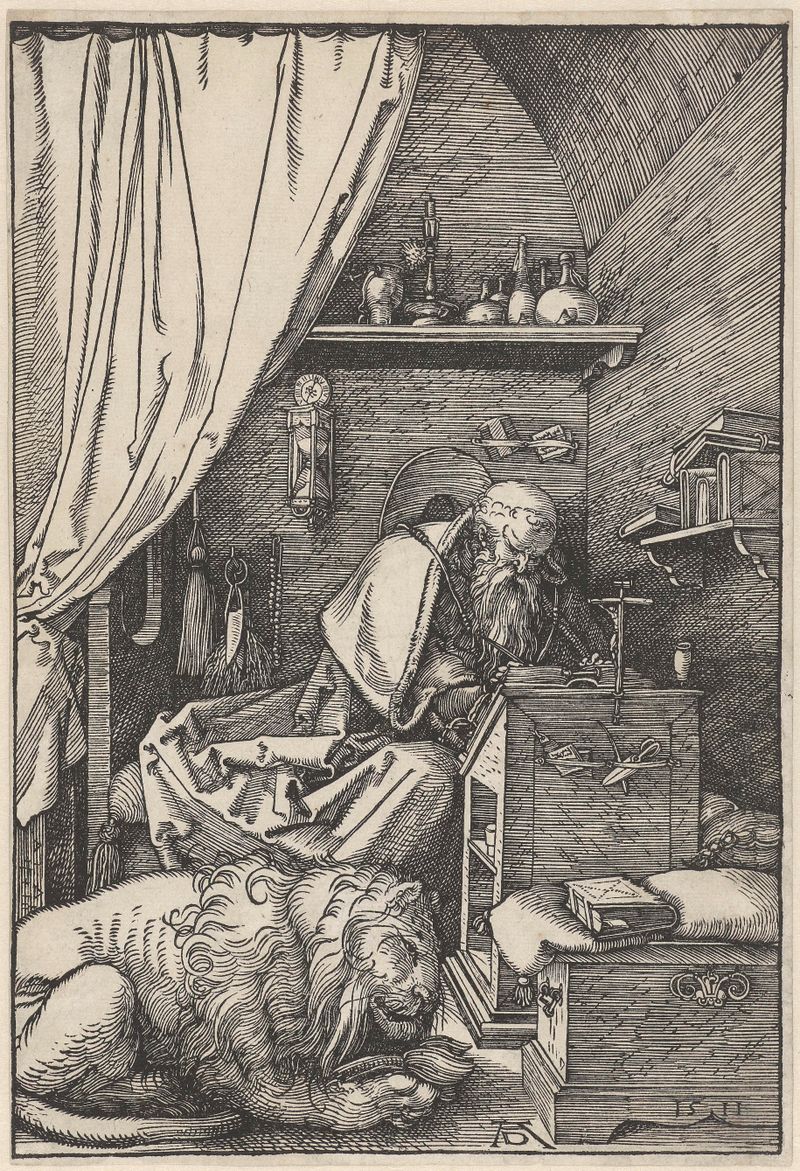
De Heilige Hiëronymus in zijn studeervertrek
Albrecht Dürer
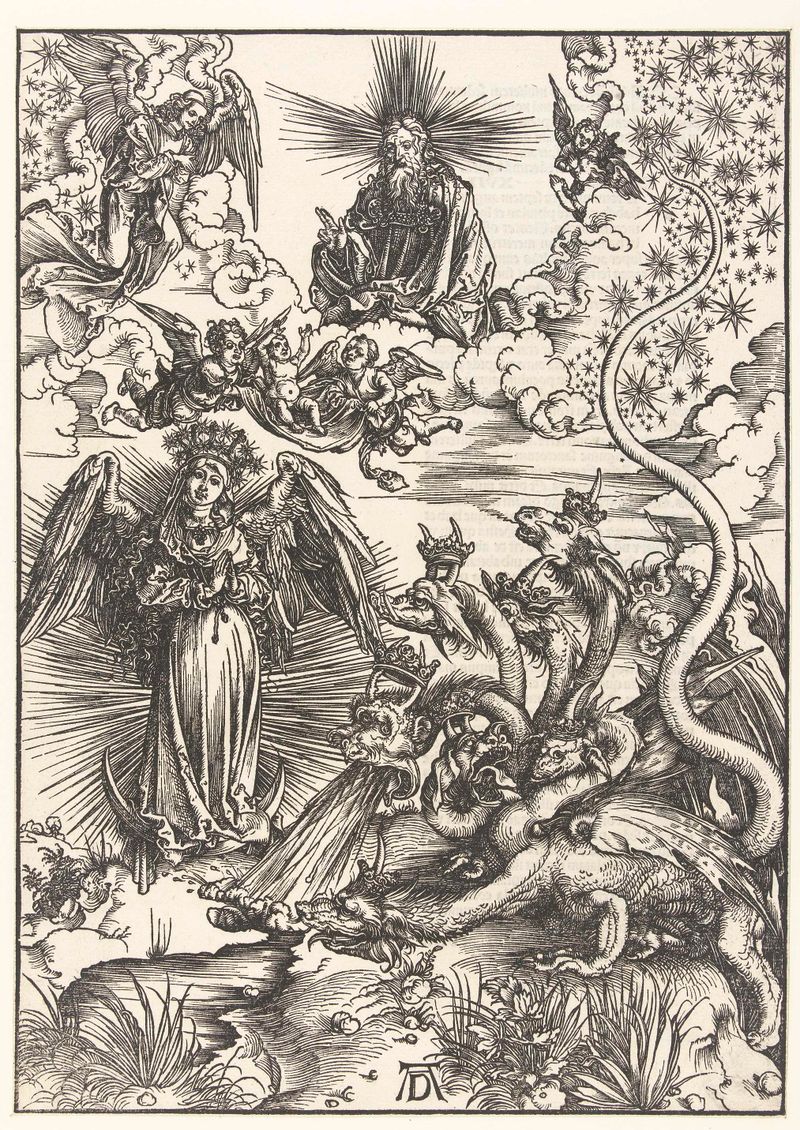
De apocalyptische vrouw en de zevenkoppige draak
Albrecht Dürer
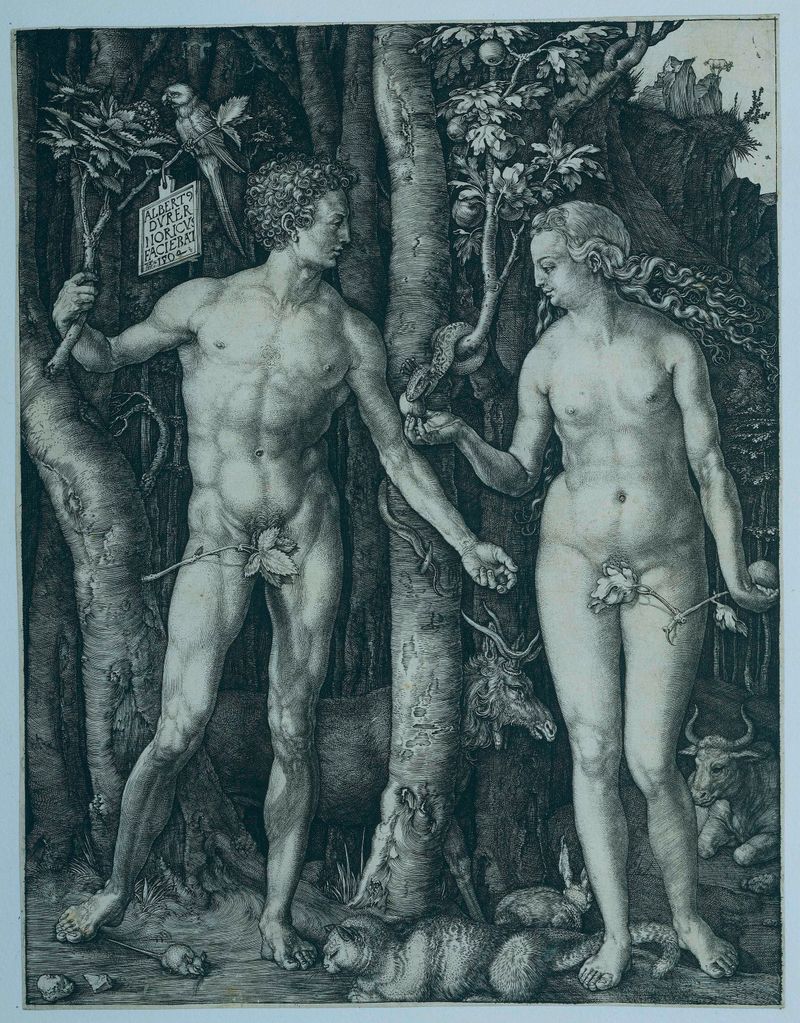
Adam en Eva
Albrecht Dürer
More Historical Art
Browse all →
The Night Watch Militia Company of District II under the Command of Captain Frans Banninck Cocq
Rembrandt van Rijn

Lincoln Memorial
Henry Bacon

The Third of May 1808
Francisco de Goya

Isaac and Rebecca, Known as ‘The Jewish Bride’
Rembrandt van Rijn

The Charge of the Mamelukes (1814)
Francisco de Goya
De vier ruiters van de apocalyps
Albrecht Dürer