
De wandeling — History & Facts
This sentiment resonates deeply within the thoughtful brushstrokes of Van Mieghem’s art, where yearning emerges as a raw, universal emotion. In De wandeling, the subtle interplay of figures and landscape draws you into a world of contemplation, inviting you to explore the depths of longing and connection. Focus first on the figures, positioned on the left, embodying an intimate yet silent conversation. Their postures are relaxed, yet there's an unspoken tension that hangs in the air.
Notice how the muted palette of earth tones envelops them, creating a warm, almost nostalgic atmosphere. The gentle arch of the path invites the eye to flow along with them, leading to an expansive horizon that promises both escape and uncertainty. The juxtaposition of light and shadow speaks volumes; the brightness of the figures contrasts sharply with the dark underbrush, suggesting a dichotomy between hope and despair. As you explore the background, the indistinct shapes of trees loom like distant memories, enhancing the feeling of nostalgia that permeates the scene.
This emotional landscape mirrors the internal yearnings of the figures, capturing a moment that is both fleeting and profound. In 1899, at a time of personal and artistic exploration, the artist found himself in Antwerp, amidst a burgeoning community of innovators. Influenced by the emotive realism of his contemporaries, Van Mieghem poured his own desires and experiences into his work. This piece reflects not only his artistic evolution but also the broader social currents of the time, where the search for connection and meaning resonated deeply within the hearts of many.
More Artworks by Eugeen Van Mieghem
Browse all →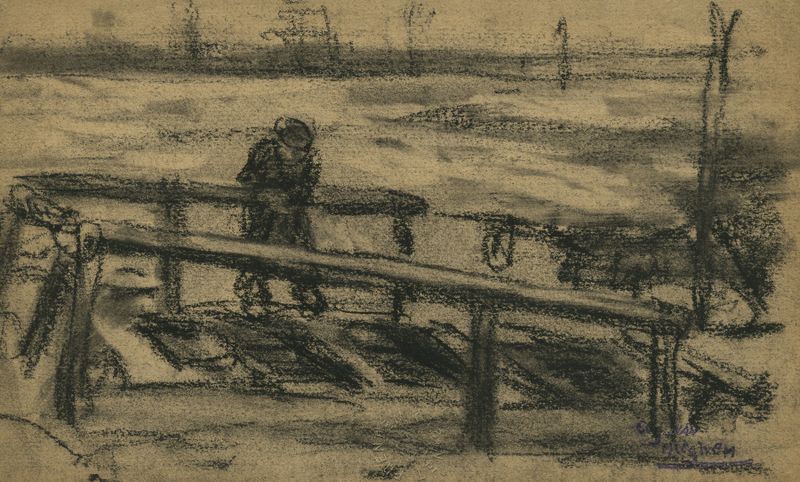
Op de aanlegsteiger
Eugeen Van Mieghem

Havengezicht met schepen en sleepboten
Eugeen Van Mieghem

De straat
Eugeen Van Mieghem

Huisje bij de Scheldedijk
Eugeen Van Mieghem
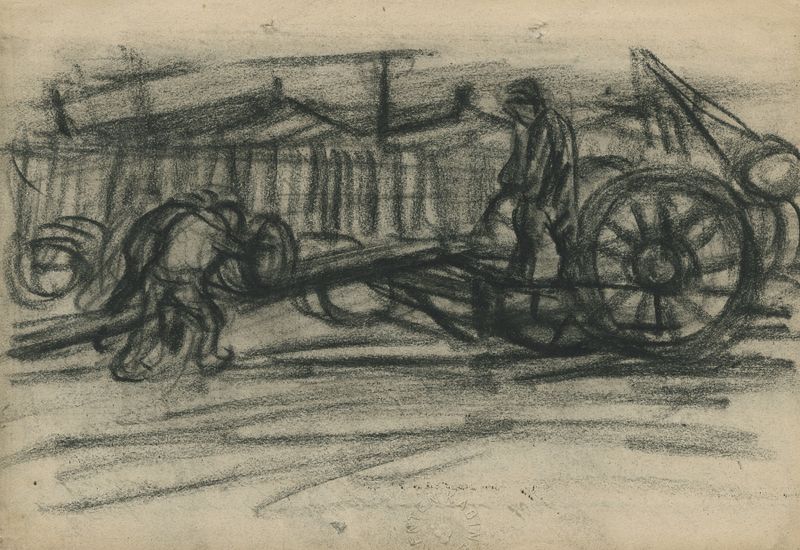
Sjouwers laden tonnen op een natiewagen
Eugeen Van Mieghem
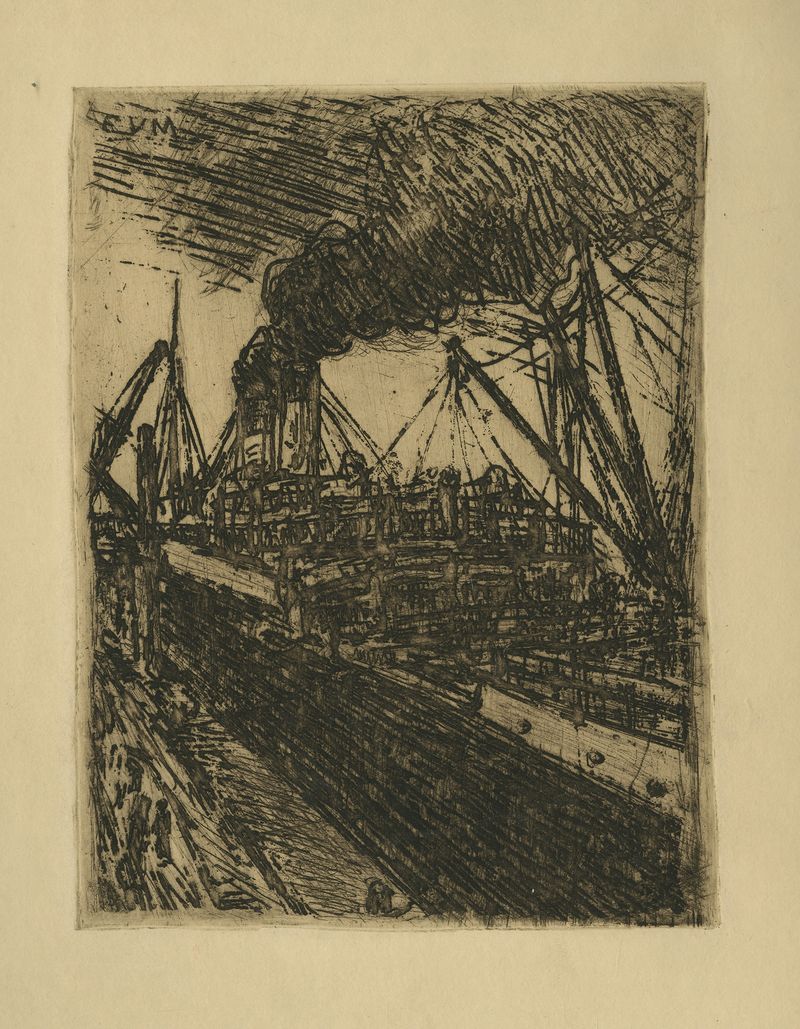
Stoomschip in de haven
Eugeen Van Mieghem
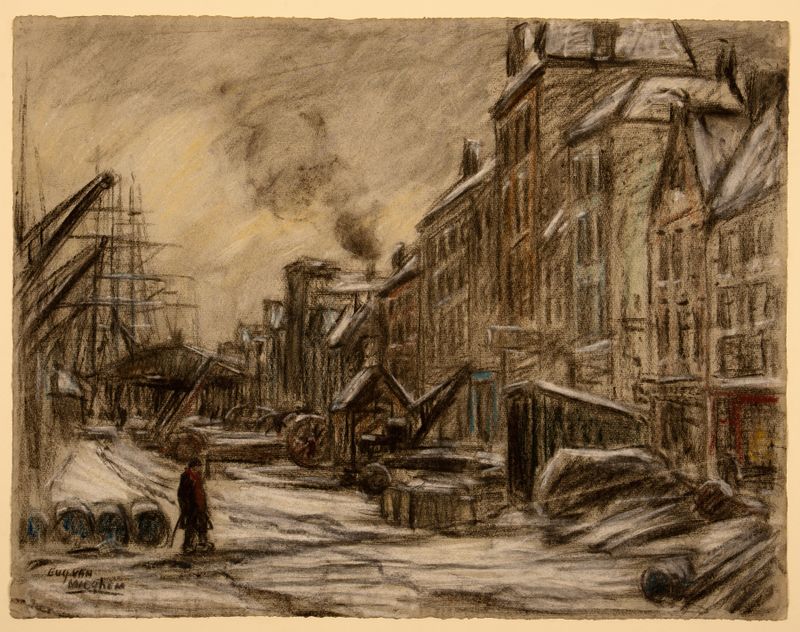
Winter op de St.-Aldegondiskaai
Eugeen Van Mieghem

Huizen bij nacht
Eugeen Van Mieghem

Opgelegde schepen in de haven
Eugeen Van Mieghem

Schippersgezin in de avondschemering
Eugeen Van Mieghem





