
Declaration of Independence — History & Facts
In a plain, high-ceilinged room, Thomas Jefferson places a document on a table before John Hancock, the seated president of Congress, while four other members of the drafting committee stand beside him. Delegates watch from rows of chairs, tall red curtains hang at the sides, and a trophy of captured British flags decorates the back wall. John Trumbull shows not the signing but the moment on June 28, 1776, when the first draft was presented to the Second Continental Congress in the Pennsylvania State House, now Independence Hall. His goal was to preserve the faces of the nation's founders: 47 people appear, all painted from life or from life portraits, though some delegates in the picture were not actually there.
Congress commissioned this large version in 1817, based on a much smaller painting he had planned in 1786, now at Yale. First shown in New York in October 1818, it was installed in the Capitol Rotunda in 1826. An 1820 engraving by Asher B. Durand helped make it Trumbull's most famous painting, and the scene appears on the back of the two-dollar bill.
It hangs in the U.S. Capitol Rotunda in Washington, DC.
More Artworks by John Trumbull
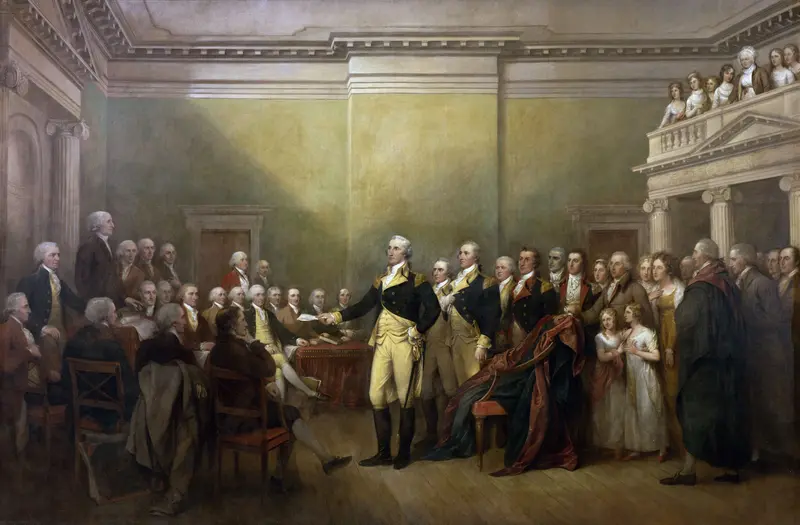
General George Washington Resigning His Commission
John Trumbull
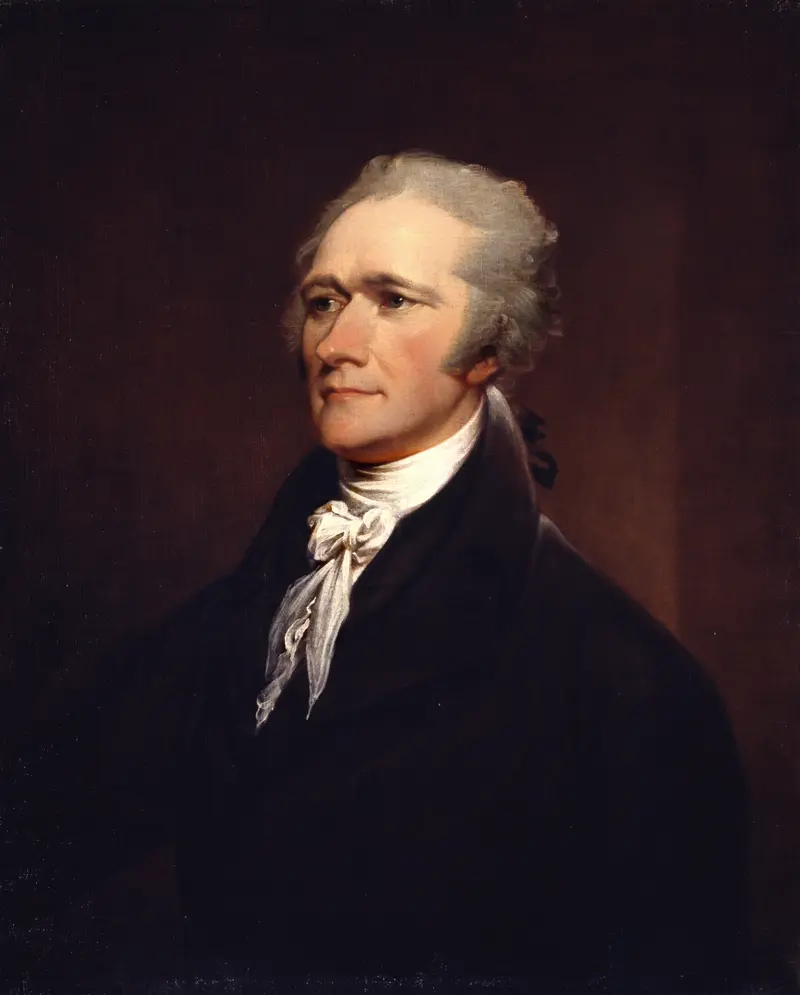
Alexander Hamilton
John Trumbull
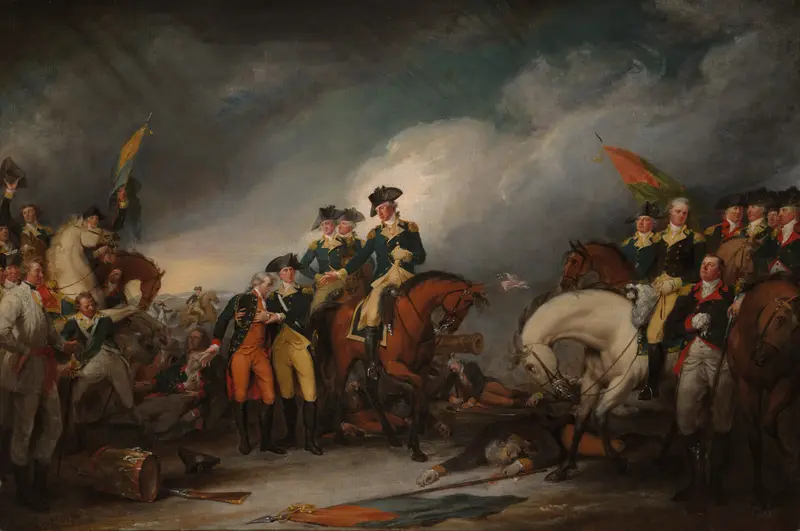
The Capture of the Hessians at Trenton, December 26, 1776
John Trumbull
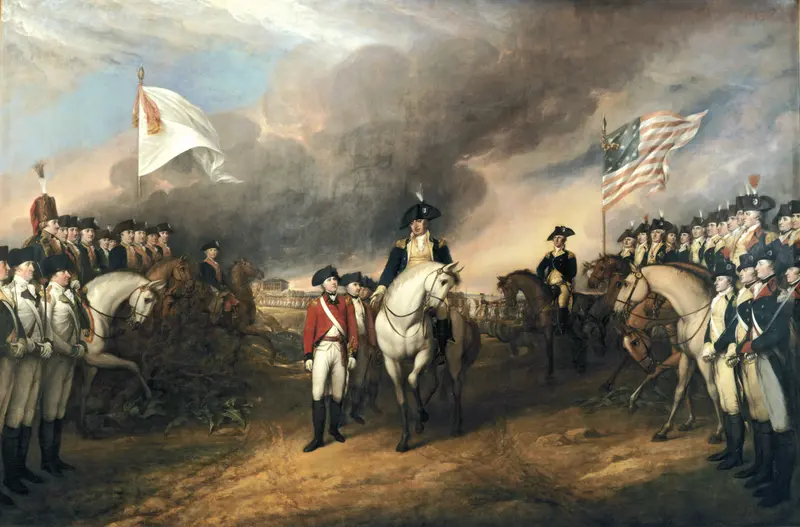
Surrender of Lord Cornwallis
John Trumbull

George Washington (1732-1799)
John Trumbull
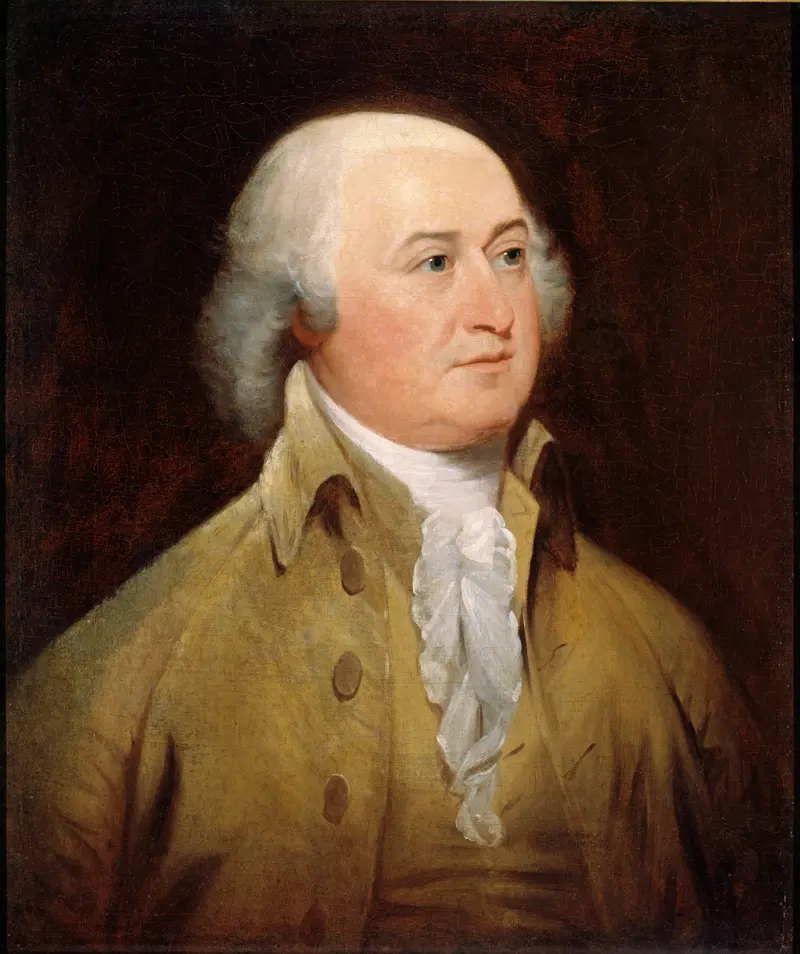
John Adams (1735-1826)
John Trumbull
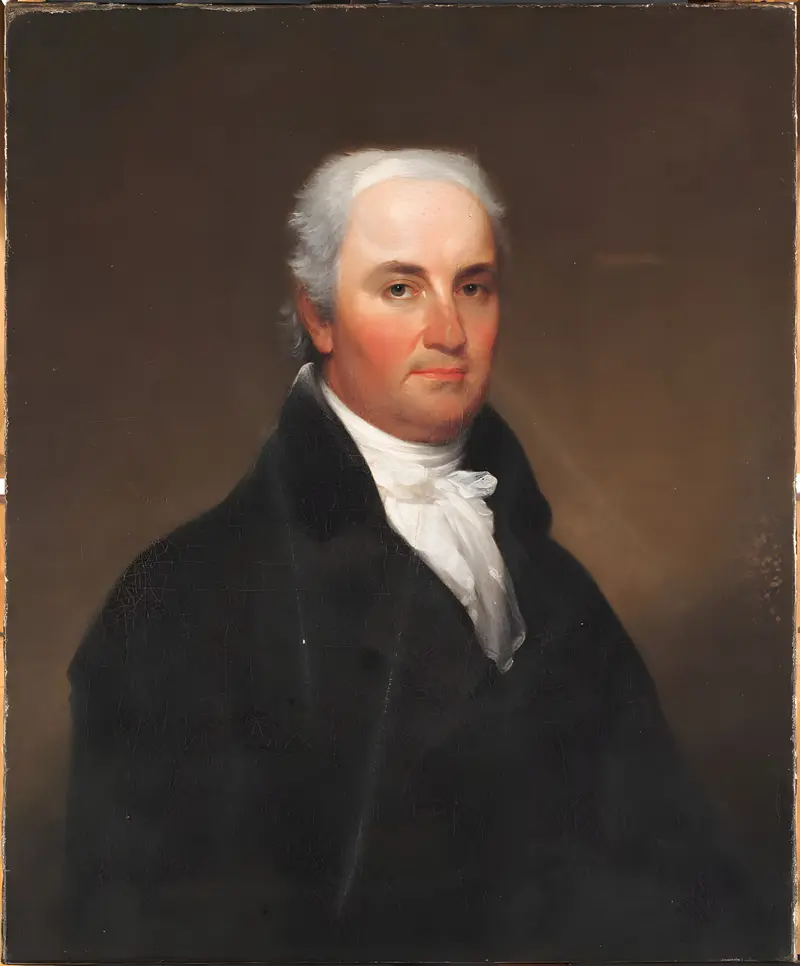
Christopher Gore (1758-1827)
John Trumbull
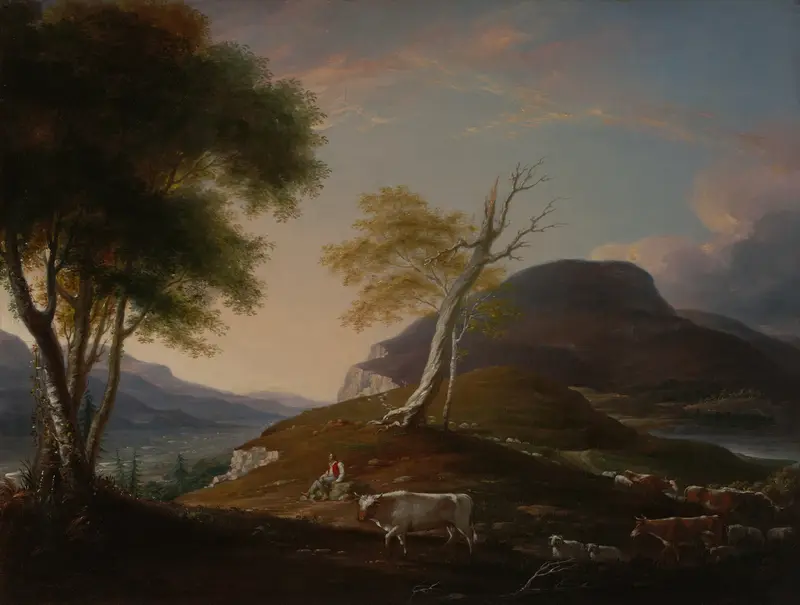
View on the West Mountain near Hartford
John Trumbull
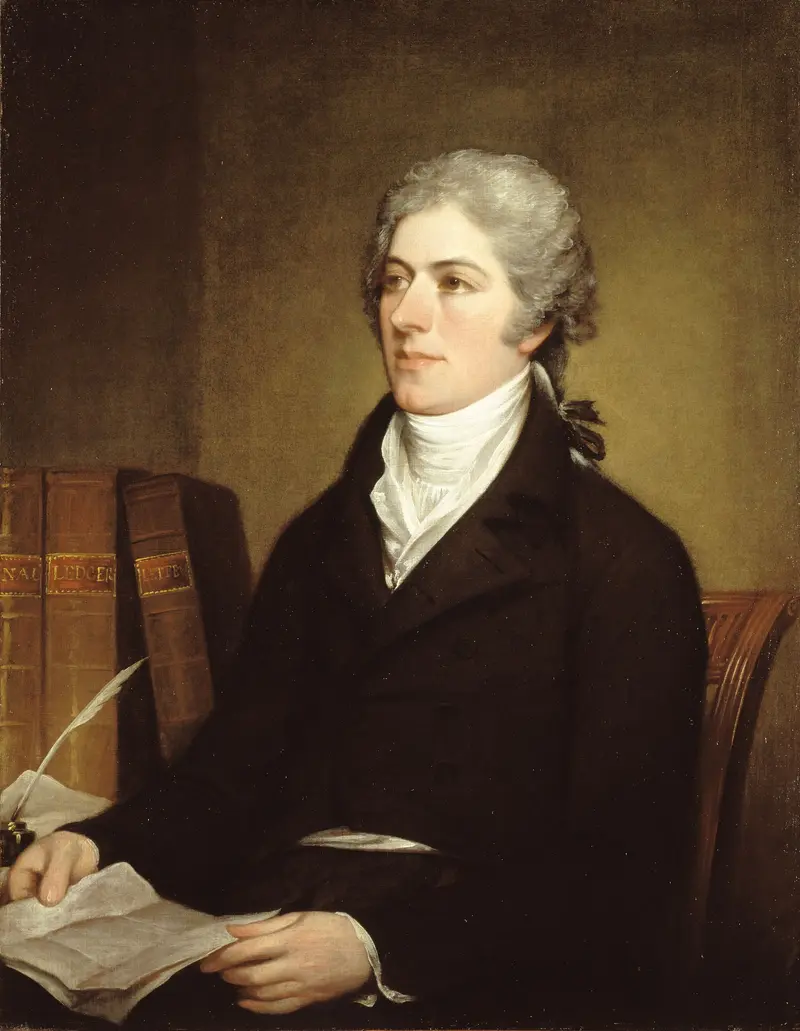
William Brown
John Trumbull
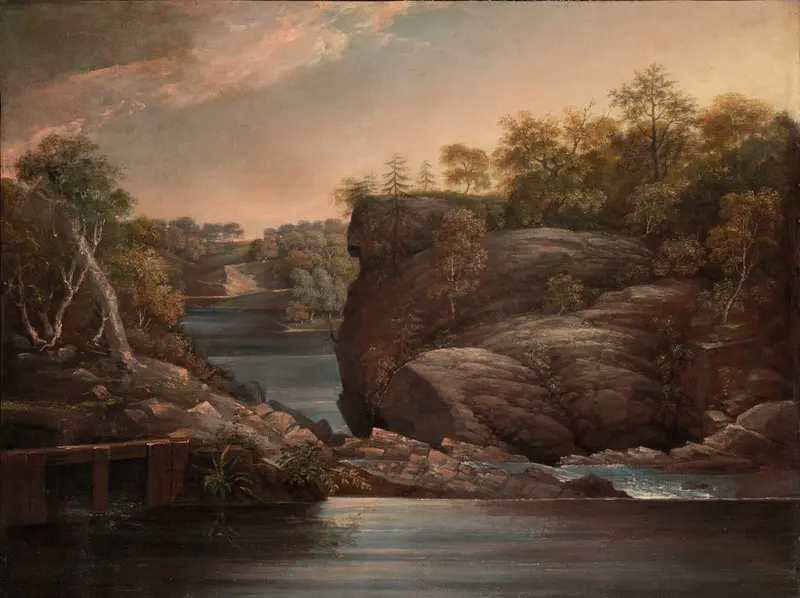
Norwich Falls (or The Falls of the Yantic at Norwich)
John Trumbull





