
Dedham Lock and Mill — History & Facts
The first thing to catch the eye in Dedham Lock and Mill is the way the light slices through the clouds, illuminating the water and the foliage with a quiet insistence. Your gaze is drawn along the curve of the riverbank, over the glinting surface of the lock, and toward the sturdy mill with its waterwheel turning steadily. The sails of moored boats echo the verticals of the distant church tower, while the shadowed trees on the right anchor the scene in deep greens.
Every detail—the cattle grazing in the shade, the footpath winding toward the lock—suggests a lived-in landscape, one shaped by both nature and the daily work of its people. Painted in 1820, this work belongs to the world of early nineteenth-century England, when artists like John Constable found new purpose in the ordinary countryside. Such paintings were not grand commissions for palaces, but rather celebrations of the familiar, often destined for private homes or local patrons proud of their region. The Yorck Project collection, which preserves this image, reminds us that the quiet revolution of landscape painting was underway: artists were turning their attention to the working land, the play of weather, and the subtle drama of rural life.
The next time you look, notice how the sky’s shifting mood seems to shape the day for everyone below.
More Artworks by John Constable
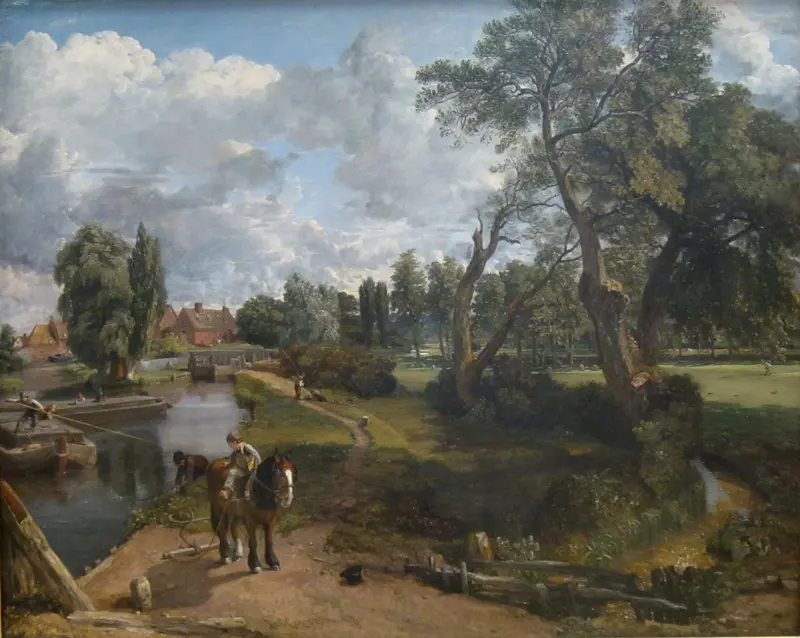
Flatford Mill (Scene on a Navigable River)
John Constable

Salisbury Cathedral From The Meadows
John Constable
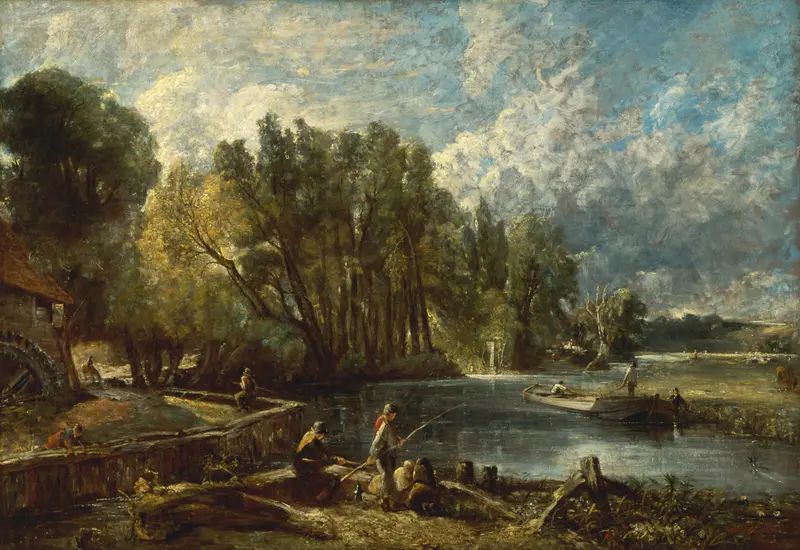
Stratford Mill
John Constable
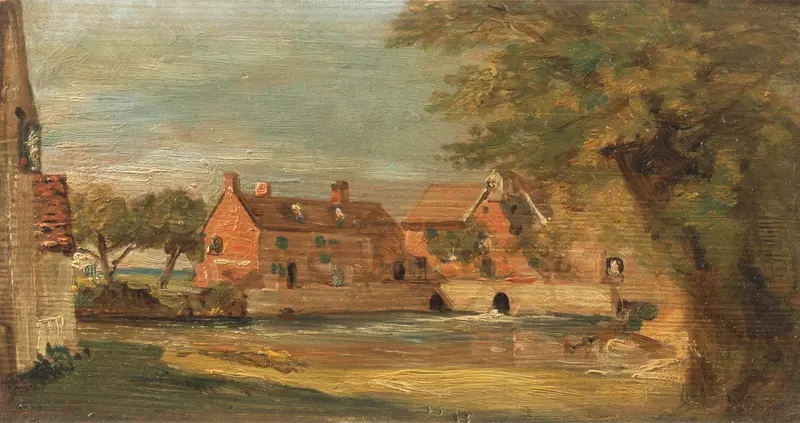
Flatford Mill
John Constable
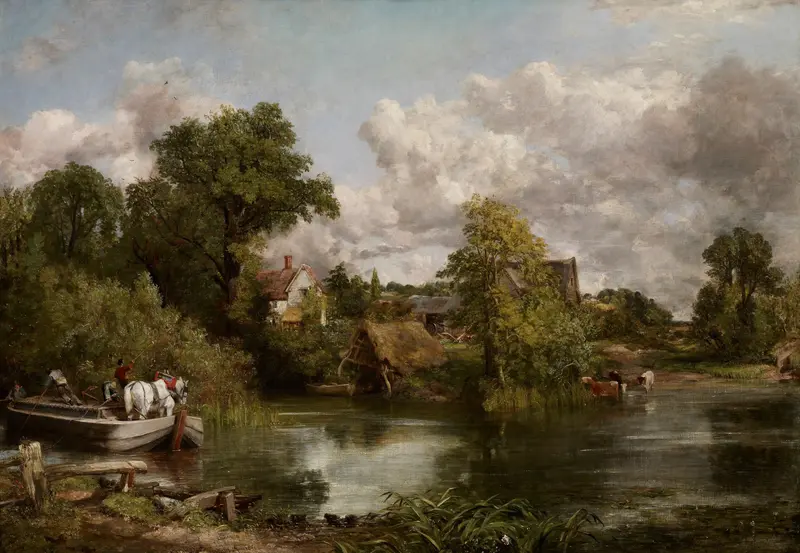
The White Horse
John Constable
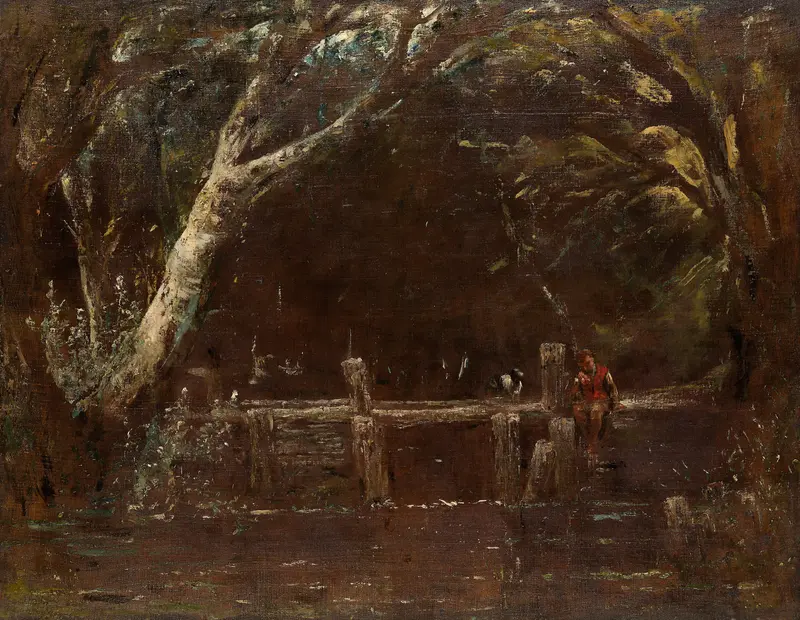
Landscape (The Lock)
John Constable
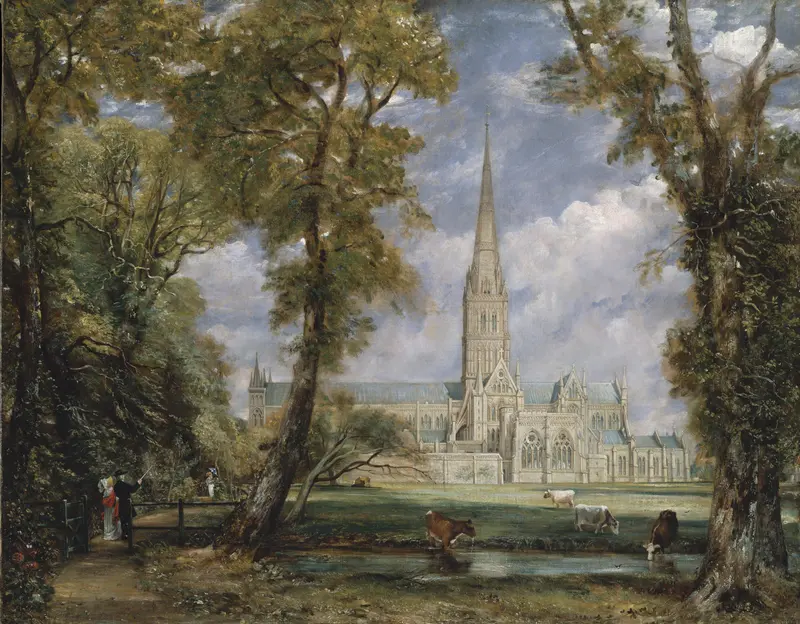
Salisbury Cathedral from the Bishop’s Grounds
John Constable
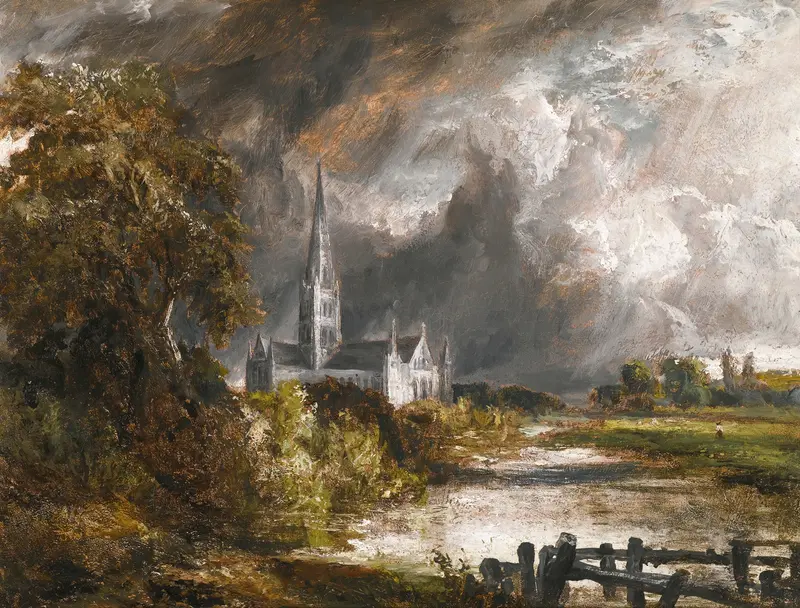
Salisbury Cathedral From The Meadows
John Constable
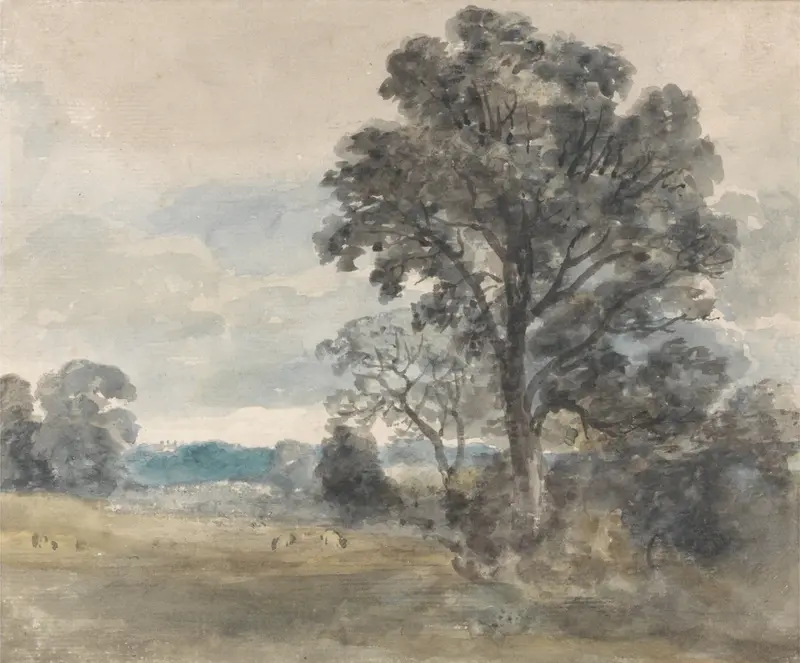
Landscape at East Bergholt
John Constable
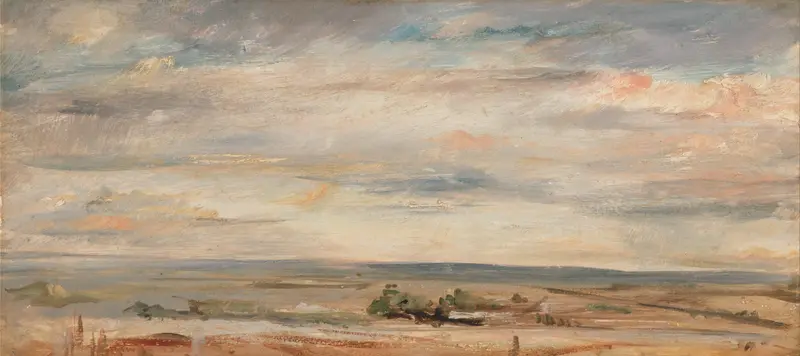
Cloud Study, Early Morning, Looking East from Hampstead
John Constable
More Landscape Art

The Starry Night
Vincent van Gogh

View of Delft
Johannes Vermeer

Water Lilies
Claude Monet

The Grand Canal, Venice, looking north-west from the Ca' Corner to the Ca' Contarini degli Scrigni, with the campanile of Santa Maria della Carità
Canaletto

Windsor Castle
Canaletto

The Grand Canal looking North-East from the Palazzo Dolfin-Manin to the Rialto Bridge
Canaletto