Dedina — History & Facts
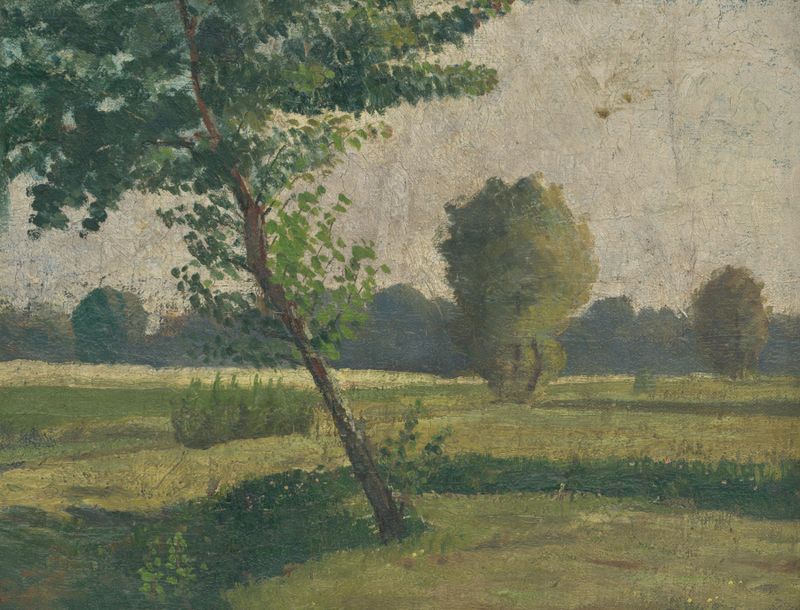
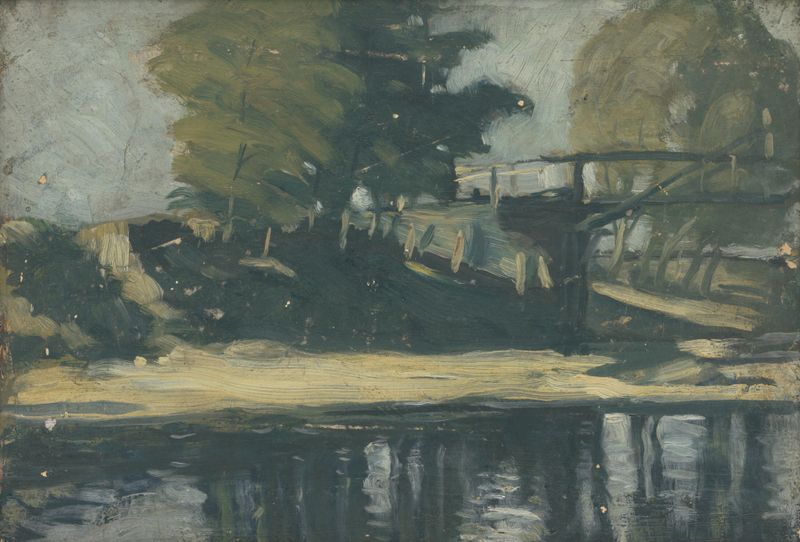
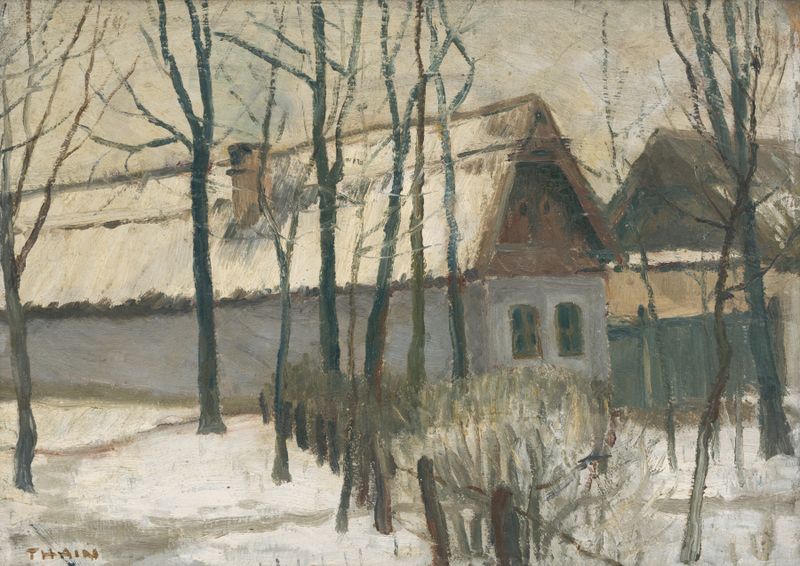
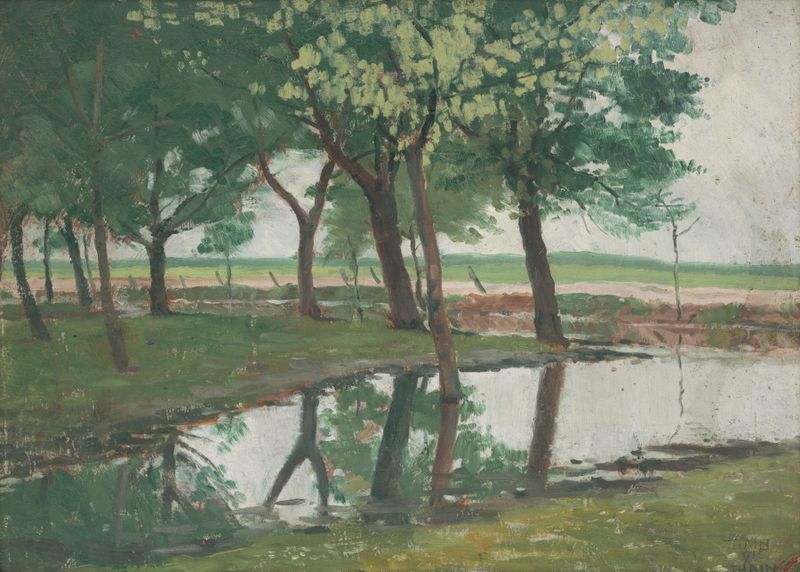
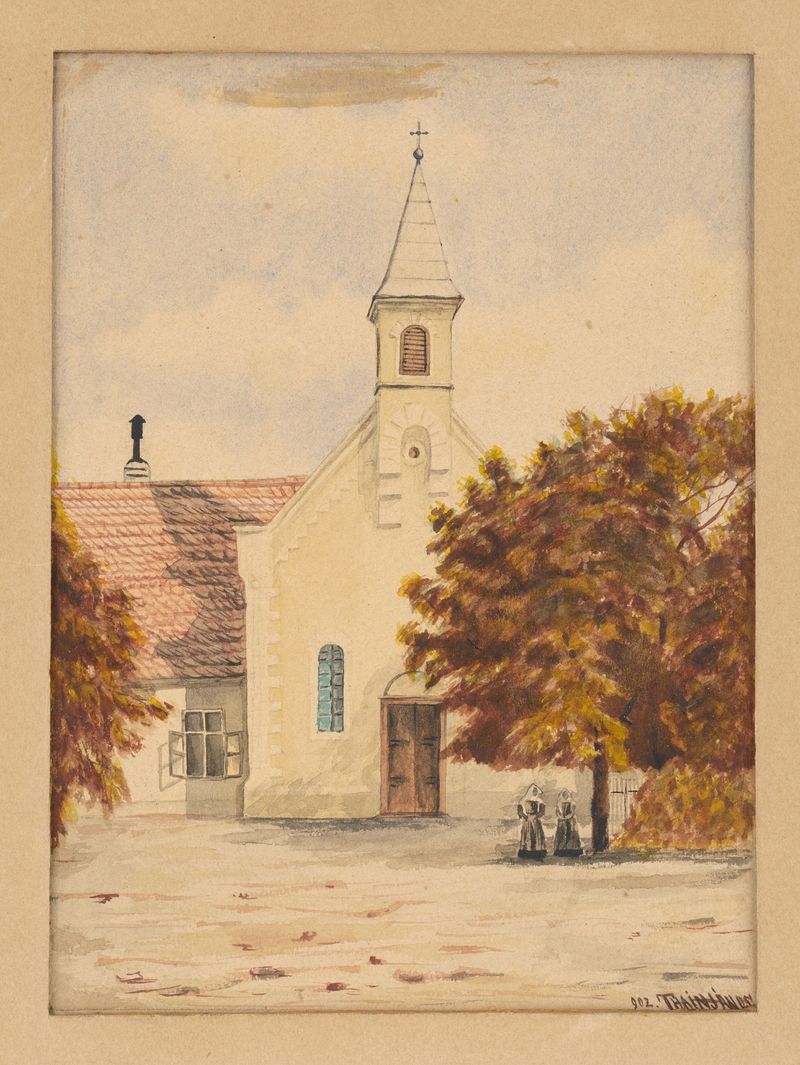
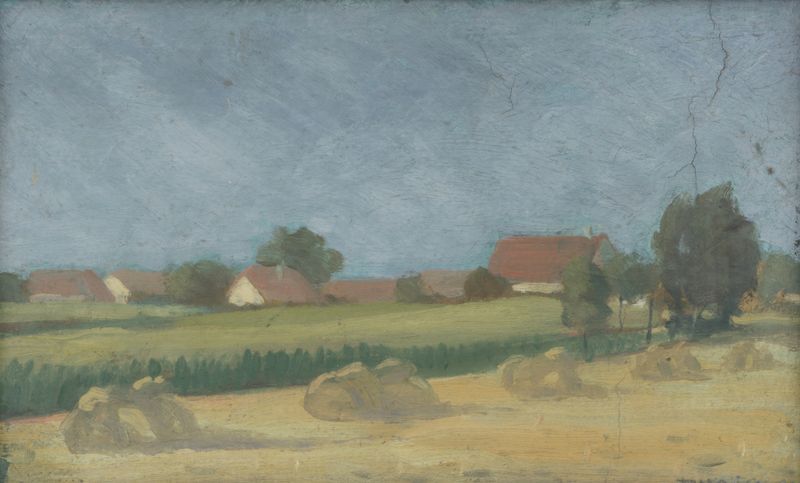
Could a single brushstroke hold eternity? In Dedina, the delicate interplay of light and color invites us to contemplate the fleeting moments that define our existence. Look to the upper left where the soft sunlight filters through a canopy of trees, casting dappled shadows on the meticulously rendered landscape. The artist's palette is a gentle symphony of greens and golds, evoking the warmth of a summer's day. Notice how the brushwork varies from smooth strokes in the foreground to more textured application in the background, creating a sense of depth and inviting the viewer's eye to wander through the picturesque village nestled among the hills. In this scene, the tension between tranquility and activity is palpable.
The serene landscape is punctuated by hints of life; a distant figure can be seen engaged in a daily task, a reminder of humanity's subtle presence within nature's grandeur. Here, the play of light symbolizes hope and renewal, while darker undertones in the shadowed areas suggest the complexities of existence that lie beneath the surface of idyllic beauty. Ján Thain painted Dedina in 1908, during a period when he was deeply influenced by the natural surroundings of his native Slovakia. This work reflects the broader artistic movements of the time, where a blend of impressionism and nationalistic themes captured the essence of everyday life in the countryside.
Thain's mastery of light and color in this piece reveals both his technical prowess and his longing to connect with the spirit of his homeland.