Na kraji lesa — History & Facts
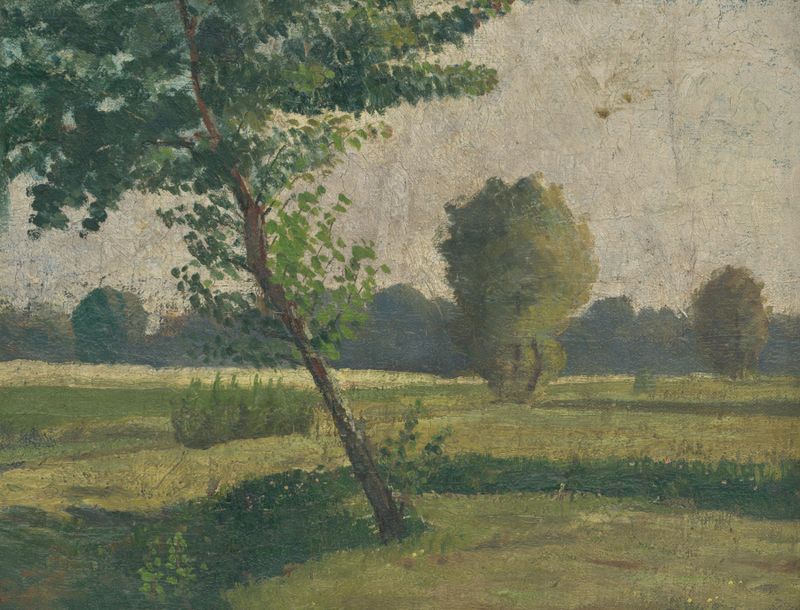
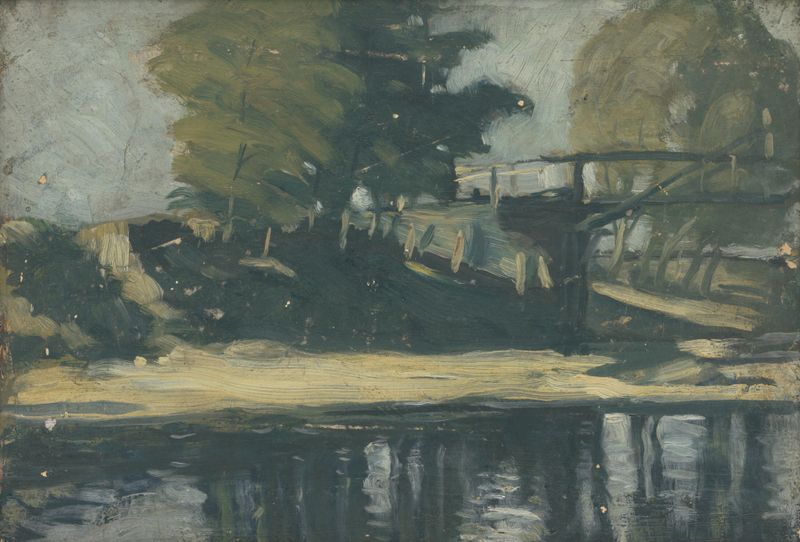
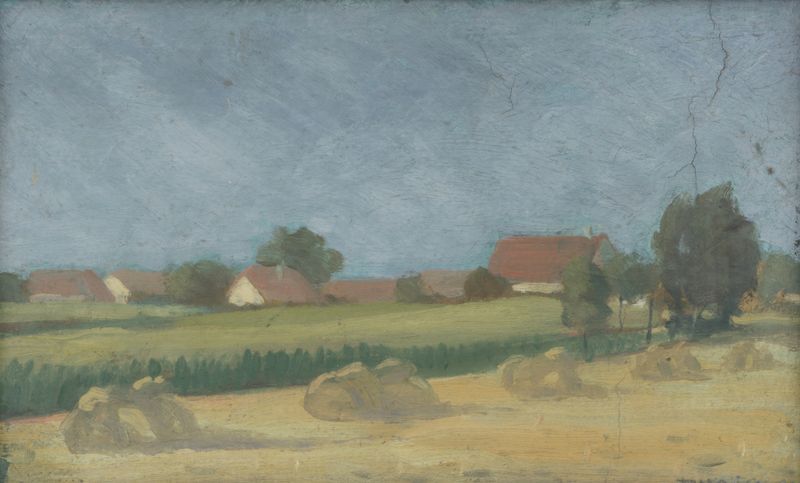
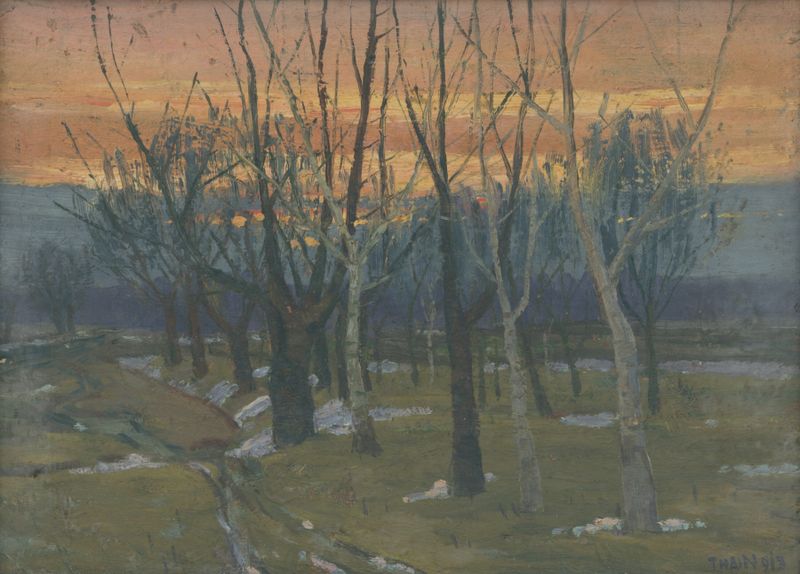
Could beauty survive in a century of chaos? Ján Thain invites us to ponder this question through a poignant exploration of nature’s quiet resilience in Na kraji lesa. Look to the left, where a soft golden light breaches the dense foliage, illuminating tender green leaves that seem to whisper secrets of renewal. The composition is both serene and evocative, as the gentle curves of the landscape draw the viewer’s eye deeper into the canvas. Rich, earthy tones contrast subtly with splashes of vibrant color, creating a dynamic interplay that reflects the underlying tension of existence amidst turmoil. Within this tranquil scene lies a rich tapestry of meaning.
The interplay of light and shadow suggests the duality of hope and despair, while the solitary path invites introspection—each step taken holds the potential for discovery yet also hints at isolation. The void in the painting beckons weary souls, offering a space for reflection on the balance between beauty and the chaos that surrounds it. In 1915, Thain was influenced by the tumult of World War I, which was reshaping Europe. Living in Slovakia, he was deeply engaged with the themes of national identity and the natural world as a refuge from the harsh realities of life.
During this period, he sought to capture fleeting moments of serenity, using his art to articulate the inexpressible longing for peace and connection in a world fracturing around him.