
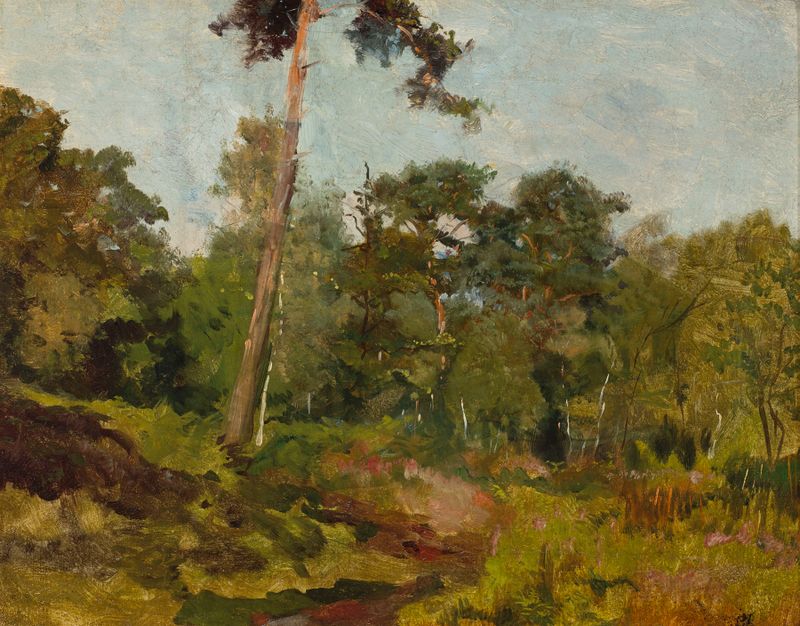
Deep forest – Windthrows, sketch for a painting — History & Facts
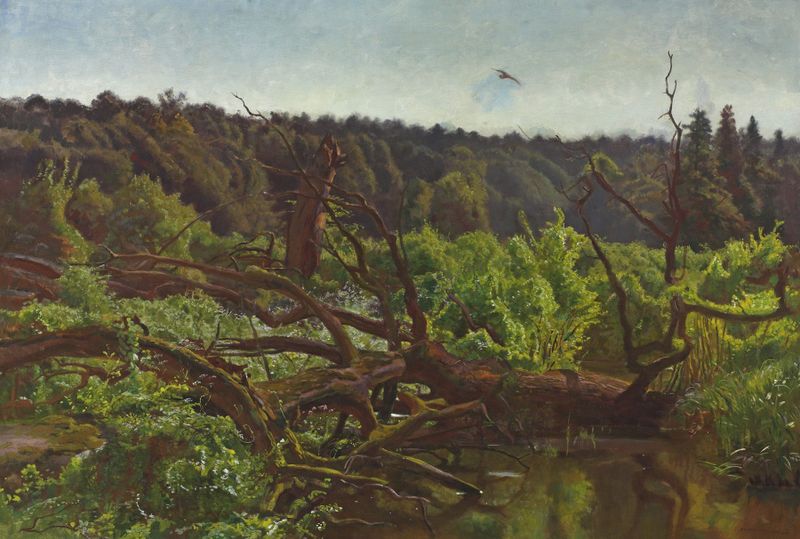
Time pulses through the layers of this work, inviting the viewer to pause and reflect on the moments captured within its strokes. Look to the center where an uprooted tree lies dramatically on the ground, its gnarled roots twisting into the air. The artist’s use of earthy tones and varying shades of green conveys the lushness of the forest, while the subtle highlights suggest dappled sunlight filtering through the dense canopy above. Notice how the textures in the bark contrast with the smoothness of the underbrush, creating a visceral sense of place, as though you could reach out and touch the scene. Within this sketch, the tension between destruction and rebirth is palpable.
The fallen tree hints at the inevitability of change, yet the surrounding foliage thrives, symbolizing resilience. Chelmonski captures not just the chaos of windthrows but also the quiet endurance of nature, compelling us to confront our own perceptions of time and growth in the cycle of life. Painted in 1902, this piece emerges from a period when Jozef Chelmonski was deeply engaged in capturing the raw beauty of the Polish landscape. At this time, he was transitioning from realism toward a more expressive approach, influenced by the artistic movements surrounding him.
The world was shifting, and his focus on nature reflected both personal introspection and the broader conversation within the art community about the relationship between humanity and the natural world.
More Artworks by Jozef Chelmonski
Browse all →
Landscape; Meadow with Marsh-Marigolds
Jozef Chelmonski
Deep forest – Windthrows
Jozef Chelmonski

Winter Sunset
Jozef Chelmonski
The Dniester River at Night
Jozef Chelmonski
Morning in the Forest
Jozef Chelmonski
Autumn landscape
Jozef Chelmonski
Lasek Buloński
Jozef Chelmonski

Episode from the Uprising of 1863
Jozef Chelmonski

Dawn
Jozef Chelmonski

Village by the Water
Jozef Chelmonski





