Der Verliebte (The Man in Love) — History & Facts
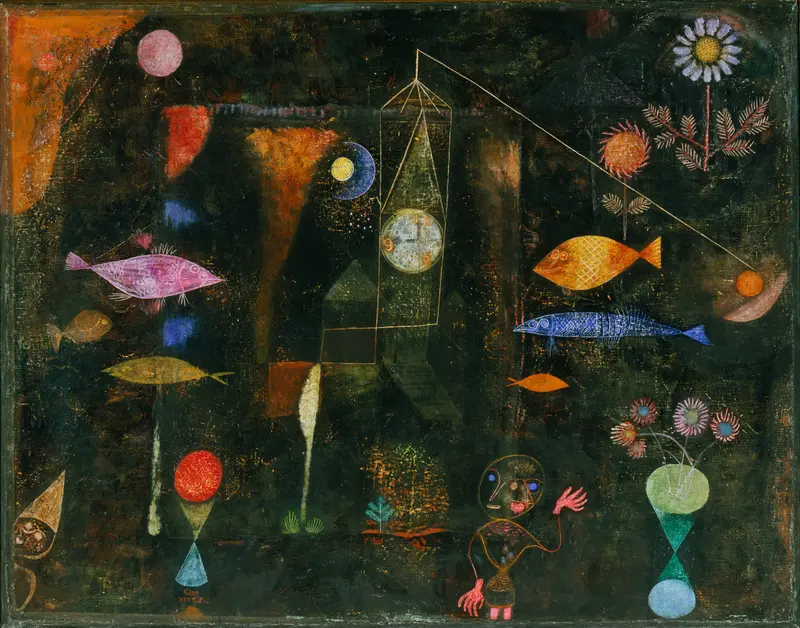
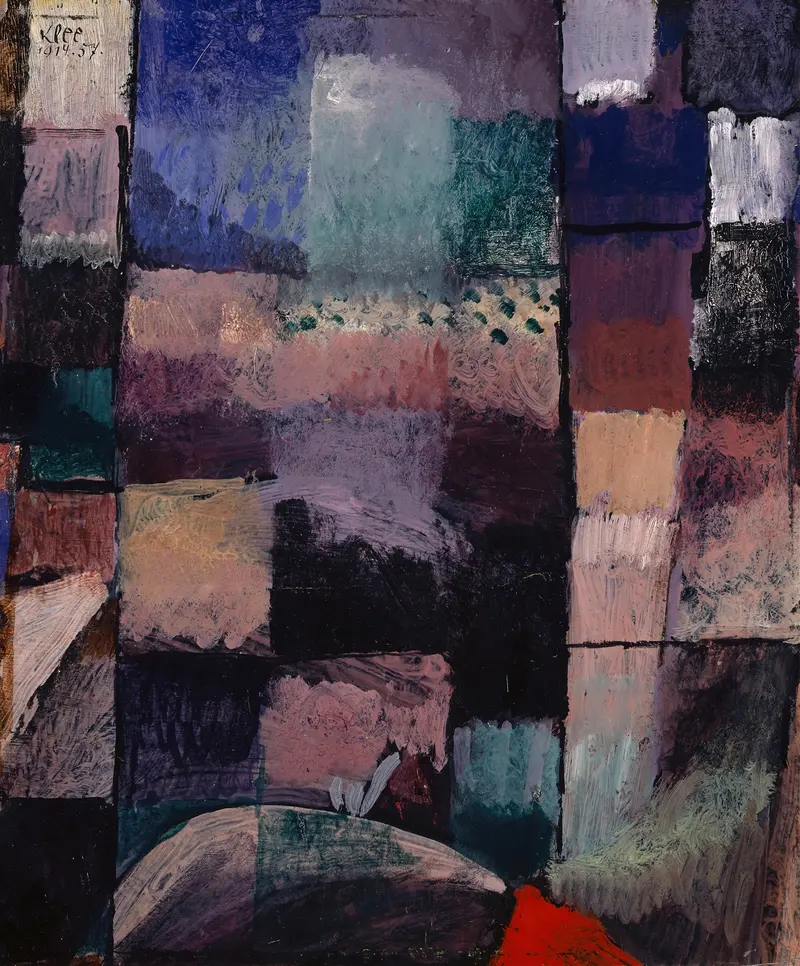
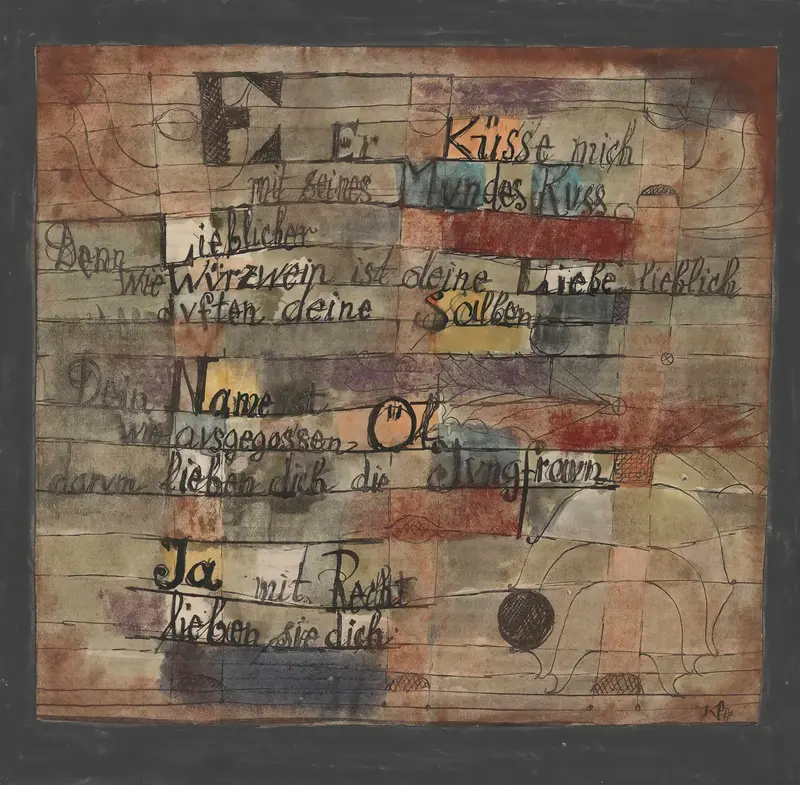
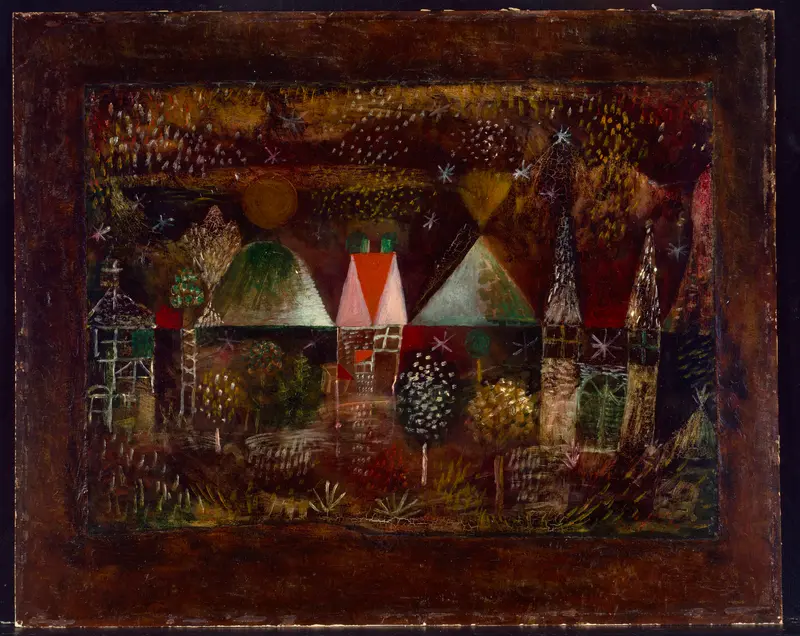
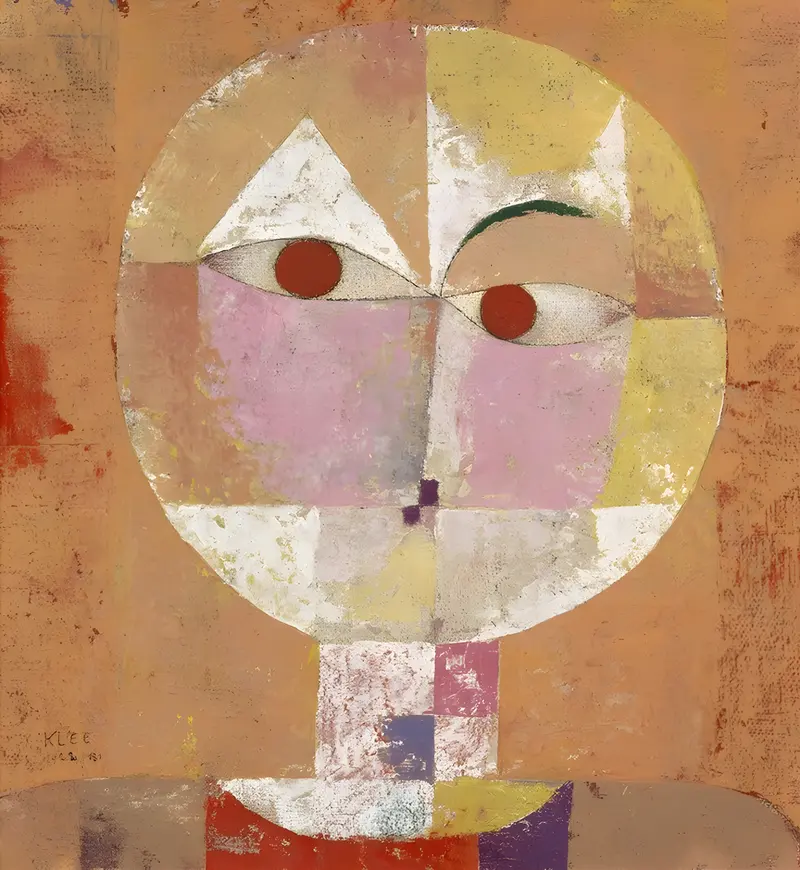
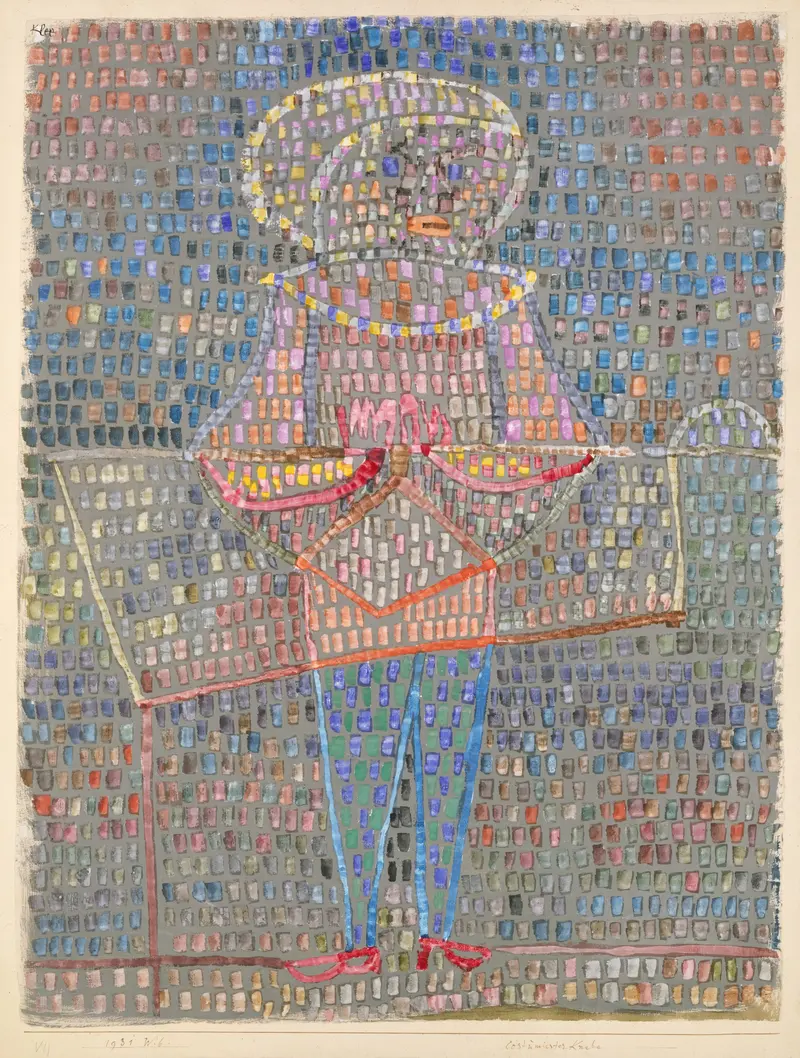
In Der Verliebte (The Man in Love), Paul Klee presents a whimsical figure characterized by bold colors and simple shapes. The central figure, with a heart motif, is depicted in a playful manner, surrounded by vibrant hues of red, blue, and yellow. The background is abstract, enhancing the emotional tone of the work.
Klee's use of color and form creates a sense of joy and affection. The painting is executed in oil on panel, a medium that allows for rich color application and texture. Klee employs a flat style, typical of his expressionist approach, where forms are simplified and exaggerated. The dimensions of the artwork are approximately 50 x 70 cm, making it a medium-sized piece that invites close inspection.
Viewers can appreciate the intricate details and the layering of colors up close. Paul Klee, a Swiss artist associated with the Expressionist movement, created Der Verliebte around 1918. This work reflects Klee's fascination with love and emotion, often exploring themes of human connection. An interesting fact about this painting is that it was created during a time when Klee was deeply influenced by his experiences in the Bauhaus school, which emphasized the unity of art and life.
The heart motif symbolizes not only romantic love but also a broader sense of affection and humanity.