
Der Vestatempel in Rom — History & Facts
Is this a mirror — or a memory? The delicate interplay between reality and illusion can unravel the mind, drawing us into a world where the past whispers through the arches of time. Look to the center of the canvas, where the ruins of the Temple of Vesta stand resolute, bathed in a soft glow that seems to transcend the moment. Notice how the light dances across the weathered stone, highlighting the intricate textures and rich details that define the structure. The surrounding landscape, lush with greenery, creates a gentle frame, inviting the viewer’s gaze to wander among the delicate balance of architecture and nature. Yet, beneath this serene beauty lies a tension between stability and decay.
The juxtaposition of the temple’s enduring form against the encroaching elements speaks to the madness of time itself — a reminder that all monuments, no matter how grand, are eventually reclaimed by the earth. Each shadow cast by the ruins hints at stories of worship and remembrance, juxtaposed with the relentless passage of days that have faded into obscurity. In 1867, while exploring the ruins of Rome, Rudolf von Alt captured this moment with an acute awareness of both history and fragility. During this time, the artist was deeply influenced by the Romantic movement, which sought to evoke emotion through nature and past grandeur.
The landscapes he painted, imbued with a sense of nostalgia, reflect not only his personal journey but also a broader fascination with the remnants of ancient civilizations amidst the encroaching modern age.
More Artworks by Rudolf von Alt
Browse all →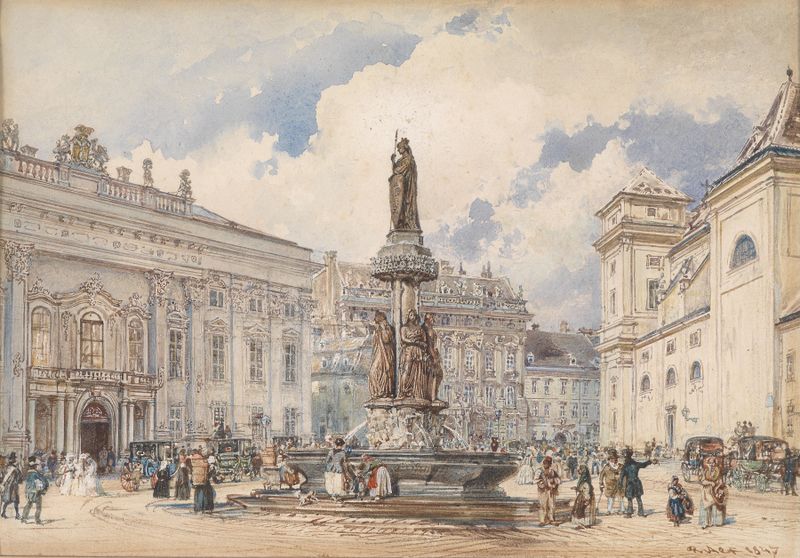
Freyung mit Austriabrunnen
Rudolf von Alt

The Interior of the Cathedral of Saint Stephen at Vienna
Rudolf von Alt
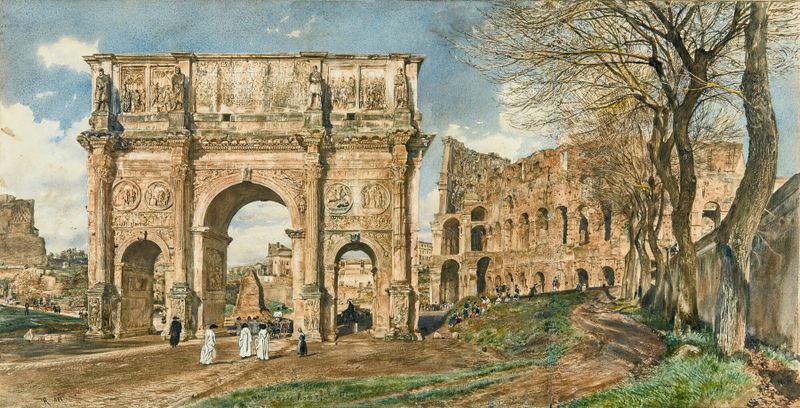
The Arch Of Constantine And The Colosseum, Rome
Rudolf von Alt

The Fleischmarkt in Vienna with the Greek-Orthodox Church of the Holy Trinity
Rudolf von Alt

Der Stephansdom in Wien
Rudolf von Alt
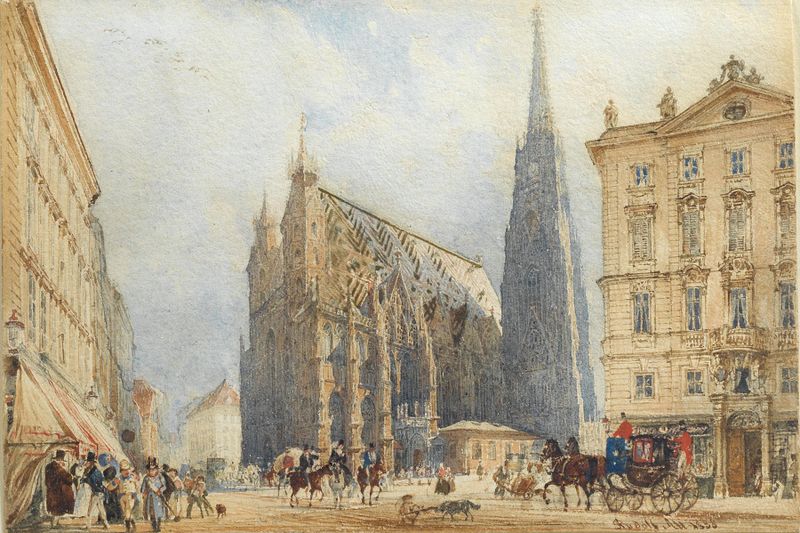
Stephansplatz
Rudolf von Alt
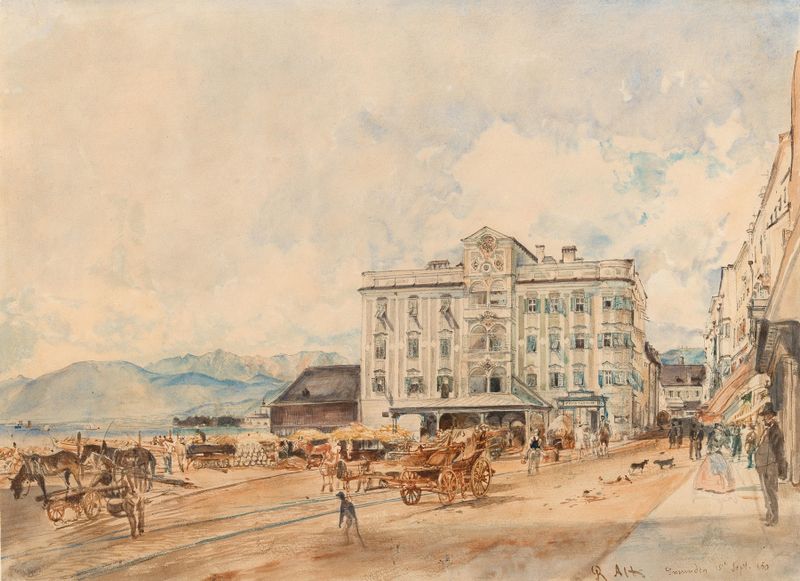
The Town Hall in Gmunden
Rudolf von Alt

View from Sant’Onofrio on Rome
Rudolf von Alt
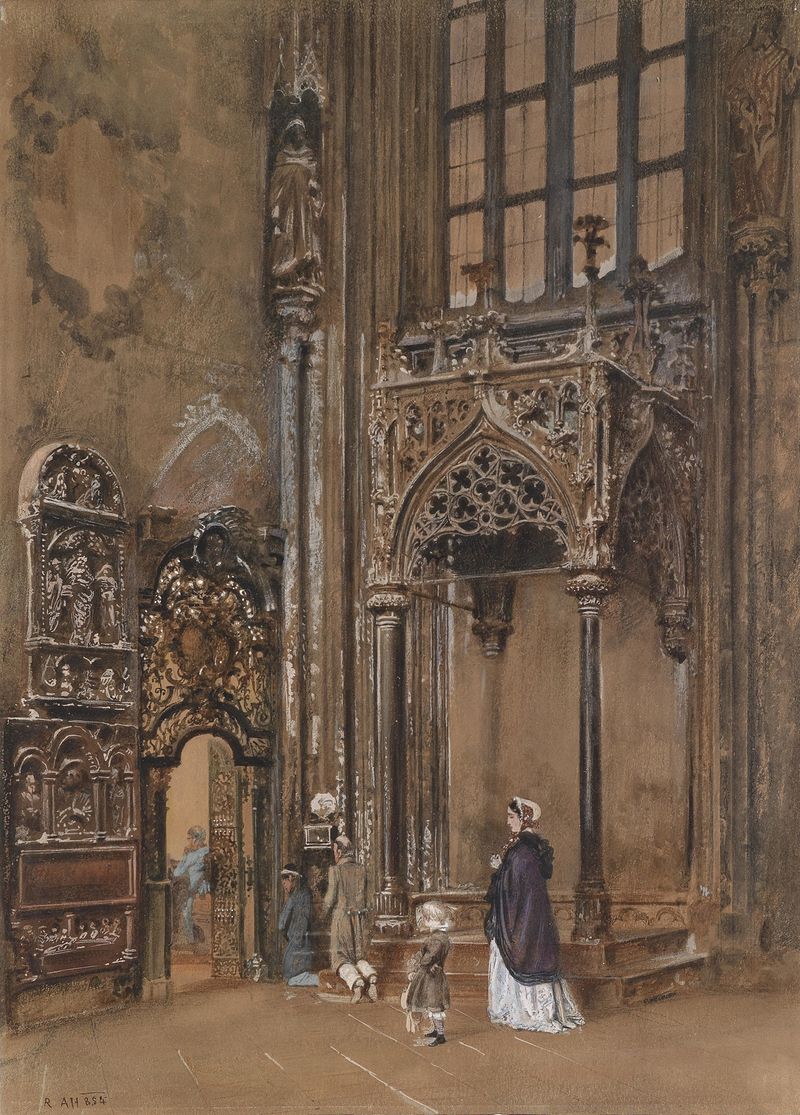
Kircheninneres
Rudolf von Alt
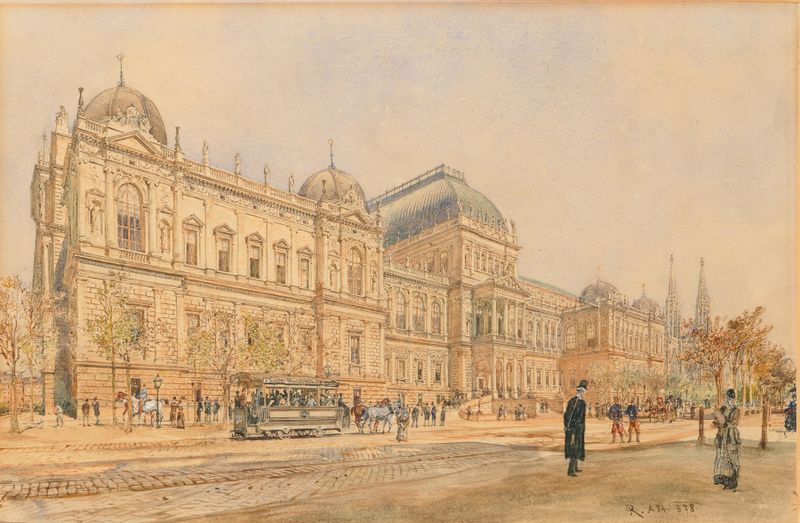
The University of Vienna on the Ringstrasse, with Horse-Drawn Tram and Figures, a view of the building still under construction in 1878 (erected by Heinrich von Ferstel 1873-1884)
Rudolf von Alt
More Architecture Art
Browse all →
The statue of Liberty
Frédéric Auguste Bartholdi

View of Houses in Delft, Known as ‘The Little Street’
Johannes Vermeer

View of Houses in Delft, Known as ‘The Little Street’
Johannes Vermeer

The Cathedral in Rouen. The portal, Grey Weather
Claude Monet

The yellow house
Vincent van Gogh

The Church in Auvers-sur-Oise, View from the Chevet
Vincent van Gogh