
Dégagement de la seconde moitié des Arènes Rue Monge — History & Facts
Could beauty survive in a century of chaos? This question lingers in the vibrant hues of a world caught between the mundane and the transformative. Look to the left at the intricate interplay of light and shadow, where deep blues and subtle ochres converge to craft a captivating streetscape. Notice how the figures, rendered in muted tones, appear to meld with the architecture, their gestures both relaxed and purposeful. The composition guides the viewer’s gaze down the street, inviting exploration of each corner, while Jouas’s brushstrokes evoke a sense of immediacy and daily life unfolding amid the backdrop of the bustling city. Delve deeper into the scene, and you will discover a narrative of change woven into the tranquil atmosphere.
The juxtaposition of the lively street against the stillness of the figures suggests a community caught in the throes of transformation, perhaps a reflection of societal shifts during a tumultuous period. Each element, from the arching trees to the distant rooftops, hints at a world on the precipice of alteration, celebrating the quiet resilience of ordinary life amidst chaos. Created between 1915 and 1945, this piece emerged during a time of significant upheaval in Europe. Jouas, working in Paris, was influenced by the remnants of the war and the modernist movements that were reshaping artistic expression.
This period witnessed a blending of traditional and contemporary styles, with the artist navigating a balance between realism and abstraction, capturing the essence of life in a city amidst both beauty and turmoil.
More Artworks by Charles Jouas
Browse all →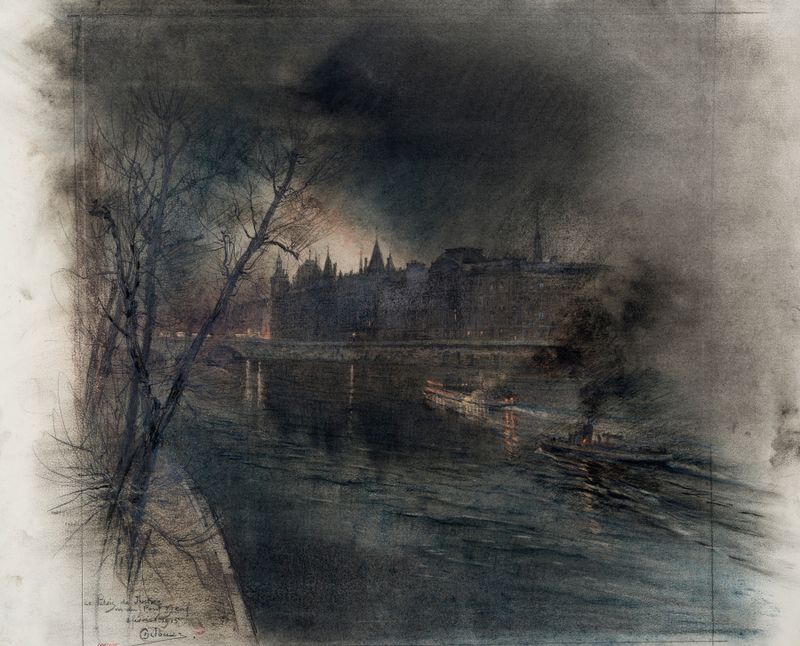
Le Palais de Justice vu du Pont-Neuf
Charles Jouas
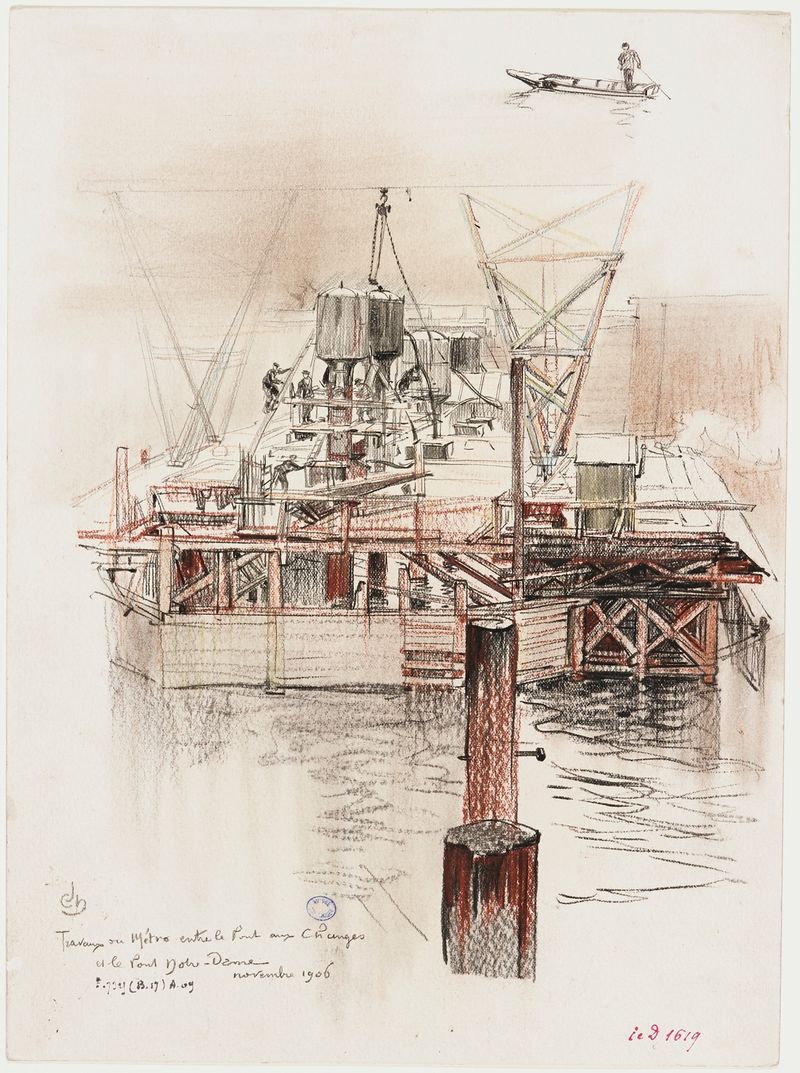
Travaux du métro entre le pont au Change et le pont Notre Dame
Charles Jouas
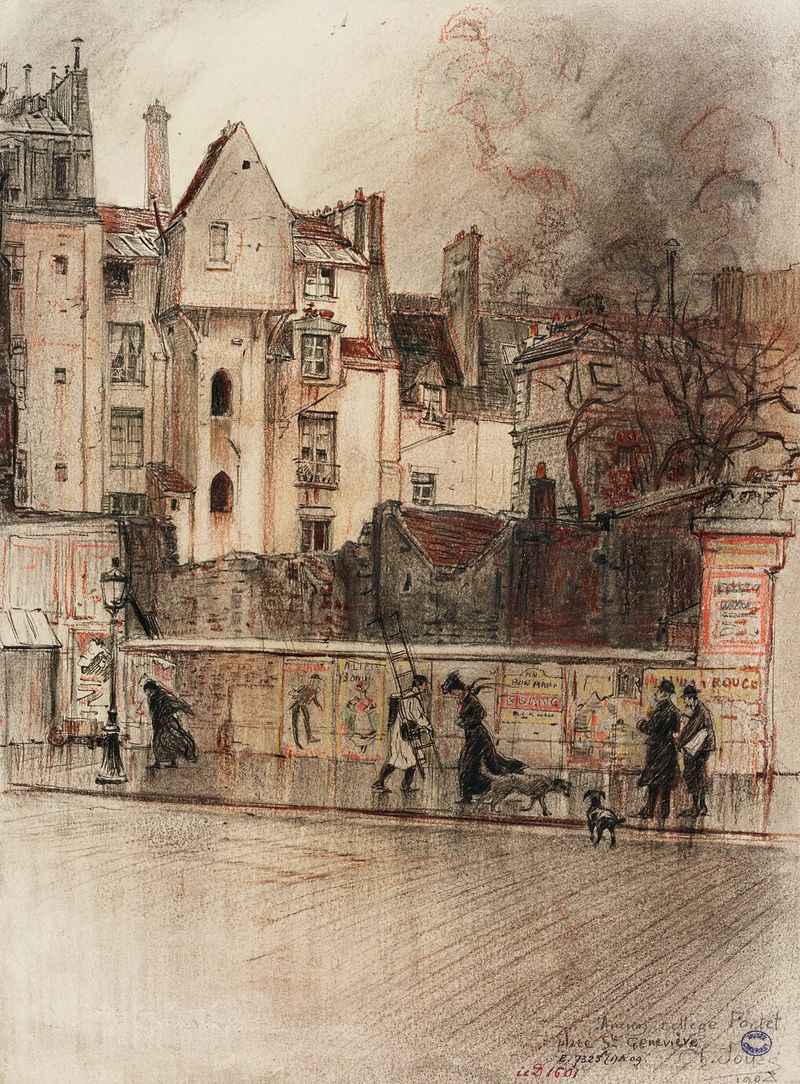
La tour de Calvin (ancien collège de Fortet), place Sainte Geneviève
Charles Jouas

Travaux du métro entre le pont au Change et le pont Notre Dame
Charles Jouas
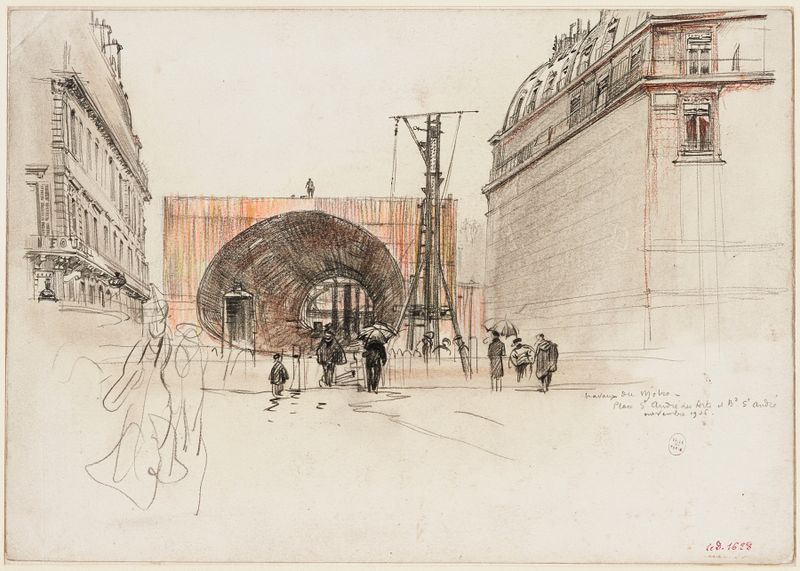
Travaux du métropolitain rue Danton et boulevard Saint-André (le caisson), 6ème aarondissement, Paris
Charles Jouas
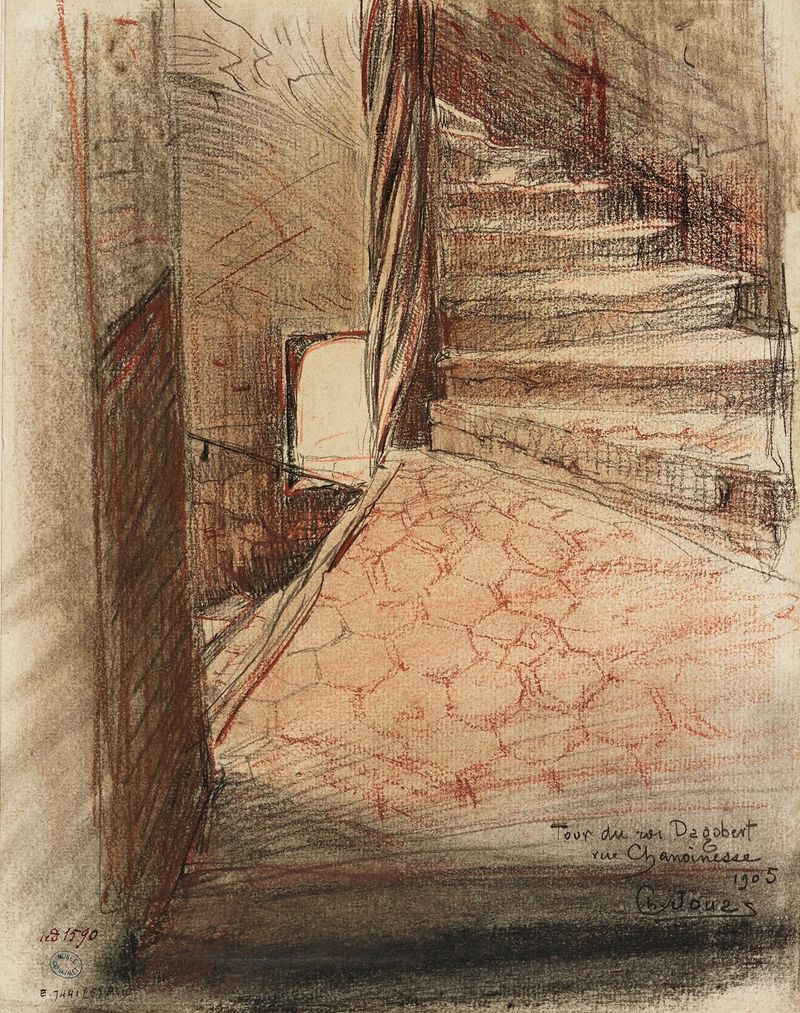
Escalier de la tour Dagobert, rue Chanoinesse
Charles Jouas

Escalier intérieur, 16 rue du Cloître Notre-Dame
Charles Jouas

L’escalier de la rue des Barres
Charles Jouas
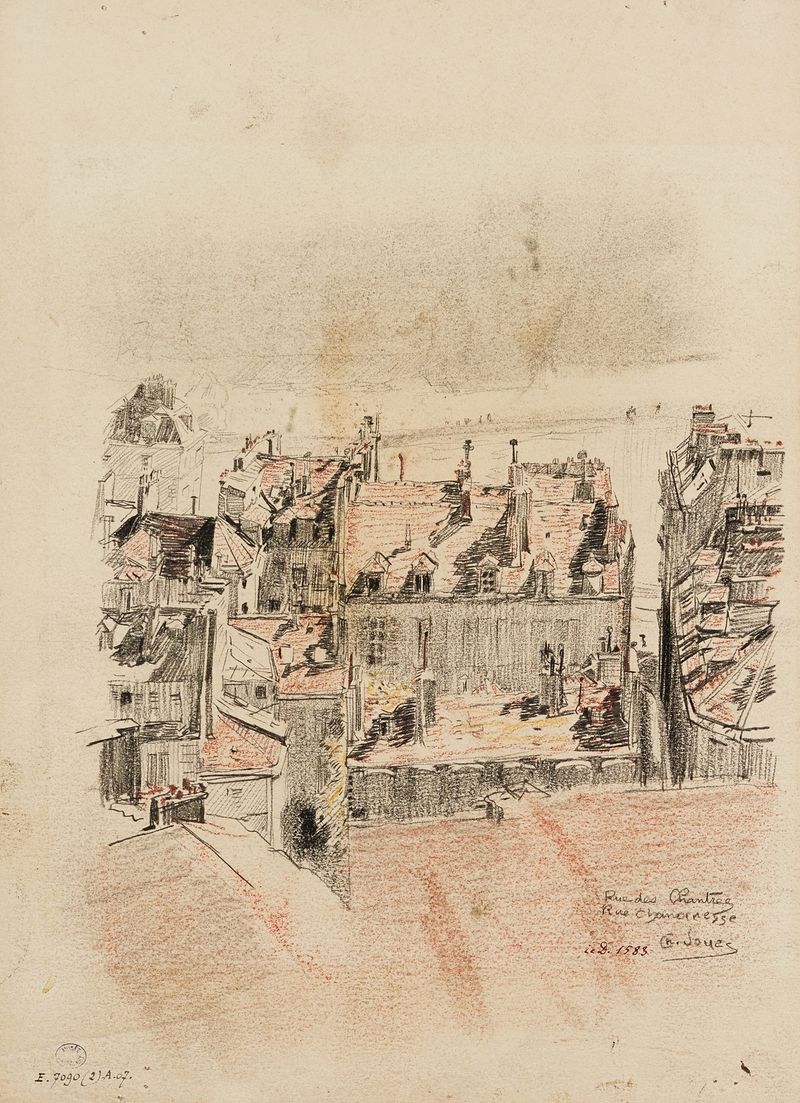
Rue des Chantres et rue Chanoinesse
Charles Jouas

Rue Grenier sur l’Eau
Charles Jouas





